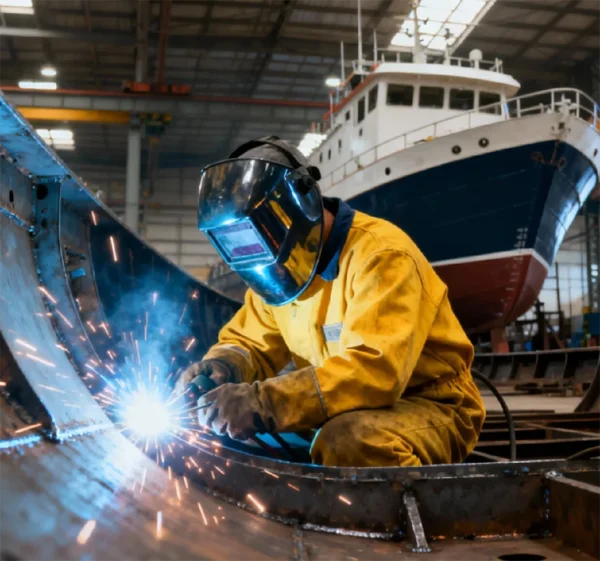
The filter is the part of the protective assembly that a worker looks through for a whole shift, and it is usually the part that is specified in the least detail. A welding filter that is too light leaves the eyes exposed to radiation the standard is designed to manage; one that is too dark pushes the welder closer to the arc to see the joint, which is a different exposure altogether. Selecting the filter is a specification task, not a preference, and the process and current range are what set it.
What the Standard Actually Covers
Eye and face protection standards define the transmittance of filters at defined wavelengths, so a filter’s shade number expresses how much of the visible and invisible radiation passes through. The standards also define the other properties a filter may claim, such as impact resistance and, for auto-darkening filters, the performance of the switching behaviour between the light state and the dark state. In the United States, welding helmets and filters sit within the ANSI Z87.1 framework that the industry references for eye and face protection; in Europe, the relevant standards cover filters and welding helmet requirements, with EN 379 addressing auto-darkening filters and EN 166 covering eye and face protection specifications.
The standards answer two questions. They define the shade range appropriate to a class of work, and they define the claims a manufacturer can mark on the product. They do not decide which shade a particular workshop should use, because that depends on the process, the current, the material and the viewing task. That decision belongs in the task assessment, and the standard is the reference used to express it.
Other optical radiation sources at work are covered on the same principle. Furnace and molten metal work produces intense visible and infrared radiation from an incandescent source. Cutting, gouging and plasma processes produce an arc with its own spectral characteristics. Where laser equipment is present, the protection is defined by the laser’s class and the equipment safety arrangements rather than by a welding shade, and laser eyewear is specified against the wavelength and the optical density the equipment manufacturer states.
The Ratings Buyers Are Asked to Prove
Two further items belong in the evidence set for most workshops. The first is the viewing task that happens between passes, because inspection, grinding and measurement at the same station determine whether the assembly needs a light state the welder can work through. The second is the bystander exposure, since adjacent benches, reflective surfaces and open booths extend the radiation beyond the person welding. Neither item is part of the filter’s marking, and both change what the site should buy.
The evidence chain for a filter follows the same logic as for any protective item: the task, the requirement, the product and the documentation.
- The processes and current or power ranges at each station, recorded in the assessment rather than assumed from the job title.
- The shade range required for those conditions, with the source that defines it.
- The standard and the shade range of the filter supplied, plus any impact or switching claims the specification relies on.
- The marking on the filter and the helmet, the care instructions, and the consumable items that keep the optical path intact.
Where a workshop runs several processes at one bench, the fourth item is usually where the specification breaks down. Filters are pooled, settings are changed by habit, and the shade in the helmet at the end of the week is not the shade that was specified. Standardising a shade range across the stations and clearing the process list with the welding supervisor is the cheapest fix available.
How Test Methods Differ Between Frameworks
Filter standards test transmittance across the spectrum, but the frameworks organise the information differently. The North American approach describes filters and welding helmets within a single eye and face protection standard, with shade numbers and additional performance requirements such as impact resistance identified by marking. The European approach separates the requirements for eye and face protection generally from those for auto-darkening welding filters, which carry their own requirements for the light state, the dark state and the switching time.
For a buyer, three practical consequences follow. A shade number in one framework is comparable in principle, because both describe attenuation, but the additional claims differ, so the specification should name the framework it works to. An auto-darkening filter carries requirements that a passive filter does not, and those requirements are part of the product’s claim rather than conveniences. And where a helmet is used with a filter from a different supplier, the assembly’s documentation should be checked, because the marking on the helmet may refer to the configuration that was originally tested.
Reading the Marking on the Product
One practical detail is worth adding to the goods-in routine: keep the instruction sheet with the helmet rather than with the delivery paperwork. Filters and helmets are often pooled and reissued, and the instruction sheet carries the shade guidance, the care requirements and the range of the filter. A helmet whose paperwork has been filed in an office is, in practice, a helmet whose settings are managed by memory.
The marking on a filter or a welding helmet identifies the manufacturer, the standard, the shade number and the additional properties claimed. On an auto-darkening filter it also identifies the light state and the dark state, so the range of the filter can be compared with the range of the work. Because the filter is a consumable-sensitive item, the marking is often the only place where the claim can be verified after the packaging has been discarded.
Three checks are worth making at goods-in. Confirm the shade or range supplied matches the specification for the stations concerned. Confirm the additional claims that the specification relies on, such as impact resistance for grinding at the same bench. And confirm the lens covers and sealing components are the ones intended for that filter, because a cover that does not seat properly allows spatter onto the filter surface, and the filter’s clarity deteriorates long before its transmittance does.
Comparing the US and EU Frameworks
| Question | North American practice | European practice |
|---|---|---|
| How is attenuation expressed? | Through shade numbers within the eye and face protection standard | Through shade numbers, with separate requirements for auto-darkening filters |
| How are auto-darkening filters handled? | As welding filters with the performance requirements the standard sets | Under requirements covering light state, dark state and switching |
| What additional claims appear? | Impact and other performance markings | Performance markings for protection and switching behaviour |
| What does the buyer verify? | Shade range, claims and marking against the specification | Shade range, claims and marking against the specification |
| What sits outside the filter? | The task, the viewing conditions and the rest of the helmet assembly | The task, the viewing conditions and the rest of the helmet assembly |
The comparison is a documentation exercise rather than a technical one, but it decides whether a mixed fleet of helmets behaves consistently. Where a site buys across markets, the specification should record the framework, the shade range and the claims required, and then confirm each delivery against those three items.
Common Misreadings of the Rating
Most of these mistakes share one cause: the filter was bought against a product category rather than against a described task. Recording the process, the current range and the viewing work before ordering removes almost all of them at no cost.
The misreadings in this category recur in every fabrication shop.
- Treating a darker shade as better protection. The shade has to suit the work; too dark a shade leads to lifting or leaning in, and the resulting exposure is worse than a correct setting.
- Using one setting across several processes. The intensity differs, so the shade range has to cover the most demanding process at that station.
- Assuming any filter suits furnace work. Furnace glare and molten metal are specified differently from a welding arc.
- Ignoring the light state. The value of an auto-darkening filter depends on the light state being usable for inspection, otherwise the helmet is lifted.
- Letting lens covers degenerate. Spatter and scratches force the welder to look around the filter, and the practical protection falls.
- Overlooking bystanders. Reflections from screens and adjacent surfaces expose people who are not welding and have no equipment specified.
- Assuming laser protection equals welding protection. Laser eyewear is specified against wavelength and optical density, not against a shade number for arc welding.
What Documentation to Request From a Supplier
A filter order should arrive with the standard and shade range, the test evidence covering the model and production site, the marking supplied, the instruction sheet including the care of the covers, and a batch traceability reference. Where the filter is supplied as part of a helmet assembly, the documentation should cover the assembly, because the helmet’s own claims may be tied to the configuration it was tested in.
Two requests are specific to this category and save trouble later. Ask for the shade range and process guidance in a form that can be posted at the station, so that the setting is not carried in someone’s memory. And ask which consumable items the supplier holds, including outer and inner lens covers, so that the workshop can restock without waiting for a shipment while damaged covers stay in service.
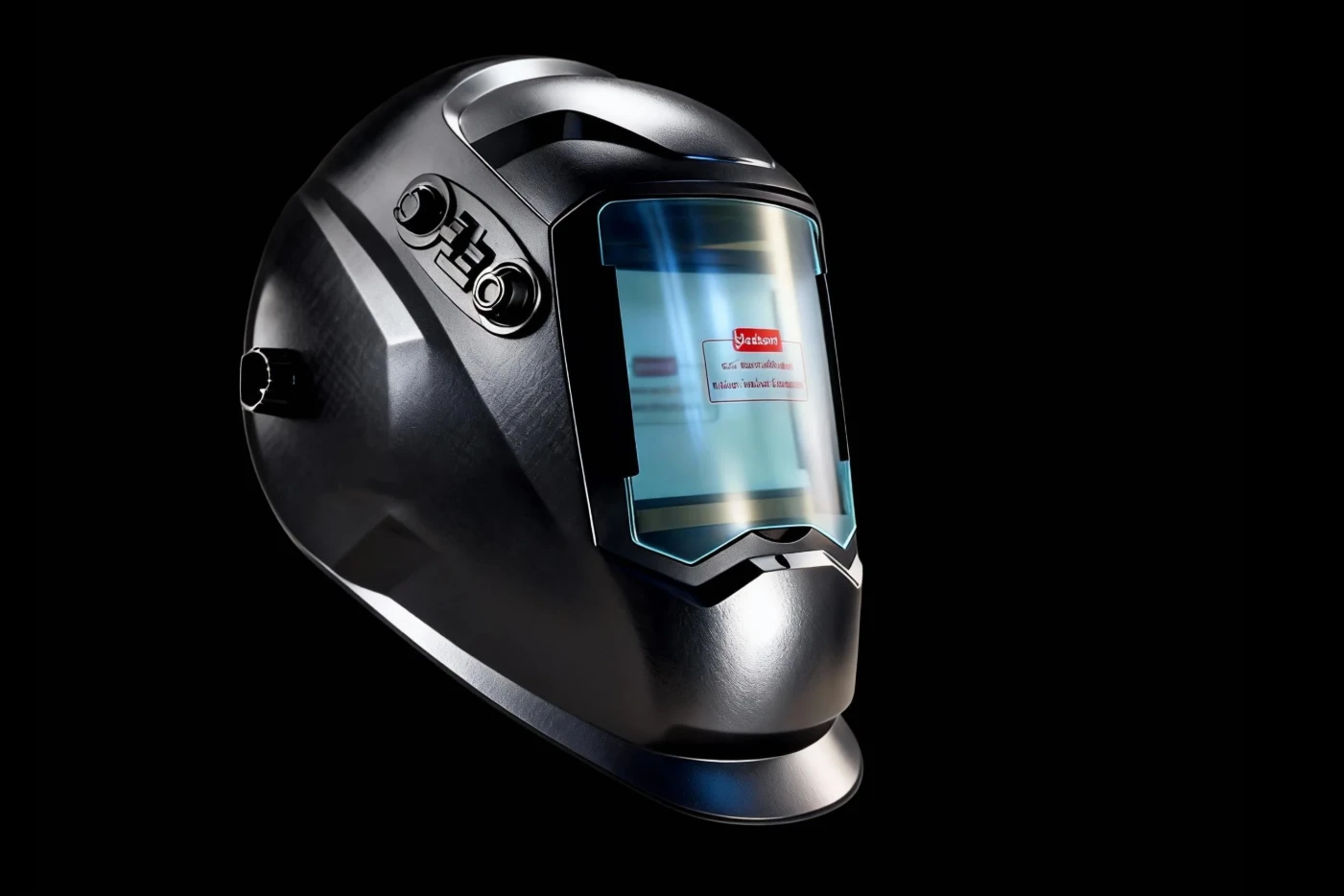
The wider subject of welding protection — helmets, goggles and the choice between them — is covered in Shield Wings’ guide to eye protection for welders, which owns that topic. The filter and helmet options appear on the auto-darkening welding helmet page, the spectacles used for adjacent tasks are listed under safety glasses, and the whole family sits in the eye and ear protection category.
Shield Wings manufactures welding helmets and eye and ear protection at a Guangdong production base and supports fabrication businesses and distributors with filter selection, consumable planning and product documentation. The decision that protects the welder is the one that records the process and the current range and then selects a filter that covers them, rather than the one that chooses the darkest available lens.
For the wider topic and related decisions, see our Welding Safety & Welding PPE.
Frequently Asked Questions
How is the correct filter shade determined?
The shade is set by the process, the current or power involved and the viewing conditions, and the ranges appropriate to each combination are defined by the applicable eye and face protection standard and by the filter manufacturer’s instructions. A specification should cite that source rather than a remembered rule, and where a welder performs several processes the range has to cover the most demanding one.
Do welding filters protect against furnace glare as well?
Furnace and molten metal work produces intense visible and infrared radiation, and the filter has to suit that source rather than a welding arc. The two are specified differently, which is why a furnace position is usually equipped with a reflective face shield and a filter chosen for the viewing task, while a welder uses a welding filter. Reading the task is what decides the product.
What does the marking on a filter tell a buyer?
It identifies the standard the filter is made to, the shade number, the manufacturer and the performance claims such as impact resistance and the state the filter switches to. The marking is what allows a receiving inspection to confirm that the delivered filter matches the specification, and it is also what demonstrates the claim during an audit.
What documentation should a buyer request with a filter order?
Ask for the standard and shade range, the test evidence covering the model and production site, the marking supplied on the product, the care and replacement instructions including lens covers, and a traceability reference. Where the filter forms part of a helmet assembly, require the documentation for the assembly as well.
How often should filters and lens covers be replaced?
Follow the manufacturer’s instructions and the site’s inspection rule. Outer lens covers are consumables that protect the filter and are replaced when scratched, spattered or cloudy, while the filter itself is replaced when its condition criteria are met. A filter that is kept in service with a damaged cover will accumulate spatter, and the optical path degrades long before the filter fails outright.
Reviewing filter selection across a workshop?
Send the processes, the current ranges and the stations involved. Shield Wings confirms the shade ranges available, the consumables needed and the documentation that supports each claim.
External references: 29 CFR 1910.133 eye and face protection, 29 CFR 1910.252 welding, cutting and brazing, UK HSE welding guidance, CEN-CENELEC standards portal, CCOHS PPE answers, Regulation (EU) 2016/425.
{“@context”:”https://schema.org”,”@type”:”FAQPage”,”mainEntity”:[{“@type”:”Question”,”name”:”How is the correct filter shade determined?”,”acceptedAnswer”:{“@type”:”Answer”,”text”:”The shade is set by the process, the current or power involved and the viewing conditions, and the ranges appropriate to each combination are defined by the applicable eye and face protection standard and by the filter manufacturer’s instructions. A specification should cite that source rather than a remembered rule, and where a welder performs several processes the range has to cover the most demanding one.”}},{“@type”:”Question”,”name”:”Do welding filters protect against furnace glare as well?”,”acceptedAnswer”:{“@type”:”Answer”,”text”:”Furnace and molten metal work produces intense visible and infrared radiation, and the filter has to suit that source rather than a welding arc. The two are specified differently, which is why a furnace position is usually equipped with a reflective face shield and a filter chosen for the viewing task, while a welder uses a welding filter. Reading the task is what decides the product.”}},{“@type”:”Question”,”name”:”What does the marking on a filter tell a buyer?”,”acceptedAnswer”:{“@type”:”Answer”,”text”:”It identifies the standard the filter is made to, the shade number, the manufacturer and the performance claims such as impact resistance and the state the filter switches to. The marking is what allows a receiving inspection to confirm that the delivered filter matches the specification, and it is also what demonstrates the claim during an audit.”}},{“@type”:”Question”,”name”:”What documentation should a buyer request with a filter order?”,”acceptedAnswer”:{“@type”:”Answer”,”text”:”Ask for the standard and shade range, the test evidence covering the model and production site, the marking supplied on the product, the care and replacement instructions including lens covers, and a traceability reference. Where the filter forms part of a helmet assembly, require the documentation for the assembly as well.”}},{“@type”:”Question”,”name”:”How often should filters and lens covers be replaced?”,”acceptedAnswer”:{“@type”:”Answer”,”text”:”Follow the manufacturer’s instructions and the site’s inspection rule. Outer lens covers are consumables that protect the filter and are replaced when scratched, spattered or cloudy, while the filter itself is replaced when its condition criteria are met. A filter that is kept in service with a damaged cover will accumulate spatter, and the optical path degrades long before the filter fails outright.”}}]}