Most sites can name the protective equipment they buy. Far fewer can show, on one page, which task each item was selected for, which hazard it addresses and which standard the selection rests on. That gap shows up in three places: a new supervisor issues the wrong garment, a buyer reorders something that was never matched to a task, and an auditor asks why a worker is wearing a specification nobody can trace. A selection matrix closes it.
Why the Programme Outlives the Product Choice
Garments are replaced constantly: a style is discontinued, a fabric is substituted, a distributor changes, a size range shifts. The reasoning behind the choice should survive all of that. A PPE programme is the reasoning made durable — the link between a task and the protection it requires, written down so that any competent person can follow it and any supplier can quote against it.
Programmes fail for predictable reasons rather than exotic ones. The assessment is done once and never revisited when the process changes. The matrix lives in a spreadsheet on one engineer’s drive. Issue records exist in a warehouse system that no one reads during an audit. Training is delivered at induction and never refreshed. Retirement rules are inferred from how a garment looks. None of these is a technical failure; they are all continuity failures.
The commercial consequence is measurable even without pricing it: a programme without a matrix buys to the highest common denominator to be safe, replaces equipment before it needs replacing because nobody can prove it is still serviceable, and renegotiates the same specification with a new supplier every few years instead of holding one stable requirement.
Assessment, Selection and Issue
The programme has three distinct stages, and they need different owners and different records. Assessment produces the hazard statement from the task risk assessment. Selection converts that statement into a standard, a level and a product specification. Issue puts the right item on the right person with the training and the record that proves it happened.
Selection guidance is always conditional on the assessment, and the assessment belongs to the employer. The employer is also the only party that can decide how much weight to give elimination, substitution, engineering and administrative controls before PPE is specified at all. PPE is the last line of defence: it reduces the consequence of exposure, it does not remove the hazard, and it only works while it is worn correctly and maintained as instructed.
| Matrix column | What it holds | Owner | Evidence behind it |
|---|---|---|---|
| Task | The activity as performed, including normal and abnormal conditions | Line management with HSE | Task hazard analysis or job safety analysis |
| Hazard and exposure | The failure mode and the exposure level in standard language | HSE | Risk assessment, arc-flash study, equipment label, noise or dust survey |
| Prior controls | What was eliminated, substituted or engineered before PPE | Engineering with HSE | Change records, guarding and ventilation specifications |
| Standard and level | The standard that governs the claim and the class or level required | HSE | Standard text and the site’s interpretation of it |
| Item issued | Garment or equipment family, model and the marking expected | Procurement with HSE | Test report or declaration for that product line and site |
| Issue record | Person, size, date, replacement cycle and signature | Line management | Issue log or asset register |
| Inspection interval | Pre-use check and the formal interval for that hazard class | Line management | Manufacturer’s instructions plus the site inspection procedure |
| Retirement rule | Damage, contamination, repair limits and end-of-life triggers | HSE with procurement | Manufacturer’s care instructions and the site’s disposal procedure |
Issue is where good technical work quietly unravels. A specification that does not match the size distribution of the workforce will be worn badly, altered or left in a locker. Recording the size, and the reason for a non-standard size, is part of the technical record rather than an administrative afterthought.
Training and Competence Evidence
Protective equipment only performs as designed when the wearer understands what it does and what it does not do. Training has to cover the specific limitation of the item, not the general principle of wearing PPE: which standard applies, what the marking means, what the garment will not protect against, when it must be withdrawn from service, and how it is cleaned and stored.
Competence evidence is what distinguishes a training programme from an induction slide. Useful records show who was trained, on which item, against which procedure, on what date, and who signed off the trainee as competent. Where the task is high consequence, a practical demonstration carries more weight than a signature: a worker who can correctly identify the rating on a garment and state when to retire it has demonstrated something an attendance sheet cannot.
Refresher timing should follow risk and change rather than the calendar alone. A site that introduces a new furnace, a new chemical or a new task sequence has invalidated part of the existing training, and the matrix should have a column or a flag that triggers retraining when the hazard statement changes.
Inspection Frequency by Hazard Class
Inspection is a programme decision, not a guess. Some protective equipment can be checked by the wearer in seconds before each use; other items need a documented periodic inspection against the manufacturer’s instructions, and in some cases a scheduled test by a competent person. The matrix should state which category each item falls into and who performs the check.
A workable structure separates three levels:
- Pre-use check by the wearer — visible damage, contamination, missing fastenings, soiled or damaged lens or visor, correct size and coverage.
- Formal periodic inspection at an interval set by the manufacturer’s instructions and the severity of the hazard, recorded against the item or the issue record.
- Specialist testing or certification where the item’s protection depends on a property that cannot be seen, carried out at the interval and by the method the manufacturer or the relevant standard specifies.
The distinction matters commercially. Sites that apply a specialist interval to items that only need a visual check spend money and staff time without improving protection; sites that apply a visual check to items that need periodic verification carry an unrecorded risk.
Record Keeping for Audits and Incidents
Records exist to answer three questions: what was specified, what was issued, and what happened afterwards. Regulators, insurers, customers and incident investigators all ask versions of the same thing, and the site that can produce a complete set in an afternoon has a material advantage over the site that reconstructs it over a week.
The minimum defensible set is compact: the current matrix with its revision history, the risk assessments behind each hazard statement, the test documentation for each item type, issue and training records per worker, and inspection, repair and retirement logs. Retention periods should be set deliberately, because incident claims can arrive long after equipment has been replaced.
Two habits make this set easier to maintain. First, record the revision reason on the matrix, not just the date, so that a later reader can see what changed and why. Second, keep the evidence pack indexed to the matrix rows, so that producing a document for an audit is a lookup rather than an investigation.
Retirement, Replacement and Stock Control
Retirement rules protect both the worker and the budget. A garment must be withdrawn when it is damaged beyond the manufacturer’s repair limits, contaminated in a way the care instructions do not resolve, exposed to a condition that invalidates its rating, or simply worn to the point where the protection claim can no longer be assumed. Replacement intervals then follow the actual wear pattern rather than a warehouse default.
Stock control is the practical half of the same problem. Sites need enough depth to cover a failure or a spike in headcount without holding so much that stock passes its useful life in a rack. Two figures make this manageable: consumption per worker per year by item type, taken from issue records, and a defined minimum stock level for each hazard-critical item. Both come out of the matrix rather than out of a separate exercise.
For a supplier conversation, that data is also the fastest route to an accurate quotation. A request that states the item, the standard, the annual quantity, the size curve and the delivery pattern can be quoted against production reality; a request for a catalogue price cannot.
Making the Programme Survive Contact With Operations
Programmes that survive are the ones that fit the shift. A matrix that requires a signature for every pair of gloves will be bypassed; a matrix that names one accountable person per task and keeps the paperwork proportionate to the risk will be followed. The design question is not how much control to add but where the control has to be tight.
Three practices consistently help. Keep the visible artefact short — a one or two page task-to-protection summary for the shop floor, with the full matrix held as the technical record behind it. Make deviation visible and legitimate, with a route to approve a one-off change that is recorded, rather than a rule that everyone quietly ignores. And review the matrix on the same cycle as the process it protects, so that a change in equipment, chemistry or task sequence triggers a specification review by default.
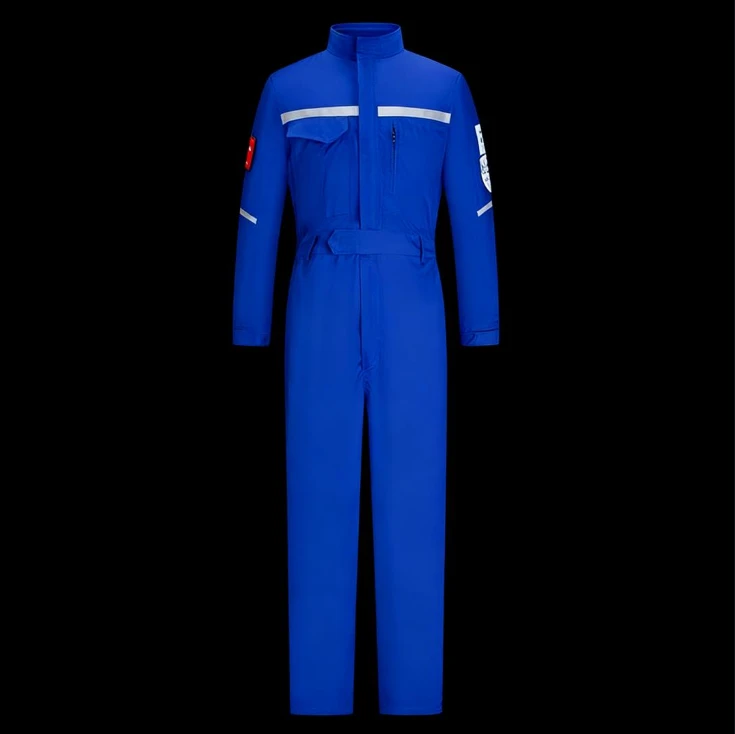
Shield Wings supplies protective equipment families across body protection, head and face, eye and ear, hand and foot protection, and works with buyers who are building or revising a programme. Support usually takes the form of material and specification guidance, test documentation for the relevant product line, and product information structured so that a matrix row can be completed without a follow-up email. For background on how certification and testing claims are structured, and which body issues which document, the site’s PPE certification guide is the concept owner for that topic.
The test of a selection matrix is not how comprehensive it looks. It is whether a new supervisor could issue the correct equipment for an unfamiliar task on their first day, and whether the site could prove six months later that the requirement was met. Everything else — the columns, the owners, the review cycle — exists to make those two things true.
For the wider topic and related decisions, see our PPE Sourcing, Manufacturing & Compliance.
Frequently Asked Questions
How many columns does a usable PPE selection matrix need?
Eight columns carry the auditable content: task, hazard and exposure, controls already in place, standard and level required, garment or equipment issued, size and issue record, inspection interval, and retirement rule. Fewer columns produce a matrix that cannot answer an auditor. More columns usually means the matrix is doubling as a purchasing sheet, which is better kept as a separate document linked by a product code.
Who owns the selection matrix?
HSE owns the technical content and the hazard statements. Procurement owns the commercial execution, and line management owns issue, training and inspection records. A matrix written only by HSE is usually not followed; a matrix written only by procurement is usually not defensible. The workable split is a joint working group that signs off revisions together, with one named owner for the document as a whole.
How often should a PPE selection matrix be reviewed?
Review whenever a task changes, a process or chemical is introduced, a near miss or incident involves protective equipment, a standard is revised, or an audit raises a finding. Outside those triggers, an annual review keeps the document alive. The failure mode is a matrix reviewed only when someone remembers: revisions then arrive after equipment has already been issued against an obsolete requirement.
Can a matrix cover several sites with different hazards?
It can, provided the hazard statement is written per site and per task rather than as one corporate average. A shared matrix works when the standard column, the garment column and the evidence column are common, and the hazard column is site-specific. Forcing one site to adopt another site’s protection level either over-specifies the lower-risk site or, worse, under-specifies the higher-risk one.
What documentation should sit behind the matrix?
For each garment line, keep the test report or declaration that supports the standard claim, the manufacturer’s care and inspection instructions, the supplier’s traceability reference, and the issue and training record for the workers covered. The matrix itself is the index; the evidence pack is what gets produced during an audit, an incident investigation or a customer site assessment.

Building or revising a programme?
Send the task list and the standards you work to. Shield Wings provides specification guidance, material options and test documentation for the product lines involved, so the matrix can be completed with verified references.
External references: 29 CFR 1910.132, 29 CFR 1910 Subpart I, UK HSE personal protective equipment guidance, CCOHS PPE answers, Regulation (EU) 2016/425, CEN-CENELEC, NFPA 70E.