

A specification that begins with a product family ends with a purchase order nobody can defend. When an incident is investigated or a client audits the programme, the question is never which catalogue item was bought; it is which hazard was assessed, which control was chosen first, and what evidence shows the garment matches that hazard. Body protection selection works in that order, from the task outward to the garment, and the buying decision becomes far easier once the hazard statement is written down.
The Hazard First, the Product Second
Most PPE catalogue pages are organised by product name because that is how products are manufactured and shipped. Hazard assessment is organised the other way round, by the failure mode the worker is exposed to: a flash fire, an electric arc, molten metal splash, an electrostatic discharge, radiant heat, a moving blade, cold, or a vehicle interface. Two tasks that look identical on a shop floor drawing can need completely different garments because the exposure mechanism differs — a welder working near a furnace and a furnace operator working beside the same welder do not share a hazard profile.
Practically, the hazard statement for a body protection decision has to answer five things before any product is discussed:
- The energy or mechanism of harm — thermal, electrical, chemical, mechanical or environmental.
- The body zones exposed — torso, arms, legs, or the whole body including the neck and wrists.
- The duration and frequency of exposure within a shift, not just the peak event.
- Whether other controls already reduce the exposure before the garment is considered.
- What evidence the buyer must hold afterwards for the audit trail.
Once those five lines exist, the product conversation becomes narrow. The garment either matches the hazard statement or it does not, and the supplier is asked to demonstrate it with a test report rather than a description.
What the Risk Assessment Has to Establish
The risk assessment is the document that converts a general hazard into a specification, and it is the employer’s to own. Suppliers can support it with technical data, test reports and application experience, but they cannot substitute for it. This is also where most sourcing problems originate: a quotation issued against a vague brief will be priced against assumptions, and the assumptions are rarely the ones the site actually works to.
For body protection specifically, the assessment needs to record the exposure level in the terms the relevant standard uses. Where arc flash is a credible hazard, the incident energy comes from an arc-flash study or the equipment label and sets the arc rating the clothing has to meet. Where flash fire is the credible hazard, the assessment identifies the garment standard that governs certification for that market. Where molten metal, radiant heat or cold is the driver, the exposure mechanism and duration define which test regime applies. Where static discharge is the concern, the assessment has to state the flammable or dust atmosphere involved, because a garment suitable for electronics assembly is not automatically the right choice for a solvent-handling area.
Two outputs matter most at the end: the required protection level expressed in the language of a standard, and the reason it was selected. The first lets a supplier quote accurately; the second is what protects the decision six months later.
Which Hazards This Category Covers and Which It Does Not
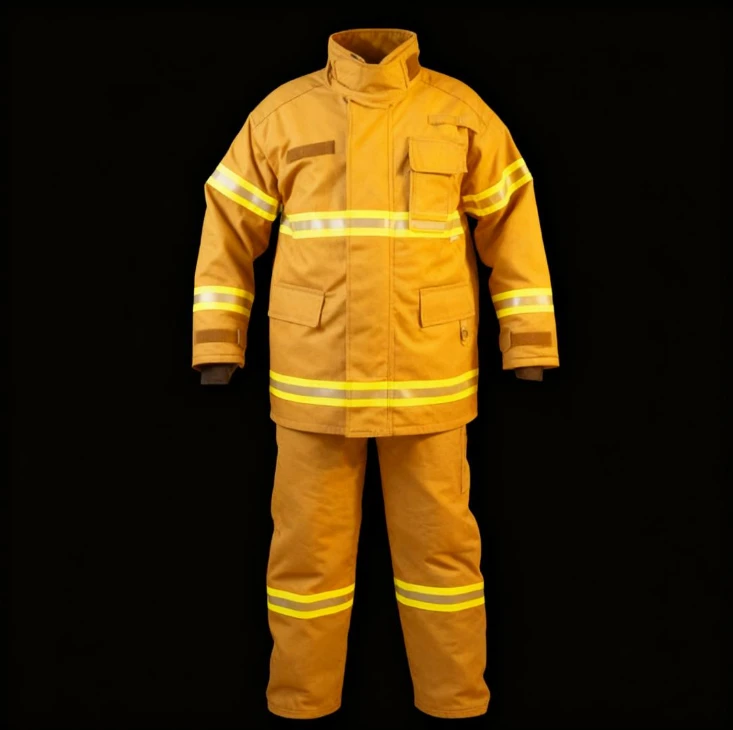
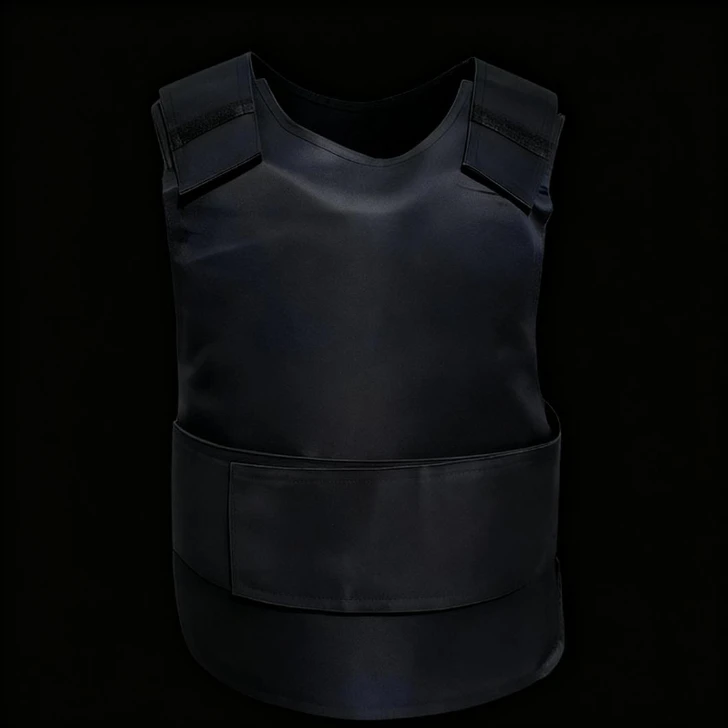
Body protection is the garment layer that covers the torso, arms and legs. In this category the main families are flame-resistant and arc-rated clothing, anti-static clothing, heat and molten metal protective clothing, cold-weather workwear, high-visibility clothing, and stab and cut resistant clothing. Those are different protection mechanisms with different standards, different test methods and different failure modes, which is why they are specified separately even when the same worker wears two of them in one shift.
Equally important is what the category does not decide. Head, face, eye and hearing protection, hand protection and footwear sit in their own families, with their own standards and their own selection logic. Chemical and biological barrier garments depend on permeation and penetration data for a named substance and are specified on that basis rather than on a thermal standard. Respiratory protection follows a different programme entirely. A complete task specification names each of these separately, and the body protection element is one line in that specification rather than the whole of it.
Matching Task to Protection Level
The protection level is not a shopping preference; it is the conclusion of the assessment, expressed in a standard that a test house can verify. The table below shows how the hazard family narrows the field and what a buyer should ask to see before the specification is frozen. It deliberately stops at the level of the decision, because the actual class, level or arc rating has to be taken from the site assessment and the equipment labels rather than from a generic table.
| Hazard driver | Standard family that frames the claim | What decides the level | Evidence to request |
|---|---|---|---|
| Flash fire | NFPA 2112 / EN ISO 11612 | Garment certification against the standard for the market, plus fabric and construction | Test report naming the standard, the style and the production site |
| Electric arc | NFPA 70E selection framework with arc-rated clothing; IEC 61482 for the fabric and garment tests | Incident energy from the arc-flash study or equipment label | Arc rating for the garment assembly and the layers that make it up |
| Molten metal splash | Heat and molten metal performance regimes within EN ISO 11612 | Metal type, pour size, position of the worker relative to the flow | Test evidence for the specific splash performance claimed |
| Static discharge in a flammable or dust atmosphere | EN 1149-1 for the garment surface property | Atmosphere classification and the site’s ignition assessment | Surface resistance data and care conditions that preserve it |
| Road and vehicle interface | ANSI/ISEA 107 / EN ISO 20471 | Road speed, sight distance, task position and background | Class, colour and retroreflective area as tested |
| Cold exposure | Garment performance specification set by the employer | Temperature, wind, duration and metabolic rate | Insulation and outer-shell data for the intended conditions |
Where two families overlap on one task, the higher demand governs the outer layer and the layering has to be tested as an assembly, not assembled from two independently strong garments. That is a technical point, and it belongs in writing in the specification rather than in a verbal agreement with the supplier.
Where Selection Usually Goes Wrong
The recurring failures are not exotic. They are structural, and they repeat across sites that have otherwise mature safety programmes.
- Buying by product name. A garment described as heat protective may be built for radiant heat rather than molten metal contact, and the description alone will not reveal the difference.
- Copying a specification without the hazard statement. A borrowed specification carries the other site’s exposure assumptions with it.
- Ignoring duration. Protective performance measured in seconds behaves differently across a full shift, and comfort failures lead to garments being removed mid-task.
- Treating one certification as transferable. Certificates apply to a product line and a production site. A claim on one style does not transfer to another style from the same catalogue.
- Layering without testing the assembly. Combining an arc-rated outer layer with an untreated base layer can remove the protection the outer layer was bought for.
- Sizing and fit decided after the order. Restrictive garments get unzipped, sleeves get pushed up, and protective coverage quietly disappears.
- Care instructions separated from the garment. Detergent choice and repair practice affect residual protection, and generic laundering advice can void the claim.
Each of these is cheap to prevent at specification stage and expensive to discover after issue. The prevention is documentation: the hazard statement, the standard, the level, the marking and the care instruction all travel together.
The Hierarchy of Controls Around the Selection
The hierarchy of controls is not a philosophical framing that sits beside the buying decision; it is the reason the buying decision is defensible. Elimination, substitution and engineering controls come first, then administrative controls such as procedure, training, permits and rotation, and only then personal protective equipment. PPE is the last line of defence: it does not remove the hazard, it reduces the consequence of contact with it, and it depends on the worker wearing and maintaining it correctly.
For a body protection specification this has three practical consequences. First, the assessment should record what was done before PPE was chosen, because a programme that jumps straight to garments will be challenged. Second, the garment requirement can be lower, and cheaper, where engineering controls have genuinely reduced the exposure — and higher, not lower, where they have not. Third, the specification should say which controls the garment assumes, so that a later change to the process triggers a review of the protection level rather than a silent reduction in safety margin.
Selection guidance in any article, including this one, is conditional on that assessment. The correct category, class or rating is a site-specific answer.
Specification Points to Fix Before Ordering
The specification document is what turns a hazard statement into a repeatable order, and it should be written so that a second supplier could quote against it without a conversation. Buyers who build it once tend to reuse it, which is why it pays to make it complete rather than convenient.
- The task and the hazard, stated in one or two lines, with the exposure level the assessment produced.
- The standard the garment must be tested to, named with its scope, and the class or level required for that task.
- The marking expected on the product, so that receiving inspection can verify the claim on delivery.
- The document set required with the quotation: test reports, declaration of conformity where applicable, care instructions and the traceability reference.
- Size range and the fit requirement, including the size curve for the actual workforce rather than a nominal range.
- Colour, retroreflective area and any branding, described in terms that do not change the protection claim.
- Care, inspection, repair and retirement rules, taken from the manufacturer’s instructions.
- Sampling and approval steps before bulk production, and the change-control rule for fabric or construction substitutions.
- Packaging and labelling requirements, including any market-specific marking the importer must apply.
Two of those lines are usually missing and usually regretted: the change-control rule and the marking expected on the product. The first prevents a substitution that keeps the price and loses the rating; the second prevents a shipment that meets the specification on paper and cannot be verified on the receiving dock. For a wider view of what the markings on protective clothing mean and how to read them against a claim, the site’s guide to PPE labels and ratings covers the label conventions in detail.
Where the programme covers several sites or several hazard families, the same discipline scales: one selection matrix, one approval route and one evidence pack per garment type. Shield Wings manufactures body protection clothing across FR and arc-rated, anti-static, heat and molten metal, high-visibility, cold-weather and cut resistant families, and supports buyers with material selection, third-party testing documentation and specification review before a programme is locked. The manufacturers who quote against a written hazard statement can price accurately; the ones asked to guess will price for the worst case.
The conclusion of the selection process is not a catalogue item. It is a short written statement — the task, the exposure, the standard, the level, the marking and the care rule — that the assessment supports, the supplier can meet and an auditor can follow. Everything else, including the colour and the logo, is downstream of that.
For the wider topic and related decisions, see our PPE Sourcing, Manufacturing & Compliance.
Frequently Asked Questions
Who decides which body protection a task requires?
The employer decides, through the risk assessment and the task hazard analysis, not the supplier and not the catalogue. A supplier can translate the hazard statement into a garment specification, name the standard that applies, and provide test evidence, but the required protection level has to come from the assessment of that workplace, that task and that exposure. Where an arc-flash study or equipment label exists, it sets the incident energy the clothing must be rated for.
Can one garment cover several hazards at once?
Sometimes, but only where the garment is tested to each standard involved and the certificates name that scope. A garment tested for flash fire and arc flash is not automatically suitable for molten metal splash, and chemical splash protection depends on permeation data for the specific substance and is normally a separate garment family. Read the marking and the test report for the property you actually need, and do not assume that a higher rating in one property carries across to another.
Does selection change when a distributor orders on behalf of end users?
The technical requirement does not change, but the documentation burden does. Distributors usually need the standard reference, the class or level, the care instructions, the size range and the traceability that lets them answer an end user audit. Where a distributor serves several industries, ordering to the highest common specification wastes money on tasks that never needed it, so keep the specification tied to the end user task and not to the warehouse stock list.
How often should protective clothing be inspected or replaced?
The interval comes from the manufacturer’s instructions and the employer’s inspection programme, not from a fixed industry number. In practice, protective clothing is checked before each issue, after any suspected exposure, and at a defined interval for stored spares. Retirement is triggered by damage, contamination, repairs outside the instructions, or a change in the task that invalidates the original rating. Records of issue, inspection and retirement are what an auditor asks to see.
What drives the cost of a body protection specification?
Cost follows the protection claim. Higher-rated fabrics, additional layers, flame-resistant trims and closures, larger size ranges, custom colour or branding, third-party test evidence for a specific standard, and low order quantities all move the price. The commercial lever is rarely the unit price alone: fitting the specification to the task, standardising a small number of garment types across similar tasks, and ordering against a realistic size curve usually reduces total spend more than negotiating a discount.
Have a specification reviewed before the order
Send the hazard statement, the standard you are working to and the size breakdown. Shield Wings technical support reviews the garment specification against the task and confirms what the test documentation will cover.
External references: OSHA 29 CFR 1910 Subpart I, personal protective equipment, 29 CFR 1910.132 hazard assessment and equipment selection, NFPA 2112, CEN-CENELEC standards portal, UK HSE guidance on personal protective equipment, CCOHS PPE answers, Regulation (EU) 2016/425 on personal protective equipment.