

Custom workwear manufacturing turns a specification into a branded product through a defined process — specification, quotation, sampling, production, and delivery — and the terms that matter most are MOQ, sampling, and the production controls. This guide explains the process, with reference to custom workwear manufacturing.
(Last modified date: October 4, 2026)
Quick definition: The custom workwear process runs through five stages: specification, quotation, sampling, production, and delivery — each with documents and approvals that protect both buyer and factory.
Key Takeaways
- MOQs vary by product complexity: apparel-style items often start in the hundreds, while tooled or branded products may carry higher minimums — and the MOQ should fit your real forecast, not your hope.
- The sampling stage should include the fabric, fit, branding, and certification — the sample is approved only when it matches the specification and carries the documentation for the finished configuration.
- The production agreement covers the AQL, the inspection points, the batch documentation, and the remedy if inspection fails — written before production starts.
- Keep the program repeatable by recording the approved sample, the specification, and the branding files, and by confirming the same materials and tooling on reorders.
What Is the Custom Workwear Process?
The custom workwear process runs through five stages: specification, quotation, sampling, production, and delivery — each with documents and approvals that protect both buyer and factory.
First, share your specification: product, materials, standards, sizes, branding, and quantity. The factory responds with pricing, tooling costs, sample terms, and lead times. Second, approve a sample — for protective workwear, the sample must carry the certification documentation. Third, lock the production plan and quality criteria in writing. Fourth, production runs with inspections at the agreed points. Finally, delivery with batch records. Each stage has an approval, and the approved sample is the reference for production.
How Do MOQs Work?
MOQs vary by product complexity: apparel-style items often start in the hundreds, while tooled or branded products may carry higher minimums — and the MOQ should fit your real forecast, not your hope.
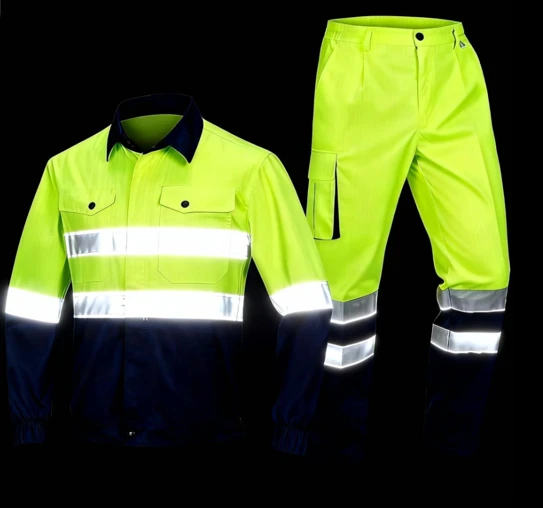
For workwear such as coveralls and FR garments, factories typically accommodate MOQs in the hundreds, with flexible terms for pilot programs. Make sure the MOQ, the reorder minimum, and whether samples are credited against the first order. A slightly higher MOQ from a factory that repeats quality can be cheaper than a low-MOQ supplier who cannot. Lock the terms for first order and reorders in writing, because the relationship scales on repeatability.
What Should the Sampling Stage Include?
The sampling stage should include the fabric, fit, branding, and certification — the sample is approved only when it matches the specification and carries the documentation for the finished configuration.
Order samples in the sizes you need, examine the fabric and construction against the spec, and confirm the branding and closures. For protective workwear, request the test report for the finished configuration, because customization can affect the certification. The approved sample becomes the reference for inspection, so record its measurements, materials, and labels. A sample that is approved on evidence is a sample that production can repeat.
What Should the Production Agreement Cover?
The production agreement covers the AQL, the inspection points, the batch documentation, and the remedy if inspection fails — written before production starts.
Define the acceptable quality level, name the inspection stages, and state who inspects and with what authority. Make sure the documentation delivered with each batch: certificates, test reports, and production records. Name the remedy for failed inspections — rework, replacement, credit, or return. The agreement turns the purchase from a transaction into a controlled process, and it protects both sides when a problem appears.
How Do You Keep Custom Workwear Repeatable?
Keep the program repeatable by recording the approved sample, the specification, and the branding files, and by confirming the same materials and tooling on reorders.
Make sure the approved sample, the specification, and the branding files are kept per order, that the reorder reproduces the product without re-approving everything, and that the material stability and the reorder terms are confirmed in writing before the next batch.
Confirm every specification, certificate, and quality term in writing before production; verify against the applicable standard and your own due diligence.
MOQ Economics and the Sampling Gate
MOQ is a manufacturing constraint rather than a policy: it comes from the minimum a mill will run, the smallest dye lot that can be matched, and the setup time a line needs. Treating it as a gate with defined stages is what keeps a custom workwear programme from turning into a series of verbal agreements.
| Stage | What is committed | Confirm in writing |
|---|---|---|
| Specification | Nothing yet | Fabric, construction, standard and branding as one document |
| Sample | Sample fee, freight and time | Who keeps the approved sample, and the criteria for approval |
| Minimum order | The MOQ quantity | How the MOQ is counted — per colour, per size, or per style |
| Reorder | Continuity of the same fabric | Whether fabric is held for you, and the dye-lot tolerance |
| Branding | Logo method and placement | That the branded configuration is the one covered by the certification |
Worked example: what the MOQ actually costs per unit
Illustrative figures. A factory quotes a minimum of 500 units per colour with a US$600 setup and dye charge. At 500 units the setup adds US$1.20 per unit; at 1,000 units the same charge adds US$0.60, so the second colour is cheaper per unit than the first only if the run is doubled. If the site needs 450 units, ordering the 500 minimum leaves 50 spares — which absorb size-mix errors at first issue, so they are not necessarily waste. The calculation to run at quotation stage is: (unit price × quantity + setup + sampling + freight) ÷ quantity, compared against the same figure at the next MOQ break.
Where the sample stops being enough
A sample is an approval artefact, not a production commitment: it proves what the factory can make by hand, not what the line will produce at volume. Branding is the second trap — a logo or a heat-applied patch can change the configuration the certification covers, so the branded garment is what should be approved and tested rather than the plain one. And a reorder is only repeatable if the fabric is the same, which is why the dye-lot tolerance belongs in the agreement before the first order, not after the second one arrives a shade off.
For the wider topic and related decisions, see our PPE Sourcing, Manufacturing & Compliance.
FAQs
What is a typical MOQ for custom workwear?
Apparel-style items often start in the hundreds; confirm the exact MOQ and reorder terms in writing.
Do we need a sample before production?
Yes. The approved sample is the reference for production and inspection.
Does branding affect the certification?
It can, so the branding is specified and approved as part of the finished garment before production.
How do we start a custom workwear program?
Submit your specification for a quotation and sample terms via our contact page , or ask Shield Wings on the custom workwear manufacturing .
What is a manufacturer’s MOQ?
The minimum order quantity is the smallest run a factory will accept, and it is set by the mill’s minimum fabric run, the smallest dye lot that can be matched and the setup time the line needs. It is usually counted per colour or per style rather than across the whole order, which is the detail to confirm in writing before quoting.
How can we reduce the MOQ on custom workwear?
Four levers work in practice: cut the number of colours so the run concentrates on one dye lot, accept a stock fabric instead of a custom one, take the factory’s own size curve rather than a bespoke one, or pay a small-run surcharge on the reduced quantity. Each trades something — colour choice, fabric exclusivity or unit price — so decide which one you are willing to give up before the negotiation.
Related Articles
- PPE Import Shipping Guide: Incoterms Lead Times and Costs
- EN ISO 11612: Heat and Flame Protection Clothing Standard
- PPE Inventory Management: Keeping Your Stock Ready
- China Personal Protective Equipment (PPE) Manufacturing Advantages: A Comprehensive Analysis for Global Buyers
- China PPE Factory Audit Guide: What to Check
- OEM PPE Manufacturing in China: The Complete Guide