

Dust atmospheres are a static problem that most plants underestimate. The powder itself is the fuel, the plant generates the charge through handling and transport, and the spark that ignites it does not need to be large. Clothing is part of the answer, but only as one element in a set of measures that includes bonding, earthing, humidity, housekeeping and equipment selection. Selecting the garment in isolation produces a specification that looks complete and leaves the ignition source intact.
What This Environment Does to People and Equipment
It is worth being precise about where the charge collects, because that is where the measures have to work. The human body accumulates charge when the worker moves across an insulating floor or when clothing rubs against a seat, a liner or a bag. Equipment accumulates charge in chutes, ducts, filters and ungrounded metal parts. Isolated conductors are the most serious case, because they can hold charge and release it as a single energetic spark when something approaches. That is why bonding and earthing of equipment is treated as a fundamental measure rather than an add-on.
Powder handling generates charge in several ways: dry product moving through chutes, pneumatic conveying, sieving, milling, bag filling and even the movement of a worker across a dry floor. The charge accumulates on insulating surfaces, including clothing and the human body, and it leaves suddenly when a conductive path appears. The result is a spark, and in a dust cloud the energy required to ignite the material can be very small.
The environment amplifies the problem. Dry air and heated buildings reduce charge dissipation, so the same plant is more prone to static in winter than in summer. Fine dust settles on surfaces where it can be disturbed into a cloud by a small air movement. And the equipment itself, from plastic liners to conveyor belts to ducting, can hold charge that discharges to a nearby worker rather than to earth.
The Hazards That Drive the Specification
The material data matters more than most buyers expect, and it comes from the dust manufacturer or from laboratory testing rather than from a general assumption. Two powders that look identical in a store room can differ substantially in how easily they ignite, and the assessment needs the data for the specific material in use. Where a process handles several powders or changes products seasonally, that variability belongs in the assessment rather than being averaged away.
The requirement comes from the employer’s dust hazard assessment and the explosion protection document, which identifies where a combustible dust atmosphere can exist and what the ignition sources are. Static discharge is one of those sources, and the clothing requirement follows from that assessment rather than from a general policy.
- The dust and its properties, including how easily it is ignited and how it behaves when dispersed.
- Where the atmosphere can be present, how often, and whether it is a normal condition or only an abnormal one.
- Whether the worker is the source of charge, the recipient of it, or both, and what the worker is standing on.
- The other ignition sources identified in the assessment, since controlling one of several does not remove the hazard.
- The ignition sensitivity of the material involved, which is normally established from the manufacturer’s data or from laboratory testing.
- The activities performed, including cleaning, filter changing and maintenance, since those are often where the exposure is highest.
Two lines on that list are frequently missing. Cleaning and maintenance are activities where dust is deliberately disturbed and workers may be in the most concentrated atmosphere; and the abnormal case, such as a filter failure or a spillage, is often where the assessment should have led to a stricter requirement.
Controls That Come Before the Equipment
Static control in a dust plant is built from engineering measures before clothing. Bonding and earthing of equipment, conductive flooring and earthing points for personnel, humidity control, avoiding unnecessary insulating materials in the process, dust extraction at source, and housekeeping that prevents layers of combustible dust from accumulating all reduce the problem rather than containing it. Equipment selection under the applicable framework for explosive atmospheres adds the next layer.
Administrative controls follow: permit systems, procedures for cleaning that avoid creating clouds, control of hot work, and training that explains why a plastic bucket, a compressed-air line or a synthetic overall matters in this environment. Personal protective equipment is the last line of defence: the garment reduces the charge the worker can accumulate and the consequence of a discharge, but it does not remove the dust, the atmosphere or the ignition sources around them.
What the Equipment Has to Do Here
It is also worth stating what the garment cannot do, because expectations in this environment run high. Anti-static clothing does not prevent a dust cloud from forming, it does not remove the dust that has settled on surfaces, and it does not protect the wearer from the thermal effects of an explosion if one occurs. Those outcomes are addressed by process design, housekeeping, ventilation and, where the hazard is serious enough, by explosion protection measures. The clothing reduces one ignition pathway; it does not reduce the fuel.
Anti-static clothing for dust environments is designed so that charge cannot build up on the wearer and is dissipated in a controlled way. In the European framework that property is tested under EN 1149-1, which addresses the surface resistance of the material; the garment’s documentation states the standard and the property claimed, and the care conditions under which the property is maintained.
Three practical consequences follow. The garment works as part of a system that includes footwear and flooring, because charge has to leave the body and reach earth. The property depends on care, so laundering and repairs are part of the specification rather than a maintenance detail. And the garment must be worn consistently: an anti-static overall worn open over an insulating base layer, or with insulating outer layers added, does not provide the path the design assumes. Sites should record which layers are permitted and which are not.
Selection Criteria Specific to This Sector
Where several zones exist in one plant, it is worth recording the requirement by area rather than by department.
| Situation | What dominates | Specification that follows | What to verify |
|---|---|---|---|
| Powder filling, bagging and palletising | Charge generation from product movement, dust cloud potential | Anti-static garment worn as part of a set, with footwear and earthing | Standard and property claimed, plus the care conditions |
| Milling, sieving and conveying | Continuous charge generation in enclosed equipment | Equipment bonding and earthing first, with garments for residual exposure | Earthing arrangements in the assessment |
| Filter changing and maintenance | Concentrated dust, deliberate disturbance | Garment plus procedures that limit cloud formation, with appropriate respiratory protection | Task procedure and the equipment specified for it |
| Cleaning and housekeeping | Dust disturbance, unsuitable cleaning methods | Anti-static clothing with cleaning methods that do not create a cloud or a charge | Cleaning procedure and the tools used |
| Dry and heated buildings in winter | Low humidity, higher charge accumulation | Humidity control, with the garment requirement unchanged but more important in practice | Humidity records and the effect on static incidents |
| Mixed areas with vapour and dust | Two ignition scenarios in one plant | One requirement covering the more demanding situation, recorded clearly | The assessment for both atmospheres and the equipment selected |
Read across the table, the garment requirement is stable while the surrounding measures vary. That is why the specification should name the atmosphere, the tasks and the complementary controls, and not only the clothing product.
Typical Specification Failures in This Sector
One further failure is organisational rather than technical. Where the dust hazard assessment, the explosion protection document and the clothing specification are held by different people and never reviewed together, changes to the process can leave the clothing requirement behind. A new product grade, a new transfer system, a change to the cleaning method or an extension of the building can all alter the exposure, and the review trigger should be written into the site’s management of change procedure.
- Clothing treated as the whole control. A dissipative garment worn with insulating footwear or on an insulating floor leaves charge on the body.
- Insulating layers underneath or over the top. Base layers, fleeces and outer garments that are not part of the specification break the path.
- Care practices that defeat the fabric. Conditioners, aggressive chemistry and unapproved repairs are common causes of lost performance; the care label controls.
- Accessories ignored. Tool bags, plastic containers, synthetic gloves and even a mobile phone case can hold charge in the wrong place.
- Cleaning creating the hazard. Compressed air and dry brushing generate clouds and charge where a wet or vacuum method would not.
- Abnormal situations left out. Spillages, filter failures and maintenance work are often the highest exposure and the least specified.
- Documentation not linked to the assessment. The garment certificate exists but the explosion protection document does not reference it, which is what an inspector looks for.
Building the Full Set Rather Than Buying Pieces
In a dust plant the set includes the anti-static garment, footwear, flooring or earthing arrangements, gloves and, where the dust cloud is the concern, respiratory protection. The interactions matter: an inner liner changes the fit and can interrupt the path, a disposable coverall worn over the garment may be insulating, and footwear that is not part of the system leaves the charge on the worker.
Shield Wings manufactures anti-static workwear within its body protection range, including coveralls and jacket options developed for industrial and powder handling environments, with the material testing and care instructions that a specification needs. The wider explanation of how these garments work and where they apply is set out in Shield Wings’ guide to anti-static workwear, which owns that topic.
The specification that holds up in a dust plant names the atmosphere, the tasks, the complementary controls and the garment property, and it keeps the paperwork connected to the assessment. Where those four are in place, the clothing does the job it was bought for.
For the wider topic and related decisions, see our Hi-Vis, Anti-Static & Cold Weather Workwear.
Frequently Asked Questions
Is anti-static clothing required in an ATEX dust zone?
The requirement comes from the employer’s explosion protection document and dust hazard assessment, not from the zone alone. Where the assessment identifies static discharge as a credible ignition source, clothing that controls charge accumulation is part of the answer, together with bonding, earthing, humidity control and housekeeping. The garment is one element of a set of measures and does not replace the others.
How is anti-static clothing different from ESD clothing?
Both control static charge, but they are specified for different consequences. In an electronics environment the objective is to prevent a discharge that damages a product; in a dust or vapour atmosphere the objective is to prevent a discharge that ignites. The garment properties may be similar, while the surrounding measures, the acceptance criteria and the documentation differ with the environment.
What properties should the garment documentation state?
The standard the garment is tested to, the surface resistance or charge control property claimed, the product line and production site the claim covers, the care conditions under which the property is maintained, and the traceability reference. Where the end user has to satisfy an explosion protection document, that document set is what the assessment will refer to.
Why does humidity matter so much in powder plants?
Because dry air reduces the rate at which charge dissipates from surfaces, so static problems worsen in winter and in heated or air-conditioned areas. Humidity control is an engineering measure that reduces charge accumulation before clothing is considered, and it is often cheaper and more effective than specifying higher-performing garments to compensate for a dry atmosphere.
Can anti-static clothing be laundered industrially?
Only within the conditions the manufacturer states, and those conditions are part of the claim. Fabric conditioners, some detergents, high temperatures and mechanical action can affect the conductive elements, and repairs or alterations that add insulating materials can interrupt the path the garment is designed to provide. Where a site uses a central laundry, the process should be confirmed against the instructions before the garments enter the system.

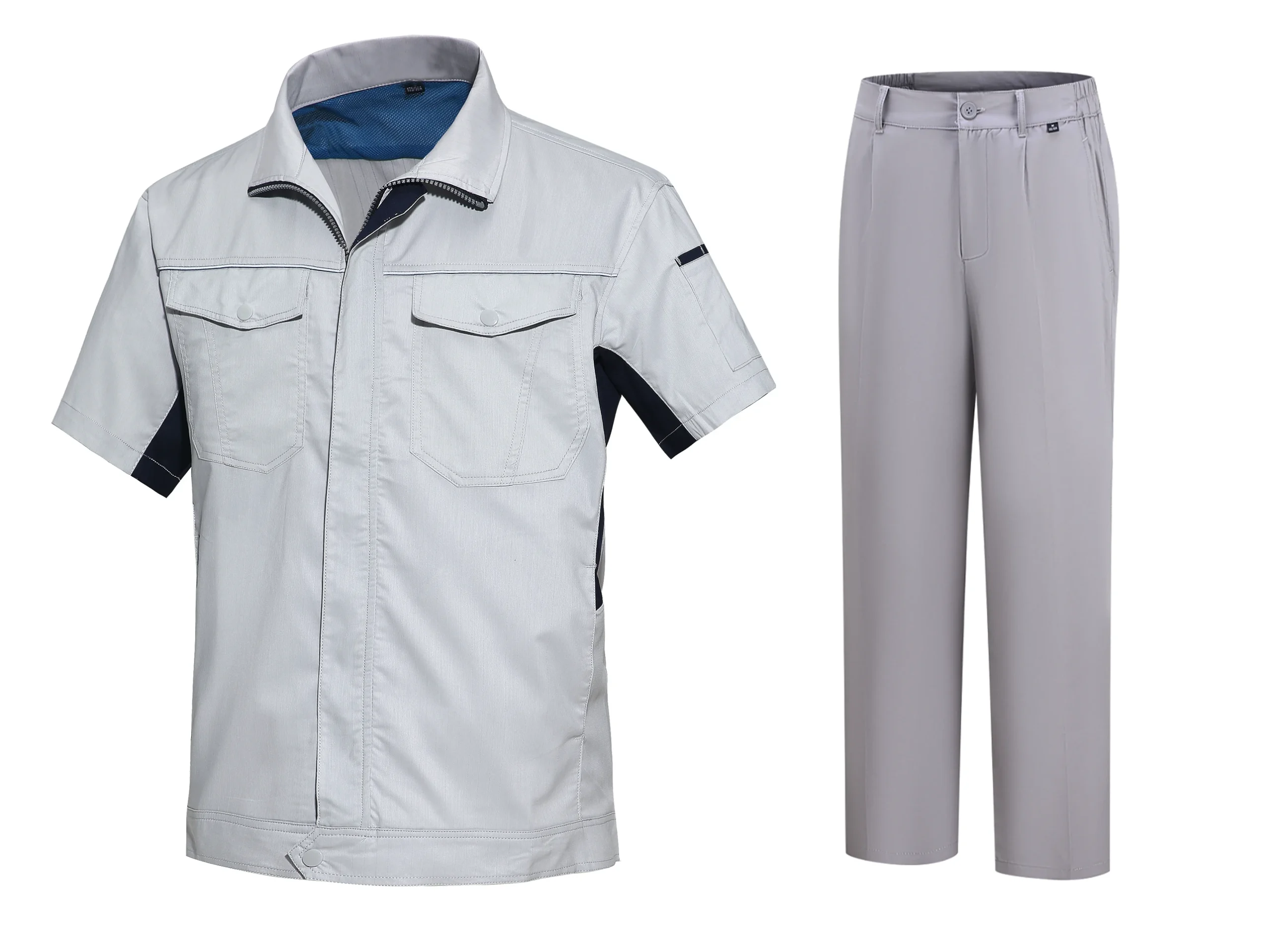
Specifying clothing for a dust atmosphere?
Send the material, the tasks and the complementary controls already in place. Shield Wings confirms which garment properties the specification can be documented against and what the test paperwork covers.
External references: CEN-CENELEC standards portal, Regulation (EU) 2016/425 on personal protective equipment, 29 CFR 1910.132 hazard assessment and equipment selection, 29 CFR 1910 Subpart I, CCOHS PPE answers, UK HSE personal protective equipment guidance.
{“@type”:”FAQPage”,”@context”:”https://schema.org”,”mainEntity”:[{“@type”:”Question”,”name”:”Is anti-static clothing required in an ATEX dust zone?”,”acceptedAnswer”:{“@type”:”Answer”,”text”:”The requirement comes from the employer’s explosion protection document and dust hazard assessment, not from the zone alone. Where the assessment identifies static discharge as a credible ignition source, clothing that controls charge accumulation is part of the answer, together with bonding, earthing, humidity control and housekeeping. The garment is one element of a set of measures and does not replace the others.”}},{“@type”:”Question”,”name”:”How is anti-static clothing different from ESD clothing?”,”acceptedAnswer”:{“@type”:”Answer”,”text”:”Both control static charge, but they are specified for different consequences. In an electronics environment the objective is to prevent a discharge that damages a product; in a dust or vapour atmosphere the objective is to prevent a discharge that ignites. The garment properties may be similar, while the surrounding measures, the acceptance criteria and the documentation differ with the environment.”}},{“@type”:”Question”,”name”:”What properties should the garment documentation state?”,”acceptedAnswer”:{“@type”:”Answer”,”text”:”The standard the garment is tested to, the surface resistance or charge control property claimed, the product line and production site the claim covers, the care conditions under which the property is maintained, and the traceability reference. Where the end user has to satisfy an explosion protection document, that document set is what the assessment will refer to.”}},{“@type”:”Question”,”name”:”Why does humidity matter so much in powder plants?”,”acceptedAnswer”:{“@type”:”Answer”,”text”:”Because dry air reduces the rate at which charge dissipates from surfaces, so static problems worsen in winter and in heated or air-conditioned areas. Humidity control is an engineering measure that reduces charge accumulation before clothing is considered, and it is often cheaper and more effective than specifying higher-performing garments to compensate for a dry atmosphere.”}},{“@type”:”Question”,”name”:”Can anti-static clothing be laundered industrially?”,”acceptedAnswer”:{“@type”:”Answer”,”text”:”Only within the conditions the manufacturer states, and those conditions are part of the claim. Fabric conditioners, some detergents, high temperatures and mechanical action can affect the conductive elements, and repairs or alterations that add insulating materials can interrupt the path the garment is designed to provide. Where a site uses a central laundry, the process should be confirmed against the instructions before the garments enter the system.”}}]}