

Heat protective clothing is bought as a category and specified as a set of distinct exposures, and that distinction is where most specification errors originate. A garment with excellent performance against radiant heat from a furnace mouth may be the wrong product for a worker who kneels on a hot surface, holds a heated component, or stands where liquid metal can splash. The standard treats those as separate performance questions, and so should the purchase order.
What the Standard Actually Covers
Heat and flame protective clothing standards address limited flame spread and a set of heat exposures that are tested separately. Convective heat is delivered by a hot gas or flame front. Radiant heat arrives as radiation without a medium, which is the load a worker feels in front of an open furnace or a hot billet line. Contact heat passes directly from a hot surface into the material where the two touch. Molten metal splash adds the behaviour of liquid metal on the garment surface, which is a contact problem rather than a pure insulation problem.
The frameworks differ in structure but not in intent. In Europe, EN ISO 11612 sets requirements for clothing protecting against heat and flame, with separate test requirements for the different exposures and limited flame spread. In the United States, clothing for thermal and flash fire hazards is specified through the standards the industry references for those exposures, including NFPA 2112 for flash fire resistant garments.
The standard therefore answers two questions for a buyer. It says what the garment has been tested for, and it says what it has not. A garment carrying a radiant heat claim has not thereby been tested for contact heat, and the marking and documentation are the only reliable place to find out which claims apply.
It is also worth separating the standard’s two roles, because buyers frequently conflate them. One role is material and garment performance under controlled test conditions, which produces the claims on the label. The other is the selection decision, which belongs to the employer and depends on the task, the position of the worker, the duration of exposure and the other controls in place. A garment can meet the standard and still be the wrong choice for a task, and no label rescues a selection that was never matched to the exposure.
The Ratings Buyers Are Asked to Prove
What a safety manager, a customer or an auditor asks for is a chain: the hazard the assessment identified, the standard and exposure the specification names, the garment that was selected, and the evidence that the delivered product matches. In heat protection, the chain usually breaks at the third link, because garments are sometimes bought against a description such as heavy duty heat resistant rather than against a named exposure.
- The exposures the task presents, expressed in the terms the standard uses rather than as a temperature alone.
- The performance the garment claims, taken from its test documentation and its marking.
- The construction features that support the claim for that exposure, including closures, coverings and interfaces with gloves and hoods.
- Care and retirement criteria, since heat exposure and laundering both change the material over time.
Where a garment forms part of an assembly, the interfaces belong in the same evidence pack. A hood with a radiant heat claim over a jacket tested for contact heat is not a single documented system, and in the event of an incident the gap between the documents is the first thing an investigator will find.
How Test Methods Differ Between Frameworks
The tests for the different exposures differ physically, because the hazards differ physically. Convective heat testing measures how long a material delays a defined temperature rise when exposed to a flame and hot gas. Radiant heat testing does the same with a radiant source, which produces a slower, more continuous load. Contact heat testing measures the rise in temperature on the inside face when the outside is held against a hot surface. Molten metal tests look at how the material behaves when liquid metal is poured onto it, including whether the metal sticks, runs or penetrates.
For buyers this has a practical consequence: heat performance cannot be compared as a single number, and a figure quoted without naming the exposure is not comparable with anything. Two garments described as high heat performance may be answering different tests, and the only meaningful comparison uses the same exposure and, ideally, the same framework. Where a site operates under both the US and EU frameworks, the specification should state which one governs the selection and use the other for information.
Reading the Marking on the Product
The marking on heat protective clothing identifies the standard, the manufacturer, the size, the care instructions and the performance claims, usually through a pictogram and a set of figures that map to the tested exposures. Reading it against the specification takes a minute and prevents the recurring problem of a garment that is correct in general and wrong for the task.
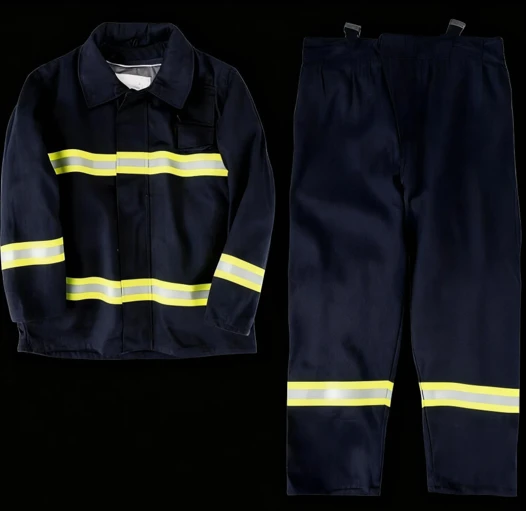
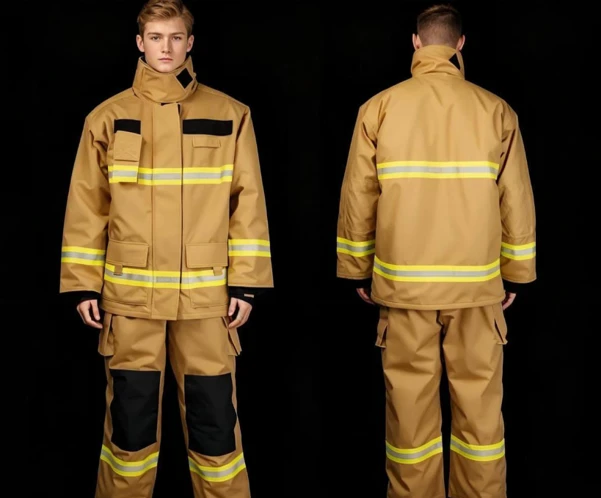
Three checks are worth building into goods-in inspection. First, confirm that the documented exposure matches the assessment, not only the fabric type. Second, confirm that the garment construction is as specified: closures that cover pockets, cuffs that overlap with gloves, and a collar that closes are part of the protection for contact and splash exposures. Third, confirm the care instructions are the ones that will be followed on site, because a central laundry using a different process can invalidate the assumptions the specification made.
A fourth check concerns fit. Bulk, stiffness and the need to layer affect how a garment hangs, and a garment that rides up when the wearer reaches overhead exposes the lower back exactly where contact heat and splash arrive. Fit is therefore part of the performance conversation rather than a comfort preference, and a fitting step before bulk issue is worth more in this category than in most.
Comparing the US and EU Frameworks
| Question | North American practice | European practice |
|---|---|---|
| How are heat claims expressed? | Through the thermal and flash fire standards the industry references for the hazard | Through EN ISO 11612, with separate requirements per exposure |
| What drives the requirement? | The hazard identified in the assessment and the applicable industry standard | The hazard identified in the assessment, expressed against the standard’s exposures |
| How is molten metal treated? | As its own performance requirement for the applications concerned | As a distinct performance requirement within the standard |
| What appears on the product? | Standard, claims, size, manufacturer and care information | Pictogram, performance figures, size, manufacturer and care information |
| What sits outside the claim? | Duration in the heat, task position and the rest of the assembly | Duration in the heat, task position and the rest of the assembly |
The consistent lesson across both frameworks is that performance belongs to a named exposure and a named garment, and that the assembly is as important as the item. Buyers who state the exposure in the specification get comparable quotations; buyers who state a temperature get a conversation.
Common Misreadings of the Rating
Heat protection errors are consistent enough to be listed as a review checklist.
- Treating heat protection as one property. Radiant, convective and contact exposures are tested separately and a claim for one is not a claim for another.
- Using a temperature as the requirement. Temperature alone omits duration, distance, whether contact occurs and how the worker moves relative to the source.
- Assuming that heavier means better. Weight and thickness affect thermal delay and comfort differently for each exposure, and they affect whether the garment is worn at all.
- Ignoring the construction. Openings, uncovered pockets and gaps at the waist undermine a material claim in contact and splash exposures.
- Assuming a flame resistant garment covers radiant heat. Flame spread performance and heat exposure performance are separate requirements.
- Overlooking the assembly. The hood, face shield, gloves and footwear contribute to the protection and have their own claims.
- Retiring garments on appearance only. Heat affects stiffness, seams and surface behaviour before it produces a visible hole; the manufacturer’s criteria govern.
Two of those items interact, which is why they are worth reading together. Weight is often used as a proxy for protection, yet a heavier garment that reduces mobility can lower the standard of work performed, bring the worker closer to the heat source and increase fatigue over a shift. The more useful question is not how heavy the garment is, but which exposure it answers and whether the wearer can complete the task in it for the whole shift. That question is answered in the assessment rather than in the catalogue.
What Documentation to Request From a Supplier
A heat protective order should arrive with the standard and the specific exposure performances claimed, the test evidence covering the model and site of production, the care and laundering instructions, and the batch traceability reference. Where the order includes a hood, gauntlets or a face shield, the same level of documentation applies to each part rather than to the set as a whole.
Two additional requests reduce risk later. Ask how the supplier handles a substitution of fabric or weight within the order period, and require notification before shipment, because those changes can alter the tested performance. And ask for the performance figures in a format that can be lifted into the specification document, so that the buyer’s own file shows the same values as the supplier’s, rather than a paraphrase that drifts over time.
The detail behind the standard itself — what each heat exposure tests and what the performance figures mean — is covered in Shield Wings’ guide to EN ISO 11612 heat and flame protection, which owns that explanation. The garments themselves are listed in the heat protective clothing range and in the wider body protection category.
Shield Wings manufactures heat protective clothing at a Guangdong production base and works with foundry, steel, glass and utility customers on the material and construction choices that support each exposure claim. The decision worth getting right at specification stage is not which garment sounds most protective, but which exposure the worker actually faces and who has documented that the garment answers it.
For the wider topic and related decisions, see our Heat, Molten Metal & Furnace Protection.
Frequently Asked Questions
Why does the standard separate radiant, convective and contact heat?
Because the three transfer heat in different ways. Convective heat arrives with a moving hot gas or flame, radiant heat travels without a medium and loads the surface continuously, and contact heat passes directly into the material where it touches a hot object. A material that performs well against one mechanism can perform poorly against another, so the standard tests each separately and a garment claims only the exposures it has been tested for.
Does a heat protective garment also protect against molten metal splash?
Only if the molten metal performance is part of what the garment has been tested to and the documentation says so. Molten metal adds the behaviour of liquid metal on the surface, including the tendency to run, collect in folds and stay in contact while it solidifies. That requires both a suitable material and a construction that closes every opening, so it is treated as its own performance requirement rather than as a stronger version of radiant heat.
How is the required performance level decided?
By the employer’s risk assessment, which describes the source of heat, the distance from it, the duration of exposure and whether contact or splash is possible. The assessment produces a requirement in the language of the standard, and the garment is then matched to that requirement with documentation. A general recommendation cannot replace it, because the same garment can be adequate at one position and unsuitable a few metres closer to the source.
What happens to heat protective clothing over its service life?
Exposure to heat stiffens, discolours and eventually weakens materials, seams and closures, and contamination or laundering outside the instructions can affect the surface behaviour that sheds heat and splash. This is why inspection and retirement rules belong in the specification: a garment can remain visually intact while the properties that were bought for the task have already degraded. The manufacturer’s instructions govern the care and the replacement criteria.
What documentation should a buyer request with a heat protective order?
Ask for the standard the garment is tested to, the specific heat exposure performances claimed, the test evidence naming the model and production site, the care and laundering instructions, and the batch traceability reference. Where the garment is part of an assembly with a hood, a face shield or gloves, require the documentation for each part so that the protection of the interfaces can be verified as well.
Matching a garment to a named heat exposure?
Send the heat source, the worker’s distance from it and the duration of exposure. Shield Wings confirms which performance claims the specified garment carries and what documentation accompanies it.
External references: CEN-CENELEC standards portal, Regulation (EU) 2016/425, NFPA 2112 flash fire resistant garments, 29 CFR 1910.132, 29 CFR 1910 Subpart I, CCOHS PPE answers, UK HSE personal protective equipment guidance.
{“@context”:”https://schema.org”,”@type”:”FAQPage”,”mainEntity”:[{“@type”:”Question”,”name”:”Why does the standard separate radiant, convective and contact heat?”,”acceptedAnswer”:{“@type”:”Answer”,”text”:”Because the three transfer heat in different ways. Convective heat arrives with a moving hot gas or flame, radiant heat travels without a medium and loads the surface continuously, and contact heat passes directly into the material where it touches a hot object. A material that performs well against one mechanism can perform poorly against another, so the standard tests each separately and a garment claims only the exposures it has been tested for.”}},{“@type”:”Question”,”name”:”Does a heat protective garment also protect against molten metal splash?”,”acceptedAnswer”:{“@type”:”Answer”,”text”:”Only if the molten metal performance is part of what the garment has been tested to and the documentation says so. Molten metal adds the behaviour of liquid metal on the surface, including the tendency to run, collect in folds and stay in contact while it solidifies. That requires both a suitable material and a construction that closes every opening, so it is treated as its own performance requirement rather than as a stronger version of radiant heat.”}},{“@type”:”Question”,”name”:”How is the required performance level decided?”,”acceptedAnswer”:{“@type”:”Answer”,”text”:”By the employer’s risk assessment, which describes the source of heat, the distance from it, the duration of exposure and whether contact or splash is possible. The assessment produces a requirement in the language of the standard, and the garment is then matched to that requirement with documentation. A general recommendation cannot replace it, because the same garment can be adequate at one position and unsuitable a few metres closer to the source.”}},{“@type”:”Question”,”name”:”What happens to heat protective clothing over its service life?”,”acceptedAnswer”:{“@type”:”Answer”,”text”:”Exposure to heat stiffens, discolours and eventually weakens materials, seams and closures, and contamination or laundering outside the instructions can affect the surface behaviour that sheds heat and splash. This is why inspection and retirement rules belong in the specification: a garment can remain visually intact while the properties that were bought for the task have already degraded. The manufacturer’s instructions govern the care and the replacement criteria.”}},{“@type”:”Question”,”name”:”What documentation should a buyer request with a heat protective order?”,”acceptedAnswer”:{“@type”:”Answer”,”text”:”Ask for the standard the garment is tested to, the specific heat exposure performances claimed, the test evidence naming the model and production site, the care and laundering instructions, and the batch traceability reference. Where the garment is part of an assembly with a hood, a face shield or gloves, require the documentation for each part so that the protection of the interfaces can be verified as well.”}}]}