

Confined space work compresses the constraints that normally sit apart from one another. The worker is in a small volume, often with a restricted opening, sometimes with an atmosphere that needs monitoring and respiration, frequently with a task that introduces heat or sparks, and always with the possibility that recovery will be difficult. Body protection has to be chosen inside those constraints, which is why the permit, and not the storeroom, is where the specification should be settled.
What This Environment Does to People and Equipment
The physical setting changes the way hazards behave. Heat builds up in a small volume, so radiant load and radiant reflection from the walls can be higher than the same task in open air. Fumes and vapours accumulate rather than dispersing, which is why atmosphere monitoring and ventilation, not clothing, manage that exposure. Movement is restricted, so a garment that is merely stiff in a workshop becomes a snagging hazard at the opening and a mobility problem inside. And escape routes are short but awkward, so anything that slows a worker down matters more than it would elsewhere.
For the equipment itself, the consequences are predictable. Garments abrade against the structure, closures catch, harnesses and belts wear the fabric at the shoulders and waist, and contamination from residues inside the space can be more concentrated than the same substance would be in the open. Inspection rules and replacement intervals for garments used in these tasks should reflect that, rather than being inherited from general workwear practice.
There is also a planning dimension that shows up in the equipment list. Confined space work is usually infrequent, which means the garments spend most of their life in a store and are used by crews who may not have worn that particular item for months. Condition checks before entry, a defined storage arrangement and a clear rule about who may release equipment from the store are therefore part of the protection, not administrative overhead. Sites that keep the confined space set separate, complete and inspected handle entry far more reliably than sites that assemble it from general stock at the time of need.
The Hazards That Drive the Specification
Permit-required confined space entry in the United States is governed by 29 CFR 1910.146, which sets out the assessment, the permit and the entry conditions, and hot work is addressed through 29 CFR 1910.252 and 1910.253. Those requirements determine the process controls; the clothing follows from the hazards those controls identify.
Three questions shape the body protection requirement:
- What is in the space? Flammable residues, dust, chemical scale or previous contents all change the requirement, and so do the cleaning and purging steps recorded on the permit.
- What work is done inside? Inspection may require no protection beyond the site standard; welding, cutting, grinding, coatings or cleaning introduce heat, sparks, solvents or mists.
- Can the worker be recovered? Harness, retrieval line and opening size interact with the garment, so the entry plan and the clothing have to be considered together.
Two further exposures belong in the same assessment even when the task is brief: heat stress inside a closed volume, and radiant heat reflected from surfaces around the task. Both are aggravated by the clothing that the task requires, which is why the entry duration and the rotation plan belong on the permit alongside the equipment list.
Controls That Come Before the Equipment
Confined space work is defined by its controls rather than by its clothing. Isolation and lockout, purging and ventilation, continuous atmosphere monitoring, the permit system with its entry conditions, the attendant outside the space, communication arrangements, and the rescue plan all come first. The hierarchy of controls puts elimination, engineering and administrative measures ahead of personal protective equipment, and this is one of the clearest cases of that ordering in practice.
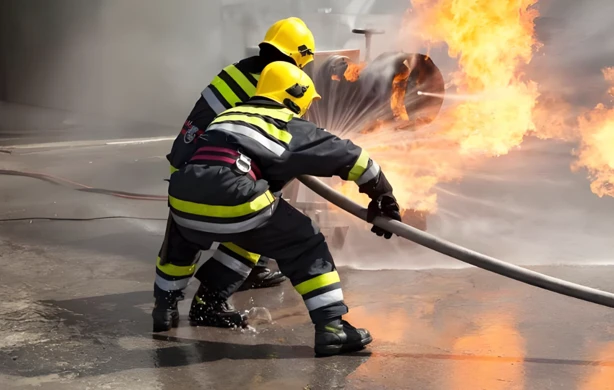
The clothing then addresses the residual exposure that the controls do not remove, which is normally the thermal and mechanical hazard of the task itself. Where the task produces flames, sparks or heat, the garment is selected for those exposures. Where the space contains flammable residues, the requirement moves upward, and where the atmosphere is already managed by ventilation and monitoring, the clothing requirement is still driven by the work rather than by the atmosphere. Getting those two separate is the difference between a specification that protects and one that adds bulk for no benefit.
Administrative controls carry unusual weight in these tasks as well. The permit sets the entry conditions, the attendant outside keeps contact with the entrants, the communication arrangement is tested before entry rather than during it, and the rescue plan is written so that it can be executed without improvisation. Each of those is what makes the residual requirement on clothing predictable, and each of them also changes it: a space that is ventilated and monitored during the task presents a different exposure from the same space at the start of the shift, before purging.
What the Equipment Has to Do Here
Protective clothing for these tasks has to satisfy three demands at once. It must provide the protection the task requires: flame resistance, heat protection, chemical resistance or mechanical cut resistance, depending on the work. It must be wearable in a confined volume for the planned duration, which means it cannot restrict the movement needed to reach the work position or move along the exit route. And it must not interfere with the rest of the entry equipment, including the harness, the retrieval line, the respirator and the communication set.
Two design consequences follow. The garment has to fit properly, because a garment that rides up when a worker bends inside a vessel exposes the lower back and can also catch on the structure. And it must be compatible with the harness at the waist and shoulders, since a coverall worn over a harness changes how the harness fits and, in some cases, how it functions. Where the task involves welding or cutting inside the space, the protective set includes face and eye protection and gloves as well, and the interface between the hood or shield and the respirator needs to be checked rather than assumed.
Protective clothing also has to survive the trip in and out. Openings are often narrow and the structure is unforgiving, so cuffs, hems and closures take abrasion that they never see in a workshop. A garment designed with external pockets and loose flaps is convenient outside the space and a liability inside it, where a flap can catch and a pocket can fill with residue. Where the task is repeated across many entries, the specification should reflect the wear pattern the task produces rather than the general site standard for protective clothing.
Selection Criteria Specific to This Sector
| Situation | What drives the requirement | Clothing element | Interaction to verify |
|---|---|---|---|
| Inspection only, no hot work, tested atmosphere | The site’s general workwear standard and any residue risk | Standard protective clothing, correctly fitted | Harness and retrieval line fit |
| Welding or cutting inside the space | Flame, sparks, molten metal spatter and fume | Flame resistant or heat protective clothing with hood or shield | Respirator and shield compatibility, glove and sleeve overlap |
| Grinding or mechanical work | Sparks, abrasion and cut exposure | Flame resistant garment plus cut protection where sharp material is handled | Mobility at the opening and inside the space |
| Solvent or chemical residues present | The substance, its flammability and its permeation behaviour | Clothing selected for the specific hazard, with specialist advice | Compatibility with respiratory protection and cleaning requirements |
| Hot or heat-soaked vessel | Ambient and radiant heat inside the space | Heat protective clothing matched to the measured conditions | Work duration, rotation and heat stress controls |
| Emergency or unplanned entry | The plan that already exists for that space | The equipment the plan specifies, kept ready and inspected | Availability, condition and pre-entry check |
Read across the table, the constant is that the permit’s hazard assessment decides the row, and the interaction column is where most programmes are found wanting. Clothing that works in isolation but conflicts with a harness or a respirator is not a protection system; it is three items of equipment sharing a worker.
Typical Specification Failures in This Sector
Failures here follow the same patterns as elsewhere, with two that are specific to the setting.
- Clothing decided at the entry point. Where the permit does not state the protective equipment, the decision is taken under time pressure by whoever is present.
- General workwear used for hot work. The task introduces flame and sparks, and the garment was never selected for them.
- Bulk that prevents recovery. A garment that is difficult to move in also makes retrieval slower, which is a safety issue rather than a comfort one.
- Ignoring heat stress. Enclosed volumes plus protective clothing plus physical work is a heat exposure in its own right, and the rotation plan belongs in the assessment.
- Interference with other equipment. Harness fit, respirator sealing and communication sets all interact with clothing at the shoulders and face.
- Contamination not assessed after the task. Residues inside the space can contaminate garments in ways that require withdrawal rather than standard laundering.
- Infrequent tasks, untested assumptions. Because the work is rare, equipment may sit unused, and a pre-entry check is what stops an out-of-condition garment going inside.
Building the Full Set Rather Than Buying Pieces
The set for a confined space entry normally includes body protection, head and face protection, eye and hearing protection as the task dictates, gloves, footwear, respiratory protection, a harness and retrieval system, and monitoring and communication equipment. Treating them as one specification, with the interactions verified before the task rather than at the opening, is what makes the entry controllable. Where hot work is involved, the welding safety PPE checklist covers the task-level set in detail and owns that explanation.
Shield Wings manufactures heat protective clothing and protective workwear at a Guangdong production base, and supports industrial customers specifying garments for tasks where mobility, harness compatibility and heat exposure all apply at once. The broader body protection range sets out the families available for these specifications.
The practical conclusion is that the permit should name the clothing, the clothing should be checked against the entry plan, and the worker should be able to enter, work and be recovered in it. Everything else on the permit assumes those three things.
Frequently Asked Questions
What body protection is needed for confined space entry?
It depends entirely on what the space contains and what work is done inside it. A space entered for inspection may need only standard protective clothing; the same space with a hot work task inside it needs flame resistant or heat protective clothing chosen for that hazard, in a form the worker can wear while moving through the opening. The requirement comes from the permit’s hazard assessment, and the clothing is then matched to it.
How does a hot work permit change the clothing requirement?
A permit brings together the fire risk, the atmosphere, the flammability of any residue in the space and the ignition sources introduced by the task. Where flame, sparks or radiant heat are present, the clothing has to be suitable for them, and where flammable residues or vapours may be present the requirement usually moves upward. The permit should state the protective equipment required, rather than leaving the clothing to be decided at the entry point.
Why is escape and rescue a clothing issue?
Because protective clothing changes how a worker moves and how quickly they can be removed. Bulky garments can snag on the opening, restrict movement in a small space, or interfere with a harness and retrieval line. When the assessment specifies clothing for a confined space entry, it should also confirm that the worker can enter, work and be recovered while wearing it, which is a task-level check rather than a product-level one.
What other equipment interacts with body protection in a confined space?
Atmosphere monitoring, respiratory protection, a harness and retrieval line, communication equipment and lighting are the usual set. Each of them changes how clothing fits and how it behaves: a respirator mask affects face protection choices, a harness interacts with the garment at the shoulders and waist, and lighting reflects differently from a garment with retroreflective detail. The permit should treat the equipment as one assembly.
What should the specification record for these tasks?
The hazard assessment for the space and the task, the required protective properties, the clothing selected with its standard and marking, the interactions with harness, respiration and communication equipment, the entry and exit method, and the inspection and replacement rule for garments used in this way. Because these tasks are infrequent, the specification also needs a pre-entry check to confirm the equipment is present and serviceable rather than assumed.
Equipping a confined space or hot work task?
Send the space, the task and the harness and respiratory equipment in use. Shield Wings confirms which garment families suit the exposure and how they fit with the rest of the entry set.
External references: 29 CFR 1910.146 permit-required confined spaces, 29 CFR 1910.252 welding, cutting and brazing, 29 CFR 1910.253 oxygen-fuel gas welding and cutting, 29 CFR 1910.132, 29 CFR 1910 Subpart I, CCOHS PPE answers, Regulation (EU) 2016/425.
{“@context”:”https://schema.org”,”@type”:”FAQPage”,”mainEntity”:[{“@type”:”Question”,”name”:”What body protection is needed for confined space entry?”,”acceptedAnswer”:{“@type”:”Answer”,”text”:”It depends entirely on what the space contains and what work is done inside it. A space entered for inspection may need only standard protective clothing; the same space with a hot work task inside it needs flame resistant or heat protective clothing chosen for that hazard, in a form the worker can wear while moving through the opening. The requirement comes from the permit’s hazard assessment, and the clothing is then matched to it.”}},{“@type”:”Question”,”name”:”How does a hot work permit change the clothing requirement?”,”acceptedAnswer”:{“@type”:”Answer”,”text”:”A permit brings together the fire risk, the atmosphere, the flammability of any residue in the space and the ignition sources introduced by the task. Where flame, sparks or radiant heat are present, the clothing has to be suitable for them, and where flammable residues or vapours may be present the requirement usually moves upward. The permit should state the protective equipment required, rather than leaving the clothing to be decided at the entry point.”}},{“@type”:”Question”,”name”:”Why is escape and rescue a clothing issue?”,”acceptedAnswer”:{“@type”:”Answer”,”text”:”Because protective clothing changes how a worker moves and how quickly they can be removed. Bulky garments can snag on the opening, restrict movement in a small space, or interfere with a harness and retrieval line. When the assessment specifies clothing for a confined space entry, it should also confirm that the worker can enter, work and be recovered while wearing it, which is a task-level check rather than a product-level one.”}},{“@type”:”Question”,”name”:”What other equipment interacts with body protection in a confined space?”,”acceptedAnswer”:{“@type”:”Answer”,”text”:”Atmosphere monitoring, respiratory protection, a harness and retrieval line, communication equipment and lighting are the usual set. Each of them changes how clothing fits and how it behaves: a respirator mask affects face protection choices, a harness interacts with the garment at the shoulders and waist, and lighting reflects differently from a garment with retroreflective detail. The permit should treat the equipment as one assembly.”}},{“@type”:”Question”,”name”:”What should the specification record for these tasks?”,”acceptedAnswer”:{“@type”:”Answer”,”text”:”The hazard assessment for the space and the task, the required protective properties, the clothing selected with its standard and marking, the interactions with harness, respiration and communication equipment, the entry and exit method, and the inspection and replacement rule for garments used in this way. Because these tasks are infrequent, the specification also needs a pre-entry check to confirm the equipment is present and serviceable rather than assumed.”}}]}