Rail corridors and airport aprons are two of the most demanding visibility environments in industry, and they share a common feature: the people who need to see the worker are operating vehicles at close quarters with restricted sight lines. A driver or a tug operator gets a fraction of a second, often while managing equipment, and the worker may be facing away, bent over a task or partially hidden by the vehicle itself. Visibility clothing in these environments is specified around that geometry.
What This Environment Does to People and Equipment
On rail infrastructure the threat comes from trains that cannot stop within the available sight distance, plus on-track plant, hand tools and the constraints of working in a corridor with limited escape routes. The visible requirement therefore depends on the line’s permitted speed, the curvature, the sight lines and whether work is protected by a possession or warned by lookouts. On an apron the threat comes from aircraft movements, service vehicles, baggage tugs, fuel bowsers and the sheer number of moving objects in a confined area, often in poor light and spray.
Both environments are also unforgiving about the moment of exposure. A worker who is visible from one direction may be invisible from another, and the position of a task often puts the retroreflective material on the wrong side of the body. That is why these operations rely on both procedural controls and garments designed for the whole body rather than a vest over ordinary workwear.
The Hazards That Drive the Specification
Direction of approach deserves particular attention on rail, because a worker standing beside a track faces one direction while trains can approach from either, and the warning arrangements assume a lookout with a view along the line. On an apron, the same worker is exposed to vehicles coming from behind as well as in front, and the quietest modern ground equipment can approach with little warning. Both situations push the specification toward garments with retroreflective material placed so that the wearer is visible from the front, the sides and the back rather than only one side.
- Vehicle speed and sight distance, which determine how much warning the driver can have.
- The position of the worker relative to the traffic: in the corridor or on the apron, facing or turned away, standing or crouching.
- The background, including bright sky, reflective surfaces, dark stock, aircraft liveries and cluttered ramp areas.
- Ambient conditions: darkness, low sun, rain, spray, snow and fog, each of which changes contrast.
- The tasks performed, including those that hide the front of the body or require reaching and bending.
- The procedural controls in place, since possessions, protected working arrangements and lookouts reduce the exposure before clothing is considered.
The equipment and the procedures interact, and the specification should record both. Where the infrastructure manager or the airport operator sets visibility requirements, those are the governing rules, and the garment specification should be written to satisfy them rather than to a general class recommendation.
Controls That Come Before the Equipment
Where a site reviews its visibility incidents, the useful questions usually concern layout and task sequencing before they concern garments.
Visibility clothing works best when the worker does not need to be in the traffic path at all. Possessions and line blockages, protected working arrangements, segregation of pedestrians from vehicle routes, one-way systems on aprons, restricted access during aircraft movements, marked walkways, marshalling procedures, and the sequencing of tasks so that people and vehicles are not in the same place at the same time all reduce exposure. Signage, lighting and vehicle standards, including conspicuity markings and warning devices, complete the picture.
Personal protective equipment is the last line of defence in the usual order: it helps a driver see someone who is already in the traffic environment, and it does not reduce the speed of the train or the momentum of an aircraft tug. Where a site’s visibility incidents continue after the garment standard is met, the useful review is usually about layout, sight lines and task sequencing rather than about the class on the label.
What the Equipment Has to Do Here
Fit and compatibility are part of the visibility requirement rather than an afterthought. A garment that is too long can be caught by equipment and one that is too loose can ride up when the wearer bends, hiding exactly the material that provides the class. Where a harness, tool belt or airside pass holder is worn, it should be arranged so that it does not cover the visible material, and the combination should be checked before the specification is issued.
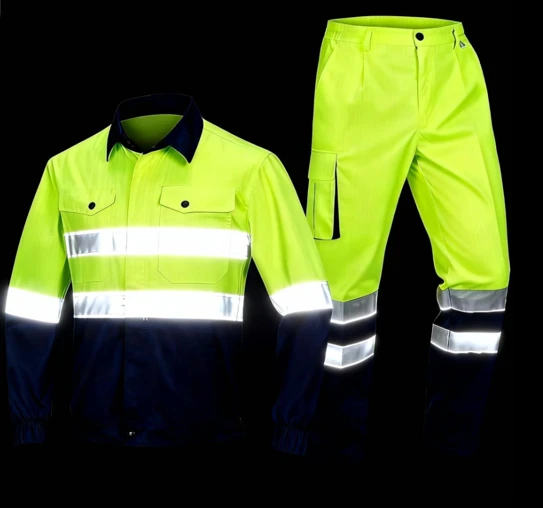
Garments for these environments are specified to provide the visible area required by the governing standard across the parts of the body that are exposed, and they are usually worn as a set: jacket or coat with trousers, or a coverall, rather than a vest over other clothing. That is because the arms, shoulders and lower body are exactly the areas a driver sees when the worker is turned away, and a vest leaves them in the ordinary material underneath.
The standard in the European framework is EN ISO 20471, and in the United States, ANSI/ISEA 107 is the reference in work zone practice, with infrastructure managers often applying additional requirements for colour, retroreflective arrangement and marking. The class itself comes from the assessment and from those rules; what the supplier must document is the class the garment achieves, the marking it carries and the care conditions that preserve the retroreflective performance. How the classes are defined is covered in Shield Wings’ guide to high visibility classes and standards, which owns that topic.
Selection Criteria Specific to This Sector
Where a site operates under an infrastructure manager’s rules, the specification should quote the rule and the class together, so that a later change in either can be identified and reviewed rather than absorbed silently.
| Situation | What dominates | Garment that follows | What to verify |
|---|---|---|---|
| On-track work in a possession | Train movements at higher speed, dark stock and corridor constraints | Class specified by the infrastructure manager, worn as a jacket or coverall with trousers | Class marking, plus any additional requirement the operator imposes |
| Track work with lookouts | Warning time and the position of the worker relative to the line | Full-body visibility with retroreflective material visible from both directions | Arrangement of material on the garment as tested |
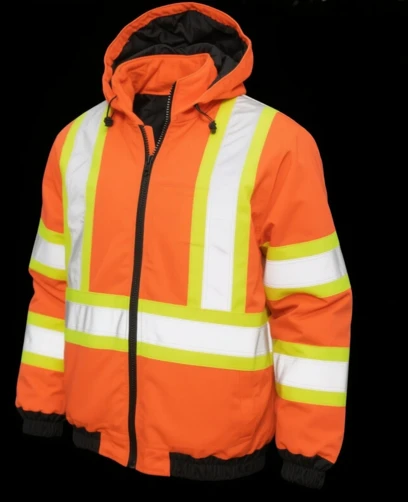
| Airport apron, aircraft servicing | Multiple vehicles, restricted sight lines, spray and low light | Garment rather than a vest, with weather-resistant outer layer where required | Coverage of arms and body, and class documentation |
| Apron work in darkness | Retroreflective performance under vehicle lighting | Retroreflective material in the arrangement the standard requires, in good condition | Condition of the tape and the care regime |
| Bad weather across both environments | Reduced contrast, wet garments | Outer layers specified as visibility garments, not added over ordinary clothing | Compatibility of layers and the care instructions |
| Supervision and visitors | Intermittent presence in traffic areas | Garment of the class required for that area, issued on entry | Issue arrangements and the condition of visitor sets |
Read across the table, the constant is that the garment has to be visible from the directions the traffic comes from, and that is a function of coverage and arrangement rather than of colour alone.
Typical Specification Failures in This Sector
One failure is cultural rather than technical: the class is met on paper while the garment is worn open, tied around the waist or replaced with a personal jacket in cold weather. That behaviour usually means the specified garment is uncomfortable in the conditions it is used in, and the answer is to specify the outer layer properly rather than to repeat the instruction. Visibility clothing in these environments is only effective while it is on and fastened.
- Vest over dark clothing. The most common failure: the arms and lower body remain invisible in the directions that matter.
- Mixed garments as a set. A jacket and trousers from different models have not been tested together, so the combined visible area is unknown.
- Overlooking the additional requirements. Infrastructure managers frequently impose their own specification for colour, marking and arrangement.
- Degraded retroreflective tape. Abrasion, unsuitable laundering, contamination and sunlight reduce performance gradually, and the garment still looks serviceable.
- Compatibility with other equipment. Tool belts, harnesses, airside passes and radios obscure visible material or change how the garment hangs.
- Night and day treated as one condition. Fluorescent material does the daytime work; retroreflective material matters most at night and in low light.
- Visitors and contractors left out. Intermittent presence in traffic areas is still exposure, and the same standard applies.
Building the Full Set Rather Than Buying Pieces
Where a site changes its garment model, the set should be rechecked rather than assumed equivalent.
Where a site works in both darkness and daylight, the set should be checked under both conditions. A fluorescent garment that performs well at midday may be less useful under sodium lighting than its retroreflective material suggests, and the visible material arrangement should be reviewed in the light the crew actually works in, including the glare from vehicle headlights and work lamps.
The set for these environments typically includes the visibility outer garment or coverall, weather protection that is itself a visibility garment, head protection with high-visibility properties where required, and footwear and gloves chosen for the task. Where a harness or a tool belt is worn, the combination should be checked so that it does not cover the material that provides the class. The wider garment range is set out in Shield Wings’ high visibility workwear pages and in the body protection category.
Shield Wings manufactures high-visibility and protective workwear at a Guangdong production base and supports rail contractors, airport operators and distributors with class options, set specification and the documentation each class claim requires.
The specification that prevents incidents in these environments is written around the traffic, the sight lines and the directions a worker is seen from, with the class taken from the governing rules and the garment specified as a set.
For the wider topic and related decisions, see our Hi-Vis, Anti-Static & Cold Weather Workwear.
Frequently Asked Questions
What class of hi vis do rail workers need?
It depends on the infrastructure, the permitted speed of the line, the sight lines in the location and the tasks performed, and it is normally set by the infrastructure manager’s standards rather than chosen by the contractor. Where a site works under those rules, the specification should follow them and record them, rather than selecting a class from a general recommendation.
Is a vest enough for apron work?
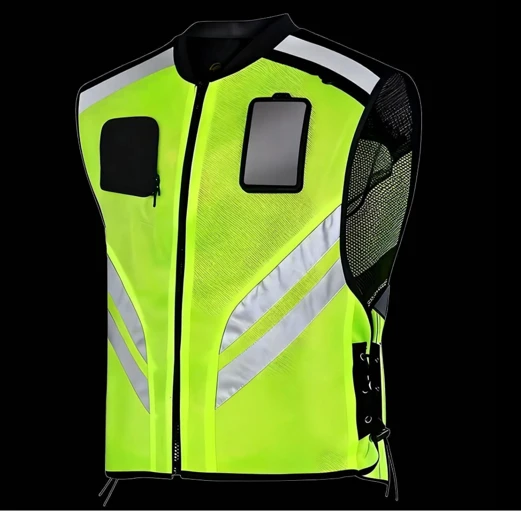
Usually not on its own. Apron work involves vehicles at close quarters, aircraft movements, ground equipment and low visibility in bad weather, and the visible area of a vest leaves the arms and lower body uncovered, particularly when the wearer is turned away or bent over a task. Garments that cover more of the body are typically specified for these environments.
Why does the garment set matter as much as the class?
Because visibility is achieved by the arrangement of fluorescent and retroreflective material on the wearer as well as by the class on the label. A vest worn over a dark jacket leaves the sleeves and back uncovered, and a jacket and trousers from different models have not been tested as a set. Where the requirement covers the whole outfit, the set should be specified and documented as a set.
How does weather affect visibility in these environments?
Rain, spray, snow and low sun all reduce the contrast a driver perceives, and wet garments can perform differently from dry ones. That is why outer layers for these sites are usually specified as garments rather than as an extra vest over normal clothing, and why the laundering and care rules matter: retroreflective performance degrades with abrasion, contamination and unsuitable washing.
What should be verified when garments are delivered?
The standard and class marked on the garment, the marking against the specification for that site, the retroreflective area and its condition, the size and fit across the workforce, and the documentation and care instructions. Where a site works under an infrastructure manager’s rules, the delivered garment should also satisfy any additional marking or colour requirement those rules impose.
Specifying visibility for track or apron work?
Send the site rules, the traffic and the tasks performed. Shield Wings confirms the classes available, the garment sets that match them and the documentation that each claim requires.
External references: CEN-CENELEC standards portal, Regulation (EU) 2016/425, 29 CFR 1910.132, 29 CFR 1926 Subpart E personal protective equipment in construction, UK HSE personal protective equipment guidance, CCOHS PPE answers.
{“@type”:”FAQPage”,”@context”:”https://schema.org”,”mainEntity”:[{“@type”:”Question”,”name”:”What class of hi vis do rail workers need?”,”acceptedAnswer”:{“@type”:”Answer”,”text”:”It depends on the infrastructure, the permitted speed of the line, the sight lines in the location and the tasks performed, and it is normally set by the infrastructure manager’s standards rather than chosen by the contractor. Where a site works under those rules, the specification should follow them and record them, rather than selecting a class from a general recommendation.”}},{“@type”:”Question”,”name”:”Is a vest enough for apron work?”,”acceptedAnswer”:{“@type”:”Answer”,”text”:”Usually not on its own. Apron work involves vehicles at close quarters, aircraft movements, ground equipment and low visibility in bad weather, and the visible area of a vest leaves the arms and lower body uncovered, particularly when the wearer is turned away or bent over a task. Garments that cover more of the body are typically specified for these environments.”}},{“@type”:”Question”,”name”:”Why does the garment set matter as much as the class?”,”acceptedAnswer”:{“@type”:”Answer”,”text”:”Because visibility is achieved by the arrangement of fluorescent and retroreflective material on the wearer as well as by the class on the label. A vest worn over a dark jacket leaves the sleeves and back uncovered, and a jacket and trousers from different models have not been tested as a set. Where the requirement covers the whole outfit, the set should be specified and documented as a set.”}},{“@type”:”Question”,”name”:”How does weather affect visibility in these environments?”,”acceptedAnswer”:{“@type”:”Answer”,”text”:”Rain, spray, snow and low sun all reduce the contrast a driver perceives, and wet garments can perform differently from dry ones. That is why outer layers for these sites are usually specified as garments rather than as an extra vest over normal clothing, and why the laundering and care rules matter: retroreflective performance degrades with abrasion, contamination and unsuitable washing.”}},{“@type”:”Question”,”name”:”What should be verified when garments are delivered?”,”acceptedAnswer”:{“@type”:”Answer”,”text”:”The standard and class marked on the garment, the marking against the specification for that site, the retroreflective area and its condition, the size and fit across the workforce, and the documentation and care instructions. Where a site works under an infrastructure manager’s rules, the delivered garment should also satisfy any additional marking or colour requirement those rules impose.”}}]}