

Two tasks that are usually specified separately put very different demands on the same helmet. Working at height raises the question of what happens if the helmet moves during a fall or a swing into a structure. Confined space entry raises the question of whether the helmet fits the space and the equipment worn inside it. Both are decided by the assessment, and both are frequently answered with the helmet that happens to be on the shelf.
The Hazard First, the Product Second
It is worth separating the exposure to the wearer from the exposure to everyone else. Head protection at height is worn both by the person working from the structure and by the people below, and the two needs can differ: the worker above may need retention for a fall, while the worker below needs protection against dropped tools. Sites that equip only the people on the platform, and leave the people underneath in ordinary helmets or none, have addressed half of the hazard.
At height, the head is exposed in three directions rather than one. Objects can fall from above, as in conventional industrial work. The head can strike a structure laterally during a fall, a swing or a transfer between anchor points, which is a different impact mechanism from a vertical drop. And the helmet itself can be displaced, which removes the protection at the moment it matters most. Dropped tools and materials add a further exposure for anyone below, which is addressed by tool tethering and exclusion zones rather than by the helmet.
In confined spaces the mechanism changes again. Lateral impact dominates, because the space is often low or awkward and the worker moves into structures. Head clearance can be minimal, so a taller shell becomes a liability rather than an advantage. And the helmet has to coexist with respiratory protection, communication equipment and a harness, all of which change how it fits and how it is retained. The fit of the complete set, not the helmet alone, is what determines whether protection is achieved.
What the Risk Assessment Has to Establish
Task duration belongs in the same set of statements. A helmet that is worn for twenty minutes at a time presents different problems from one worn for a full shift, and retention that is tolerable briefly can become a reason to loosen the helmet after an hour. Where shifts are long, the fit and the weight distribution become protection variables rather than comfort preferences.
Occupational head protection requirements sit in 29 CFR 1910.135 in the United States, with construction requirements in 29 CFR 1926 Subpart E, and confined space entry is governed by 29 CFR 1910.146. In Europe the PPE Regulation and the head protection standards apply. In every case the assessment produces the requirement, and for these tasks it should record:
- The height and the fall exposure, including whether a fall-arrest system is required and how it is anchored.
- The possibility of lateral impact, including headroom, structure and movement through openings.
- The falling-object exposure from above and from work performed by others nearby.
- The other equipment worn: harness, respiratory protection, communication set, face protection and eyewear.
- The retention requirement, and how it interacts with the need to remove the equipment quickly in an emergency.
- The access route itself, since openings and ladders determine what shape and height of helmet can be worn through them.
The last two items are where most programmes are found wanting. Retention is often specified without checking whether the arrangement can be released in the circumstances the entry plan assumes, and the access route is rarely considered until someone is stuck at an opening with a helmet that will not fit through it.
Which Hazards This Category Covers and Which It Does Not
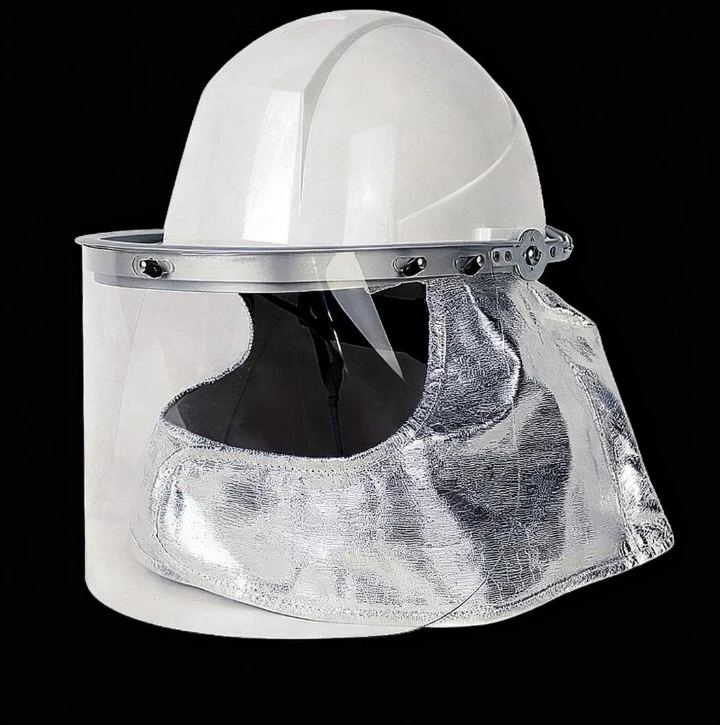
This category covers the shell and its retention system for these tasks, together with the accessories that are legitimately part of the assembly: chin straps, sweatbands, helmet-mounted lamps, ear muffs and, where specified, face protection. The shell classes and the performance each provides are covered in Shield Wings’ guide to safety helmets under ANSI Z89.1 and EN 397, which owns that topic.
What the helmet does not do is equally specific. It does not prevent a fall: guardrails, work platforms, anchor systems, edge protection and the discipline of working within them are the controls that keep a person from falling. It does not protect the face or the eyes, which need their own specification. It does not remove the falling-object hazard, which is addressed by tool tethering, exclusion zones and sequenced work. And it does not reduce the hazard in a confined space: atmosphere monitoring, ventilation, permits and the rescue plan come first, with the helmet addressing the residual impact exposure.
Matching Task to Protection Level
| Situation | What dominates | Helmet characteristics that follow | What to verify | Work platform and scaffold work | Falling objects, headroom, movement between levels | Shell class per the assessment, with secure retention and comfortable fit for a full shift | Retention system, fit and compatibility with eyewear | Fall-arrest work with a harness | Fall and swing, lateral impact, helmet displacement | Retention arrangement that keeps the helmet in place, plus lateral impact performance where required | The harness and helmet interfaces, and how the assembly behaves in a fall | Ladder and access work | Headroom, snagging, dropped tools | Low-profile shell where clearance is restricted, with retention | Access route trial and tool tethering arrangements | Confined space entry, low headroom | Lateral impact, clearance, equipment interference | Shell that fits the space with retention that can be released in an emergency | Trial of the complete set inside the space or a mock-up | Confined space entry with respiratory protection | Interference with the mask, seal and communication | Configuration chosen with the respiratory protection rather than separately | Seal integrity and the ability to communicate | Working below others at height | Dropped tools and materials | Head protection as a residual control, with exclusion zones and tethering first | The controls above, not only the helmet specification |
|---|
Read across the table, the class is often the least interesting part of the decision. Retention, lateral impact performance where it is required, fit with the rest of the equipment and clearance in the space are what determine whether the helmet is worn and whether it stays in place when it matters.
Where Selection Usually Goes Wrong
The most common practical failure is the loosened helmet. Workers who find the retention arrangement uncomfortable tighten it for the inspection and slacken it for the task, which is the same as having no retention at the moment of exposure. Where that pattern appears, the useful response is to trial other configurations rather than to repeat the instruction, because the arrangement is usually the reason.
- Retention assumed rather than specified. A helmet without the arrangement the task needs can be lost during the event it was bought for.
- Lateral impact ignored. Vertical impact performance does not describe behaviour against a structure on the way down or in a confined space.
- Access route not checked. A shell that will not pass through an opening or snags on structure creates a problem at the point of entry.
- Accessories added afterwards. Lamps, muffs and face protection change the fit and can affect the properties the helmet was selected for.
- Interference with respiratory protection. The mask seal is the protection; a helmet that disturbs it undermines the reason for the entry.
- Comfort sacrificed. A helmet that pressures the head or traps heat is adjusted, tilted or removed during the task.
- No withdrawal rule after an impact. A helmet that has absorbed an impact is assessed before it returns to service.
The Hierarchy of Controls Around the Selection
Where a site is reviewing its arrangements after an incident, the useful questions usually concern access planning, anchor selection and the discipline of the entry rather than the helmet on the head.
That is also why the helmet specification should be reviewed whenever the access method changes, since a different platform or a different entry point alters both the impact exposure and the clearance available.
Height and confined space work are the clearest examples of personal protective equipment coming last. Guardrails, platforms, edge protection, anchor systems and fall-arrest equipment, together with permits, rescue plans, atmosphere monitoring and supervision, all address the hazard before a helmet is considered. The helmet protects against impact when those controls do not remove the exposure entirely, and it is one item in a set that also includes the harness, the respiratory protection and the communication equipment.
Selection guidance in this article is conditional on the assessment, including the fall-protection and confined space arrangements that apply to the task. Where a site is unsure whether its helmet is suitable for the combination it uses, testing the complete set in the space or on a mock-up answers more questions in an hour than a specification review answers in a month.
Specification Points to Fix Before Ordering
- The hazards: falling objects, lateral impact, headroom and the access route.
- The standard and class required, with the marking expected on the shell.
- The retention system, including how it is adjusted and released in an emergency.
- Compatibility with the harness, respiratory protection, eyewear and communication equipment.
- Accessories that are part of the assembly, specified with the helmet rather than added later.
- Size and fit across the workforce, with a trial of the complete set.
- Inspection, cleaning and retirement criteria, including withdrawal after any impact.
- Documentation required with the quotation: test evidence, marking and traceability.
Shield Wings manufactures safety helmets, smart safety helmets and head protection at a Guangdong production base and supports construction, utility, industrial and rescue customers with configuration guidance, accessory selection and the documentation each product carries. The connected option for teams that need monitoring or communication is described on the smart safety helmet page, and the wider family sits in the head and face protection range.
The specification that protects people in these tasks is the one that names the access route, the retention arrangement and the rest of the equipment, and then confirms the whole set in the conditions it will be used in.
For the wider topic and related decisions, see our Head, Face & Eye Protection.
Frequently Asked Questions
Do you need a hard hat when working at height?
Where there is a risk of injury to the head, head protection is required, and working at height usually adds two specific concerns: falling objects from above and the possibility that the helmet is displaced during a fall or a swing into a structure. That is why retention and lateral impact performance matter more in this work than in ordinary industrial tasks, and why the helmet must also be compatible with the harness in use.
Why does the chin strap matter for height work?
Because a helmet that comes off during a fall or a swing provides no protection at the moment it is needed. Retention systems keep the helmet in position and, where the assessment requires it, prevent it from being lost while the wearer moves through a structure. The class and configuration required come from the assessment rather than from a general preference.
What should be checked before entering a confined space?
Head clearance and the direction of movement, since lateral impact becomes the dominant risk when a space is low or awkward; the fit of the helmet with the respirator, harness and communication equipment in use; and the retention arrangement, because it may need to be released quickly in an emergency while still working during the entry. Each of those belongs in the entry plan rather than in a decision taken at the opening.
Can a standard industrial helmet be used for confined space work?
It can where the assessment shows it meets the exposure, but the fit inside the space and the interaction with the other equipment are the deciding factors. A helmet that is adequate in the open may be the wrong shape for a low opening, or may interfere with a respirator or with communication equipment. Trialling the complete set in the space, or in a mock-up, is the reliable way to confirm it.
What else belongs in the specification?
The helmet class and any lateral impact requirement, the retention system, compatibility with the fall-arrest harness and the respiratory protection, the accessories attached to the helmet and their effect on fit, and the inspection and replacement criteria including withdrawal after any impact. Where accessories are needed, they should be specified as part of the assembly rather than added later.
Specifying head protection for height or confined space work?
Send the access route, the harness and respiratory protection in use, and the tasks performed. Shield Wings confirms the helmet configurations available and the documentation each carries.
External references: 29 CFR 1910.135 head protection, 29 CFR 1910.146 permit-required confined spaces, 29 CFR 1926 Subpart E personal protective equipment in construction, CCOHS guidance on headwear, CEN-CENELEC standards portal, Regulation (EU) 2016/425.
{“@type”:”FAQPage”,”@context”:”https://schema.org”,”mainEntity”:[{“@type”:”Question”,”name”:”Do you need a hard hat when working at height?”,”acceptedAnswer”:{“@type”:”Answer”,”text”:”Where there is a risk of injury to the head, head protection is required, and working at height usually adds two specific concerns: falling objects from above and the possibility that the helmet is displaced during a fall or a swing into a structure. That is why retention and lateral impact performance matter more in this work than in ordinary industrial tasks, and why the helmet must also be compatible with the harness in use.”}},{“@type”:”Question”,”name”:”Why does the chin strap matter for height work?”,”acceptedAnswer”:{“@type”:”Answer”,”text”:”Because a helmet that comes off during a fall or a swing provides no protection at the moment it is needed. Retention systems keep the helmet in position and, where the assessment requires it, prevent it from being lost while the wearer moves through a structure. The class and configuration required come from the assessment rather than from a general preference.”}},{“@type”:”Question”,”name”:”What should be checked before entering a confined space?”,”acceptedAnswer”:{“@type”:”Answer”,”text”:”Head clearance and the direction of movement, since lateral impact becomes the dominant risk when a space is low or awkward; the fit of the helmet with the respirator, harness and communication equipment in use; and the retention arrangement, because it may need to be released quickly in an emergency while still working during the entry. Each of those belongs in the entry plan rather than in a decision taken at the opening.”}},{“@type”:”Question”,”name”:”Can a standard industrial helmet be used for confined space work?”,”acceptedAnswer”:{“@type”:”Answer”,”text”:”It can where the assessment shows it meets the exposure, but the fit inside the space and the interaction with the other equipment are the deciding factors. A helmet that is adequate in the open may be the wrong shape for a low opening, or may interfere with a respirator or with communication equipment. Trialling the complete set in the space, or in a mock-up, is the reliable way to confirm it.”}},{“@type”:”Question”,”name”:”What else belongs in the specification?”,”acceptedAnswer”:{“@type”:”Answer”,”text”:”The helmet class and any lateral impact requirement, the retention system, compatibility with the fall-arrest harness and the respiratory protection, the accessories attached to the helmet and their effect on fit, and the inspection and replacement criteria including withdrawal after any impact. Where accessories are needed, they should be specified as part of the assembly rather than added later.”}}]}