

Connected helmets are usually introduced through the technology door and then judged by the safety programme they were added to. A unit can locate a worker, detect a fall or open a channel to the control room, and still fail the site’s purpose because nobody owns the charging routine, nobody responds to the alerts, and the helmet is heavier than the one it replaced. Integrating them properly means treating the electronics as an addition to a head protection requirement that must still be met.
Why the Programme Outlives the Product Choice
Helmets are replaced, and connected helmets will be replaced faster than conventional ones because their electronics age differently from their shells. The programme is what survives that turnover: the hazard statement that produced the requirement, the inspection and record rules, the issue process and the response arrangements for whatever the device reports. Sites that write the programme first can change supplier or model without redesigning their safety system, and sites that buy the technology first usually rebuild the programme around it.
There is also a straightforward commercial argument. Connected units cost more than conventional helmets, and their value depends on being used as designed and maintained as specified. A helmet that is issued and forgotten, with a flat battery and an obscured sensor, delivers neither the protection nor the capability, and the investment is recorded as a safety improvement while behaving as neither.
Where connected helmets are introduced alongside existing head protection, the programme also has to answer a question of consistency. Two workers on the same task with different helmets may have different protection performance and different alert coverage, and the difference needs to be deliberate rather than historical. Writing the intended distribution into the programme, and stating why some crews have connected units and others do not, prevents the equipment from becoming a status marker and keeps the safety reasoning intact.
Assessment, Selection and Issue
The assessment comes first and it does not change because the helmet is connected. Head protection requirements in the United States are set out in 29 CFR 1910.135, with the general selection framework in 29 CFR 1910.132; in Europe, the PPE Regulation and the head protection standards apply. The employer decides the class and type required for the task, and the connected helmet has to meet that requirement before any other feature is considered.
Selection then addresses the effects the electronics introduce. Weight and balance change how a shell sits, and a heavier or poorly balanced helmet is adjusted during the shift. Cameras, lamps and sensor pods alter the profile and can catch on structures. Batteries need a regime for charging and replacement. And the unit has to work with the ear muffs, face shields and respiratory protection already in use, because the mounting points are usually shared.
Issue is where a programme quietly succeeds or fails. Each unit should be recorded against a worker, with its identifier, its configuration and the charging equipment provided. Where units are pooled between crews, the identity link weakens and with it the inspection history, the alert routing and any incident investigation that depends on knowing which device was in use.
Selection should also test the assumptions the vendor cannot test. A unit that depends on network coverage fails in a basement, a tunnel or a remote site, and a unit that depends on a phone application fails when the phone is not carried. Where those conditions exist, the programme should either state the limitation or choose a configuration that does not rely on them, and the assessment should record the decision. A connected helmet that only works where the risk is lowest is not an improvement to the programme, it is a distraction from it.
Training and Competence Evidence
Training for a connected helmet covers the protection basics and the device. The wearer still needs to know how to check the shell, the suspension and the markings, how the helmet should be worn and adjusted, and when to withdraw it. On top of that, they need to know how to charge and store the unit, what the indicators and alerts mean, what to do when the battery is low or a sensor reports a fault, and who to tell when something does not work.
Competence evidence should be specific enough to answer questions later. A record that says a worker attended induction is weak; a record that shows the worker was trained on the inspection criteria for the specific unit they were issued, on the charging routine and on the alert response procedure is defensible. Where supervisors or control room staff receive the alerts, their role should be trained separately, because an alert that nobody is trained to act on is not a control.
It is worth training the failure cases explicitly, because that is where programmes lose equipment. What does a worker do when the battery indicator shows low at the start of a shift, when a cable is damaged, when the unit will not charge, or when an alert sounds and no one answers? Each of those has a correct action, and each becomes a judgement call if it was never discussed. A short set of written answers, kept with the charging station, resolves most of them without supervision.
Inspection Frequency by Hazard Class
Inspection in a connected helmet programme has three layers, and the electronics add points to each.
| Level | When it happens | What it covers | Record |
|---|---|---|---|
| Pre-use check | Before every use by the wearer | Shell, suspension, chin strap, marking legibility, visible damage; battery state, cable condition, sensor and optical surfaces | Withdrawal if anything is found; unit marked as suspect and removed |
| Periodic inspection | At the interval set by the manufacturer’s instructions and the site procedure | Full examination against the manufacturer’s criteria, including the electronics, charging accessories and mounting hardware | Dated inspection record against the unit |
| Event check | After any impact, fall event, exposure to heat or chemicals, or a reported device fault | Assessment before any return to service, with the shell and the electronics assessed separately | Event record and disposition for the unit |
The intervals come from the manufacturer’s instructions and the site’s own experience. Two details are worth writing into the procedure: what happens when the shell is sound but the electronics are not, and what happens when the electronics work but the helmet has taken an impact. Without those two answers, units drift between states, and a helmet that should have been withdrawn reappears in service because the display still lights up.
Record Keeping for Audits and Incidents
Records in this category serve the same purposes as any head protection programme, with an additional data dimension. The safety records are the specification the units were bought against, the issue record linking unit and worker, the inspection history, and the withdrawal record. The data dimension covers what the device reports: location, alerts, fall events and any monitoring function, together with who can see that information and how long it is kept.
Data questions are best settled before issue rather than after. The workforce and their representatives will want to understand what is collected and why, and the site will want a clear answer for a client or an insurer who asks. A short written statement of the purpose, the access rules and the retention period is usually enough, and it prevents the technology being experienced as surveillance rather than as protection.
Two further record items are specific to this family of equipment and are easy to overlook. The first is configuration: which units have which features enabled, because two helmets of the same model can behave differently depending on their settings, and a fault report is unanswerable without that information. The second is the service history of the electronics themselves, including replacements, repairs and software changes, so that a unit’s behaviour can be explained at a later date if an incident is investigated.
Retirement, Replacement and Stock Control
Retirement rules for conventional helmets are based on shell condition, impact history, exposure and the manufacturer’s guidance. Connected helmets add battery condition, charging performance, sensor calibration where relevant, and the availability of software support. The programme should state which of those triggers retirement for the whole unit and which can be resolved by replacing a component, because the two answers lead to different costs.
Stock control should follow the same logic. Spare charging accessories, cables and mounting hardware are consumables in practice, and a site that cannot replace a cable quickly will stop using the unit rather than report the fault. A defined number of ready spare helmets also protects the programme during a battery failure or a repair, so that the task continues with protection rather than without it.
Making the Programme Survive Contact With Operations
Where the roll out is phased, the phase boundaries should be based on risk rather than on seniority. The crews that work alone, in remote areas, or in tasks where an unnoticed fall or an unobserved stop-work event carries the greatest consequence are the ones for whom the connected capability changes the outcome most, and starting there produces the evidence the rest of the programme needs. Beginning with the crews that are easiest to equip usually produces a pilot that demonstrates very little.
The features of connected helmets, and the benefits and payback arguments made for them, are covered in Shield Wings’ article on smart safety helmet features and ROI, which owns that topic. What decides whether the programme survives is less glamorous: a charging routine that fits the shift pattern, alerts that route to a person who can act, spares that are actually in the store, and a habit of reviewing the data rather than merely collecting it.
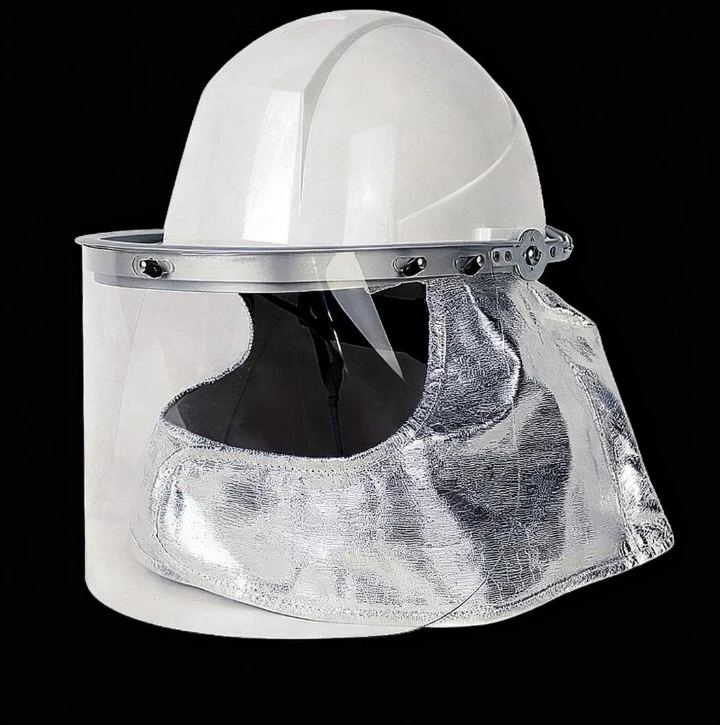
Shield Wings manufactures smart safety helmets alongside conventional head protection at a Guangdong production base, and works with site teams and distributors on configuration, accessories and the documentation a programme needs. The wider head and face protection range shows how the connected option sits with the helmets, hoods and shields it is likely to be combined with.
The test of a roll out is not how many units are issued. It is whether each unit is charged, inspected, worn and responded to, and whether the site can show that on paper six months later.
Frequently Asked Questions
Is a smart helmet still a piece of head protection?
Yes, and that has to be settled first. The helmet has to meet the head protection requirement identified in the assessment, and the connected features are additional capability rather than the reason it is worn. Where the electronics add weight, change the balance of the shell or interfere with the suspension, those effects belong in the selection decision, because a helmet that is uncomfortable or unstable will be worn badly.
What new failure points do connected helmets introduce?
Batteries and charging, cables and connectors, sensors, lens or camera surfaces, and software updates. Each of them needs an inspection point and a replacement rule, because a helmet can pass a conventional shell and suspension check while a sensor is obscured or a cable is damaged. The programme should define who checks what, how often, and what happens to a unit whose electronics have failed but whose shell is sound.
How should alerts and location data be handled in a programme?
As part of the site’s procedures rather than as an automatic safety control. Alerts require a response process, a named receiver and a defined escalation, or they become noise that workers learn to ignore. Location and monitoring data raise questions of privacy and consultation with the workforce and their representatives, and those questions are best resolved before the units are issued rather than afterwards.
How do smart helmets change inspection and record keeping?
They add items to the inspection and add data to the records. The inspection covers the shell, suspension and markings as before, plus the battery state, the condition of cables and sensors, and the cleanliness of any optical surface. Records should link the unit identifier to the worker, and where a device reports condition or incidents, the site should be able to explain how that information is stored, who sees it and how long it is retained.
What is the most common reason a smart helmet roll out fails?
The equipment is issued without the process behind it. Where there is no charging routine, no response to alerts, no spare units and no agreed answer on data, workers experience the helmet as an inconvenience rather than as protection, and the technology is quietly abandoned. Piloting on one crew with a defined process, then scaling with the process already written down, is the sequence that works.

Planning a connected helmet roll out?
Send the tasks, the workforce pattern and the other equipment in use. Shield Wings confirms the configuration, accessories and documentation, and the spare parts that keep units in service.
External references: 29 CFR 1910.135 head protection, 29 CFR 1910.132, CCOHS guidance on headwear, UK HSE personal protective equipment guidance, CEN-CENELEC standards portal, Regulation (EU) 2016/425.
{“@context”:”https://schema.org”,”@type”:”FAQPage”,”mainEntity”:[{“@type”:”Question”,”name”:”Is a smart helmet still a piece of head protection?”,”acceptedAnswer”:{“@type”:”Answer”,”text”:”Yes, and that has to be settled first. The helmet has to meet the head protection requirement identified in the assessment, and the connected features are additional capability rather than the reason it is worn. Where the electronics add weight, change the balance of the shell or interfere with the suspension, those effects belong in the selection decision, because a helmet that is uncomfortable or unstable will be worn badly.”}},{“@type”:”Question”,”name”:”What new failure points do connected helmets introduce?”,”acceptedAnswer”:{“@type”:”Answer”,”text”:”Batteries and charging, cables and connectors, sensors, lens or camera surfaces, and software updates. Each of them needs an inspection point and a replacement rule, because a helmet can pass a conventional shell and suspension check while a sensor is obscured or a cable is damaged. The programme should define who checks what, how often, and what happens to a unit whose electronics have failed but whose shell is sound.”}},{“@type”:”Question”,”name”:”How should alerts and location data be handled in a programme?”,”acceptedAnswer”:{“@type”:”Answer”,”text”:”As part of the site’s procedures rather than as an automatic safety control. Alerts require a response process, a named receiver and a defined escalation, or they become noise that workers learn to ignore. Location and monitoring data raise questions of privacy and consultation with the workforce and their representatives, and those questions are best resolved before the units are issued rather than afterwards.”}},{“@type”:”Question”,”name”:”How do smart helmets change inspection and record keeping?”,”acceptedAnswer”:{“@type”:”Answer”,”text”:”They add items to the inspection and add data to the records. The inspection covers the shell, suspension and markings as before, plus the battery state, the condition of cables and sensors, and the cleanliness of any optical surface. Records should link the unit identifier to the worker, and where a device reports condition or incidents, the site should be able to explain how that information is stored, who sees it and how long it is retained.”}},{“@type”:”Question”,”name”:”What is the most common reason a smart helmet roll out fails?”,”acceptedAnswer”:{“@type”:”Answer”,”text”:”The equipment is issued without the process behind it. Where there is no charging routine, no response to alerts, no spare units and no agreed answer on data, workers experience the helmet as an inconvenience rather than as protection, and the technology is quietly abandoned. Piloting on one crew with a defined process, then scaling with the process already written down, is the sequence that works.”}}]}