

Smart safety helmets add communication, sensing, and monitoring to head protection — turning the helmet from passive equipment into a connected tool for high-risk operations. This guide explains the features, the benefits, and how to judge the return on investment, with reference to Shield Wings’ smart safety helmet.
(Last modified date: October 2, 2026)
Quick definition: A smart helmet integrates electronics into the certified shell — communication, environmental sensors, worker monitoring, and sometimes augmented reality — while keeping the protective rating the standard requires.
Key Takeaways
- The features that matter depend on the operation: communication for noisy sites, gas and oxygen sensing for hazardous atmospheres, location and man-down monitoring for isolated workers, and AR for complex tasks.
- The benefits are faster coordination, earlier hazard detection, quicker response to incidents, and better situational awareness — each of which translates into fewer incidents and less downtime.
- Judge the ROI by comparing the cost of the helmets and the program against the cost of the incidents and delays the features prevent — response time, downtime, and injuries have real numbers.
- Verify the head protection certification on the smart model, the battery and durability in the working environment, the data and privacy arrangements, and the integration with existing systems.
What Makes a Helmet “Smart”?
A smart helmet integrates electronics into the certified shell — communication, environmental sensors, worker monitoring, and sometimes augmented reality — while keeping the protective rating the standard requires.
The electronics add function without removing protection: built-in speakers and microphones for hands-free team communication, gas and temperature sensors for hazard detection, location tracking and man-down alerts for safety monitoring, and AR displays for complex tasks. The key engineering requirement is that the shell still meets the head protection standard. The smart features are layered into a helmet that must first and foremost protect the head.
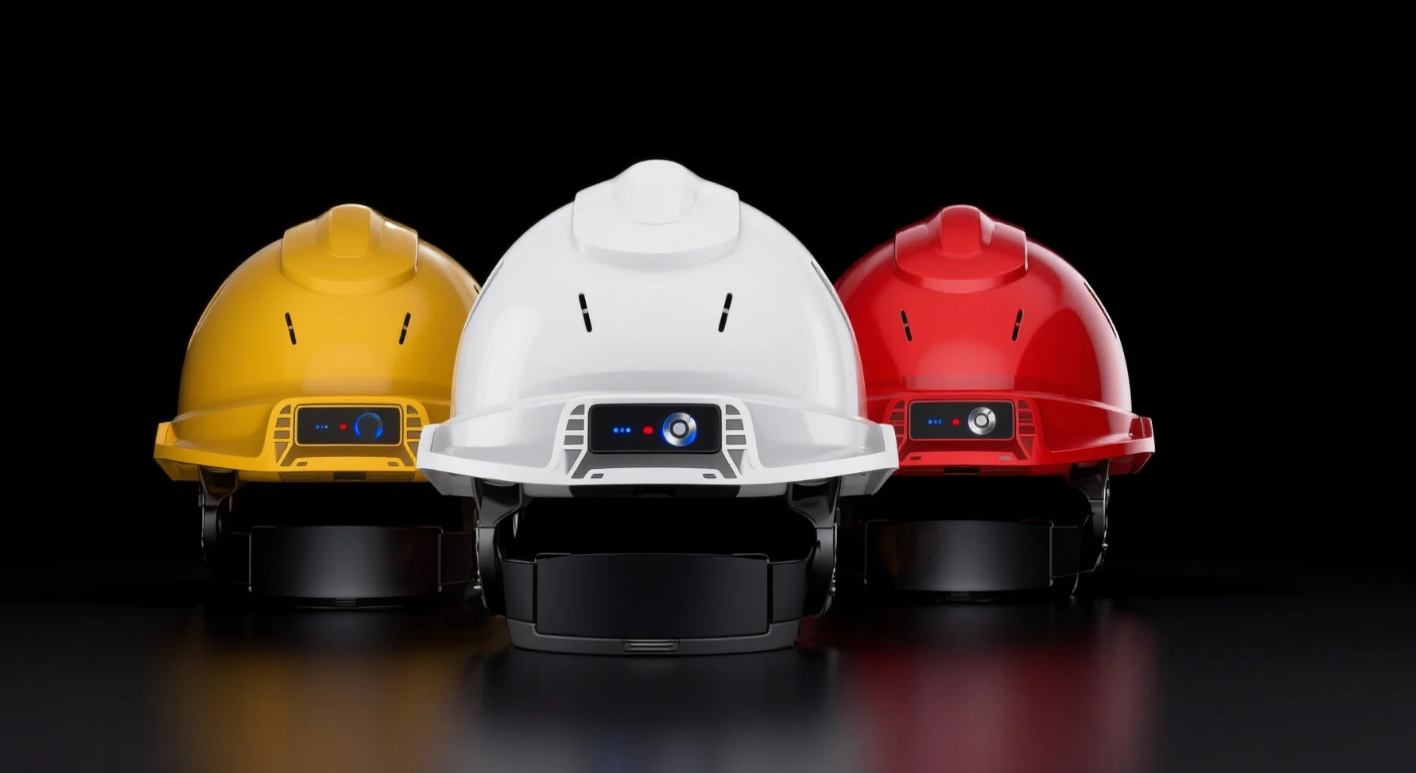
Whatever the electronics add, the helmet underneath still has to be a compliant helmet.
What Features Matter for Your Operation?
The features that matter depend on the operation: communication for noisy sites, gas and oxygen sensing for hazardous atmospheres, location and man-down monitoring for isolated workers, and AR for complex tasks.
| Feature | Best for |
|---|---|
| Communication | Noisy sites, coordination |
| Gas and temperature sensors | Hazardous atmospheres |
| Location tracking | Remote and large sites |
| Man-down alerts | Isolated workers |
| AR assist | Complex assembly, maintenance |
No single helmet needs every feature. Choose the set that addresses the site’s actual gaps — where coordination fails, where an incident goes unnoticed, where workers enter hazardous atmospheres. The feature list should come from the operation’s risk profile, not from the brochure.
What Are the Benefits in the Field?
The benefits are faster coordination, earlier hazard detection, quicker response to incidents, and better situational awareness — each of which translates into fewer incidents and less downtime.
Hands-free communication lets crews coordinate without stopping work or removing PPE. Sensors warn workers before they enter a dangerous atmosphere. Man-down and location alerts cut response time when an incident happens. AR can overlay instructions onto the work view, reducing errors on complex tasks. The benefits are measurable where the operation is large, remote, or hazardous — the value comes from the specific gaps the features close.
What the Helmet Still Has to Be
Every feature in this article sits on top of a head-protection requirement that does not change because the helmet has electronics in it. That requirement is the first line of any specification, and the second thing a buyer should check after the features list.
29 CFR 1910.135 requires the employer to ensure that each affected employee wears a protective helmet when working in areas where there is a potential for injury to the head from falling objects, and to ensure that a helmet designed to reduce electrical shock hazard is worn near exposed electrical conductors that could contact the head. The same section names ANSI Z89.1 among the recognised consensus standards for head protection.
Read against a smart helmet, that produces three checks that no feature list will answer for you:
- Does the helmet itself still hold its certification with the electronics fitted? A module that changes the shell, the harness or the weight distribution is a modification, and the certificate belongs to the configuration that was tested.
- Does it still comply with ANSI Z89.1 — and which type and class? The electrical class in particular matters, because it is exactly the property a crew working near conductors depends on.
- Does the added weight and hardware change how it sits? A helmet that shifts or needs re-tightening through a shift is a helmet that gets worn badly, which defeats the protection and the data at the same time.
Below that sits the general duty in 1910.132(d): assess the workplace for the hazards, select equipment that protects against the hazards identified, communicate the selection to each affected employee, select PPE that properly fits, and certify the assessment in writing.
The practical test for a smart helmet programme is therefore not “does the data help?” but “is the helmet still the compliant helmet we would have bought without the electronics, and does the technology make it more likely to be worn correctly?” A helmet that answers both is a genuine upgrade. One that answers only the first is an expensive hard hat.
How Do You Judge the ROI?
Judge the ROI by comparing the cost of the helmets and the program against the cost of the incidents and delays the features prevent — response time, downtime, and injuries have real numbers.
Build the calculation from your own data: how long does it take to find a missing worker today, how much does a coordination failure cost, what does a gas exposure incident cost in medical, downtime, and insurance? If the features close real gaps, the payback is calculable; if they address no measured problem, the ROI is a guess. Start with a pilot on one crew, measure the operational benefit, then scale. The ROI is site-specific, and the evidence should be site-specific too.
What Should You Verify Before Buying?
Verify the head protection certification on the smart model, the battery and durability in the working environment, the data and privacy arrangements, and the integration with existing systems.
The helmet must meet the head protection standard with the electronics installed — confirm the certificate for the exact model. Check battery life against the shift, and the helmet’s behavior in the site’s heat, dust, and moisture. Confirm what data the sensors collect, where it goes, and how it is protected. Then trial the helmets with the crew, because a smart feature that does not survive the shift is a feature that does not protect. A smart helmet that passes the certification, the environment test, and the crew trial is the one to scale.
Select head protection for the site’s impact and electrical hazards, and confirm fit, accessories, and replacement against the applicable standard.
The smart helmet decision should be part of a technology plan, not a single purchase: the pilot measures the benefit, the rollout covers training and data management, and the budget includes batteries, spare parts, and replacement on the head protection cycle. Work with a manufacturer that supplies the smart helmet as a certified product — with the electronics documented as part of the finished system — and that can support the pilot with clear specifications. Keep the certificate and the data agreements in the compliance file, because a smart helmet is both safety equipment and a data system. The value comes from the integration; the protection comes from the certification.
Confirm the helmet’s battery, charging, and data plan against the shift pattern and the site’s privacy rules, because a helmet that runs out mid-shift is a helmet whose features are not protecting.
For the wider topic and related decisions, see our Head, Face & Eye Protection.
FAQs
How do we plan battery, charging, and rollout success?
Confirm the helmet’s battery and charging plan against the shift pattern, because a helmet that runs out mid-shift is a helmet whose features are not protecting.
Do smart features reduce the helmet’s protection?
Only if the design is wrong; a certified smart helmet keeps its protective rating with the electronics integrated — confirm the certificate for the exact model.
How long does the battery last?
It depends on the features and the environment; verify the battery against your shift length in the pilot.
Can the features be added to existing helmets?
Not reliably. Smart features should be integrated and certified as part of the finished helmet system.
How do we pilot smart helmets?
Start with one crew and a measured set of benefits — request pilot guidance via our contact page or the smart safety helmet page.

Fit and retention decide whether the helmet stays on the head when it matters.
Related Articles
- ANSI/ISEA 105 Explained: Cut and Puncture Ratings
- Thermal Protective Clothing for Steel Mills
- Why Do Cut Injuries Happen and How Do Cut Resistant Gloves Help?
- Safety Helmets: The Complete Guide (ANSI Z89.1 and EN 397)
Official Resources
- Smart Safety Helmet
- Eye Protection For Welders Helmets Goggles And Filters
- How To Choose Work Boots For Construction Sites
- Welding Helmet Standards En 379 And Ansi Z87 1 Standards
- Puncture Resistant Safety Shoes Standards And Applications
- Ppe Procurement Guide How To Buy Safety Equipment For Your Team
- Contact Shield Wings