

Puncture resistant safety shoes protect the sole of the foot from nails, wire, glass, and sharp debris — a hazard the toe cap does nothing about. This guide explains the standards and where puncture protection matters, with reference to puncture resistant shoes from Shield Wings.
(Last modified date: October 2, 2026)
Quick definition: Puncture protection is a plate built into the sole — steel or composite — that stops sharp objects from penetrating the foot, tested against defined force and deflection limits.
Key Takeaways
- In North America, ASTM F2413 defines puncture resistance with impact and compression codes, while EN ISO 20345 covers penetration protection in its S-class footwear — the certificate states which standard the shoe meets.
- Construction and demolition, recycling and waste handling, warehousing and logistics, and any site with nails, wire, glass, or sharp debris on the floor need puncture-resistant footwear.
- Puncture plates come in steel and composite: steel offers strength at lower cost, while composite plates are lighter and non-conductive, which matters for electrical and security-sensitive environments.
- Choose by the site’s hazard assessment: name the puncture hazard, confirm the standard and protection code, select the plate type for the environment, and validate fit with a wear trial.
What Is Puncture Protection in Safety Footwear?
Puncture protection is a plate built into the sole — steel or composite — that stops sharp objects from penetrating the foot, tested against defined force and deflection limits.
The plate sits between the outsole and the insole, protecting the sole of the foot across its full length. It stops nails, wire, glass, and sharp debris from reaching the foot when the worker steps down. The toe cap protects the front; the plate protects the bottom; the two protections answer different hazards. A site with debris on the floor needs both.
Confirm the plate spans the full sole on the sample, because a plate that ends short of the ball of the foot leaves the most stepped-on area unprotected.
Which Standards Govern Puncture Resistance?
In North America, ASTM F2413 defines puncture resistance with impact and compression codes, while EN ISO 20345 covers penetration protection in its S-class footwear — the certificate states which standard the shoe meets.
ASTM F2413 includes puncture as one of the protection requirements, and EN ISO 20345 includes penetration protection in classes such as S1P and S3. The certificate for the exact model states the standard and the protection codes. When you specify, name the standard your market requires and confirm the puncture protection is included — a shoe with a toe cap is not automatically puncture resistant. The label and the certificate together define what the shoe can be relied on to do.
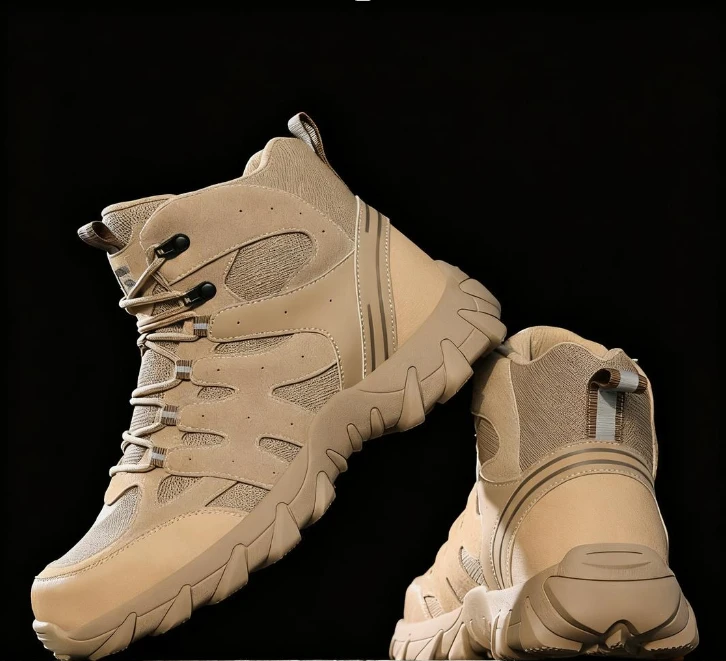
Puncture protection lives in the sole plate, not in the toe cap.
Which Work Environments Need Puncture Protection?
Construction and demolition, recycling and waste handling, warehousing and logistics, and any site with nails, wire, glass, or sharp debris on the floor need puncture-resistant footwear.
Demolition floors are full of nails and broken materials; recycling lines handle sharp metal and glass; warehouses move pallets that shed staples and strapping. In each case, a worker stepping down onto a sharp object without a plate risks a puncture injury that is painful, disabling, and expensive. The hazard assessment decides which sites and roles need the plate, and the matrix names them. When the floor is the hazard, the sole is the protection.
What Should the Puncture Plate Be Made Of?
Puncture plates come in steel and composite: steel offers strength at lower cost, while composite plates are lighter and non-conductive, which matters for electrical and security-sensitive environments.
| Plate type | Strength | Weight | Conductivity |
|---|---|---|---|
| Steel | High | Heavier | Conductive |
| Composite | High | Lighter | Non-conductive |
Both meet the same penetration test standards, so the choice follows the environment: composite suits electrical work and sites with metal detectors, steel suits general heavy industry at a lower cost. The plate must span the sole correctly and stay intact for the shoe’s life — a worn or displaced plate is a protection failure. Inspect the sole as part of the regular footwear check.
What the Regulation Actually Requires
Puncture protection is unusual among PPE properties because the regulation names it as a trigger in its own right, separate from impact. That distinction is the reason a steel toe is not an answer to a puncture hazard.
29 CFR 1910.136 requires protective footwear where there is a danger of foot injury from falling or rolling objects, or objects piercing the sole, or where the footwear will protect against an electrical hazard remaining after other protective measures. Three triggers, and only the first one is about impact.
Read that way, the standard is asking a site three separate questions:
- Can something fall or roll onto the foot? — the impact and compression case, answered by the toe cap.
- Can something penetrate the sole from below? — the penetration case, answered by the midsole plate, which is tested separately.
- Does an electrical hazard remain after other controls? — the conductivity case, answered by the footwear rating.
A boot can satisfy the first question and fail the second entirely: an excellent steel toe cap protects the toes from a dropped object and does nothing about a nail entering through the sole. That is why “steel toe” and “puncture resistant” are not synonyms in a specification, and why the certificate for the model has to state penetration protection explicitly.
The same section names ASTM F2412 and F2413 among the recognised consensus standards for protective footwear. F2412 covers the test methods, F2413 the performance requirements, and the rated properties follow from those tests — so the certificate reference is the only reliable way to confirm which of the three triggers above a given model actually answers.
Underneath sits the general duty in 1910.132(d): assess the workplace for the hazards, select equipment that protects against the hazards identified, communicate the selection to each affected employee, select PPE that properly fits, and certify the assessment in writing. On a site where debris is handled, that assessment has to record the penetration hazard as its own line — otherwise the purchase order will answer the hazard somebody wrote down, which is usually the obvious one.
How Do You Choose Puncture-Resistant Footwear?
Choose by the site’s hazard assessment: name the puncture hazard, confirm the standard and protection code, select the plate type for the environment, and validate fit with a wear trial.
Confirm the certificate covers puncture for the exact model, and check the plate spans the sole as the design intends. Match the plate type to the environment — composite for electrical and security settings, steel for general industry. Then run a wear trial with the crew, because puncture shoes must also fit, grip, and support for the full shift. The footwear is one element of the site’s foot protection system, chosen alongside toe protection, slip resistance, and any electrical rating.
Electrical footwear is secondary protection and does not replace de-energization, insulated tools, or the employer’s electrical safety procedure; confirm all selections against the job hazard assessment and the applicable standard.
Puncture-resistant footwear should be part of a documented foot protection plan: the site hazard list names which roles need the plate, the certificate confirms it on the exact model, and the inspection routine checks the sole through the shoe’s life. Work with a manufacturer that supplies the puncture protection as a verified feature — with the certificate stating the standard and the code — rather than as an assumed extra on a toe-cap shoe. Keep the documentation per style, re-check on reorders, and review the plan when the site’s floor conditions change. A puncture injury is one of the most preventable in industry; the plan makes the prevention visible.
For the wider topic and related decisions, see our Safety Footwear & Boots.
FAQs
What should the foot protection plan track?
The foot protection plan should also include the daily reality of the site: where debris collects, which roles step into it, and whether the plate and sole survive the actual duty. Inspect the soles on the regular cycle and replace footwear when the plate or sole is compromised, and feed field failures back into the spec. A plan that is tied to the floor conditions keeps the protection where the hazard is.
Is a steel toe shoe automatically puncture resistant?
No. Puncture protection requires a sole plate and its own test; confirm the certificate includes it.
Do composite plates protect as well as steel?
Yes, both meet the same penetration standards; the difference is weight and conductivity, so choose by the environment.
How long does the puncture plate last?
For the shoe’s service life if the sole stays intact; inspect the sole regularly and replace footwear when the plate is compromised.
How do we get puncture-resistant shoes for our site?
Tell us your hazards and environment, and we will recommend footwear with documentation via our contact page or the safety footwear page.
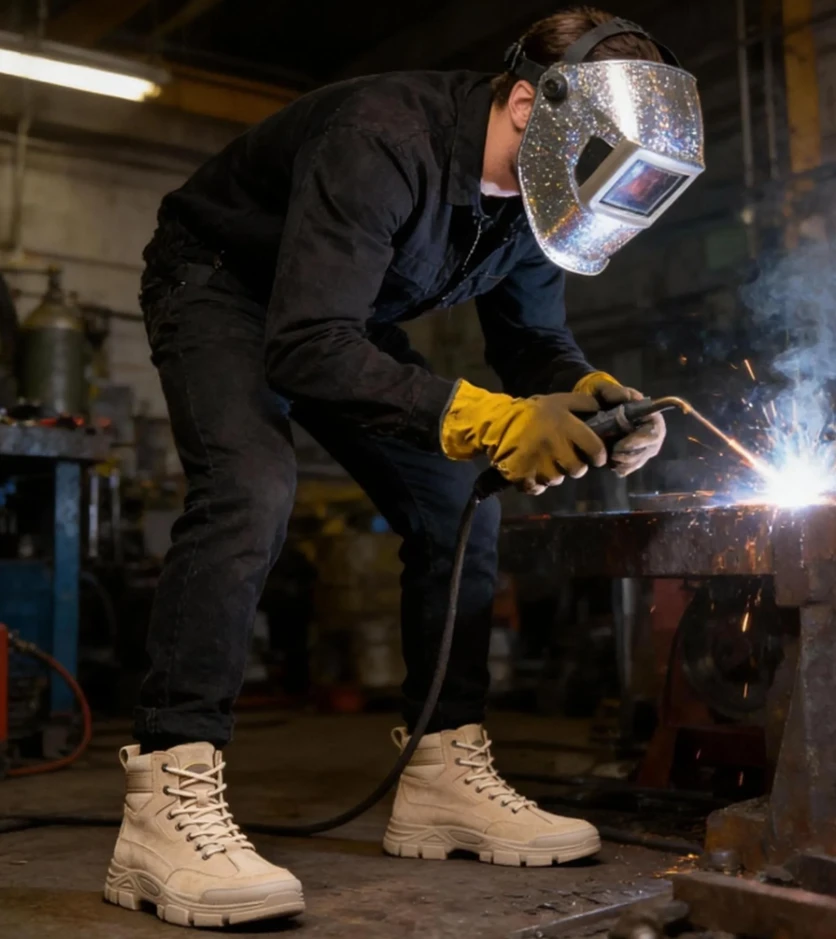
Inspect the sole on the regular cycle; a compromised sole takes the plate with it.
Related Articles
- Anti-Static Workwear: The Complete Guide
- Smart Safety Helmets: Features Benefits and ROI
- High Temperature Gloves: Types Ratings and Selection
- How to Choose Work Boots for Construction Sites
- Safety Footwear Standards: ASTM vs EN ISO 20345
- Steel Toe vs Composite Toe Boots: Which Should You Choose
Official Resources
- Steel Toe Puncture Resistant Safety Shoes
- Safety Footwear Standards Astm Vs En Iso 20345
- Steel Toe Vs Composite Toe Boots Which Should You Choose
- Welding Gloves Types Heat Ratings And Selection
- Flame Resistant Clothing For Oil And Gas Standards And Selection
- Hand Safety In Manufacturing Injuries Prevention And Ppe
- Contact Shield Wings