

Flame resistant clothing protects oil and gas workers from flash fire, the sudden ignition of gas, vapor, or crude that can engulf a worksite in seconds. Choosing the right FR system means matching NFPA 2112 or EN ISO 11612 garments to each role, from the wellsite to the refinery — and sourcing them from a certified manufacturer like Shield Wings.
Last updated:
Quick definition: Flash fire is the rapid combustion of a flammable gas or vapor cloud that lasts only seconds but can reach extreme temperatures across a wide area; FR clothing limits the burn injury by resisting ignition and insulating…
Key Takeaways
- Oil and gas workers need FR clothing because flash fire and hydrocarbon ignition are sudden, survivable hazards: a worker with FR garments can escape a flash fire with limited burns, while a worker in untreated clothing…
- NFPA 2112 is the benchmark for flash fire protection in North America, while EN ISO 11612 governs heat and flame protection in Europe and international markets; CE marking confirms EU compliance.
- A complete FR system includes FR coveralls or shirt-and-pants, an FR outer layer or jacket for cold or rain, FR underwear layers in the highest-risk areas, and matching FR accessories such as hoods and gloves.
- Choose by role and task: drilling and well service crews need rugged flash fire garments, refinery maintenance teams may need dual flash fire and arc protection, and office or control-room staff usually need little or…
- Offshore platforms add stringent requirements around durability, weather protection, and emergency drills, while onshore sites vary from wellpads to refineries with different exposure levels and comfort needs.
- Yes.
Why Do Oil and Gas Workers Need FR Clothing?
Oil and gas workers need FR clothing because flash fire and hydrocarbon ignition are sudden, survivable hazards: a worker with FR garments can escape a flash fire with limited burns, while a worker in untreated clothing may not survive.
Gas, vapor, and crude oil can ignite with little warning during drilling, production, processing, and maintenance. When that happens, the first seconds decide the outcome. FR clothing resists ignition and self-extinguishes, buying the worker time to exit the hazard zone and limiting the area of burn injury. Regulations and corporate safety standards in most producing regions require FR clothing for anyone working in areas with flammable gas or liquid — which is most of the oil and gas value chain.
The requirement is usually written into operating procedures rather than left to judgment. In North America, standards such as API RP 54 and OSHA rules for well servicing set expectations for flame-resistant garments, while operators add their own HSE policies for contractors and visitors. What that means for procurement is practical: every worker entering a classified zone needs a garment that meets the specified standard, and the certificate needs to be available on demand. Buying FR clothing becomes a compliance decision, not a uniform decision.
What Is Flash Fire and How Does FR Clothing Help?
Flash fire is the rapid combustion of a flammable gas or vapor cloud that lasts only seconds but can reach extreme temperatures across a wide area; FR clothing limits the burn injury by resisting ignition and insulating the skin.
Unlike a fire that stays in one place, a flash fire travels through the air and covers the worker from every direction. The flame front passes quickly, but the heat is intense enough to ignite clothing that then continues burning against the skin. FR garments stop that secondary burn — the fabric does not support combustion, and its thermal barrier slows heat transfer long enough for the worker to reach safety. This is why FR clothing is treated as the last line of defense behind gas detection, ventilation, and safe work practices.
Which Standards Apply to FR Clothing in Oil and Gas?
NFPA 2112 is the benchmark for flash fire protection in North America, while EN ISO 11612 governs heat and flame protection in Europe and international markets; CE marking confirms EU compliance.
| Standard | What it covers | Where it applies |
|---|---|---|
| NFPA 2112 | Flash fire protective garments for industrial workers | United States and Canada |
| EN ISO 11612 | Protection against heat and flame | Europe and global projects |
| ASTM F1506 | Electric arc-rated clothing | Electrical and utility tasks |
| CE (PPE Regulation) | Certification mark for EU sale | European Union |
Many multinational operators require dual certification so one garment works across regions. When selecting, confirm which standard your site or client specifies, then verify the certificate — a label alone is not proof of compliance.
What Should an Oil and Gas FR Clothing System Include?
A complete FR system includes FR coveralls or shirt-and-pants, an FR outer layer or jacket for cold or rain, FR underwear layers in the highest-risk areas, and matching FR accessories such as hoods and gloves.
The system matters more than any single garment. Base layers worn under the coverall add insulation and prevent skin exposure at cuffs and collars. Outer layers add weather protection without weakening the FR rating of the combined system. Head and hand protection close the gaps: an FR balaclava or hood protects the neck, and FR gloves protect the hands during emergency response. When you source the system from one factory, every layer is rated and documented together, which simplifies compliance and removes guesswork.
Regional conditions change the system even when the standard stays the same. In the Middle East and West Africa, crews need lightweight breathable FR fabrics that do not cause heat stress. In the North Sea and Arctic operations, the system expands to include insulated FR under layers and weatherproof FR outerwear. The hazard analysis sets the floor; climate sets the details. A supplier that can supply the full system across climates — and document each layer — makes it possible to standardize the program globally without buying from five vendors.
How Do You Choose FR Clothing for Different Roles?
Choose by role and task: drilling and well service crews need rugged flash fire garments, refinery maintenance teams may need dual flash fire and arc protection, and office or control-room staff usually need little or no FR clothing.
Start by mapping who actually enters classified zones. Wellsite crews work close to hydrocarbons and need NFPA 2112 or EN ISO 11612 garments with good abrasion resistance. Electrical and instrument technicians in the same facility may need arc-rated clothing as well, so dual-certified garments earn their cost. Contractors and visitors should follow the same standard as employees, or they become a hidden gap in the program. A simple role-based matrix turns this into a checklist instead of a debate.
Maintenance crews deserve special attention because they work in the highest-risk window: equipment is being opened, lines are being broken, and the normal barriers are down. In shutdowns and turnarounds, FR clothing requirements should be specified in the work permit system, and spare garments should be available on site for contractors who arrive without the right gear. The matrix should also be reviewed after every incident or near-miss, because the real world always teaches lessons the paperwork missed.
Where Do Offshore and Onshore Requirements Differ?
Offshore platforms add stringent requirements around durability, weather protection, and emergency drills, while onshore sites vary from wellpads to refineries with different exposure levels and comfort needs.
Offshore workers face salt spray, wind, and confined spaces, so garments need corrosion-resistant hardware and layering for weather. Onshore operations range from remote wellpads where durability matters most to refineries where multiple hazards overlap. In both cases, the FR rating is decided by the hazard analysis, and the fabric weight is decided by climate and comfort. Our oil and gas safety equipment selection combines these factors into role-based packages.
Can You Get Custom FR Workwear for Your Team?
Yes. Shield Wings supplies custom FR workwear for oil and gas operators — company logos, high-visibility trim, tailored sizing, and layering packages — through wholesale, OEM, and ODM programs.
Operators typically want their crews identifiable and compliant: embroidered logos, reflective stripes, and standardized color schemes. Customization also solves practical problems, such as extra pocket layouts for instruments or sizing for diverse crews. As the manufacturer, we can adjust designs before production, approve a sample, and then scale. Wholesale buyers benefit from direct pricing and batch documentation, and our engineers work with your spec to ensure every customized detail keeps its FR performance.
Custom programs usually start with a specification review, move to a sample for approval, and then run in production batches with documented lead times. Ask about MOQ flexibility — many operators want to pilot a design on one crew before rolling it out across the organization — and confirm how revisions are handled between batches. When the program is locked, batch documentation for every delivery keeps the compliance file current without extra effort.
Expert Views
“The difference between an effective FR program and a box-checking exercise shows up in the field. We have walked platforms where crews wore the right standard but the wrong fit — baggy coveralls that snag, or garments with unclosed cuffs that defeat the protection. We have also seen operators buy flash fire garments for electrical tasks without checking the arc rating. My guidance is always the same: run the hazard analysis role by role, build the full layered system, and verify every certificate with documentation. Then test a sample on the actual crew, in the actual climate, because a garment that is too hot will end up unzipped. When protection, fit, and comfort line up, the program works — and that is when workers trust it.” — HSE Consultant, Shield Wings
What Should Your Next Step Be?
Map every role that enters classified zones, confirm the standard each role requires, and request sample garments before ordering in volume.
Our team can review your role matrix and recommend FR systems — base layers, coveralls, outerwear, hoods, and gloves — matched to your climate and hazard levels. Send your current spec or questions through our contact page, or browse the FR clothing range and oil and gas solutions to start. Samples ship quickly, and wholesale pricing is confirmed in writing before you commit.
What the Garment Has to Prove, and What the Site Has to Keep
A flash-fire claim is only useful if it survives an audit, and the audit asks two different questions: what the garment was tested to, and what the site did with it. The table below splits the evidence along that line, because the second half is the part buyers forget.
| Evidence from the factory | What it settles | Record the site keeps |
|---|---|---|
| Report naming the garment model and the standard | Which article was tested, and against what | The certificate filed against the purchase order |
| Thermal test result for the fabric system | How the assembly behaves in a flash fire | The report version that matches the delivered model |
| Laundering instructions with the rating | How many care cycles the protection is rated for | The laundry log tied to each garment batch |
| Declaration covering decoration and trims | Whether the branded version is the tested version | The approved sample and artwork file |
| Hazard assessment (29 CFR 1910.132(d)(1)) | That the employer selected for the identified hazard | The written assessment and its certification (1910.132(d)(2)) |
Worked example: the laundry cycle as a budget line
Illustrative assumptions. A crew of 40 is issued two garments each, and the site launders weekly, so each garment is washed around 45 times a year. If the factory rates the garment for a defined number of care cycles, the replacement budget follows from that number divided by 45 — not from the calendar and not from how the garment looks. Write the rating on the store’s record when the batch arrives; a garment whose care rating was never recorded cannot be retired on evidence, only on appearance.
Where the paperwork stops protecting anyone
Three limits are worth writing into the procedure. A thermal test describes an assembly, so mixing layers from two makers voids the assumption that produced the number. Contamination from hydrocarbons or solvents is not visible and is not removed by a normal wash cycle, so a contaminated garment is retired rather than laundered. And the employer-pays rule (1910.132(h)(1)) makes replacement a planned cost rather than an exception, which is the line that keeps a programme from quietly degrading into single garments.
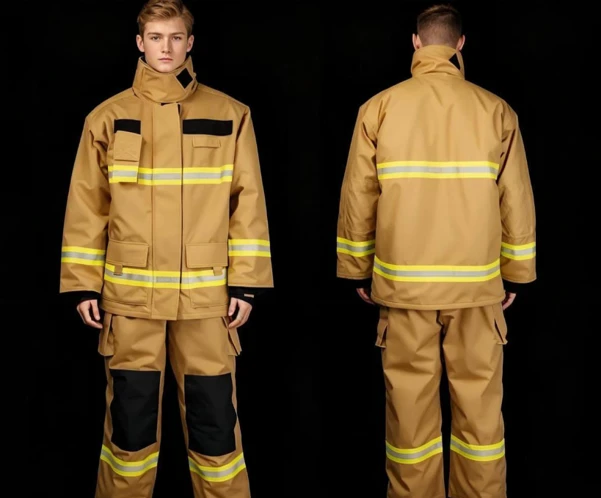
For the wider topic and related decisions, see our Flame-Resistant Workwear.
FAQs
Is FR clothing required for everyone on a rig?
Anyone entering classified zones where flammable gas or liquid may be present should wear appropriate FR clothing; verify the exact requirement with your site’s safety case.
Can FR clothing protect against both flash fire and arc flash?
Some garments are certified to both NFPA 2112 (flash fire) and ASTM F1506 (arc), which is common for electrical work in oil and gas facilities.
How long does FR clothing last in harsh environments?
Life depends on fabric, care, and duty. Inspect quarterly, follow laundering rules, and replace garments showing damage, fading, or contamination.
Do you supply complete layered systems or single garments?
Both. We recommend ordering the complete system — base, coverall, outer, hood, and gloves — so all layers are rated and documented together.
What documentation should come with FR clothing?
Four items: a test report naming the exact model and the standard, the thermal result for the fabric system, laundering instructions tied to the rating, and a declaration covering any decoration or trims. Keep the version that matches the delivered model — a report for an earlier revision answers a question nobody asked.
Who pays for FR clothing replacements?
The employer. Protective equipment required by the standard has to be provided at no cost to employees (29 CFR 1910.132(h)(1)), and since damaged or defective equipment shall not be used (1910.132(e)), replacement is a recurring budget line rather than an exception to be negotiated per incident.
Related Articles
- How to Choose Work Boots for Construction Sites
- PPE Import Shipping Guide: Incoterms Lead Times and Costs
- How to Evaluate PPE Suppliers: Price Quality and Delivery
- FR Clothing Fabrics Explained: Nomex Kevlar Modacrylic and More
- FR Clothing Certifications: NFPA 2112 ASTM F1506 and EN ISO 11612
- FR Clothing for Welders: What You Actually Need
Official Resources
- Flame Resistant Clothing Sizing And Fit Guide
- Why Do Oil And Gas Workers Need Fr Clothing
- Why Do Cut Injuries Happen And How Do Cut Resistant Gloves Help
- What Are Flame Resistant Coveralls And How Do They Protect You
- Contact Shield Wings
- Heat Protective Clothing
References
- OSHA – Official Website
- NFPA – Official Website
- ASTM International – Official Website
- European Commission – CE Marking