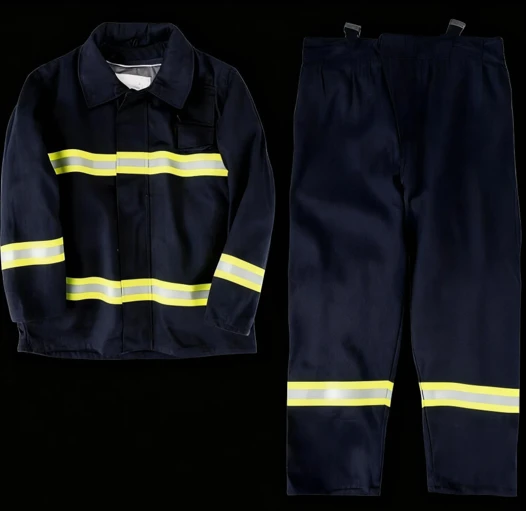
On a site with several employers, flame resistant clothing is the item where responsibility is most easily assumed to belong to someone else. The host sets the rules, the contractor employs the worker, a subcontractor supplies the labour and a laundry handles the garments, and each party can reasonably believe another is managing the condition of what is being worn. A programme exists to close that gap with documents rather than assumptions.
Why the Programme Outlives the Product Choice
It is worth being explicit about why a performance standard works better than a product standard on these sites. A product requirement forces every contractor to buy the same garment, which is convenient to audit and expensive to comply with, and it makes the site dependent on one supplier. A performance requirement allows contractors to use their own provision where it meets the stated level, keeps competition in the supply chain, and shifts the documentation burden to where the technical knowledge actually sits, which is with the contractor and its supplier.
Garments are replaced, contracts change and contractors move between sites. The programme is what survives: the minimum standard for each area, the requirement expressed as performance rather than as a brand, the issue and care arrangements, and the records that show who was wearing what. Sites with that structure can change supplier in an afternoon; sites without it rebuild the logic every time a new contractor arrives.
The commercial consequence is not the price of the garments. It is the cost of the gaps: a contractor arriving with garments that do not meet the site requirement, an incident investigation that cannot establish what was worn, or a laundry cycle that quietly reduces the protection of every garment that passes through it. Each of those is expensive in its own way, and each is easier to prevent than to correct.
Assessment, Selection and Issue
Issue is where the interface most often breaks down. Agency labour, subcontractors of subcontractors and short-term specialists arrive with varying provision, and the host site may not know until the person is at the gate. A short pre-mobilisation check, confirming that arriving workers have garments meeting the stated level and the documentation to support it, is a small administrative step that removes most of the surprise. Where a contractor cannot demonstrate compliance before mobilisation, the gap is easier to resolve in advance than on the day.
The host site’s rule should be a performance standard written per area: the hazard, the standard and the level required for that area, and the requirement to document it. That approach allows contractors to use their own garments where the documentation supports the claim, and it avoids controlling the market through a brand requirement.
The employer of the worker remains responsible for providing and maintaining the protection its workers need. In practice, a workable split looks like this.
- The host site states the minimum requirement per area and verifies that arriving contractors meet it.
- The contractor supplies and maintains garments that meet or exceed that requirement, with documentation.
- Issue records link garments to individuals, including agency and subcontractor labour.
- Care and laundering arrangements are agreed in writing, with the process stated against the care instructions.
- Inspection and retirement rules apply to contractor garments in the same way as to the host’s own.
Where the work involves electric arc exposure, the requirement is set by the incident energy identified in the study or on the equipment labels for that task, and the garments provided must be documented against that level. Where the work involves flash fire rather than arc, the appropriate standard governs. The distinction is worth writing into the host rule, because the two are frequently confused in contract documents.
Training and Competence Evidence
It is also worth agreeing how the site will handle a worker who arrives without compliant clothing. Where the rule is clear, the decision is straightforward: the person is equipped from the site or contractor stock, or the work does not start. Where the rule is unclear, the decision is usually taken at the gate under time pressure, which is how non-compliant garments end up working on site for a shift and then being normalised.
Contractor workers need the same understanding of the garment as the host’s own staff: what the rating means, what it does not cover, when the garment must be withdrawn, and how it should be cared for. Induction arrangements are where this is usually delivered, and the most useful inductions cover the site’s rule, the specific garments issued, and the reporting route when a garment is damaged or does not fit.
Competence verification should be proportionate. A record showing that the contractor’s workforce was briefed on the site’s FR requirement, that the garments provided meet it, and that the issue records exist is normally enough. What causes trouble is a system that verifies the contractor’s paperwork once at the start of a contract and never revisits it, while the workforce changes through the contract period.
Inspection Frequency by Hazard Class
Where garments are laundered by the contractor rather than the host, the host’s interest is in the process rather than in the equipment. A contractor using a laundry that runs outside the manufacturer’s instructions is degrading every garment in that programme, and the effect appears as premature failures that look like a product problem. Asking for the laundry process to be confirmed against the care instructions is a reasonable condition of working on site, and it is cheaper than replacing garments early.
| Garment and use | Inspection arrangement | Who performs it | Record |
|---|---|---|---|
| FR garments in routine use | Pre-use check by the wearer, plus a periodic check against the manufacturer’s criteria | Wearer and contractor supervisor | Issue record and inspection outcome |
| Arc-rated clothing for electrical tasks | Checked before work, with the required level confirmed against the task | Wearer and authorised person | Task record referencing the garment level |
| Laundered garments in a managed programme | Inspected after laundering and before return to the worker | Laundry or store | Wash record and inspection result |
| Garments involved in an incident or exposure | Withdrawn immediately and assessed before any return to service | Contractor with host HSE involvement | Incident record and disposition |
| Agency and short-term labour | Checked at induction, with issue recorded on the same basis as permanent staff | Contractor supervisor | Issue record for the individual |
The table’s purpose is to make the handover points visible. On a multi-employer site the risk is not usually a missing rule; it is a rule that stops at the boundary between two employers.
Record Keeping for Audits and Incidents
The record set has to survive a change of contractor, a change of supplier and, if necessary, an incident investigation years later. Five items carry most of the weight: the host site’s stated requirement per area, the standard and level of the garments provided, the issue records linking workers to garments, the care and laundering arrangements, and the inspection and retirement records.
Where several contractors work on one site, a common format for those records is worth more than a perfect format for one of them. An investigator or an auditor should be able to compare the provision of two contractors working in the same area without translating between two systems, and the simplest way to achieve that is for the host to specify the record fields, not the supplier.
Retirement, Replacement and Stock Control
Replacement planning on a multi-employer site also benefits from a shared view of consumption. Where the host collects anonymised replacement figures from its contractors, it can see whether one area is consuming garments unusually fast, which is usually a sign of a task, a laundering process or a specification problem rather than a supplier issue. That single data point is often the first evidence that something in the programme needs reviewing.
Retirement criteria should be the same for contractor garments as for the host’s own: damage, contamination, repairs outside the instructions, degradation and any exposure beyond the garment’s specification. Where garments are laundered centrally, the condition assessment after washing is the natural checkpoint, and it catches the damage that pre-use checks at the workplace miss.
Stock control on a multi-employer site needs one further decision: who holds spares. Where the host holds a small stock of common sizes for emergency use, a contractor whose garment fails mid-shift can be re-equipped immediately. Where nobody holds spares, the practical outcome is that a worker continues in a damaged garment until the end of the shift, which is precisely what the programme was meant to prevent.
Making the Programme Survive Contact With Operations
The final consideration is contractual. Requirements written only in a site induction are difficult to enforce when a contractor changes personnel, and requirements written only in a contract are difficult to apply at the gate. The two have to appear in both places, with the performance levels stated, the documentation described and the verification step defined, so that the site’s control does not depend on the goodwill of whichever contractor is on site this week.
The standards that govern flash fire and arc-rated garments, and how they are selected for oil and gas work, are covered in Shield Wings’ article on flame resistant clothing for oil and gas, which owns that topic. The garments themselves are set out in the arc flash protection range and in the wider body protection category.
Shield Wings manufactures flame resistant and arc-rated clothing at a Guangdong production base and supports host sites, contractors and distributors with specification guidance, size ranges and the documentation that a programme needs to record. Where a host site is building the requirement from scratch, the most useful first step is to write the requirement per area in performance terms, because everything else in a contractor programme follows from that document.
The test of the programme is the question asked after an incident: who was wearing what, and how do we know. Where the answer exists in a single record set, the programme is working, whatever the paperwork looks like.
For the wider topic and related decisions, see our Flame-Resistant Workwear.
Frequently Asked Questions
Who is responsible for FR clothing on a multi-employer site?
The employer of the worker is responsible for providing and maintaining the protective equipment its workers need, while the host site is responsible for the rules that apply on its premises. In practice this means a host standard that states the minimum requirement for each area, and contractor arrangements that meet it, with the interface agreed in writing. Ambiguity about who supplies what is the most common source of gaps.
Can a contractor use its own FR garments on a host site?
Where the garments meet the host site’s stated requirement and the documentation supports the claim for the tasks performed, there is usually no reason to refuse them. Problems arise when the host standard is expressed as a brand or a colour rather than as a performance requirement, or when the contractor’s documentation cannot demonstrate the level required for the task. A performance-based standard avoids both.
What documentation should contractors be able to produce?
The hazard assessment that established the requirement, the standard and level the garments are tested to, the issue records linking garments to workers, the care and laundering arrangements, and the inspection and retirement records. For arc-related work, the required arc rating for the task and the evidence that the garments provided meet it are the core documents.
How should laundering be handled across several employers?
Either each employer manages its own laundering to the manufacturer’s instructions, or the host site provides a managed service and requires all garments entering it to be compatible with the process. The second option gives consistency and avoids cross-contamination between garments from different sources, but it only works if the process is inside the care instructions for every garment involved.
How does the programme handle contractors who move between sites?
By treating the requirement as a set of documented levels rather than a site-specific product. A contractor who works on several sites needs garments that meet the most demanding requirement they encounter, plus a clear statement of which level applies where, so the issue and the record remain consistent even though the sites are different.
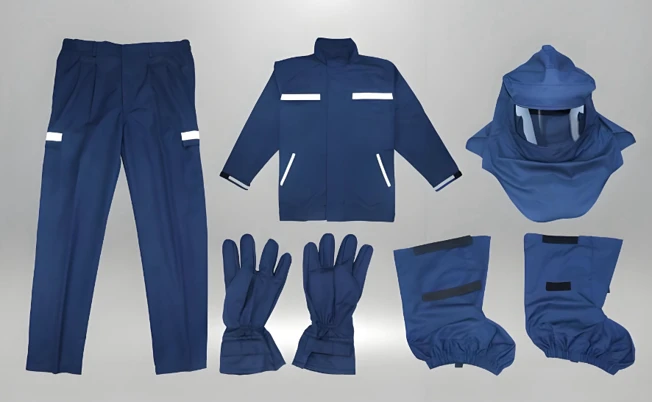

Building a contractor FR programme?
Send the areas, the tasks and the number of employers involved. Shield Wings confirms the garment levels available, the size ranges and the documentation that a multi-employer programme needs.
External references: NFPA 70E electrical safety in the workplace, NFPA 2112 flash fire resistant garments, 29 CFR 1910.132, CCOHS PPE answers, CEN-CENELEC standards portal, Regulation (EU) 2016/425.
{“@type”:”FAQPage”,”@context”:”https://schema.org”,”mainEntity”:[{“@type”:”Question”,”name”:”Who is responsible for FR clothing on a multi-employer site?”,”acceptedAnswer”:{“@type”:”Answer”,”text”:”The employer of the worker is responsible for providing and maintaining the protective equipment its workers need, while the host site is responsible for the rules that apply on its premises. In practice this means a host standard that states the minimum requirement for each area, and contractor arrangements that meet it, with the interface agreed in writing. Ambiguity about who supplies what is the most common source of gaps.”}},{“@type”:”Question”,”name”:”Can a contractor use its own FR garments on a host site?”,”acceptedAnswer”:{“@type”:”Answer”,”text”:”Where the garments meet the host site’s stated requirement and the documentation supports the claim for the tasks performed, there is usually no reason to refuse them. Problems arise when the host standard is expressed as a brand or a colour rather than as a performance requirement, or when the contractor’s documentation cannot demonstrate the level required for the task. A performance-based standard avoids both.”}},{“@type”:”Question”,”name”:”What documentation should contractors be able to produce?”,”acceptedAnswer”:{“@type”:”Answer”,”text”:”The hazard assessment that established the requirement, the standard and level the garments are tested to, the issue records linking garments to workers, the care and laundering arrangements, and the inspection and retirement records. For arc-related work, the required arc rating for the task and the evidence that the garments provided meet it are the core documents.”}},{“@type”:”Question”,”name”:”How should laundering be handled across several employers?”,”acceptedAnswer”:{“@type”:”Answer”,”text”:”Either each employer manages its own laundering to the manufacturer’s instructions, or the host site provides a managed service and requires all garments entering it to be compatible with the process. The second option gives consistency and avoids cross-contamination between garments from different sources, but it only works if the process is inside the care instructions for every garment involved.”}},{“@type”:”Question”,”name”:”How does the programme handle contractors who move between sites?”,”acceptedAnswer”:{“@type”:”Answer”,”text”:”By treating the requirement as a set of documented levels rather than a site-specific product. A contractor who works on several sites needs garments that meet the most demanding requirement they encounter, plus a clear statement of which level applies where, so the issue and the record remain consistent even though the sites are different.”}}]}