

Flame resistant clothing protects oil and gas workers from flash fire, the sudden ignition of gas, vapor, or crude that can engulf a worksite in seconds. Choosing the right FR system means matching NFPA 2112 or EN ISO 11612 garments to each role, from the wellsite to the refinery — and sourcing them from a manufacturer like Shield Wings that can supply conformity documentation for the exact models you order.
Last updated:
Quick definition: Flash fire is the rapid combustion of a flammable gas or vapor cloud that lasts only seconds but can reach extreme temperatures across a wide area; FR clothing limits the burn injury by resisting ignition and insulating…
Key Takeaways
- NFPA 2112 is the benchmark for flash fire protection in North America, while EN ISO 11612 governs heat and flame protection in Europe and international markets; CE marking confirms EU compliance.
- A complete FR system includes FR coveralls or shirt-and-pants, an FR outer layer or jacket for cold or rain, FR underwear layers in the highest-risk areas, and matching FR accessories such as hoods and gloves.
- Choose by role and task: drilling and well service crews need rugged flash fire garments, refinery maintenance teams may need dual flash fire and arc protection, and office or control-room staff usually need little or…
- Offshore platforms add stringent requirements around durability, weather protection, and emergency drills, while onshore sites vary from wellpads to refineries with different exposure levels and comfort needs.
- Expert Views
- For role-based FR system packages in oil and gas, contact our team via our contact page or review the oil and gas safety equipment page.
What Is Flash Fire and How Does FR Clothing Help?
Flash fire is the rapid combustion of a flammable gas or vapor cloud that lasts only seconds but can reach extreme temperatures across a wide area; FR clothing limits the burn injury by resisting ignition and insulating the skin.
Unlike a fire that stays in one place, a flash fire travels through the air and covers the worker from every direction. The flame front passes quickly, but the heat is intense enough to ignite clothing that then continues burning against the skin. FR garments stop that secondary burn — the fabric does not support combustion, and its thermal barrier slows heat transfer long enough for the worker to reach safety. This is why FR clothing is treated as the last line of defense behind gas detection, ventilation, and safe work practices.
Choose garments from the hazard assessment and the applicable standard; fabric or certification type alone does not establish suitability for a task.
Which Standards Apply to FR Clothing in Oil and Gas?
NFPA 2112 is the benchmark for flash fire protection in North America, while EN ISO 11612 governs heat and flame protection in Europe and international markets; CE marking confirms EU compliance.
Flash fire garments are specified against standards such as NFPA 2112 and EN ISO 11612, with arc-rated options following ASTM F1506 where electrical work is involved. For a full comparison, see our FR coverall buyer’s guide and the PPE certification guide.
Many multinational operators require dual certification so one garment works across regions. When selecting, confirm which standard your site or client specifies, then verify the certificate — a label alone is not proof of compliance.
What Should an Oil and Gas FR Clothing System Include?
A complete FR system includes FR coveralls or shirt-and-pants, an FR outer layer or jacket for cold or rain, FR underwear layers in the highest-risk areas, and matching FR accessories such as hoods and gloves.
The system matters more than any single garment. Base layers worn under the coverall add insulation and prevent skin exposure at cuffs and collars. Outer layers add weather protection without weakening the FR rating of the combined system. Head and hand protection close the gaps: an FR balaclava or hood protects the neck, and FR gloves protect the hands during emergency response. When you source the system from one factory, every layer is rated and documented together, which simplifies compliance and removes guesswork.
Regional conditions change the system even when the standard stays the same. In the Middle East and West Africa, crews need lightweight breathable FR fabrics that do not cause heat stress. In the North Sea and Arctic operations, the system expands to include insulated FR under layers and weatherproof FR outerwear. The hazard analysis sets the floor; climate sets the details. A supplier that can supply the full system across climates — and document each layer — makes it possible to standardize the program globally without buying from five vendors.
How Do You Choose FR Clothing for Different Roles?
Choose by role and task: drilling and well service crews need rugged flash fire garments, refinery maintenance teams may need dual flash fire and arc protection, and office or control-room staff usually need little or no FR clothing.
Start by mapping who actually enters classified zones. Wellsite crews work close to hydrocarbons and need NFPA 2112 or EN ISO 11612 garments with good abrasion resistance. Electrical and instrument technicians in the same facility may need arc-rated clothing as well, so dual-certified garments earn their cost. Contractors and visitors should follow the same standard as employees, or they become a hidden gap in the program. A simple role-based matrix turns this into a checklist instead of a debate.
Maintenance crews deserve special attention because they work in the highest-risk window: equipment is being opened, lines are being broken, and the normal barriers are down. In shutdowns and turnarounds, FR clothing requirements should be specified in the work permit system, and spare garments should be available on site for contractors who arrive without the right gear. The matrix should also be reviewed after every incident or near-miss, because the real world always teaches lessons the paperwork missed.
Where Do Offshore and Onshore Requirements Differ?
Offshore platforms add stringent requirements around durability, weather protection, and emergency drills, while onshore sites vary from wellpads to refineries with different exposure levels and comfort needs.
Offshore workers face salt spray, wind, and confined spaces, so garments need corrosion-resistant hardware and layering for weather. Onshore operations range from remote wellpads where durability matters most to refineries where multiple hazards overlap. In both cases, the FR rating is decided by the hazard analysis, and the fabric weight is decided by climate and comfort. Our oil and gas safety equipment selection combines these factors into role-based packages.
Expert Views
“The difference between an effective FR program and a box-checking exercise shows up in the field. We have walked platforms where crews wore the right standard but the wrong fit — baggy coveralls that snag, or garments with unclosed cuffs that defeat the protection. We have also seen operators buy flash fire garments for electrical tasks without checking the arc rating. My guidance is always the same: run the hazard analysis role by role, build the full layered system, and verify every certificate with documentation. Then test a sample on the actual crew, in the actual climate, because a garment that is too hot will end up unzipped. When protection, fit, and comfort line up, the program works — and that is when workers trust it.” — HSE Consultant, Shield Wings
What Should Your Next Step Be?
For role-based FR system packages in oil and gas, contact our team via our contact page or review the oil and gas safety equipment page.
Where Flash Fire Actually Starts, and What the FR Layer Buys
“Flash fire risk” is too abstract to specify against. What a site can actually plan for is a short list of ignition events, and each one points at a control — only some of which are clothing.
| Event | Control that removes it | What FR clothing adds |
|---|---|---|
| Hot work near a hydrocarbon line | Gas test, permit, isolation, fire watch | Escape time if a release ignites anyway |
| Static discharge while loading or sampling | Bonding, earthing, anti-static footwear and clothing | Removes the ignition source from the wearer, not the product |
| Line break during purging or draining | Procedure, drip trays, controlled drain-down | Protection for the person closest to the release |
| Escaped gas finding an ignition source | Detection, ventilation, shutdown discipline | Reduces burn severity on the exposed skin |
| Spill igniting on hot surfaces | Housekeeping, lagging, surface temperature control | No substitute — the fix is the surface |
Worked example: turning a site walk into a garment list
Illustrative walk-through of six roles on one terminal: process operators inside classified areas, maintenance doing hot work on lines, the electrical crew racking breakers, tank farm staff sampling, laboratory technicians, and office staff visiting the unit. The first three roles need FR garments; the sampling role needs FR with anti-static performance; the laboratory needs the requirement decided by what it actually handles; and the visitor case is met by a coverall issued at the gate. Two requirements need a second look — the electrical crew needs an arc rating as well as flash-fire protection, and anyone working near live equipment needs shock protection that no garment provides.
What the flash-fire standard does not promise
FR clothing in a flash fire buys escape time and reduces burn injury; it does not make someone able to fight the fire or work in it, and it does not survive a sustained exposure. The other boundary is that the garment is only one layer of a control set: bonding and earthing, gas detection, permits and procedures do the prevention work, and a site that leans on clothing instead of those controls has moved the risk onto the person rather than removing it.
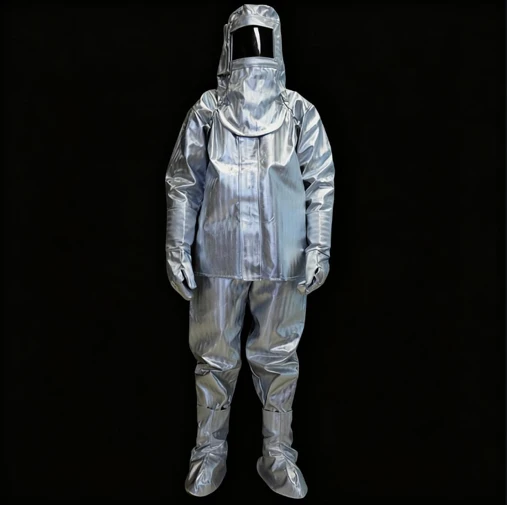
For the wider topic and related decisions, see our Flame-Resistant Workwear.
FAQs
Is FR clothing required for everyone on a rig?
Anyone entering classified zones where flammable gas or liquid may be present should wear appropriate FR clothing; verify the exact requirement with your site’s safety case.
Can FR clothing protect against both flash fire and arc flash?
Some garments are tested to both NFPA 2112 (flash fire) and ASTM F1506 (arc), which is common for electrical work in oil and gas facilities.
How long does FR clothing last in harsh environments?
Life depends on fabric, care, and duty. Inspect quarterly, follow laundering rules, and replace garments showing damage, fading, or contamination.
Do you supply complete layered systems or single garments?
Both. We recommend ordering the complete system — base, coverall, outer, hood, and gloves — so all layers are rated and documented together.
What is a flash fire?
A short-duration, high-intensity fire caused by the ignition of a dispersed flammable vapour, gas or dust cloud. It lasts seconds rather than minutes, which is why protective clothing is specified for escape time and burn reduction rather than for working inside the fire.
Does FR clothing prevent a flash fire?
No. It reduces the consequence. Prevention comes from the control set around the hazard — gas testing, permits and isolation for hot work, bonding and earthing for static, detection and ventilation for escaped gas. Clothing is the last line, and a site that relies on it has not removed the ignition source.
Related Articles
- High Visibility Workwear: Classes and Standards
- PPE for Construction Workers: The Complete Guide
- Arc Flash Suit Care: Inspection Storage and Maintenance
- FR Clothing Fabrics Explained: Nomex Kevlar Modacrylic and More
- FR Clothing Certifications: NFPA 2112 ASTM F1506 and EN ISO 11612
- FR Clothing for Welders: What You Actually Need
Official Resources
- Fr Clothing Certifications Nfpa 2112 Astm F1506 And En Iso 11612
- Heat Protective Clothing
- Products
- Contact Shield Wings
References
- OSHA – Official Website
- NFPA – Official Website
- ASTM International – Official Website
- ISO – Official Website
- European Commission – CE Marking