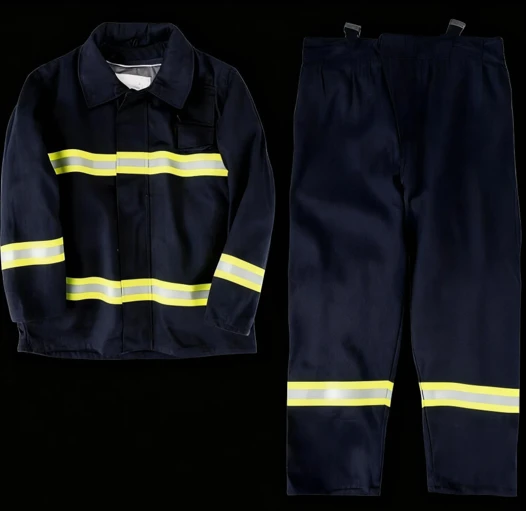
Flame resistant coveralls are one-piece FR garments that protect the torso, arms, and legs against flash fire and arc flash. Buying them well means matching fabric, standard, fit, and customization to your hazard analysis. This guide walks procurement teams through every decision, with factory-direct guidance on flame resistant coveralls from Shield Wings.
Last updated:
Quick definition: The main FR fabric families are aramid fibers such as Nomex-type materials, treated cotton and cotton blends like Proban, and modacrylic blends — each balancing protection, comfort, durability, and cost.
Key Takeaways
- The standard depends on your hazard: NFPA 2112 for flash fire, ASTM F1506 for electrical arc, and EN ISO 11612 for heat and flame in international markets — and some jobs require compliance with more than one.
- Choose in four steps: confirm the standard and hazard level, select the fabric family, check the fit and closure design, and verify the test certificate before ordering.
- FR coveralls must fit close enough to avoid snagging and excess fabric, but loose enough for mobility and an insulating air layer — and every worker needs their own correctly sized garment.
- The table below summarizes the configurable options typically offered by a factory like Shield Wings.
- Yes.
- FR coveralls should be washed with non-ionic detergent, no chlorine bleach or fabric softener, at the temperature on the care label — and inspected regularly because protective performance depends on the fabric staying…
Which Standard Should Your Coveralls Meet?
The standard depends on your hazard: NFPA 2112 for flash fire, ASTM F1506 for electrical arc, and EN ISO 11612 for heat and flame in international markets — and some jobs require compliance with more than one.
| Standard | Primary hazard | Typical markets |
|---|---|---|
| NFPA 2112 | Flash fire | United States, oil and gas |
| ASTM F1506 | Electric arc | United States, electrical work |
| EN ISO 11612 | Heat and flame | Europe and international |
| CE marking where applicable | EU PPE conformity documentation | European Union |
Before comparing prices, confirm which standard your site’s risk assessment requires. Many buyers choose coveralls tested to both a flash fire and an arc standard so one garment covers multiple tasks. The standard is also the anchor of your compliance file: a label without a test report is not proof of anything.
Compliance thinking also shapes documentation. When an auditor asks why a certain coverall is in service, the answer should be a paper trail: the hazard assessment, the standard, the certificate, and the batch records. Buyers who collect that trail from the first sample save themselves weeks of scrambling later. Ask every supplier for the certificate before purchase and batch-level documentation with delivery, and keep both in a single folder that the whole safety team can access.
What Fabrics Are Used in FR Coveralls?
The main FR fabric families are aramid fibers such as Nomex-type materials, treated cotton and cotton blends like Proban, and modacrylic blends — each balancing protection, comfort, durability, and cost.
Inherently FR fibers resist flame as part of their chemistry and keep protecting after many washes. Treated fabrics pass the same standards when new but rely on a chemical finish that needs correct laundering to remain effective. For hot environments, lightweight modacrylic blends breathe better; for heavy industries, aramid and FR cotton blends offer more durability. The right choice depends on climate, task, and budget — which is why our engineers at Shield Wings match fabric to the customer’s conditions rather than pushing one material.
How Do You Choose the Right FR Coverall?
Choose in four steps: confirm the standard and hazard level, select the fabric family, check the fit and closure design, and verify the test certificate before ordering.
Start with the hazard: a flash fire site needs NFPA 2112 clothing, while electrical work needs arc-rated garments with a cal/cm² rating. Next, choose fabric based on climate and duty cycle — lighter blends for hot climates, heavier weaves for abrasion-heavy work. Then look at practical details: closure type, pocket placement, and sizing range. Finally, request the certificate and a sample; a sample worn through a real shift tells you more than any brochure.
Build the selection into a written specification before you contact suppliers. A clear spec — standard, fabric family, closure type, sizing range, and quantity — makes quotes comparable and prevents the common problem of choosing between offers that do not actually match. Include delivery expectations: sample lead time, bulk production time, and how changes mid-order are handled. Factory-direct suppliers can usually confirm these in writing, which is exactly the information a procurement team needs to plan.
What Fit and Sizing Issues Matter for FR Coveralls?
FR coveralls must fit close enough to avoid snagging and excess fabric, but loose enough for mobility and an insulating air layer — and every worker needs their own correctly sized garment.
Common procurement mistakes include ordering one size for a whole crew and ignoring the range of body types. Measure chest, waist, inseam, sleeve, and height against the manufacturer’s chart, and order extended sizes where needed. Pay attention to cuff and collar closures: they should close snugly to prevent flame entry, especially when worn over other layers. A coverall that fits properly also improves compliance, because workers wear what feels like their own gear.
FR Coverall Specifications at a Glance
The table below summarizes the configurable options typically offered by a factory like Shield Wings. Final specifications always depend on the hazard analysis and target standards.
| Specification | Available options |
|---|---|
| Applicable standards | NFPA 2112, ASTM F1506, EN ISO 11612, as specified |
| Fabrics | Aramid, modacrylic blends, FR cotton (Proban-type) |
| Features | Two-way zippers, flap pockets, reflective trim, radio loops |
| Sizing | Regular and extended sizes, custom fit programs |
| Customization | Logos and trim approved as part of the finished garment, company colors, tailored closures |
| Ordering | Samples, wholesale lots, OEM/ODM programs |
Production batches are inspected against written checklists, and traceability records linking production to fabric lots and certificates are available on request, so your compliance file can be completed from first sample to final delivery.
Can You Customize FR Coveralls for Your Company?
Yes. As a manufacturer, Shield Wings customizes FR coveralls with embroidered logos, reflective trim, company colors, and tailored sizing through our OEM and ODM programs.
Branded FR workwear serves two purposes: it presents a professional uniformed team, and it makes compliance visible on site. Logos, reflective trim, and other custom materials must be specified and approved as part of the finished garment system before production, together with pocket configurations for tools and radios and closure choices from zippers to snap fronts. The OEM process mirrors our other lines: agree on the design, approve a sample, then produce. Wholesale buyers can start with one sample coverall, test it, and scale without a large first commitment. More detail is available on our OEM/ODM page.
How Do You Care for FR Coveralls?
FR coveralls should be washed with non-ionic detergent, no chlorine bleach or fabric softener, at the temperature on the care label — and inspected regularly because protective performance depends on the fabric staying intact.
Improper laundering is the fastest way to shorten FR life. Bleach and fabric softeners degrade FR chemistry or leave flammable residues, and high heat can shrink or damage the weave. Store coveralls away from direct sunlight and chemicals, and never store them damp. Set an inspection schedule: check for holes, worn cuffs, frayed seams, and fading, and replace garments that no longer meet the standard. Documentation of care and inspection is part of a defensible safety program.
As a practical baseline, most FR coveralls should be washed in warm water with a mild non-ionic detergent, rinsed thoroughly, and dried on low heat or hung to dry. Industrial laundry services that specialize in FR clothing are worth considering for large teams, because they control temperature, detergent, and inspection in one process. Whatever route you choose, post the care instructions at the laundry point and train workers not to treat FR garments like regular workwear.
Where Should You Buy FR Coveralls in Bulk?
Buy FR coveralls from a factory that can show you the test reports, production records, and sample garments — direct manufacturer sourcing gives you better pricing, control, and traceability than buying through intermediaries.
When you buy factory-direct from a Chinese manufacturer like Shield Wings, you gain three things: wholesale pricing without a trading company markup, direct access to engineers for customization, and batch-level documentation you can attach to your compliance file. Ask every supplier three questions: which standards does the certificate cover, what is the lead time for samples and bulk, and can you inspect or audit production? A supplier that answers all three openly is a supplier worth scaling with.
Volume planning is part of the same conversation. Most factories quote tiered pricing, so confirm the price break at your actual order quantity rather than the starting rate. Ask about sample cost and whether it is credited against the bulk order, and check the production window against your season — FR coverall orders for a new safety season often need four to six weeks of lead time, so early ordering avoids last-minute substitutions of products that do not match your spec.
FR Coverall Procurement Checklist
A short checklist keeps the purchase comparable and compliant:
- Hazard assessment and applicable standard confirmed.
- Fabric family matched to climate and duty.
- Sizing range covers the whole crew.
- Sample approved on real workers.
- Certificate and batch documentation requested in writing.
- Care and replacement schedule defined.
What Should Your Next Step Be?
Confirm the standard your site requires, select the fabric family that fits your climate and tasks, and order samples before scaling to a full team order.
Send us your hazard analysis or current spec, and we will recommend the right FR coverall — standard, fabric, sizing, and customization — with samples available before you commit to bulk. Wholesale and OEM buyers can discuss volume pricing and lead times directly with our factory team through our contact page or by requesting a quote on any FR clothing product page.
Choose garments from the hazard assessment and the applicable standard; fabric or certification type alone does not establish suitability for a task.
What Changes the Protection Over a Coverall’s Life
A coverall is bought certified and worn until someone decides it looks worn out. The gap between those two points is where the protection actually moves, and each change has a check that belongs in the store rather than in a judgement call.
| What changes | Effect on protection | Control |
|---|---|---|
| Wash cycles beyond the care rating | The treatment that gives the fabric its flame resistance is consumed | Record the rated cycles at goods-in and count washes against the garment batch |
| Hydrocarbon or solvent contamination | The contaminated area can burn even though the fabric is intact | Retire rather than launder; contamination is not removed by a normal cycle |
| Decoration added after certification | The decorated garment is no longer the tested article | Approve the decorated sample as the production reference |
| Closure and seam damage | The garment no longer covers what it was specified for | Inspect closures and seams at issue and after each wash |
| Layering changes | An untreated or meltable layer underneath defeats the system | Specify the base layer; check it at fitting, not on the shop floor |
| Size drift through repeated washing | Sleeves and cuffs ride up when the wearer reaches | Check the cover after the first industrial wash, before the batch is issued |
Worked example: a three-year replacement plan from one number
Illustrative. A site issues two coveralls per wearer to 80 people, and the care instruction rates the garment at 50 industrial washes. If each garment is washed weekly — around 45 cycles a year — the rated life is reached inside the first year, and the plan becomes roughly 160 garments a year rather than a three-year cycle ending in one large replacement. The number that drives it is the rated wash count, which is why it belongs on the store’s record next to the batch code; without it, replacement is scheduled by appearance, and appearance is the last thing to change.
Where a replacement decision is not technical
Two constraints sit outside the fabric. Contamination the site cannot identify ends the garment’s life regardless of its condition, because it cannot be cleaned out with confidence. And a garment washed with fabric softener or dried at the wrong temperature may fail the care instruction while still looking new — which is why the laundry record, not the visual check, is the evidence that a coverall is still within its rated life.
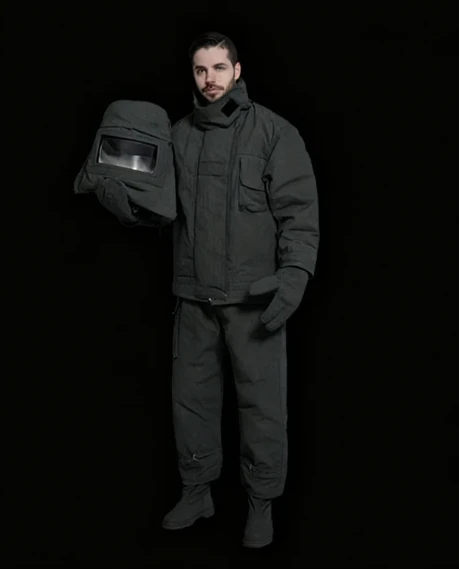
For the wider topic and related decisions, see our Flame-Resistant Workwear.
FAQs
Are FR coveralls and arc-rated coveralls the same?
No. FR resists flame and flash fire; arc-rated garments carry a cal/cm² rating for electrical arc exposure. Some coveralls meet both, so check the certificate.
Can FR coveralls be worn over other clothing?
Yes, when sized for layering. The fit must allow mobility and an insulating air layer without excess fabric that can snag.
How often should FR coveralls be replaced?
Replace garments that show damage, fading, or contamination, and follow the manufacturer’s recommended service life. Quarterly inspection catches most issues early.
Do you offer sample orders for bulk buyers?
Yes. We recommend ordering one sample in the sizes you need, testing it on real workers, and approving it before bulk production.
How long do FR coveralls last?
Service life is set by the care rating and the working environment rather than by age: count the industrial washes against the rated number, and retire on contamination, closure damage or a failed care instruction. A garment that still looks new can be outside its rated life, which is why the wash record matters more than the visual check.
Can we put our logo on FR coveralls?
Yes, when the decoration is approved as part of the finished garment and the certificate covers that configuration. A patch or heat-applied transfer changes the article that was tested, so the sample to approve is the decorated one and the artwork file is part of the order record.
Related Articles
- Thermal Protective Clothing for Steel Mills
- Arc Flash Protection for Utility Workers: A Practical Guide
- Arc Flash PPE Categories 1-4 Explained
- FR Clothing Fabrics Explained: Nomex Kevlar Modacrylic and More
- FR Clothing Certifications: NFPA 2112 ASTM F1506 and EN ISO 11612
- FR Clothing for Welders: What You Actually Need
Official Resources
- Heat Protective Clothing
- Hand Safety In Manufacturing Injuries Prevention And Ppe
- En Iso 11612 Heat And Flame Protection Clothing Standard
- Flame Resistant Clothing For Oil And Gas Standards And Selection
- Fr Coveralls Wholesale How To Vet A Manufacturer
- OEM/ODM Services
- Contact Shield Wings
- Flame Resistant Coveralls The Buyers Guide
References
- NFPA – Official Website
- ASTM International – Official Website
- ISO – Official Website
- European Commission – CE Marking