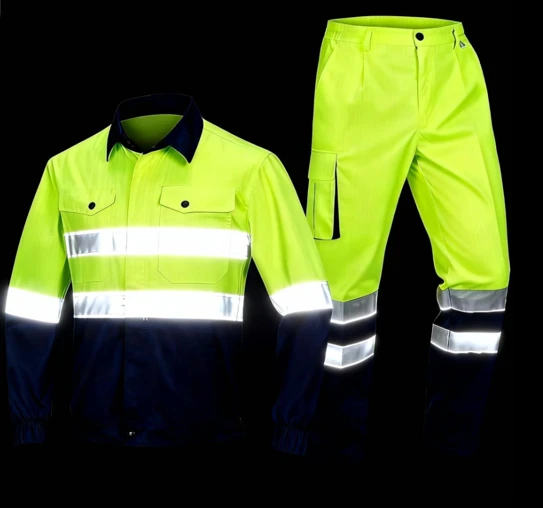
ESD and anti-static clothing both control static electricity, but they are designed for different problems — anti-static garments prevent charge buildup in flammable atmospheres, while ESD garments control charge dissipation in electronics — and the distinction decides the specification. This guide explains the difference, with reference to
Last updated:
Shield Wings’ anti-static workwear.
What Is the Core Difference?
Anti-static clothing limits charge buildup on the garment, while ESD clothing is engineered to dissipate charge at a controlled rate and connect to a grounding system — two different mechanisms for two different risks.
In flammable atmospheres, the goal is to stop charge from accumulating to a level that can ignite vapor or dust. In electronics, the goal is to dissipate charge controllably so a discharge does not damage sensitive components. Anti-static garments use conductive fibers to spread and limit charge; ESD garments are part of a grounded system — with wrist straps, grounding cords, and conductive floors — that drains charge away. The distinction matters because the garment alone is not the whole answer in either case.
Which Risk Is Each Garment Solving?
| Risk | Garment approach | System |
|---|---|---|
| Ignition in flammable atmospheres | Limit charge buildup | Garment plus flooring and footwear |
| Component damage in electronics | Controlled dissipation | Garment plus grounding and straps |
The petrochemical site needs the charge never to reach ignition energy; the electronics facility needs the charge to leave the body in a controlled path. The same fabric could not do both jobs optimally, which is why the garments are specified differently. The risk assessment decides which problem you are solving, and the specification follows.
How Do the Standards Differ?
Anti-static clothing is tested against standards such as EN 1149 for charge decay and surface resistance, while ESD garments follow standards such as IEC 61340-5-1 for the controlled grounding system.
EN 1149 verifies the fabric limits charge buildup; IEC 61340-5-1 governs the complete ESD system, including garments, wrist straps, floors, and their connections. The certificate states which standard the garment meets and the test values. A garment that passes EN 1149 is not automatically compliant as part of an IEC 61340 system, and vice versa. When you specify, name the standard your environment requires and confirm the certificate for the exact model.
How Do You Choose Between Them?
Choose by the hazard: flammable atmospheres point to anti-static garments, often combined with FR, while electronics and cleanrooms point to ESD garments integrated with grounding.
For petrochemical and oil and gas work, anti-static garments with a defined care cycle and often FR certification are the baseline. For electronics assembly and cleanrooms, ESD smocks with wrist straps and grounding points are the system. Some operations need both properties, and combined garments exist with both test reports. The choice follows the risk assessment, the standard, and the environment — never the label alone.
How Do You Care for Each Type?
Anti-static garments must avoid fabric softeners that coat the conductive fibers, and ESD garments must maintain the grounding connections and the integrity of the conductive path.
The care rules protect the mechanism: no fabric softeners, mild detergents, and inspection of the conductive grid for anti-static garments; for ESD garments, check the wrist straps, cords, and garment-to-ground connections on the schedule the system requires. Keep the records per garment or batch and retest where the standard requires. The garment is part of a system, and the care program keeps the system working.
Static control depends on the full grounding system, including garments, flooring, footwear, and work practices, per the applicable standard.
Evidence to Verify Before Approving ESD vs Anti-Static Clothing: What’s the Difference
A supplier claim is not enough to approve ESD vs Anti-Static Clothing. The purchasing file should connect the workplace hazard to the exact model, its supporting documents, and the configuration workers will actually receive.
| Verification item | What to request | Reason to stop approval |
|---|---|---|
| Hazard basis | Task, exposure, environment, and the site assessment that created the requirement | The product is being selected from a catalogue without a documented hazard basis |
| Exact product identity | Model, size range, material or component specification, and revision | The quotation and test document refer to different models or constructions |
| Model-specific evidence | Applicable standard, edition, test method, result, laboratory, and report date | Only a generic certificate, logo, or supplier declaration is available |
| System compatibility | Instructions showing how the item works with the rest of the PPE ensemble | Fit, coverage, accessories, or another PPE item creates a protection gap |
| Receipt and change control | Approved sample, SKU or lot link, inspection criteria, and notice of material changes | The delivered item cannot be tied back to the approved sample and evidence |
For U.S. programs, keep this evidence with the employer’s PPE assessment and training records. OSHA’s general PPE requirements make hazard assessment, suitable equipment, proper fit, and employee training separate obligations; a product certificate does not replace them. See 29 CFR 1910.132.
When to Reopen the Selection Decision
Approval should not be treated as permanent. Reassess ESD vs Anti-Static Clothing when the work, product, evidence, or condition changes.
- The task or exposure changes: repeat the hazard assessment before carrying the old specification into a new process, energy level, temperature, chemical, or work location.
- The supplied construction changes: obtain revised model-specific evidence when fabric, coating, component, accessory, test standard, or manufacturing route changes.
- Fit or compatibility fails: stop issue when movement, coverage, visibility, communication, dexterity, or another PPE item is compromised.
- Damage or contamination appears: follow the manufacturer’s inspection and retirement instructions rather than relying on appearance alone.
- Records no longer match: quarantine stock when the label, SKU, batch, user instructions, and supporting report cannot be reconciled.
This review gate turns procurement into a controlled decision: hazard → model → evidence → fit trial → receipt inspection → periodic reassessment.
FAQs
Is anti-static clothing the same as ESD clothing?
No. Anti-static limits buildup; ESD is part of a controlled grounding system. Specify by the risk you are solving.
Can one garment serve both environments?
Only if it is tested and documented for both properties — confirm the standards and reports for the exact model.
Why is grounding part of ESD clothing?
ESD garments drain charge through a defined path; without the straps, cords, and floor, the garment alone does not complete the system.
How do we choose the right garment for our site?
Tell us the hazard and environment, and we will recommend the specification via our contact page , or ask Shield Wings’ factory team on the anti-static workwear page .