

The most common mistake in hand safety is buying up. A site orders the highest cut level it can find, the gloves are too thick to feel a fastener, workers take them off, and the injury happens bare-handed. Protection that gets removed is not protection — and the glove level is a decision that has to come out of the task, not out of the catalogue.
(Last modified date: October 1, 2026)
Key Takeaways
- Hand injuries are common because hands touch everything, and because cuts, crushes, burns, chemicals and vibration each need a different control that no single glove provides.
- Build the glove matrix by walking each task and recording the hazard, the required properties and the level — so the floor and procurement read from the same document.
- Engineering controls come first. Guarding, tool design and process change reduce exposure before any glove is selected.
- Under OSHA 1910.138 the employer must base glove selection on the task, the conditions, the duration of use and the hazards identified — not on a generic level.
- Over-rated gloves reduce dexterity and get removed. Match the level to the task and review the matrix after every incident.
Why Are Hand Injuries So Common in Manufacturing?
Hands are the most frequently injured part of the body in manufacturing because they touch everything — tools, parts, edges and moving equipment — and because the hazards they meet require different protection that a single glove cannot deliver.
Manufacturing exposes hands to a wide hazard set at the same time: sharp edges and blades, crushing and pinch points, heat and sparks, chemicals, and vibration. The same worker may meet several of these across one shift, which is why hand safety is a programme rather than a product. The cost also runs well past treatment — lost time, replacement training and production disruption all follow a single laceration.
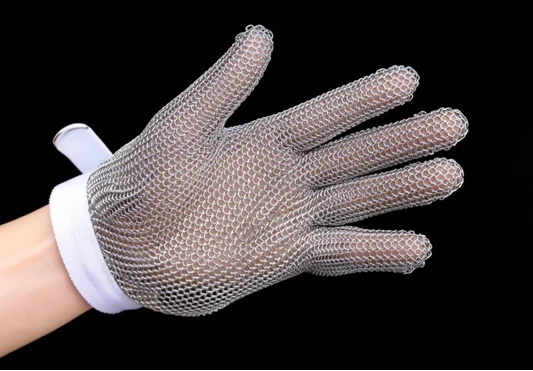
Cut-resistant gloves are one line in the matrix — not the whole answer to hand safety.
What Are the Main Hand Hazards in Manufacturing?
The main hazards are cuts and lacerations, crushing and impact, pinch points, burns and thermal exposure, chemicals, and vibration — and each one is controlled differently.
| Hazard | Control |
|---|---|
| Cuts and lacerations | Cut-resistant gloves matched to the task |
| Crushing and impact | Impact-rated gloves |
| Pinch points | Guarding plus task-specific gloves |
| Burns and heat | Heat-resistant gloves |
| Chemicals | Chemical-resistant gloves |
| Vibration | Anti-vibration gloves, tool controls |
That list is the starting point, and US regulation names the same categories. OSHA 1910.138 requires employers to select hand protection where hands are exposed to skin absorption of harmful substances, severe cuts or lacerations, severe abrasions, punctures, chemical burns, thermal burns, or harmful temperature extremes. It then sets the selection test: the choice must be based on the performance characteristics of the glove measured against the task, the conditions present, the duration of use, and the hazards and potential hazards identified. A glove chosen without that comparison is a guess with a specification number on it.
The task assessment decides the detail. A fabrication line needs cut and impact protection, a foundry adds heat, and a finishing department adds chemical resistance. The hazard list drives both the glove specification and the engineering controls that reduce exposure at the source.
How Do You Build a Task-Level Glove Matrix?
Walk each task and record the hazards, the required glove properties and the level — then standardise the specification so workers and procurement work from the same sheet.
A matrix does not need to be complicated. Five columns carry the whole decision, and the same sheet becomes both the ordering document and the training document:
| Task | Hazard identified | Required property | Level / test standard | Glove model |
|---|---|---|---|---|
| Sheet handling at the shear | Severe cut, abrasion | Cut resistance with grip | Level per EN 388 cut test | — |
| Press loading | Pinch point, impact | Impact protection, dexterity | Impact-rated back | — |
| Degreasing station | Chemical contact | Chemical resistance | Permeation data per chemical | — |
| Bench assembly | Hand-arm vibration | Anti-vibration padding | Tool control first | — |
For each task, note the materials handled, the edges and forces involved, and any heat, chemical or impact exposure, then assign the glove properties — cut level, impact level, coating and size. Review the matrix after incidents, near misses and process changes, because the hazards move when the line moves. The details of cut-level testing are covered in EN 388 explained: cut resistance testing for gloves.
How Do You Reduce Hand Hazards at the Source?
Engineering controls come first. Guarding, tool design and process change reduce exposure before PPE is needed, and the hierarchy of controls should shape every hand safety improvement.
Guarding covers pinch points and moving equipment. Tool design reduces vibration and awkward grip. Process change can remove the sharp edge or the hot contact entirely. PPE is the last layer, selected for the residual risk that remains after the controls are in place — not as a substitute for them. When a hand injury happens, the investigation should ask why the control failed, not only which glove was worn. That single shift in the question is what moves a programme from reactive to preventive.
What Does the Training and Compliance Programme Include?
Task-level training, a fitting and issue system per worker, scheduled inspection, and audits that verify the glove on the hand matches the glove on the matrix.
Workers need to know which glove belongs to which task and why, because compliance follows understanding rather than instruction. Issue gloves per worker where fit matters — a loose glove is a caught glove — inspect on a schedule, and replace damaged gloves immediately rather than at the end of the week. The audit checks the field: is the glove on the hand the glove named in the matrix, and is it in serviceable condition? The same discipline that keeps the programme running also keeps the documentation ready for an inspection.
One sourcing note that changes the workload later: a supplier who documents every glove line and keeps batch records makes that audit trail simple, while a patchwork of suppliers makes it a project. Review the matrix and the stock on the same cycle, and let incident and near-miss data drive the next specification.
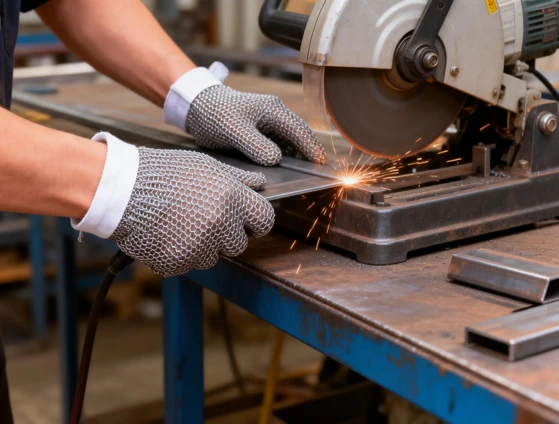
Impact and mechanical gloves cover the crush and pinch hazards a cut-resistant glove does not.
Running the Programme as a Loop
Hand safety is a continuous loop — assess, equip, train, audit, improve — and the review is what keeps the loop turning. Review on a fixed cycle and immediately after any incident: compare injury data against the glove matrix, confirm the controls are still in place, and update the training and the specification from what the data shows. Share the results with the floor, because a programme the crew can see working is a programme the crew supports. Our team can supply the full glove matrix — cut, impact, heat and chemical lines — with test reports per model, through the contact page or the manufacturing PPE page.
For the wider topic and related decisions, see our Hand, Cut & Impact Protection.
FAQs
How often should the hand safety program be reviewed?
The hand safety program should be reviewed on a cycle and after every incident: compare the injury data against the glove matrix, confirm the controls are in place, and update the training and the spec from what the data shows. Share the results with the floor, because a program the crew sees working is a program the crew supports.
Do we need a different glove for every task?
Most sites standardize on a small set of glove types covering the main hazard groups, with the matrix naming which glove belongs to which task.
Should we buy the highest cut level?
No. Match the level to the task; over-rated gloves reduce dexterity and get removed, which creates a different risk.
What should we do after a hand injury?
Investigate the task, the controls, and the glove, update the matrix and training, and correct the gap before work resumes.
How do we set up a hand safety program?
Walk your tasks, build the glove matrix, and request matched gloves with documentation via our contact page or the manufacturing PPE page.
Related Articles
- EN 388 Explained: Cut Resistance Testing for Gloves
- Cut Resistant Gloves: The Complete Buying Guide
- Cut Resistant Gloves for Food Processing: What to Look For
- PPE for Welders and Fabricators: Complete Guide
- Why Do Oil and Gas Workers Need FR Clothing?
Official Resources
- Manufacturing PPE
- Cut Resistant Gloves
- Arc Flash Suit Care: Inspection, Storage and Maintenance
- Contact Shield Wings
References
- 29 CFR 1910.138 — Hand protection: hazard categories requiring hand protection, and the basis for selecting it. Electronic Code of Federal Regulations.
- 29 CFR 1910.132 — General requirements: hazard assessment, PPE selection and written certification. Electronic Code of Federal Regulations.
- EN 388 — protective gloves against mechanical risks: abrasion, cut, tear and puncture test methods (standard designation; full text is not publicly available).