

Glass and sheet metal both cut, but they do it differently and they reward different gloves. A wet glass pane slides through the hand and needs grip before it needs anything else. A thin steel offcut from a shear presents a sharp edge at speed with oil on it. Buying the highest-rated cut glove for both tasks usually produces a glove nobody wears for a full shift, and a glove that is not worn provides no cut protection at all.
The Hazard First, the Product Second
The physical mechanism is an edge sliding across the glove under load. How much of the force reaches the hand depends on the sharpness of the edge, the angle of contact, the speed and, crucially, how well the worker controls the material. That last factor is why grip and dexterity are part of cut protection rather than separate from it. A glove that cannot hold an oily panel produces the slip that creates the cut, whatever the liner inside it is rated for.
Task differences then drive the specification. Flat glass handling involves large surfaces, awkward centre-of-mass shifts and, on some lines, water; the load is steady and the risk is loss of grip on a heavy pane. Sheet metal handling involves edges that are sharp by design, offcuts that arrive unpredictably, and an oily film that reduces friction. Processing and packaging add other requirements: repeated pick-and-place of small parts demands sensitivity, while manual deburring demands abrasion resistance at the fingertips.
What the Risk Assessment Has to Establish
Occupational hand protection requirements sit in 29 CFR 1910.138 in the United States, with the selection framework in 29 CFR 1910.132; European buyers work through the PPE Regulation and the mechanical risk standard for gloves. The assessment converts the hazard into a specification.
- The material, its edges and the forces involved, including whether the edge is stationary or moving and whether machinery is present.
- The condition of the surface: dry, wet, oily or contaminated, and how that changes through the shift.
- The size and weight of the items handled, since a heavier item changes the grip force required.
- The dexterity the task needs, because it decides whether a high-level liner can be used at all.
- The duration and repetition, including whether the glove has to stay on for the whole shift.
- Other exposures present, such as heat, cold, chemicals or a need for hygienic handling.
- The machine controls that apply, because guarding and tooling design usually reduce the hazard more than any glove.
The dexterity line and the machine controls line are the two most often left out. The first decides whether the specification survives contact with the work; the second determines how much of the hazard the glove is being asked to absorb, and it is usually the more effective place to intervene.
Which Hazards This Category Covers and Which It Does Not
The boundary with the forearm matters in both materials, because glass panes and long offcuts are frequently held against the arm or the body while being positioned. A gauntlet cuff or a sleeve is often the difference between a protected forearm and an uncovered one, and the two should be specified together so that the cuff overlaps the sleeve rather than leaving a gap. In glass handling this is a routine requirement; in sheet metal work it is often overlooked until a cut appears above the glove.
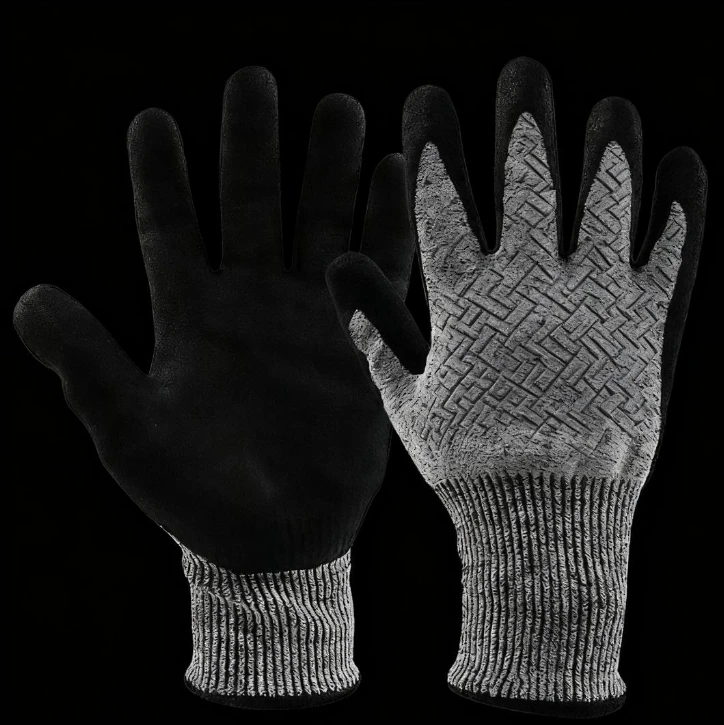
High cut resistant gloves in this family cover the hand and, in gauntlet designs, the wrist and part of the forearm. The constructions typically combine high-performance yarns with steel or glass components at the higher levels, and they are usually coated on the palm or fully coated to provide grip and abrasion resistance. The gloves sit in the hand protection range alongside the heat and impact families.
What they do not cover matters as much. A cut glove is not puncture protection unless it is tested and documented for it, and point hazards such as wire ends or staples behave differently from a sliding edge. It is not heat protection: molten metal, hot components and flame need their own specification. It is not chemical protection, and an oily or solvent-contaminated glove may need replacement rather than cleaning. And it does not remove the hazard: machine guarding, safer handling methods, jigs and lifting aids come first in the hierarchy of controls.
Matching Task to Protection Level
| Task | What dominates | Glove characteristics that follow | What to verify |
|---|---|---|---|
| Flat glass handling and glazing | Wet or damp grip on large panes | Cut resistant liner with a grip coating suited to wet surfaces, gauntlet cuff | Grip trial on the actual pane, wet and dry |
| Glass cutting and edge work | Sharp fresh edges, small controlled movements | Higher cut level with a thinner liner to preserve control | Cut level documentation and dexterity trial |
| Sheet metal shearing and handling | Sharp edges with oil film, repetitive handling | Cut resistant liner with an oil-tolerant coating and good abrasion life | Coating performance on oily parts and wear rate over a shift |
| Press and machine feeding | Edge exposure plus machine movement | Glove selected for the task, with guarding and tooling as the primary controls | Machine controls in place, and the glove specified for the residual exposure |
| Deburring and finishing | Abrasion with intermittent sharp edges | Higher abrasion resistance with cut performance documented | Abrasion and cut data for the model, and replacement rate |
| Inspection and packing of metal parts | Frequent light handling, small components | Thinner glove with moderate cut level for sensitivity | Sizing and dexterity across the workforce |
The cut level itself comes from the assessment and from the standard the site works to, and the test method matters: the performance of a glove containing hard or abrasive fibres can differ noticeably between a rotating-blade test and a straight-blade test, which is why a level is not comparable across frameworks without the underlying data. The detail behind that is set out in Shield Wings’ guide to EN 388 cut resistance testing, which owns the topic.
Where Selection Usually Goes Wrong
One further pattern is worth separating from the list, because it is commercial rather than technical. Where gloves are bought on unit price alone, the cheaper product is usually the one with less abrasion resistance and a shorter coating life, so it is replaced more often and worn past the point where the liner is still intact. Comparing cost per pair without comparing replacement rate and the level of protection in month two tends to produce a decision that looks economical in the purchase order and expensive in the incident record.
The failures in glass and metal work are consistent.
- Buying the top level for every task. Thicker liners reduce dexterity, so the glove is removed for the delicate part of the job.
- Ignoring grip. A slip under load is the mechanism that produces most cuts, and it is a coating and fit question rather than a liner question.
- One glove for two materials. Glass and metal present different surfaces, and a compromise often performs poorly on both.
- Coating used past breach. Once the liner is exposed and abraded, the marked level no longer describes the glove on the hand.
- Puncture assumed from cut data. Point hazards need their own documentation.
- Oily gloves left in service. Contamination affects grip and can affect the liner, and the care instructions determine what can be done about it.
- Guarding overlooked. Where hands still enter a blade area, the more effective answer is a change to the machine or the method, not a heavier glove.
The Hierarchy of Controls Around the Selection
Cut injuries are reduced most reliably by keeping the hand away from the edge. Machine guarding, fixed or interlocked enclosures, jigs and fixtures that hold the workpiece, vacuum and magnetic lifters for sheet material, mechanical handling for sheet and panes, safe edge protection during transport, and tooling that removes the need to reach into the cutting area all reduce the exposure. Administrative controls follow: methods for handling and stacking, restrictions on loose blades and scrap, and training in body position and grip.
Personal protective equipment is the last line of defence. A cut glove reduces the severity of contact when the earlier controls fail or when a residual exposure remains, and it depends on being worn for the whole task, in the right size, in sound condition. The evidence from most plants is that the glove which gets worn is the one that lets the worker do the job, which is why dexterity belongs in the specification rather than in the complaint log.
Specification Points to Fix Before Ordering
- The task, the material and the surface condition, including how wet or oily the parts are in practice.
- The standard the glove must be tested to, the performance level required, and the test method where the framework allows more than one.
- The construction: liner type, level, gauge, coating material and coverage, and cuff length.
- Grip and dexterity requirements, verified by a trial on the actual component in the actual condition.
- The size range and the sizes actually worn, with a fitting step before bulk issue.
- Replacement rules with defined wear indicators, plus a consumables plan that keeps replacements available.
- Documentation required with the quotation: test evidence for the model and site, care instructions, traceability.
- Change control, so a substitution of liner or coating is notified before shipment.
The cut glove families themselves are listed on the cut resistant gloves page, including constructions that extend to the highest cut levels with 316L stainless steel components. Shield Wings manufactures hand protection at a Guangdong production base and works with glass processors, metal fabricators and distributors on liner, coating and size selection, supplying the test documentation that each claimed level requires.
The decision that holds up is the one taken from the material and the surface condition, and then tested with the workers who will wear the glove. A level that cannot be worn is a specification that will be quietly abandoned by the end of the first shift.
For the wider topic and related decisions, see our Hand, Cut & Impact Protection.
Frequently Asked Questions
What is the highest cut level available in a glove?
Cut performance scales run upward through the levels defined by the standard the glove is tested to, and the highest levels are reached with constructions that combine high-performance yarns with steel or glass components. A higher level is not automatically the better choice: it usually brings a thicker liner, less dexterity and a shorter service life, so the level should be selected against the task rather than against the top of the scale.
Do gloves for glass handling need a different coating from sheet metal gloves?
Often they do. Glass handling involves wet or damp surfaces on some lines and smooth, flat panes on others, and the coating determines grip on those surfaces. Sheet metal work usually involves oily, dry or abrasive edges where a different coating performs better. Where a single glove covers both, the grip requirement of the more difficult condition should decide the coating.
How does fit affect cut performance?
A glove that is too loose rotates on the hand when a sharp edge is grasped, which reduces control and can expose the palm or fingers; a glove that is too tight is removed for the difficult part of the task. Fit therefore affects both the protection and the compliance rate, and the correct size should be established by trial with the component rather than by assuming the size the worker wears in other gloves.
How do I know when a cut glove should be replaced?
Replace it when the liner is exposed, when the coating is breached or cut, when the glove is contaminated in a way the care instructions cannot resolve, or when the glove no longer fits correctly. Cut performance belongs to the intact construction, so a glove worn past those points no longer matches the level it is marked with. A defined wear indicator and easy replacement at the workstation keep the rule practical.
Can a cut glove also provide puncture protection?
Only where the puncture performance is part of the glove’s tested claims. Cut resistance describes behaviour against a sliding edge, while puncture resistance describes resistance to a point under load, and different constructions achieve them. Where the task involves both, for example handling scrap with sharp points, the specification should require evidence for each property on the same glove.

Choosing gloves for glass or sheet metal?
Send the material, the surface condition and the handling method. Shield Wings recommends liner and coating combinations, confirms the performance levels that can be documented, and supplies samples for a trial.
External references: 29 CFR 1910.138 hand protection, 29 CFR 1910.132, CCOHS guidance on protective gloves, UK HSE personal protective equipment guidance, CEN-CENELEC standards portal, Regulation (EU) 2016/425.
{“@context”:”https://schema.org”,”@type”:”FAQPage”,”mainEntity”:[{“@type”:”Question”,”name”:”What is the highest cut level available in a glove?”,”acceptedAnswer”:{“@type”:”Answer”,”text”:”Cut performance scales run upward through the levels defined by the standard the glove is tested to, and the highest levels are reached with constructions that combine high-performance yarns with steel or glass components. A higher level is not automatically the better choice: it usually brings a thicker liner, less dexterity and a shorter service life, so the level should be selected against the task rather than against the top of the scale.”}},{“@type”:”Question”,”name”:”Do gloves for glass handling need a different coating from sheet metal gloves?”,”acceptedAnswer”:{“@type”:”Answer”,”text”:”Often they do. Glass handling involves wet or damp surfaces on some lines and smooth, flat panes on others, and the coating determines grip on those surfaces. Sheet metal work usually involves oily, dry or abrasive edges where a different coating performs better. Where a single glove covers both, the grip requirement of the more difficult condition should decide the coating.”}},{“@type”:”Question”,”name”:”How does fit affect cut performance?”,”acceptedAnswer”:{“@type”:”Answer”,”text”:”A glove that is too loose rotates on the hand when a sharp edge is grasped, which reduces control and can expose the palm or fingers; a glove that is too tight is removed for the difficult part of the task. Fit therefore affects both the protection and the compliance rate, and the correct size should be established by trial with the component rather than by assuming the size the worker wears in other gloves.”}},{“@type”:”Question”,”name”:”How do I know when a cut glove should be replaced?”,”acceptedAnswer”:{“@type”:”Answer”,”text”:”Replace it when the liner is exposed, when the coating is breached or cut, when the glove is contaminated in a way the care instructions cannot resolve, or when the glove no longer fits correctly. Cut performance belongs to the intact construction, so a glove worn past those points no longer matches the level it is marked with. A defined wear indicator and easy replacement at the workstation keep the rule practical.”}},{“@type”:”Question”,”name”:”Can a cut glove also provide puncture protection?”,”acceptedAnswer”:{“@type”:”Answer”,”text”:”Only where the puncture performance is part of the glove’s tested claims. Cut resistance describes behaviour against a sliding edge, while puncture resistance describes resistance to a point under load, and different constructions achieve them. Where the task involves both, for example handling scrap with sharp points, the specification should require evidence for each property on the same glove.”}}]}