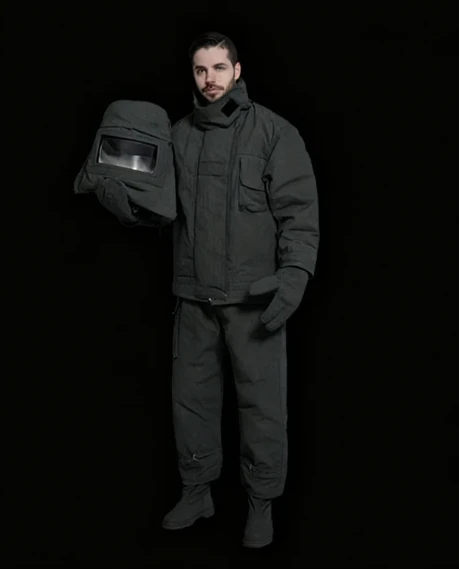
Flame retardant hoods protect the neck, scalp, and the exposed skin between the helmet and the jacket — the gaps where flame and arc energy find their way in. This guide explains why they matter and how to choose them, with reference to Shield Wings’ FR hoods.
Last updated:
Why Do FR Hoods Matter?
FR hoods matter because the neck and scalp are among the most exposed areas in a fire or arc event, and a gap at the collar line turns a protected body into an injury site.
In arc flash and flash fire exposure, the face, neck, and scalp face the highest energy — and they are exactly the areas a jacket alone leaves open. The hood closes that gap, providing FR coverage between the helmet, the face protection, and the jacket collar. It is part of the complete system, not an accessory: the rating of the hood must match the rating of the ensemble it completes.
What Should an FR Hood Cover?
An FR hood should cover the scalp, neck, and the area above the jacket collar, with an opening for the face that works with the helmet and face protection.
| Coverage area | What it protects |
|---|---|
| Scalp | Radiant heat, flame |
| Neck | Flame and arc exposure |
| Collar overlap | Gap between hood and jacket |
| Face opening | Works with face shield and helmet |
The hood must overlap the jacket collar and tuck under the helmet so there is no exposed path from the outside to the skin. The face opening must align with the face protection so the eyes and breathing area stay clear. The hood is designed as part of the system, and the fit and coverage are part of the selection.
What Standards Apply to FR Hoods?
FR hoods are tested to the standards of the ensemble they complete — arc-rated hoods follow arc standards such as ASTM F1506 or IEC 61482, while flash fire hoods follow standards such as NFPA 2112.
The standard must match the hazard: an arc-rated ensemble needs an arc-rated hood with the correct cal/cm² rating, and a flash fire ensemble needs a hood certified for flash fire. The hood’s certificate should state the standard, the rating, and the model, and it should match the ensemble it completes. A hood from a different system, or one without a matching rating, creates the gap the ensemble was designed to close.
How Do You Choose the Right Hood?
Choose the hood by the ensemble’s rating, the fit with the helmet and face protection, the material’s breathability, and the task’s duration — then trial it with the crew.
Start with the rating the ensemble requires, then check the fit: the hood must tuck under the helmet and overlap the jacket without binding or leaving gaps. Consider breathability and comfort, because a hood worn for a full shift must manage heat. Confirm the face opening works with the face shield or welding helmet. Trial the hood with the rest of the system, because a hood that does not integrate is a hood that gets adjusted and abandoned.
How Should FR Hoods Be Cared For?
Launder FR hoods per the care label with approved detergents, inspect them before each use for holes, fraying, and contamination, and replace them when the protection is compromised.
The hood takes direct exposure, so inspection matters: check for holes, worn seams, and contamination that could ignite. Follow the same laundry rules as the rest of the FR clothing — no bleach, no fabric softeners. Replace the hood on the ensemble’s service schedule and after any incident. A hood in good condition is part of the protection; one that is worn is a gap.
Choose garments from the hazard assessment and the applicable standard; fabric or certification type alone does not establish suitability for a task.
FR hoods should be ordered as part of the ensemble, not as a separate impulse purchase: the rating must match the jacket and helmet system, and the documentation should travel with the set. Work with a manufacturer that supplies the hood with the certificate for the exact model and can confirm compatibility with the ensemble’s ratings and fit. Keep spares for the sizes in use, because a missing hood is a gap in the system, and review the hood spec when the ensemble or the task changes. A hood that is rated, fitted, and stocked is the piece that closes the gap the ensemble was designed to protect.
Confirm the face opening aligns with the face protection and the hood tucks under the helmet, because a hood that shifts during work creates the gap it was designed to close.
Evidence to Verify Before Approving Flame Retardant Hoods: Why They Matter and How to Choose
A supplier claim is not enough to approve Flame Retardant Hoods Why They Matter and How to Choose. The purchasing file should connect the workplace hazard to the exact model, its supporting documents, and the configuration workers will actually receive.
| Verification item | What to request | Reason to stop approval |
|---|---|---|
| Hazard basis | Task, exposure, environment, and the site assessment that created the requirement | The product is being selected from a catalogue without a documented hazard basis |
| Exact product identity | Model, size range, material or component specification, and revision | The quotation and test document refer to different models or constructions |
| Model-specific evidence | Applicable standard, edition, test method, result, laboratory, and report date | Only a generic certificate, logo, or supplier declaration is available |
| System compatibility | Instructions showing how the item works with the rest of the PPE ensemble | Fit, coverage, accessories, or another PPE item creates a protection gap |
| Receipt and change control | Approved sample, SKU or lot link, inspection criteria, and notice of material changes | The delivered item cannot be tied back to the approved sample and evidence |
For U.S. programs, keep this evidence with the employer’s PPE assessment and training records. OSHA’s general PPE requirements make hazard assessment, suitable equipment, proper fit, and employee training separate obligations; a product certificate does not replace them. See 29 CFR 1910.132.
When to Reopen the Selection Decision
Approval should not be treated as permanent. Reassess Flame Retardant Hoods Why They Matter and How to Choose when the work, product, evidence, or condition changes.
- The task or exposure changes: repeat the hazard assessment before carrying the old specification into a new process, energy level, temperature, chemical, or work location.
- The supplied construction changes: obtain revised model-specific evidence when fabric, coating, component, accessory, test standard, or manufacturing route changes.
- Fit or compatibility fails: stop issue when movement, coverage, visibility, communication, dexterity, or another PPE item is compromised.
- Damage or contamination appears: follow the manufacturer’s inspection and retirement instructions rather than relying on appearance alone.
- Records no longer match: quarantine stock when the label, SKU, batch, user instructions, and supporting report cannot be reconciled.
This review gate turns procurement into a controlled decision: hazard → model → evidence → fit trial → receipt inspection → periodic reassessment.
FAQs
How do we confirm hood fit and track it with the ensemble?
Confirm the face opening aligns with the face protection, because a hood that shifts during work creates the gap it was designed to close.
Can any FR hood be used with any ensemble?
No. The hood’s rating must match the ensemble’s rating and fit its system — confirm both before use.
Do arc-rated and flash fire hoods differ?
Yes. They are tested to different standards; the hood must match the hazard the ensemble addresses.
How often should FR hoods be inspected?
Before each use, with deeper inspection on the ensemble’s schedule; replace damaged or contaminated hoods immediately.
How do we get FR hoods matched to our ensembles?
Tell us your ensemble ratings, and we will confirm matching hoods via our contact page or the FR hood page .