

These two hoods are often compared as if they were grades of the same product, one heavier and one lighter. They are not. One is built to reflect radiant heat away from the wearer, and the other is built to resist ignition and limit heat transfer from a flash fire or an arc. Choosing between them is not a quality decision; it is a question of which mechanism is present in the task, and getting it wrong leaves the worker protected against the wrong event.
What Each Option Is Designed For
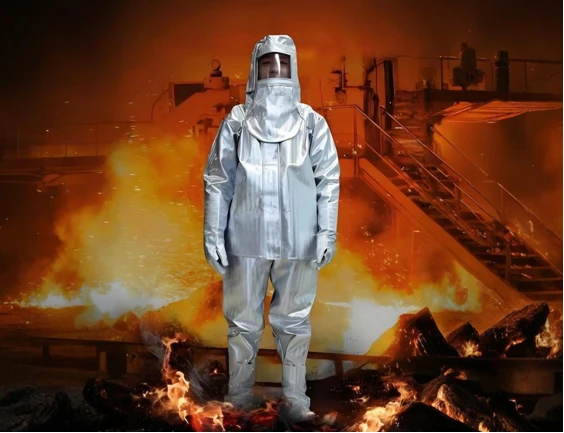
An aluminium foil hood, also described as an aluminised hood, is specified where radiant heat is the dominant load: furnace doors, casting lines, hot billet handling, glass furnaces and molten metal operations. Its construction places a reflective surface over a heat resistant substrate, so a proportion of the radiant energy that would otherwise be absorbed is reflected before it reaches the garment. That is why it is used where workers face a hot surface directly, and why it is normally paired with a reflective face shield and heat protective clothing.
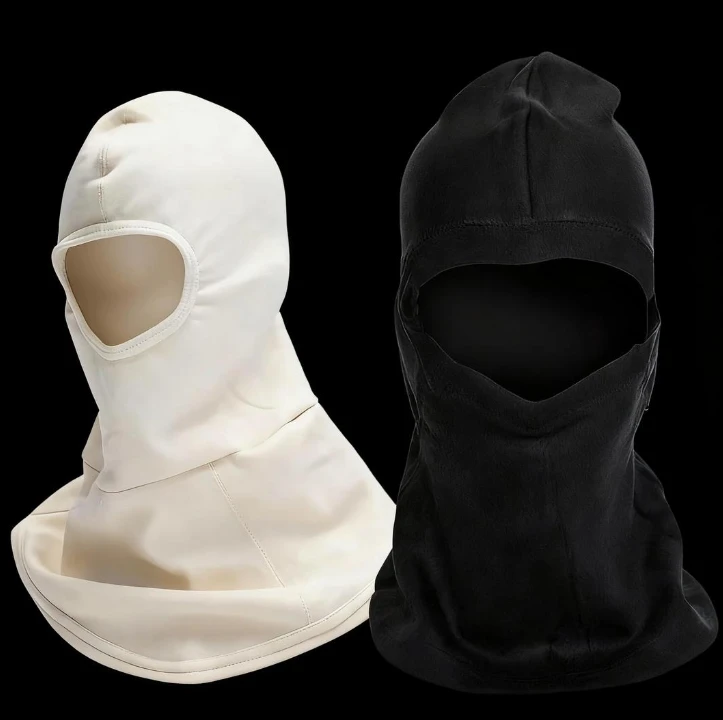
An FR hood or balaclava is specified where flash fire or electric arc exposure is credible, and it is worn as part of an arc-rated or flame resistant ensemble. It is built from materials that resist ignition, limit heat transfer and do not melt, and it is designed to sit under a helmet or with a face shield, covering the neck, ears and head. Electrical utilities, petrochemical plants, and welders working in confined or hazardous areas are the typical users.
It helps to name the physical difference plainly, because it explains every other difference between the two products. Radiant heat travels from a hot surface to the wearer without heating the air in between, which is why a reflective barrier placed in the line of sight reduces what the worker receives. Convective and contact heat from a flash fire or an arc arrive at the garment itself, which is why the material’s ignition behaviour and its insulation value, rather than its surface reflectivity, decide performance. Once that distinction is clear, the remaining comparison rows become consequences rather than separate decisions.
How They Differ in Construction
The construction difference follows directly from the hazard. Aluminised hoods depend on a reflective surface layer, which means the surface is the working part of the garment and the materials beneath it exist to hold that surface in place and to block residual heat. They are generally stiffer, less breathable and more resistant to folding, and they are often made with a wider face opening to accommodate a reflective shield.
FR hoods use inherently flame resistant or treated fabrics that can be cut and sewn close to the head, which gives a closer fit, better hearing and easier use under a helmet. The material does not reflect radiant heat, but it resists ignition and limits heat transfer, and it can be laundered and reused with a longer service interval than a reflective surface normally allows. Seams, closures and the face opening are the areas where both types are engineered, and in both cases those are the parts that determine whether coverage is achieved in use.
There is one construction detail worth raising with any supplier before ordering, and it applies to both families. The area that fails first in service is rarely the middle of the fabric; it is the face opening, the seams around it, and the closure that holds the hood in place. Those are the parts that must be inspected and, where the design allows, replaced. A hood whose face opening stretches out of shape in the first month will leave the throat and chin exposed for the rest of its life, and no material claim compensates for that.
Performance Differences That Matter on Site
| Consideration | Aluminium foil hood | FR hood or balaclava |
|---|---|---|
| Dominant hazard addressed | Radiant heat from a hot surface or molten metal source | Flash fire and electric arc exposure |
| How the hazard is managed | Reflective surface reduces radiant energy reaching the garment | Material resists ignition and limits heat transfer |
| Fit and mobility | Stiffer, wider face opening, often worn with a reflective shield | Close fitting, easy to wear under a helmet |
| Comfort over a shift | Warm and less breathable; usually removed when out of the heat | Worn for the whole task as part of the ensemble |
| What ends its life | Surface damage, creasing, contamination and heat cycling | Fabric damage, contamination, fit loss and laundering condition |
| Where it is usually found | Foundries, steel and glass plants, molten metal handling | Utilities, petrochemical, welding and maintenance work |
Read the table as a pair of columns rather than a ranking. The aluminised hood is not an upgrade of the FR hood, and the FR hood is not a lighter version of the aluminised one. Each answers a different physical mechanism, and the row that decides the choice is the first one, which belongs to the assessment rather than to the catalogue.
Cost and Service Life Compared
The commercial comparison is about replacement frequency more than unit price, and the drivers differ. A reflective surface loses its benefit through creasing, abrasion, contamination and cleaning, so aluminised hoods tend to be replaced on the condition of the surface rather than on visible wear to the fabric. Handling and storage matter a great deal: a hood that is folded into a locker or scraped against a structure can lose its reflective performance long before it looks damaged.
An FR hood is retired on fabric damage, contamination, loss of fit or laundering condition, and it generally tolerates more handling. Its cost over time is driven by how many launderings the material takes, how the site washes it, and how often the fit changes because the hood has stretched or shrunk. In both cases the dominant cost is usually not the garment but the consequence of the wrong specification: a hood that is not worn, or that is worn past the condition in which it still performs.
Stocking arrangements matter as much as the products. Aluminised hoods are usually held at or near the hot area because they are only useful there, while FR hoods travel with the worker as part of a set stored in a bag or a locker. Where a site keeps both, the storage and inspection rules should differ accordingly: reflective surfaces need somewhere flat and protected from abrasion, while FR hoods need to be dry, clean and available at the point of issue. A single storage practice applied to both families is how reflective performance is quietly lost in a locker.
Where the Choice Is Genuinely Commercial
There are situations where both families would satisfy the requirement and the decision becomes commercial legitimately. A task may present low radiant heat that an FR hood handles comfortably, or the site may have standardised its head protection and be choosing between two documented options within one family. In those cases the tie-breakers are fit, availability, care arrangements, spare parts and how the hood interacts with the helmet and shield already in use.
What is not commercial is substituting one family for the other to reduce cost or simplify stock. Where radiant heat is the dominant load, an FR hood does not reflect it; where arc or flash fire exposure is credible, an aluminised hood is not thereby arc rated. The specification should record the exposure and the documentation for the product chosen, so that the decision can be reviewed by someone who was not present when it was made.
Where the site is building the specification from scratch, the sequence that avoids most trouble is short: describe the heat type from the assessment, select the family, check the documentation for the specific exposure, then trial the fit against the helmet and face protection in use. Reversing the sequence, which is what happens when a purchase is driven by availability, produces a stock list that looks coherent and behaves unpredictably in the areas that matter.
How to Trial the Decision Before Committing
A trial is worth more than a datasheet comparison in this category, because comfort and fit decide whether the hood is worn. Three checks are worth building into it. Ask the workers to wear each option for a representative period in the actual heat, and record how long before they want to remove it. Check the interface with the helmet, face shield and respiratory protection already in use, since interference appears immediately in practice and not on paper. And check visibility and hearing, because a hood that muffles instructions or restricts peripheral vision changes how the worker moves in a hazard area.
Record the trial outcome in the specification: which option was selected, for which positions, and what the workers reported. That record is what makes the next purchase straightforward and what answers an auditor’s question about why two similar-looking products are stocked for two areas of the same plant.
Which Buyer Profile Each Option Suits
Three buyer profiles cover most of the market. A foundry, steel mill or glass plant with furnace and casting positions needs aluminised hoods, reflective shields and heat protective clothing, specified by position and replaced on surface condition. An electrical utility, contractor or petrochemical site needs FR or arc-rated hoods as part of an ensemble, specified against the incident energy and maintained through a documented laundering and inspection programme. A fabrication or maintenance business that works across several industries usually needs both, kept for their own areas, with the boundary written into the task procedures.
The design principles behind reflective protective surfaces are explained in Shield Wings’ article on aluminium foil hood applications, which owns that topic. The reflective hood itself is shown on the aluminium foil hood page, and the FR alternative is shown on the flame retardant hood page, both within the head and face protection range.
Shield Wings manufactures both hood families at a Guangdong production base and supports foundry, steel, glass, utility and petrochemical buyers with material selection and product documentation. The decision that holds up is the one taken from the heat type rather than from the appearance of the garment, and the one that records which positions each product was chosen for.
For the wider topic and related decisions, see our Heat, Molten Metal & Furnace Protection.
Frequently Asked Questions
Can an aluminium foil hood be used for electrical arc flash work?
Only where the product is documented for that exposure. Aluminised hoods are specified for radiant heat, and their reflective surfaces reduce the radiant load reaching the worker; that is a different property from arc-rated head protection, which is selected against the incident energy identified by the employer’s study or the equipment labels. Where arc exposure is credible, the assessment decides the requirement and the documentation has to support the choice.
Why do aluminium foil hoods have a shorter service life?
The reflective surface is the working part of the garment, and it is affected by creasing, abrasion, contamination, cleaning chemicals and heat cycling. Once the surface is damaged, the radiant benefit falls away even though the hood may still look whole. Aluminised items therefore tend to be replaced on surface condition, while FR hoods are retired on fabric damage, contamination or fit, which usually gives them a longer service interval.
Which hood suits a worker who moves between hot and cool areas?
Where the exposure is radiant heat and the worker moves in and out of it, an aluminised hood is normally the right choice for the hot period, but it is uncomfortable to wear outside that period and is usually removed. Where the exposure is flash fire or arc, the FR hood is worn as part of the set for the whole task, because the hazard can occur without warning. The task pattern therefore decides which family fits better.
Do the two types need different care?
Yes, and the manufacturer’s instructions should be followed for each rather than a shared procedure. Aluminised surfaces are sensitive to abrasion, folding and aggressive cleaning, while FR fabrics are affected by chemistry, temperature and mechanical action in the wash. Where both families are used on one site, the laundry should be arranged so that they are not processed together under a single generic programme.
How should a site decide between the two?
By describing the heat type and then checking documentation. Radiant heat at a furnace, a casting line or a hot billet points toward an aluminised hood; flash fire or arc exposure points toward an FR hood or an arc-rated alternative, each documented for its exposure. Where the site has both exposures in different areas, the answer is normally two specifications used in their own areas, not one compromise worn everywhere.
Choosing between reflective and FR head protection?
Send the heat source, the task and the exposure duration. Shield Wings confirms which hood family fits the hazard, what documentation each carries, and how each is maintained.
External references: CEN-CENELEC standards portal, Regulation (EU) 2016/425, NFPA 2112 flash fire resistant garments, 29 CFR 1910.132, CCOHS PPE answers, UK HSE personal protective equipment guidance.
{“@context”:”https://schema.org”,”@type”:”FAQPage”,”mainEntity”:[{“@type”:”Question”,”name”:”Can an aluminium foil hood be used for electrical arc flash work?”,”acceptedAnswer”:{“@type”:”Answer”,”text”:”Only where the product is documented for that exposure. Aluminised hoods are specified for radiant heat, and their reflective surfaces reduce the radiant load reaching the worker; that is a different property from arc-rated head protection, which is selected against the incident energy identified by the employer’s study or the equipment labels. Where arc exposure is credible, the assessment decides the requirement and the documentation has to support the choice.”}},{“@type”:”Question”,”name”:”Why do aluminium foil hoods have a shorter service life?”,”acceptedAnswer”:{“@type”:”Answer”,”text”:”The reflective surface is the working part of the garment, and it is affected by creasing, abrasion, contamination, cleaning chemicals and heat cycling. Once the surface is damaged, the radiant benefit falls away even though the hood may still look whole. Aluminised items therefore tend to be replaced on surface condition, while FR hoods are retired on fabric damage, contamination or fit, which usually gives them a longer service interval.”}},{“@type”:”Question”,”name”:”Which hood suits a worker who moves between hot and cool areas?”,”acceptedAnswer”:{“@type”:”Answer”,”text”:”Where the exposure is radiant heat and the worker moves in and out of it, an aluminised hood is normally the right choice for the hot period, but it is uncomfortable to wear outside that period and is usually removed. Where the exposure is flash fire or arc, the FR hood is worn as part of the set for the whole task, because the hazard can occur without warning. The task pattern therefore decides which family fits better.”}},{“@type”:”Question”,”name”:”Do the two types need different care?”,”acceptedAnswer”:{“@type”:”Answer”,”text”:”Yes, and the manufacturer’s instructions should be followed for each rather than a shared procedure. Aluminised surfaces are sensitive to abrasion, folding and aggressive cleaning, while FR fabrics are affected by chemistry, temperature and mechanical action in the wash. Where both families are used on one site, the laundry should be arranged so that they are not processed together under a single generic programme.”}},{“@type”:”Question”,”name”:”How should a site decide between the two?”,”acceptedAnswer”:{“@type”:”Answer”,”text”:”By describing the heat type and then checking documentation. Radiant heat at a furnace, a casting line or a hot billet points toward an aluminised hood; flash fire or arc exposure points toward an FR hood or an arc-rated alternative, each documented for its exposure. Where the site has both exposures in different areas, the answer is normally two specifications used in their own areas, not one compromise worn everywhere.”}}]}