

Prescription safety glasses let workers who need corrective lenses get impact-rated eye protection without choosing between clear vision and safety — and the right option depends on the Rx, the hazard, and the task. This guide explains the options, with reference to Shield Wings’ safety glasses.
(Last modified date: October 2, 2026)
Quick definition: The main options are prescription safety frames, over-glasses safety spectacles, and goggles or face shields worn over prescription frames, with the choice following the hazard and the fit.
Key Takeaways
- Workers with prescription needs must not be forced to choose between seeing clearly and being protected, because a worker who cannot see is a hazard to themselves and everyone around them — and an uncomfortable second…
- Prescription safety frames can meet the same impact standards as non-prescription eyewear — such as ANSI Z87.1 or EN 166 — but the prescription lens material and thickness affect the impact performance.
- Fit prescription safety eyewear per worker, using the individual’s Rx and measurements, and validate the fit with the same wear trial used for non-prescription eyewear.
- Clean prescription safety lenses with lens-safe materials, store them in a case, inspect them for scratches and coating wear, and replace them when the protection or the vision is compromised.
Why Do Prescription Workers Need Special Safety Eyewear?
Workers with prescription needs must not be forced to choose between seeing clearly and being protected, because a worker who cannot see is a hazard to themselves and everyone around them — and an uncomfortable second pair gets left in the locker.
When a prescriptive worker wears ordinary safety glasses over their prescription frames, the fit is compromised, the lenses fog and shift, and the protection is never quite right. Dedicated prescription safety eyewear solves the problem by building the prescription into an impact-rated frame that meets the same standard as non-prescription safety glasses. The goal is one pair that provides both clear vision and certified impact protection, worn correctly for the whole task.
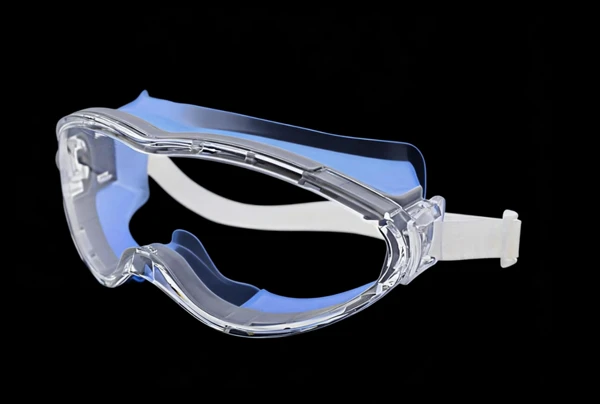
Side protection is a requirement wherever flying objects are a hazard — including on prescription eyewear.
What Are the Options for Prescription Safety Eyewear?
The main options are prescription safety frames, over-glasses safety spectacles, and goggles or face shields worn over prescription frames, with the choice following the hazard and the fit.
| Option | Best for | Notes |
|---|---|---|
| Rx safety frames | General industrial work | Prescription built into the safety frame |
| Over-glasses spectacles | Occasional use, visitors | Worn over personal Rx glasses |
| Goggles over Rx | Dust, splash, chemical | Sealed fit over the Rx frame |
| Face shield over Rx | High-energy or splash | Full face coverage over eyewear |
For daily industrial work, prescription safety frames give the best optics and fit. Over-glasses spectacles suit visitors and occasional users. Goggles and face shields add sealed or full-face protection over the primary Rx eyewear where the hazard requires it. The option follows the task and the prescription.
Do Prescription Safety Frames Meet the Same Standards?
Prescription safety frames can meet the same impact standards as non-prescription eyewear — such as ANSI Z87.1 or EN 166 — but the prescription lens material and thickness affect the impact performance.
Prescription safety eyewear should be supplied and marked as a compliant finished frame-and-lens system for the required hazard and standard. High prescriptions may need thicker or higher-index lenses, which changes weight and optics, so the Rx and the safety requirement are engineered together. Confirm that the finished pair carries the standard mark and that the certificate covers the lens and frame combination. A prescription safety pair is certified as a system, not as two separate parts.
What OSHA Requires for Prescription Wearers
The prescription case is written into the eye-protection regulation rather than left to site policy, and it names two acceptable routes. Knowing which one your programme is on decides what you buy.
29 CFR 1910.133(a)(3) requires that an employee who wears prescription lenses while engaged in operations involving eye hazards either wears eye protection that incorporates the prescription in its design, or wears eye protection that can be worn over the prescription lenses without disturbing the proper position of the prescription lenses or the protective lenses.
Read that sentence carefully, because the second route has a condition attached. Over-glasses protection is permitted — but not if wearing it pushes the prescription lenses out of position or shifts the protective lenses relative to the eyes. When the two pairs interfere, the arrangement no longer satisfies the requirement even though both items are individually certified.
Two further paragraphs in the same section shape what you buy:
- 1910.133(a)(2) requires eye protection that provides side protection where there is a hazard from flying objects, and explicitly accepts detachable side shields that meet the section’s requirements. Frames without side arms fail the specification regardless of the lens.
- 1910.133(a)(4) requires eye and face PPE to be distinctly marked to facilitate identification of the manufacturer. A frame that has lost its marking has lost the evidence that it is the certified model — which is exactly the moment a substitution gets proposed.
The practical conclusion for a team programme is that prescription-ready safety frames are usually the better route than over-glasses, and not only on comfort grounds. Integrated prescription satisfies the first route outright, removes the interference question that the second route has to answer, and avoids the everyday failure where a worker wears the over-glasses for a while and then stops because the optics are poor. Where a crew already owns personal prescription glasses and a site needs a quick interim measure, over-glasses are legitimate — provided the fit test confirms neither pair is being disturbed.
Underneath all of it sits the standard PPE chain in 1910.132(d): assess the hazards, select equipment that protects against them, communicate the selection, select PPE that fits properly, and certify the assessment in writing. For prescription eyewear the fit step is doing more work than usual, because “fits properly” is the condition the regulation itself attaches to the over-glasses route.
How Do You Fit Prescription Safety Eyewear for a Team?
Fit prescription safety eyewear per worker, using the individual’s Rx and measurements, and validate the fit with the same wear trial used for non-prescription eyewear.
Each worker’s prescription and pupillary distance are unique, so the eyewear must be ordered per person rather than in bulk sizes. The frame must fit over the worker’s face without pressure points, and the lenses must sit at the correct distance from the eyes for the Rx to work. Test the pair through real tasks, check compatibility with helmets, earmuffs, and respirators, and collect feedback on fogging, comfort, and vision. A well-fitted prescription pair is worn; one that does not fit is abandoned.
How Do You Care for Prescription Safety Lenses?
Clean prescription safety lenses with lens-safe materials, store them in a case, inspect them for scratches and coating wear, and replace them when the protection or the vision is compromised.
Scratched lenses scatter light and reduce both vision and protection, and coating wear affects the lens performance. Assign each worker their own pair, keep cleaning supplies at the workstations, and replace damaged pairs promptly. Prescriptions change, so review the Rx on the same cycle as the worker’s eye examination. A prescription safety pair that is clean, current, and undamaged provides both clear vision and certified protection.
Select eye and face protection for the process, radiation level, impact hazard, and compatibility with other PPE; confirm against the applicable standard.
For the wider topic and related decisions, see our Head, Face & Eye Protection.
FAQs
Can workers wear their personal prescription glasses under safety glasses?
They can for short tasks, but over-glasses or dedicated Rx safety frames give better fit and protection for regular work.
Does the prescription change the impact rating?
The lens material and thickness affect impact performance, so the finished pair is certified as a system with the Rx lenses installed.
How do we order prescription safety eyewear for a team?
Collect each worker’s Rx and measurements, order per person, and validate fit with a trial — submit your requirements via our contact page, or ask Shield Wings’ factory team on the safety glasses page.
Are prescription safety frames available in safety styles?
Yes, in both industrial and stylish frames that meet the same impact standards.

Fit decides whether the protection stays in place through a shift.
Related Articles
- Structural Firefighting Boots: NFPA 1971 Explained
- Puncture Resistant Safety Shoes: Standards and Applications
- Flame Resistant Clothing for Oil and Gas: Standards and Selection
- How to Choose Safety Glasses for Your Workplace
- Safety Face Shields: Types and Selection Guide
- Safety Glasses: The Complete Buying Guide
Official Resources
- Safety Glasses
- Safety Glasses The Complete Buying Guide
- Safety Face Shields Types And Selection Guide
- Industrial Safety Gloves Sizing And Fit Guide
- Puncture Resistant Safety Shoes Standards And Applications
- Aluminum Foil Heat Protective Clothing How It Works
- Contact Shield Wings