

Hearing protection is unusual in that the performance of the product is decided largely by the wearer. A plug can be rated highly and provide very little protection if it is inserted shallowly, and a workforce can be equipped to specification while achieving a fraction of it in practice. Custom-moulded plugs and fit testing are the two approaches that address that gap directly, and they are usually considered together.
The Hazard First, the Product Second
There is also a training dimension that a custom programme does not remove. A worker still has to insert the protector, wear it for the whole exposure, and know what to do when it becomes uncomfortable or when a replacement is needed. Custom plugs simplify the first of those, but the other three are programme matters, and the sites that get the best results treat the purchase as one element of a fit and training routine rather than as the routine itself.
Noise damages hearing by delivering energy to the inner ear, and the protectors in use are the last line of defence after the noise has already been reduced at source. Their effectiveness in service is a product of fit and time worn: a protector that seals well and stays in for the whole exposure is doing the work, while one that is loose, or sitting in a pocket, is not.
Custom-moulded plugs improve one half of that equation. Made from an impression of the individual ear, they remove much of the technique dependence that affects standard plugs: there is only one correct orientation, the seal does not rely on rolling and expansion, and the fit does not vary between attempts. They do not address the other half, which is whether the wearer keeps them in, and they do not guarantee protection on their own. Anyone selling them as a complete answer is describing half of the problem.
What the Risk Assessment Has to Establish
It is worth recording what is currently achieved, not only what is issued. Where a site can show measured levels, the protectors in use and the achieved attenuation for a sample of workers, the case for custom plugs — or against them — becomes an evidence-based decision rather than a preference. Where that data does not exist, the audit trail for the decision is weak, and the programme has no baseline against which to demonstrate improvement.
Occupational noise requirements sit in 29 CFR 1910.95 in the United States, covering monitoring, protection, training and hearing conservation, with the selection framework in 29 CFR 1910.132; European sites work within the noise requirements of the framework that applies to them. For a custom programme, the assessment has to establish:
- The measured levels at each position, and whether the exposure is steady, intermittent or impulsive.
- The duration and pattern of wear, including whether the protector must stay in for a full shift.
- What the worker must still hear: speech, alarms, radio traffic or machine signals.
- Whether standard protectors have been tried and what the problems were, recorded rather than assumed.
- The other equipment worn: eyewear, head protection, respiratory protection and face protection.
- The hygiene and storage arrangements, since a personal protector still needs a cleaning routine.
- Who would take impressions, how replacements would be handled and how the records would be kept.
The fourth item is the one that justifies the programme. Where standard protectors are being used correctly and consistently, the case for custom plugs is weaker; where a group of workers cannot achieve a reliable fit with any standard type, the case is strong, and the assessment should record the attempts that were made.
Which Hazards This Category Covers and Which It Does Not
Two boundaries are worth stating. Custom plugs are still personal protective equipment and are still the last line of defence, so they belong after the engineering and administrative measures rather than instead of them. And they are personal items, which means the programme has to handle the practical consequences: labelling, storage, cleaning, replacement and the occasional remake when a plug does not fit as expected.
This family covers personal protectors made for an individual and the fit verification that supports them, along with cleaning, storage and replacement. It sits within the eye and ear protection range alongside the standard plugs, muffs and banded protectors issued for the same areas.
What custom plugs do not do is remove the need for the rest of the programme. They do not reduce the noise, they do not replace the employer’s duty to control exposure at source, they do not address the communication requirement by themselves, and they do not solve a compliance problem that is caused by protection being inconvenient to reach. A custom plug that is left in a locker provides the same protection as a foam plug left in a locker.
Matching Task to Protection Level
Where a site decides to provide custom plugs for a particular group, it is worth keeping standard protectors available for everyone else, so that a worker waiting for an impression is not left without protection in the meantime.
| Situation | What dominates | Provision that follows | What to verify |
|---|---|---|---|
| High sustained exposure, standard protectors used correctly | Consistent attenuation for the whole shift | Standard protectors remain appropriate, with fit checks and training | That the achieved protection matches the requirement in practice |
| Workers who cannot achieve a reliable fit with standard types | Individual fit | Custom-moulded plugs made from an impression, with fit verification | The attenuation achieved by that individual |
| Long shifts in high noise with helmet and eyewear | Comfort that keeps the protector in place | Custom plugs or a well-fitted alternative, chosen for compatibility | Comfort over hours and interference with other equipment |
| Tasks requiring speech and alarms to remain audible | Balance between protection and communication | Protector chosen with the communication requirement in mind, verified individually | Intelligibility of speech and warning signals |
| Impulsive exposure in specific processes | Consistency of fit at the moment of the event | A protector the worker keeps in place, verified by fit testing | Achieved attenuation and the pattern of wear |
| Mixed site with several noise areas | Choice across areas | A graded provision, with custom plugs where the requirement is highest | The link between each area and the protector issued |
Read across the table, custom plugs are a targeted solution for a fit problem, not a general upgrade. Where the programme is considering them for a whole workforce, the more useful first step is usually to measure what the workforce is achieving with the current protectors, because that shows whether the problem is fit, training or availability.
Where Selection Usually Goes Wrong
One failure is organisational rather than technical: the programme is introduced for a whole site at once, without a pilot. A pilot with one crew or one area produces the evidence needed for the rest of the site, identifies the practical problems with impressions, remakes and storage, and builds the internal confidence that makes the wider roll out straightforward.
- Custom plugs bought as a compliance purchase. The protector improves, the training and availability do not, and the exposure stays where it was.
- No fit verification. Without measurement, the site cannot show that the new provision actually improved anything.
- Impressions taken informally. A poorly taken impression produces a poorly fitting plug, and the worker concludes that custom protection does not work.
- Hygiene overlooked. A personal protector still needs cleaning and a place to be stored, and it is used daily.
- Replacement not planned. Custom plugs age, harden and lose fit, and the programme needs an interval and a remake route.
- Communication ignored. A well-sealed plug that prevents the wearer from hearing an alarm or an instruction creates a different risk.
- Compatibility assumed. Plugs, muffs, helmets and eyewear interact, and the assembly should be checked rather than assembled from separate purchases.
The Hierarchy of Controls Around the Selection
Before a custom programme is considered, the exposure itself should be examined. Enclosing or isolating noisy plant, acoustic treatment, maintenance that keeps machinery quiet, separating noisy processes and sequencing work so that fewer people are exposed all reduce the problem at source. Administrative controls follow: rotation, limits on time in the area and controlled access.
Personal protective equipment is the last line of defence, and custom plugs improve how well that final layer performs for the individuals who need it. The programme is strongest when it is presented in those terms, because it then sits alongside the engineering and management measures rather than replacing them.
Specification Points to Fix Before Ordering
It is also worth agreeing in advance how a plug that does not fit will be handled, since remakes are normal in any programme of this kind. Where the site and the supplier have agreed the process, the worker experiences a short delay and a replacement; where they have not, the worker is left with a protector they do not use, and the programme’s reputation suffers among exactly the people it was meant to help.
- The measured exposure for each position and the required protection level.
- The evidence that standard protectors were tried, and what was found.
- How impressions will be taken, by whom, and how the plugs will be labelled for the individual.
- The fit verification method, and how the results will be recorded and acted on.
- Cleaning, storage and replacement criteria, including who pays for a remake after a poor fit.
- Compatibility with helmets, eyewear and respiratory protection in use.
- Communication requirements and how they will be satisfied.
- Documentation required with each order, including the attenuation data and the individual’s record.
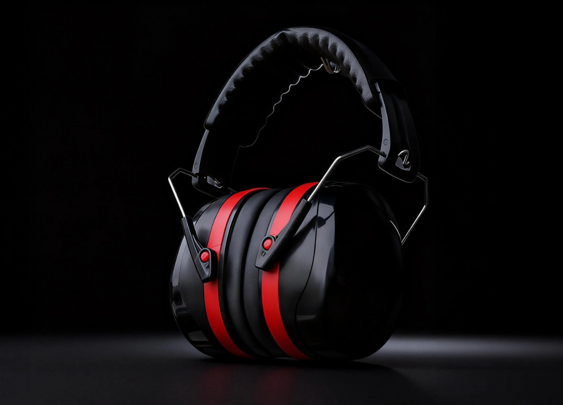
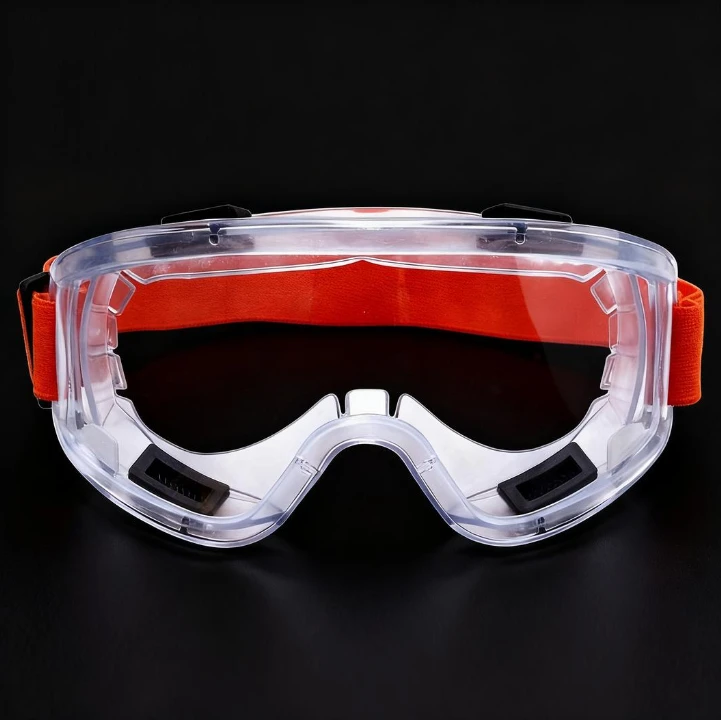
Shield Wings manufactures hearing protection earmuffs and eye protection at a Guangdong production base and supplies industrial customers and distributors with attenuation data, fitting guidance and product documentation. The standard protectors that remain the right answer for most areas are listed on the hearing protection earmuffs page, and the eye protection issued alongside them is covered in Shield Wings’ guide to selecting safety glasses, which owns that topic.
A custom programme is judged by one measurement: what the wearer achieves with the protector in place, for the whole exposure. Everything in the specification should be arranged around being able to answer that question.
For the wider topic and related decisions, see our Hearing Protection & Noise Control.
Frequently Asked Questions
What are custom-moulded earplugs?
They are hearing protectors made from an impression of an individual’s ear, so the plug is shaped to that person’s canal rather than taken from a standard size. They are used where a good fit is difficult to achieve with standard protectors, where protection has to be worn for long periods, or where the site wants to reduce the variation in fit across a workforce. The impression is taken by a trained person, and the plug is made and labelled for that individual.
Do custom earplugs guarantee better protection?
No. They improve the consistency of fit for the individual and reduce the technique dependence of standard plugs, but the protection achieved still depends on insertion, on how long the protector is worn, and on the condition of the plug. That is why fit verification is worth doing even with custom protectors: it shows what the wearer actually achieves rather than what the product can achieve in theory.
What is earplug fit testing?
It is a measurement of the attenuation a specific protector achieves on a specific person, rather than the laboratory figure on the packaging. It is used to confirm that a wearer can fit a protector correctly, to compare candidate protectors for one person, and to identify workers who need training or a different type. The method and equipment come from the supplier or the service provider, and the results belong in the training record.
How long do custom earplugs last?
Service life depends on the material, the care regime and the wearer’s own anatomy, since the canal changes shape over time. The maker normally states a replacement interval and provides criteria based on condition, such as hardening, cracking, contamination or loss of fit. Because they are personal items, they also need a cleaning routine and a storage place that keeps them clean between shifts.
When is a custom programme worth the cost?
Where standard protectors are not producing reliable protection for a group of workers, where exposure is high and sustained, where communication requirements mean the protector has to be comfortable enough to keep in place, or where the workforce has repeatedly reported poor fit. It is less likely to be justified where the exposure is modest and standard protectors are being used consistently and correctly.
Considering fit testing or custom protection?
Send the measured levels, the areas involved and what has been tried so far. Shield Wings confirms the protector options, the attenuation data and the documentation a programme needs.
External references: 29 CFR 1910.95 occupational noise exposure, 29 CFR 1910.132, UK HSE noise guidance, CCOHS PPE answers, CEN-CENELEC standards portal, Regulation (EU) 2016/425.