

Noise programmes tend to be strong on the purchase and weak on the loop. A site buys earmuffs, distributes them, and then discovers at the annual audiometry round that nothing can be explained: which areas the workers were exposed to, what protection was issued, whether it fitted, or what changed in the plant last year. Closing that loop is not a paperwork exercise; it is what turns a set of products into a programme that can detect and correct a problem.
Why the Programme Outlives the Product Choice
The pressure to keep the programme current comes from the plant itself. Equipment is added or replaced, production rates change, a bay is enclosed or opened up, and the noise profile of a role shifts without anyone deciding that it should. Where the programme includes a review trigger for those changes, the exposure data stays usable; where it does not, the assessment ages into a historical document and the protection requirement is inherited from whoever ordered it last.
Protectors change, models are discontinued, and helmet-mounted options come and go. The programme is what survives: the measurement that established the exposure, the protection selected against it, the training that taught the workforce to fit and use it, the surveillance that shows whether hearing is being protected, and the review that ties them together. Sites with that structure can change supplier in an afternoon; sites without it rebuild the logic every time the catalogue changes.
The commercial case is equally plain. Exposure that is measured can be engineered away, which is usually cheaper over a decade than paying for protection indefinitely. Protection that is specified against a measurement is bought at the right level rather than the highest available. And surveillance findings that are examined against the exposure record often point to a specific fix — a machine, a shift pattern or a task — rather than to a general instruction to wear protection.
Assessment, Selection and Issue
Protection level should always be selected with an explicit margin for real-world performance, because laboratory attenuation assumes a correctly fitted protector worn for the whole exposure. Writing that margin down, rather than applying it silently, makes the selection reviewable and gives the programme a way to respond when fitting or compliance turns out to be worse than assumed. It also stops the common drift toward ever-higher ratings, which is a symptom of a fit or use problem rather than a level problem.
Occupational noise requirements in the United States are set out in 29 CFR 1910.95, which covers monitoring, protection, training and hearing conservation obligations, with the general PPE selection framework in 29 CFR 1910.132. In Europe, the site works within the noise requirements of the framework that applies to it, together with the PPE Regulation. In every case the employer owns the assessment.
The assessment has to identify where and when exposure occurs, not just that it exists. A measurement taken in the middle of a hall tells you the level in that position; it does not tell you what a fitter experiences while working under a machine, or what a loader receives during a burst of activity at the end of a shift. Useful noise assessments therefore describe positions, tasks and durations, and they note the conditions of the measurement so that a later comparison means something.
Selection follows from the measurement and from what workers must still hear. Protection that brings the exposure within limits but removes warning signals is not a solution; it is a trade that has to be managed with visual signals, radios or a different form of protection. Issue then records who received which protector, in which size or configuration, and when — because without that record the training and the surveillance cannot be connected to anything.
Training and Competence Evidence
Refresher training should follow changes in the plant or in the protection issued, not only the calendar.
Training in this category has one central purpose: correct use. For plugs that means insertion and seating; for muffs it means the seal and what interferes with it; for both it means knowing when to replace a consumable part and what to do when a protector is uncomfortable or damaged. It is also worth covering why the protector is worn at all, because workers who understand the exposure are more likely to keep the protection on rather than removing it for a conversation.
Competence evidence should be specific. A signature on an induction sheet is weak; a record showing that a worker was trained on the specific protectors issued in their area, on the fitting method, and on the reporting route when something does not fit is defensible. Where supervisors are expected to check that protection is worn correctly, their own training should cover what correct looks like for the protectors in use, since a plug cannot be verified visually with the same confidence as a muff.
Inspection Frequency by Hazard Class
| Item | Inspection arrangement | Who performs it | Record |
|---|---|---|---|
| Ear muffs in daily use | Pre-use check of shell, cushion, headband and seal; cushions and headbands replaced on the manufacturer’s interval | Wearer, with store support for parts | Issue record and replacement of service parts |
| Reusable plugs | Pre-use check for cleanliness, shape and condition; replaced when the material hardens or is damaged | Wearer | Issue and replacement record where the programme tracks it |
| Disposable plugs | New pair for each use; stored clean and supplied at the point of use | Wearer, with stock control by the store | Consumption record, which also shows whether use matches the exposure |
| Helmet-mounted muffs | Mounting, arm tension and seal checked in the configuration worn, including with spectacles and a helmet | Supervisor or trained inspector | Configuration record against the helmet |
| Electronic or communication protectors | Protection performance checked as a protector, plus the electronics: battery, function test, cleanliness of microphones | Wearer, with periodic check | Unit record including battery and fault history |
The interval logic here is that the protector’s protection depends on parts that wear. Cushions and headbands are the components that most often reduce performance unnoticed, and they are the cheapest to replace. A programme that carries spare parts in the store, and that lets a worker swap a cushion without a request form, will keep protection at its specified level far more reliably than one that relies on an annual inspection.
Record Keeping for Audits and Incidents
Retention periods deserve a decision rather than a default. Hearing changes over a working lifetime, and a claim or a review can arrive years after the exposure that contributed to it. Keeping the assessment, the protection specified and the surveillance results for a defined period, and keeping them linked to a role rather than to a filing cabinet, is what makes a historical question answerable.
The records in a hearing conservation programme are only useful if they connect. Five items cover most needs: the noise measurements with their dates and conditions; the areas and roles the measurements cover; the protection specified against each exposure; the issue and training records for the workers concerned; and the health surveillance results with the review that followed them.
The connection is what answers the difficult questions. If a worker’s hearing shows a change, the programme should be able to show what exposure that role involved, what protection was provided, whether the worker was trained and fitted, and whether anything in the plant changed in the preceding year. That is also the point at which a technical conversation with the supplier becomes useful, because the answer may be a different protector configuration rather than a different brand.
Retirement, Replacement and Stock Control
Retirement in this category is driven by condition and by hygiene rather than by a fixed life. Muffs are withdrawn when cushions no longer seal, the headband no longer holds them in place or the shell is damaged; plugs are replaced on condition or, for disposables, at each use. Electronic protectors add battery condition and function to the same list, and a unit that no longer performs its protection function is retired regardless of whether the electronics still work.
Stock control decides whether the programme survives contact with a busy week. Consumables should be available at the point of use, in the sizes people actually need, and spare cushions and headbands should be held centrally so that a service part is never a reason to keep a worn protector in service. Tracking consumption also gives an early signal: a sudden rise in plug usage in an area often means the protection there is uncomfortable or the protection level has changed.
Making the Programme Survive Contact With Operations
Two design choices make the difference in daily use. Make the correct protection the easiest to obtain, with supplies at the point of entry to the area rather than in a store that closes at four. And give supervisors something simple to check, such as the seal of a muff and the presence of plugs before entry, rather than a form. Programmes that survive are usually the ones whose daily requirements fit into the way the shift already runs.
The compliance side of buying and importing protective equipment — declarations, marking and documentation — is covered in Shield Wings’ PPE compliance checklist, which owns that topic. What makes a hearing programme work on site is less formal: protection stored where the work happens, fitting taught by someone who can demonstrate it, a supervisor who checks the seal rather than the presence of the equipment, and a review that uses the surveillance results rather than filing them.
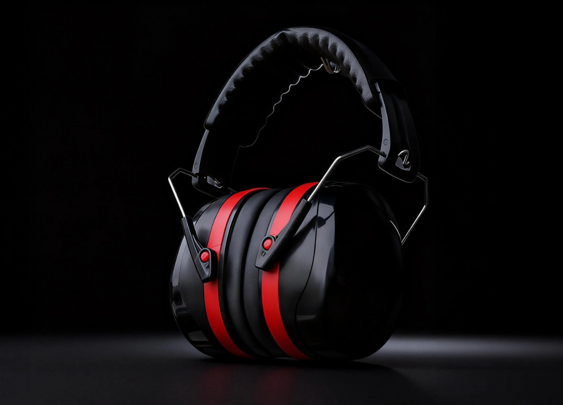
Shield Wings manufactures hearing protection earmuffs and eye protection at a Guangdong production base and supports industrial customers with attenuation data, fitting guidance and the documentation a programme needs to record what was issued. The wider range is set out in the eye and ear protection category, and the products themselves are listed on the hearing protection earmuffs page.
The test of a hearing conservation programme is not the thickness of the file. It is whether the site can explain a change in hearing, and whether it can show that the protection it bought was the protection its workers were wearing.
For the wider topic and related decisions, see our Hearing Protection & Noise Control.
Frequently Asked Questions
What has to be in a hearing conservation programme?
Noise monitoring that identifies where exposure occurs and how high it is, protection selected against that data and provided without cost to the worker, training that covers fitting and use, health surveillance such as audiometry where the regulations require it, and records that link all four together. The exact obligations depend on the jurisdiction, and the programme should be written against the rule that applies to that site.
Does hearing protection remove the need for audiometry?
No. Protection reduces exposure at the ear, while audiometry checks whether the hearing of the workforce is changing over time. The two work together: monitoring shows where the exposure is, protection addresses it, and surveillance is what detects a problem that the protection did not prevent. Where a change appears, it is also the signal to revisit the assessment and the protection in that area.
How often should the noise assessment be repeated?
When there is reason to believe that exposure has changed, and otherwise on the cycle the employer’s programme defines. Triggers include new plant, a process change, a change in the work pattern or shift length, building modifications that change reverberation, and findings from audiometry. A site that only reassesses noise levels once, at commissioning, will miss the effects of every change that followed.
What records should a hearing conservation programme keep?
The measurements and the conditions they were taken under, the areas and roles covered, the protection specified against those exposures, the issue records, the training records, and the results and review of health surveillance. Keeping them linked matters more than keeping them in volume, because the value appears when a change in hearing has to be explained against the exposure history of a particular role.
What is the most common weakness in these programmes?
The gap between the assessment and what is actually worn. Measurements are taken, protection is bought, and nothing connects the two at the point of use: the protector in the area is not the one specified, plugs are inserted badly, or the protection is removed for conversation. Closing that gap is mostly training, fitting, supervision and making the correct option the easiest one to use.
Building or reviewing a hearing conservation programme?
Send the assessed areas, the roles and the equipment in use. Shield Wings supplies attenuation data, fitting guidance and configuration options, plus the documentation that supports the issue and training records.
External references: 29 CFR 1910.95 occupational noise exposure, 29 CFR 1910.132, UK HSE noise guidance, CCOHS PPE answers, CEN-CENELEC standards portal, Regulation (EU) 2016/425.
{“@context”:”https://schema.org”,”@type”:”FAQPage”,”mainEntity”:[{“@type”:”Question”,”name”:”What has to be in a hearing conservation programme?”,”acceptedAnswer”:{“@type”:”Answer”,”text”:”Noise monitoring that identifies where exposure occurs and how high it is, protection selected against that data and provided without cost to the worker, training that covers fitting and use, health surveillance such as audiometry where the regulations require it, and records that link all four together. The exact obligations depend on the jurisdiction, and the programme should be written against the rule that applies to that site.”}},{“@type”:”Question”,”name”:”Does hearing protection remove the need for audiometry?”,”acceptedAnswer”:{“@type”:”Answer”,”text”:”No. Protection reduces exposure at the ear, while audiometry checks whether the hearing of the workforce is changing over time. The two work together: monitoring shows where the exposure is, protection addresses it, and surveillance is what detects a problem that the protection did not prevent. Where a change appears, it is also the signal to revisit the assessment and the protection in that area.”}},{“@type”:”Question”,”name”:”How often should the noise assessment be repeated?”,”acceptedAnswer”:{“@type”:”Answer”,”text”:”When there is reason to believe that exposure has changed, and otherwise on the cycle the employer’s programme defines. Triggers include new plant, a process change, a change in the work pattern or shift length, building modifications that change reverberation, and findings from audiometry. A site that only reassesses noise levels once, at commissioning, will miss the effects of every change that followed.”}},{“@type”:”Question”,”name”:”What records should a hearing conservation programme keep?”,”acceptedAnswer”:{“@type”:”Answer”,”text”:”The measurements and the conditions they were taken under, the areas and roles covered, the protection specified against those exposures, the issue records, the training records, and the results and review of health surveillance. Keeping them linked matters more than keeping them in volume, because the value appears when a change in hearing has to be explained against the exposure history of a particular role.”}},{“@type”:”Question”,”name”:”What is the most common weakness in these programmes?”,”acceptedAnswer”:{“@type”:”Answer”,”text”:”The gap between the assessment and what is actually worn. Measurements are taken, protection is bought, and nothing connects the two at the point of use: the protector in the area is not the one specified, plugs are inserted badly, or the protection is removed for conversation. Closing that gap is mostly training, fitting, supervision and making the correct option the easiest one to use.”}}]}