

Most eye protection is chosen for a task performed standing upright at a bench, looking forward or down. Overhead work and confined space work invert that geometry: the wearer looks up, the debris arrives from above, and the space available for the eyewear is defined by a mask, a helmet and an opening. Eyewear that performs well in the first case frequently fails in the second, and the failure appears as fogging, displaced lenses or a worker who removes the glasses to see.
The Hazard First, the Product Second
It is also worth separating the hazards that occur during the task from those that occur immediately before and after it. Much overhead work involves preparing a surface, checking a joint or retrieving a tool, and those activities happen with the head tilted back and the eyes unprotected if the eyewear has been pushed up onto the forehead. The specification should describe the whole task sequence rather than the welding or cutting element alone.
Overhead work changes the direction from which everything arrives. Particles, dust, drips of condensation, lubricant and process fluid all come from above, and an open-brow spectacle design leaves a path that a forward-facing task never exposes. Where the work involves cutting, grinding or chipping overhead, the particle energies are higher and the exposure is closer to the face, which is why face protection is usually added to primary eyewear rather than substituted for it.
Confined space work changes the conditions rather than the direction. The atmosphere is often humid, warm and contaminated, the worker is close to the surface being worked and adopts awkward positions, and the space limits how much equipment can be worn comfortably at once. Fogging is the practical result, and a worker who cannot see clearly will lift the eyewear, wipe it, or work without it for the awkward part of the task.
What the Risk Assessment Has to Establish
Duration and task sequence matter here as much as they do in hearing protection. A worker who is inside a vessel for three hours will behave differently from one who enters for fifteen minutes, and the same eyewear may be practical for one and not the other. Where the entry is long or repeated, the assessment should record the number of entries and the time inside, because that is what determines whether fogging and discomfort will lead to removal.
Occupational eye and face protection requirements sit in 29 CFR 1910.133 in the United States, with construction requirements in 29 CFR 1926 Subpart E, and confined space entry is governed by 29 CFR 1910.146. The assessment has to describe the exposure in terms the eyewear can answer.
- What can reach the eye and from which direction, including anything arriving from above.
- The particle size and energy, and whether fragments or larger pieces are credible.
- Whether liquid, condensate or chemical splash is present, from above or from the sides.
- The atmosphere: humidity, heat, dust and contamination, all of which affect fogging and cleaning.
- The working position, since looking up or working close to a surface changes coverage and fit.
- The other equipment worn: respiratory protection, a helmet, hearing protection and a hood.
- The access route, because eyewear has to be put on and taken off within the space or before entry.
Two lines decide the specification more than the rest. The direction of the hazard determines whether an open design can be used at all, and the equipment combination determines whether the chosen eyewear can be worn without constant adjustment. How the marking on a product maps to those requirements is covered in Shield Wings’ guide to choosing safety glasses, which owns that topic.
Which Hazards This Category Covers and Which It Does Not
The boundary with face protection is worth stating clearly, because it is where specifications usually blur. Primary eye protection covers the eye itself and is worn close to the face; face protection covers the face and is generally a layer in front of it. A visor mounted on a helmet reduces the energy reaching the eyes, but it does not seal, and it is routinely lifted. Treating the visor as primary protection removes the layer that stays in place when the visor is moved.
This family covers the eyewear worn under or with other protection: spectacles, goggles and over-spectacle designs, together with the fit and anti-fog properties that make them usable in these positions. It sits inside the eye and ear protection range alongside the face shields and hoods that are specified for the same tasks.
What it does not do is protect the whole face, seal the airway or protect the head. A face shield worn over eyewear covers the face but is not primary eye protection; a mask seals the airway but leaves the eyes exposed; a helmet protects the crown. In confined space work all three are usually worn together, and the combination, not the individual item, is what has to be specified and checked.
Matching Task to Protection Level
| Task or position | What dominates | Eyewear that follows | What to verify |
|---|---|---|---|
| Overhead grinding and cutting | Particles from above, sparks | Sealed or brow-covered eyewear with a face shield or visor over it | Coverage from above and the combination staying in position |
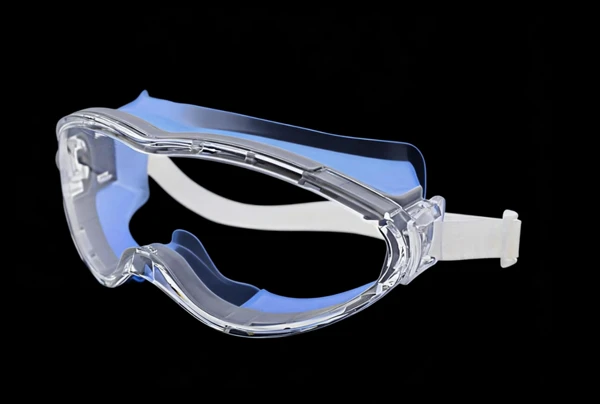
| Overhead work with dripping fluids | Liquid arriving from above | Goggle-style protection rather than spectacles | Seal and the absence of a path over the brow |
| Work inside a vessel or duct | Humidity, fogging, close surfaces | Anti-fog treated eyewear that fits with the mask and helmet | Fogging behaviour and clearance at the opening |
| Confined space with chemical residues | Splash plus atmosphere | Sealed goggles, with face protection as an additional layer | Chemical compatibility and cleaning method |
| Inspection and maintenance in a low space | Dust, awkward positions, restricted movement | Close-fitting eyewear that stays in place when the wearer looks up | Retention and comfort across a full entry |
| Working under others at height | Debris from above with no contact | Primary eyewear plus the site’s head and face protection, with exclusion zones first | The controls above, not only the eyewear |
Read across the table, the recurring requirement is coverage from above and the ability to wear the eyewear with everything else. Where either is missing, the worker compensates: by looking to the side, by holding the eyewear in place with a hand, or by removing it for the difficult part of the task.
Where Selection Usually Goes Wrong
One failure is specific to these tasks: the eyewear is selected for the main hazard and then forgotten for the supporting work. Chipping, scraping, cleaning and inspection inside a vessel all happen with the same head position and often with the same debris, and they are frequently the moment when eyewear has been pushed up for comfort. Specifying for the whole task rather than for the headline activity is what prevents that gap.
- Spectacles used for overhead work. The open brow leaves a path that debris follows.
- Fogging treated as a comfort issue. It is the most common reason eyewear is removed in humid and confined environments.
- Combination never trialled. Eyewear, mask, helmet and hood interfere in ways that appear only when worn together.
- Prescription needs ignored. Workers wearing ordinary spectacles under protective eyewear lose the seal and the coverage.
- Cleaning that damages the coating. Anti-fog and anti-scratch coatings fail with the wrong cloth or chemical, and the replacement is chosen on price rather than on performance.
- Replacement left to the wearer’s judgement. A scratched lens in a confined space becomes a lens that is not worn.
- Access arrangements overlooked. Eyewear that cannot be put on before entry and adjusted inside the space will be worn badly or not at all.
The Hierarchy of Controls Around the Selection
Where the work is inside a vessel, the cleaning and preparation before entry deserves as much attention as the work itself, because residues left in place can be disturbed by the task and become an eye and respiratory exposure. Cleaning the space, ventilating it and confirming the atmosphere are controls that reduce the eyewear requirement rather than increase it, and they are usually easier to arrange than a change of equipment.
Both tasks offer alternatives to eyewear that are often overlooked. For overhead work, tool tethering, containment of the work area, screening, and sequencing that keeps people out from below reduce the exposure before any eyewear is considered. For confined space work, ventilation, atmosphere monitoring, permits, cleaning of residues before entry and careful task sequencing reduce both the atmospheric and mechanical exposures.
Personal protective equipment is the last line of defence. Where the eyewear is specified after those controls are in place, the requirement is usually simpler and the eyewear is easier to wear correctly. Where it is specified instead of them, the site ends up with heavier protection for a hazard that could have been removed.
Specification Points to Fix Before Ordering
It is worth confirming one practical detail before the order is placed: how the eyewear will be cleaned and stored between entries. In these environments eyewear is contaminated, fogged and handled with gloves, and a cleaning method that is not available on site means lenses are wiped with whatever is to hand, which damages the coating and shortens the life of the protection.
- The hazard and its direction, including anything arriving from above.
- Whether a face shield or visor is required in addition to primary eyewear.
- Compatibility requirements with the mask, helmet, hood and hearing protection.
- Anti-fog performance needed, and how the coating should be cleaned.
- Coverage and retention, verified in the position the work is performed in.
- Prescription arrangements, including over-spectacle designs or inserts where needed.
- Size range, fitting step and replacement rules for lenses and straps.
- Documentation required with the quotation: test evidence, marking and traceability.
Shield Wings manufactures eye and ear protection at a Guangdong production base and supplies industrial customers and distributors with product information and documentation. The spectacles themselves are listed on the safety glasses page, and buyers specifying eyewear for these positions will find the broader selection logic in the buying guide linked above.
The specification that works in these environments is the one chosen for the direction of the hazard and for the equipment it must coexist with, and then confirmed in the working position. Everything else is a choice made standing upright in a store room.
For the wider topic and related decisions, see our Head, Face & Eye Protection.
Frequently Asked Questions
What eye protection is needed for overhead work?
Eyewear that keeps debris out while the wearer is looking up, which in practice means a design that seals or covers from above rather than a pair of spectacles with an open brow. The requirement follows the assessment of what can fall and from where, and it is usually combined with a face shield or helmet-mounted visor where larger particles or fragments are credible.
What changes in a confined space?
Three things: the working position, which is often awkward and close to surfaces; the atmosphere, which may be humid, hot or contaminated and causes fogging; and the clearance available, since eyewear has to fit with respiratory protection and a helmet inside a restricted opening. The eyewear that works on a bench is often the wrong choice for the same task inside a vessel.
Why does fogging matter enough to change a specification?
Because a worker who cannot see lifts the eyewear or works by feel, and both remove the protection at the moment it is needed. Fogging is caused by the combination of heat, humidity, physical effort and coverage, so the answer is usually a design with ventilation or an anti-fog treatment, and sometimes simply a change to the sequence of the task that reduces the time the eyewear is worn in a humid environment.
How should eyewear work with respiratory protection and helmets?
The combination has to be checked as an assembly rather than item by item. A mask seal can be disturbed by temple arms, a helmet suspension can push spectacles forward, and a hood can dislodge eyewear when it is pulled over the head. Where the combination is used regularly, a short trial with the whole set identifies interference before it becomes a habit of adjusting equipment during a task.
What should a specification include for these tasks?
The hazard and the direction it comes from, whether a face shield is needed in addition to primary eyewear, the compatibility requirement with the mask, helmet and hood, the anti-fog performance needed for the environment, the size and fit arrangements including prescription options, and the cleaning and replacement rules for lenses, coatings and straps.
Specifying eyewear for overhead or confined work?
Send the task, the direction of the hazard and the equipment worn with it. Shield Wings confirms the eyewear options available, the fit information and the documentation each product carries.
External references: 29 CFR 1910.133 eye and face protection, 29 CFR 1910.146 permit-required confined spaces, 29 CFR 1926 Subpart E personal protective equipment in construction, CCOHS PPE answers, CEN-CENELEC standards portal, Regulation (EU) 2016/425.
{“@type”:”FAQPage”,”@context”:”https://schema.org”,”mainEntity”:[{“@type”:”Question”,”name”:”What eye protection is needed for overhead work?”,”acceptedAnswer”:{“@type”:”Answer”,”text”:”Eyewear that keeps debris out while the wearer is looking up, which in practice means a design that seals or covers from above rather than a pair of spectacles with an open brow. The requirement follows the assessment of what can fall and from where, and it is usually combined with a face shield or helmet-mounted visor where larger particles or fragments are credible.”}},{“@type”:”Question”,”name”:”What changes in a confined space?”,”acceptedAnswer”:{“@type”:”Answer”,”text”:”Three things: the working position, which is often awkward and close to surfaces; the atmosphere, which may be humid, hot or contaminated and causes fogging; and the clearance available, since eyewear has to fit with respiratory protection and a helmet inside a restricted opening. The eyewear that works on a bench is often the wrong choice for the same task inside a vessel.”}},{“@type”:”Question”,”name”:”Why does fogging matter enough to change a specification?”,”acceptedAnswer”:{“@type”:”Answer”,”text”:”Because a worker who cannot see lifts the eyewear or works by feel, and both remove the protection at the moment it is needed. Fogging is caused by the combination of heat, humidity, physical effort and coverage, so the answer is usually a design with ventilation or an anti-fog treatment, and sometimes simply a change to the sequence of the task that reduces the time the eyewear is worn in a humid environment.”}},{“@type”:”Question”,”name”:”How should eyewear work with respiratory protection and helmets?”,”acceptedAnswer”:{“@type”:”Answer”,”text”:”The combination has to be checked as an assembly rather than item by item. A mask seal can be disturbed by temple arms, a helmet suspension can push spectacles forward, and a hood can dislodge eyewear when it is pulled over the head. Where the combination is used regularly, a short trial with the whole set identifies interference before it becomes a habit of adjusting equipment during a task.”}},{“@type”:”Question”,”name”:”What should a specification include for these tasks?”,”acceptedAnswer”:{“@type”:”Answer”,”text”:”The hazard and the direction it comes from, whether a face shield is needed in addition to primary eyewear, the compatibility requirement with the mask, helmet and hood, the anti-fog performance needed for the environment, the size and fit arrangements including prescription options, and the cleaning and replacement rules for lenses, coatings and straps.”}}]}