

Safety glasses protect the eyes from impact, particles, splash, and radiation — but protection only works when the right lens, coating, and frame stay on the face through the whole task. This guide explains standards, lens materials, coatings, and fit, with field insight from Shield Wings’ safety glasses.
(Last modified date: October 2, 2026)
Quick definition: ANSI Z87.1 is the North American occupational eye protection standard, and EN 166 is its European equivalent; both define impact, optical, and coverage requirements, and the mark on the frame is the proof that the…
Key Takeaways
- Eye injuries keep happening not because protection is missing, but because the wrong eyewear is worn, worn incorrectly, or removed mid-task — fogging, poor fit, and scratched lenses are the real failure points.
- Polycarbonate is the default for industry — light, impact-resistant, and UV-blocking — while Trivex adds clarity and optical quality at a higher price; glass is now rare because of weight and shatter behavior.
- Anti-fog coating is the feature that keeps glasses on faces in hot or humid work; anti-scratch extends life in abrasive environments; and tints or shade lenses handle glare and optical radiation — each chosen by the…
- Run the trial with a representative group, not the safety manager alone: issue candidate frames for a full shift, collect structured feedback on fit, fogging, and compatibility with other PPE, and let the crew’s answers…
- Spectacles, wraparounds, goggles, and face shields each address a different hazard profile, and the correct choice follows the task rather than the uniform.
- Fit is decided by a wear trial, not a size chart: the glasses should sit level, hold position when the worker bends and looks down, and work under other PPE such as helmets, earmuffs, and face shields.
Why Do Eye Injuries Still Happen on Protected Sites?
Eye injuries keep happening not because protection is missing, but because the wrong eyewear is worn, worn incorrectly, or removed mid-task — fogging, poor fit, and scratched lenses are the real failure points.
The most common scenario is not a worker without glasses; it is a worker who took them off “just for a second” to wipe fog, or who wears a pair that slides down the nose so the gap faces the work. Particle and splash injuries cluster in exactly those moments. The second most common failure is scratched, pitted lenses that the worker cannot see through — so they remove the glasses to work properly. A good eyewear program therefore solves comfort and vision problems, not just selection problems.
What Do ANSI Z87.1 and EN 166 Actually Test?
ANSI Z87.1 is the North American occupational eye protection standard, and EN 166 is its European equivalent; both define impact, optical, and coverage requirements, and the mark on the frame is the proof that the eyewear was tested.
The distinction that matters on a label is impact class. In North America, “Z87” marks basic impact protection, while “Z87+” marks high-impact protection with a higher-velocity impact test — the safer choice for grinding, chipping, and most industrial work. In Europe, EN 166 uses optical classes 1–4 (class 1 is the clearest for continuous work) and impact codes that must be marked on the frame. A pair without a mark, or with a mark you cannot decode, has not demonstrated anything. For teams shipping to both regions, eyewear carrying both Z87+ and EN 166 marks simplifies one inventory across sites.
Which Lens Material Should You Choose?
Polycarbonate is the default for industry — light, impact-resistant, and UV-blocking — while Trivex adds clarity and optical quality at a higher price; glass is now rare because of weight and shatter behavior.
Polycarbonate absorbs impact energy instead of shattering, which is why it dominates industrial eyewear and meets high-impact classes at a comfortable weight. Trivex offers similar impact performance with sharper optics and better scratch behavior, making it popular for precision and long-wear roles. Glass scratches less but is heavy and, in some configurations, can break into hazardous fragments, so it has almost disappeared from modern safety eyewear. Base thickness matters too: thicker lenses meet higher impact grades but add weight and edge distortion, so match the thickness to the hazard rather than defaulting to the thickest.
Lens thickness interacts with optical class, and optical class matters for continuous work. A worker doing fine assembly or inspection needs class 1 optics — the clearest rating — because edge distortion causes eye strain and headaches over a shift. Heavy impact-rated lenses may carry a lower optical class, which is fine for demolition but wrong for precision work. When you specify, state both the impact class and the optical class, because a lens that protects but distorts will be removed within a week. Suppliers should be able to state both values from the test report rather than describing the lens in general terms.
Which Coatings and Tints Fit the Task?
Anti-fog coating is the feature that keeps glasses on faces in hot or humid work; anti-scratch extends life in abrasive environments; and tints or shade lenses handle glare and optical radiation — each chosen by the task, not by preference.
Fogging is the number one reason workers remove eyewear, and anti-fog coatings or vented designs fix most of it. Anti-scratch coating protects lenses in dusty, gritty settings where uncoated polycarbonate scratches within weeks. Clear lenses suit indoor work; gray and amber tints reduce outdoor glare; and welding, plasma, and laser work require shade-rated lenses — never ordinary tints. Some precision tasks benefit from anti-reflective coating under bright lighting. Specify the coating stack with the purchase; a field-applied treatment rarely performs like a factory-applied one.
How Do You Run an Eyewear Fit Trial That Actually Works?
Run the trial with a representative group, not the safety manager alone: issue candidate frames for a full shift, collect structured feedback on fit, fogging, and compatibility with other PPE, and let the crew’s answers drive the final model.
A two-week trial with ten to twenty workers across different roles reveals what a spec sheet cannot: which frame stays put when the worker looks down, which one fogs in the first hour, and which temple presses against hearing protection. Ask each tester the same questions — comfort after four hours, fogging frequency, fit with helmet and earmuffs, and whether they would wear the pair all day. Include workers who wear prescription lenses, because their experience differs. Keep a small stock of spare lenses and parts for the chosen model, and record the model and certificate in the compliance file. A little participation at the start saves a great deal of enforcement later.
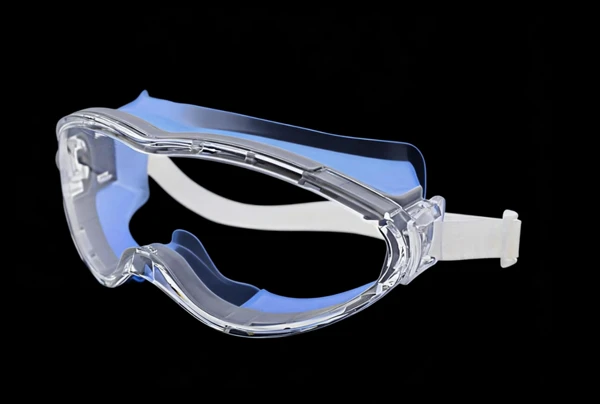
Side protection is a requirement wherever flying objects are a hazard, not an accessory.
Which Style Protects Against Which Hazard?
Spectacles, wraparounds, goggles, and face shields each address a different hazard profile, and the correct choice follows the task rather than the uniform.
| Hazard | Recommended protection |
|---|---|
| Flying particles, impact | High-impact spectacles or goggles |
| Dust and grit | Goggles with venting |
| Chemical splash | Sealed goggles or face shield |
| Glare outdoors | Tinted lenses with UV blocking |
| Welding and plasma | Shade-rated lenses under a helmet |
Wraparound lenses add side protection without separate side shields, which matters for grinding and overhead work. Goggles seal around the eyes, making them the minimum for dust and splash tasks. Face shields protect the whole face but are worn over primary eyewear, never instead of it. Many sites standardize a base pair of spectacles and add goggles or shields for specific tasks — a layered approach that matches the hazard without over-specifying every station.
How Do You Make Sure the Glasses Actually Fit?
Fit is decided by a wear trial, not a size chart: the glasses should sit level, hold position when the worker bends and looks down, and work under other PPE such as helmets, earmuffs, and face shields.
Measure the bridge, temple length, and lens coverage against the actual faces on site, and test at the end of a shift when faces are warmest. Prescription users need Rx safety frames or over-glasses designs, because an uncomfortable second pair ends up in the pocket. Check compatibility with the rest of the head protection system — a helmet strap that dislodges the glasses, or earmuffs that press the temples into the skull, will quietly defeat the program. Let workers choose from two or three approved models so compliance follows fit instead of enforcement.
How Should Safety Glasses Be Cared For and Replaced?
Clean lenses with lens-safe wipes or mild soap and water, store them in a case, and replace any pair with scratched, crazed, or damaged lenses — because a scratched lens is a new hazard, not a badge of service.
Never wipe coated lenses with rough cloths, paper towels, or solvents, which strip the coating. Microfiber cloths and approved solutions are the standard, and a small cleaning station at the entrance to the work area removes the “no clean cloth available” excuse. Assign each worker their own pair for fit and hygiene, and keep spare stock so a damaged pair is replaced the same day. Replace eyewear after any significant impact even if damage is invisible, because the lens may be compromised. A worker should never choose between a damaged pair and no pair.
Set the replacement rule by task, not by calendar alone. Grinding, chipping, and abrasive environments scratch lenses in weeks; clean assembly work can keep a pair for a year or more. Review a sample of in-service eyewear quarterly and look for the three failure modes: scratches that scatter light, coating wear at the edges, and frame deformation that lets the glasses slide. When the failure pattern appears in one model, investigate the task before simply reordering — a different coating or a more robust frame may fix the root cause.
Select eye and face protection for the process, radiation level, impact hazard, and compatibility with other PPE; confirm against the applicable standard.
What OSHA Requires of Eye Protection
In the United States the requirement is set by hazard and by the body part, and three of those requirements decide most buying decisions: side protection, prescription handling, and marking.
29 CFR 1910.133(a)(1) requires the employer to ensure each affected employee uses appropriate eye or face protection when exposed to eye or face hazards from flying particles, molten metal, liquid chemicals, acids or caustic liquids, chemical gases or vapours, or potentially injurious light radiation. That list is worth reading against your own task list, because the protection that answers molten metal is not the protection that answers vapour.
Three further paragraphs in the same section have direct consequences for what you buy:
- Side protection where flying objects are a hazard. 1910.133(a)(2) requires eye protection that provides side protection, and explicitly accepts detachable side shields (clip-on or slide-on) that meet the section’s requirements. This is why a frame without side arms fails the specification even when the lens does not.
- Prescription wearers are covered by the regulation, not by a workaround. 1910.133(a)(3) requires that an employee who wears prescription lenses while doing work with eye hazards either wears protection that incorporates the prescription in its design, or wears protection that can be worn over the prescription lenses without disturbing the position of either pair. Over-glasses styles satisfy the second route; they are not a stopgap.
- Marking is required. 1910.133(a)(4) requires eye and face PPE to be distinctly marked to facilitate identification of the manufacturer. A frame that has lost its marking has lost the evidence that it is the certified model — which matters at the point where a substitute is proposed.
The same section also requires filter lenses with a shade number appropriate to the work where injurious light radiation is present, which is the requirement behind the shade selection discussed above and, for welding, behind the filter-shade minimums in OSHA 1910.252 Table J-1.
One practical note follows from the prescription paragraph. A site that issues over-glasses to everyone with a prescription gets compliance, but not the best optics; a site that offers prescription-ready safety frames gets both. For crews where eyewear is worn for a full shift, the second option usually wins on both comfort and compliance, which is the same argument set out in ergonomic design in protective equipment.
For the wider topic and related decisions, see our Head, Face & Eye Protection.
FAQs
Can safety glasses be worn over prescription glasses?
Yes, over-glasses styles exist, but Rx safety frames give better fit and optics. Prescription-ready safety eyewear is now widely available and is the better long-term choice.
Are tinted lenses safe for indoor work?
Only if the tint is rated for the lighting. Dark tints reduce visibility indoors; keep clear lenses as the default and use tints for outdoor glare or specific radiation tasks.
How often should safety glasses be replaced?
Replace when lenses scratch, frames deform, or fit degrades, and after any impact that stresses the lens. With heavy abrasive work, that can mean quarterly; with clean indoor work, yearly is common.
Do you offer samples before a bulk order?
Yes. We recommend sampling frames in the sizes your crew needs and testing them through real shifts before committing to volume — map your eye hazards and request samples via our contact page or the safety glasses page.

Fit decides whether the protection stays in place through a shift.
Related Articles
- How to Choose Safety Glasses for Your Workplace
- Auto-Darkening vs Passive Welding Helmets
- Welding Safety PPE: The Complete Checklist
- Safety Glasses with Prescription: Options for Workers
- Safety Face Shields: Types and Selection Guide
Official Resources
- Safety Glasses
- Safety Glasses With Prescription Options For Workers
- Welding Helmet Standards En 379 And Ansi Z87 1 Standards
- Safety Face Shields Types And Selection Guide
- Puncture Resistant Safety Shoes Standards And Applications
- Industrial Safety Gloves Sizing And Fit Guide
- Contact Shield Wings