

On a utility crew, the helmet is the item most likely to be chosen by appearance and the item least able to tolerate that approach. A shell that looks identical to the one on the next van can be specified for a different exposure class, and the difference is carried in a marking rather than in the shape. For buyers, the practical question is narrow and answerable: which class does this task require, how is that class marked, and what has to be true of the shell, the suspension and every accessory mounted on it.
What the Standard Actually Covers
Industrial head protection standards define the helmet as a shell, a suspension and the assembly that holds them together, and they characterise the protection the helmet provides under defined test conditions. In the United States, ANSI/ISEA Z89.1 sets out the types and classes used for industrial head protection; in Europe, EN 397 covers industrial safety helmets, with optional requirements that a manufacturer may claim and mark.
Those optional and class requirements are the part that matters in electrical work. A helmet intended for use where contact with energised parts is credible is designed so that the shell and its assembly do not introduce a conductive path, and it is tested accordingly. A helmet marked as conductive, or one with no electrical claim at all, is not the same product, even when it comes off the same production line and shares the same silhouette.
Two boundaries are worth stating plainly. First, the standard covers the helmet, not the whole electrical work specification: insulating gloves, sleeves, arc-rated clothing, footwear and insulated tools are separate items with separate standards. Second, the standard defines what the helmet can be expected to resist under test, not what will happen in a specific incident.
The Ratings Buyers Are Asked to Prove
What a procurement team is usually asked to prove is not a number. It is that the class of the helmet matches the class of exposure in the assessment, and that the delivered product carries the marking that proves it. This is a documentation question as much as a technical one, and it is where otherwise compliant orders fall short.
Three statements should be available for every electrical head protection order:
- The class or performance claim the helmet is intended to meet, named in the language of the applicable standard.
- The test documentation that supports the claim, naming the model and the production site it covers.
- The marking on the shell, so that receiving inspection can confirm the claim without opening a test report.
Accessory claims belong in the same set. If a lamp bracket, ear muffs or a face shield is supplied with the helmet, the documentation should show that the combination is intended to be used together, because the manufacturer’s declared performance applies to the configuration that was tested.
How Test Methods Differ Between Frameworks
The two main frameworks approach electrical performance from different angles, which matters when a specification crosses markets. The North American system classifies helmets by type and class, so an electrical class is visible in the marking and in the catalogue data that supports it. The European standard treats industrial head protection as a base requirement set with optional additional requirements that a manufacturer claims and marks, so an electrical claim appears as an additional marking rather than as a separate class family.
The practical consequences are three. A buyer working to one framework cannot read a class from the other framework’s marking without a reference table, so the specification should name the framework rather than an assumed equivalent. A supplier asked for “the same helmet as before” across markets may deliver a product that meets a comparable but not identical requirement. And importer labelling, instructions and declarations follow the framework of the market the product is placed on, which is a documentation workload that belongs in the purchase agreement rather than in a post-arrival scramble.
Reading the Marking on the Product
The marking is the helmet’s own statement about what it is. It identifies the manufacturer, the standard the helmet is made to, the type and class or the optional requirements claimed, the size range, and in many cases a production date that ties the shell to a batch and to an inspection or replacement regime.
For a receiving inspection, three checks catch most problems. Confirm that the class or optional marking on the shell matches the order and the assessment, not just the model number. Confirm that the marking is permanent and legible in the position the standard requires, because adhesive labels that fall off take the claim with them. And confirm that accessories added by the supplier do not obscure, replace or contradict the original marking.
Where a site standardises on one helmet across several departments, it is common to find that the electrical requirement has been set by the most demanding task and then applied everywhere. That is a safe but expensive default. The better approach is to keep the demanding class where it is needed and use an appropriate, cheaper helmet elsewhere, with the matrix recording which task each helmet was issued for.
Comparing the US and EU Frameworks
| Question | North American approach | European approach |
|---|---|---|
| How is electrical protection expressed? | As a type and class designation in the marking | As an optional requirement the manufacturer claims and marks |
| What determines the requirement? | The exposure identified in the employer’s assessment | The exposure identified in the employer’s assessment |
| What appears on the shell? | Manufacturer, standard, type and class, size, date | Manufacturer, standard, optional claims, size, date |
| What does the buyer verify? | Class versus assessment, and model versus test evidence | Optional claim versus assessment, and model versus test evidence |
| Where do accessories fit? | Must be intended for the shell and not compromise the class | Must be intended for the shell and not compromise the claimed properties |
Reading both frameworks side by side is a documentation exercise rather than a technical one, but it is the step that most often reveals that a specification has been copied from the wrong market. Where a multi-site programme uses both, the selection matrix should carry the framework in the standard column, not only the product name.
Common Misreadings of the Rating
Errors in electrical head protection are consistent enough to be treated as a checklist.
- Reading the class as a general durability rating. The electrical class says nothing about heat resistance, molten metal performance or lateral impact.
- Assuming that a vented shell is equivalent to a non-vented one. Ventilation changes the shell, and its suitability depends on the exposure the assessment identified.
- Treating one framework’s class as the equivalent of another’s. The frameworks are not interchangeable, and the specification should name the one it works to.
- Adding accessories after purchase. A drilled shell or an adhesive mount can affect the properties the class represents.
- Ignoring the suspension. The suspension is a service part with its own replacement interval; a worn one changes how the helmet behaves.
- Using the helmet as a substitute for other controls. Insulation, isolation, work procedures and barriers come first; the helmet reduces the consequence of a residual exposure.
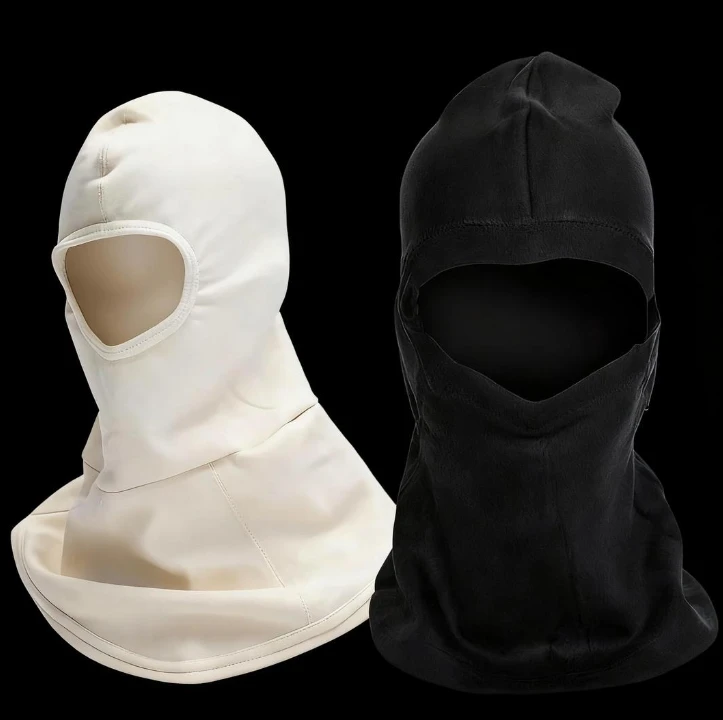
- Forgetting the arc hazard. Electrical work often carries an arc-flash exposure in addition to contact risk, and that exposure is addressed by arc-rated clothing, shields and hoods, not by the shell alone.
The hierarchy of controls applies here in the usual order: isolate and de-energise, apply engineering controls and barriers, control the work through procedures and permits, and only then rely on personal protective equipment. Head protection is the last line of defence and is selected for the residual risk that remains after the earlier controls are in place.
What Documentation to Request From a Supplier
A quotation for electrical head protection becomes usable when it arrives with four things: the model and class offered, the test evidence that supports it, the marking as it will appear on the product, and the care, inspection and replacement instructions. Adding the accessory list, the packaging and the labelling for the destination market completes the pack for an importing buyer.
Two details are worth negotiating rather than assuming. Ask for confirmation of what happens if the specified model is substituted during the order period, because a change of shell can change the claim even when the model number looks similar. And ask for the batch traceability reference on the packaging, so that a helmet in service can be traced back to the shipment it came from if a problem is found later.
Where the order covers a fleet rather than a single crew, add two more items to the pack: the declaration of conformity for the market the product is placed on, and the importer or distributor details that the labelling has to carry. Electrical utilities and their contractors are frequently audited by clients and regulators, and a missing declaration is a paperwork failure that stops a shipment from being released into service even when the helmets themselves are correct.
It is also worth agreeing, in writing, how the class requirement will be reviewed. Utility work changes: crews take on different tasks, equipment is replaced, procedures are revised, and a helmet class chosen for one distribution task may no longer match the exposure described in an updated assessment. A short clause requiring notification before any specification change keeps that review on the supplier side of the relationship as well as the buyer side.
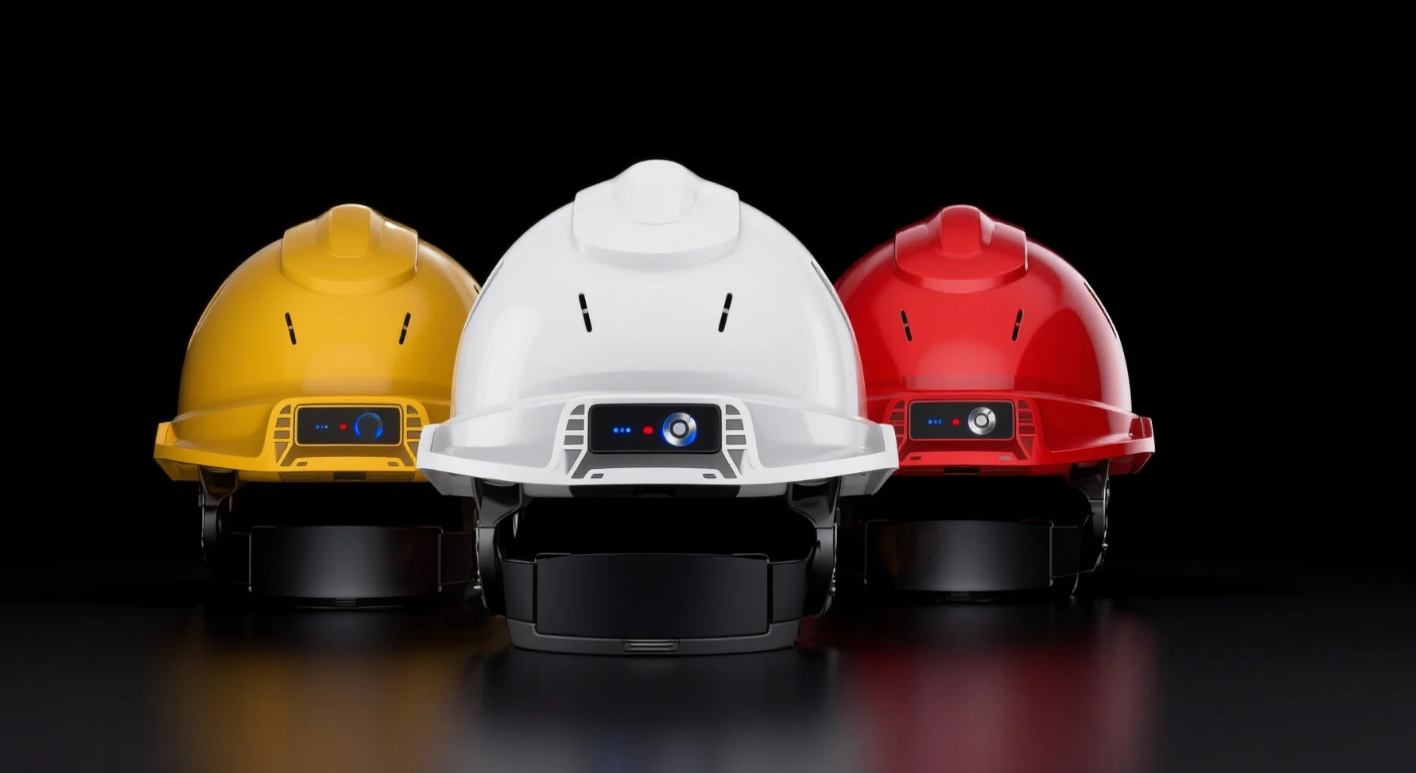
The two frameworks, the marking conventions and the type and class terminology are explained in more detail in Shield Wings’ guide to safety helmets under ANSI Z89.1 and EN 397, which owns that explanation. For crews whose head protection requirement extends to monitoring, location or communication features, the smart safety helmet range sets out what those options add and what they require from the user’s own systems, and the full head and face protection range covers the hoods and shields that accompany a shell in electrical and utility work.
Shield Wings manufactures head and face protection — welding helmets, face shields, hoods and smart safety helmets — at a Guangdong production base, and supports electrical and utility buyers with material and construction information, test documentation and specification review before an order is placed. The decision that makes the difference is not which helmet looks most robust; it is whether the class, the marking and the accessory list all match the task the assessment describes.
For the wider topic and related decisions, see our Arc Flash & Electrical Safety PPE.
Frequently Asked Questions
What makes a helmet suitable for electrical work?
The shell and its assembly are designed and tested so that the helmet does not introduce a conductive path to the wearer, and the class marking states which electrical exposure the helmet is intended for. The class required comes from the employer’s risk assessment for that task. A shell that is unmarked for electrical performance, or marked as conductive, is not specified where contact with energised parts is credible.
Can accessories be added to an electrical helmet?
Only accessories intended for that shell and mount, and only where they do not compromise the properties the class marking represents. Metal components, unapproved adapters, drilled shells and adhesive-mounted brackets all fall outside that rule. Where ear muffs, face shields or lamps are needed, they should be specified as part of the original helmet system rather than added afterwards.
Does a helmet replace other electrical protective equipment?
No. Head protection is one element of an electrical work specification that also covers insulating gloves, sleeves, arc-rated clothing, footwear and insulating tools and barriers as the assessment requires. Each item has its own standard and its own inspection regime, and no single item substitutes for another. The complete set, worn and maintained as instructed, is what the assessment relies on.
How should a non-conductive helmet be inspected?
Inspect the shell and suspension before each use for cracks, crazing, deformation, chemical or solvent contamination, and for damage caused by heat or ultraviolet exposure. Inspections should follow the manufacturer’s instructions, and the results recorded against the helmet identifier. Any helmet that has taken an impact, or whose condition is doubtful, is withdrawn rather than returned to service.
What documentation should accompany a quotation?
Ask for the test report or declaration covering the model and class you are specifying, the marking the product carries, the manufacturer’s care, inspection and retirement instructions, and a traceability reference for the batch. Where the end user has to evidence the selection to a client or a regulator, the class marking on the delivered product is what links the shipment to the assessment.
Confirming a class for utility work?
Send the exposure described in the assessment and the market the product will be sold in. Shield Wings confirms the model, the marking and the test documentation that will accompany the shipment.
External references: 29 CFR 1910.137 electrical protective equipment, 29 CFR 1910.269 electric power generation, transmission and distribution, 29 CFR 1910.333 selection and use of work practices, 29 CFR 1910.135 head protection, UK HSE electrical safety guidance, CEN-CENELEC standards portal, Regulation (EU) 2016/425.