

In a modern fabrication cell, the welding is done by a machine and the people at risk are everyone else. Loaders, inspectors, quality technicians and maintenance staff all pass through the arc’s field of view, usually in short exposures several times a shift, and short intermittent exposure is exactly the pattern that eye protection programmes are worst at managing. The specification question is therefore not only which helmet the welder wears, but who else is exposed and what the cell itself controls.
What This Environment Does to People and Equipment
Automated and high-amperage welding concentrates more energy into the arc than light fabrication work, and it distributes that energy further. Optical radiation reflects from workpieces, fixtures and machine guarding, so an onlooker can receive exposure from a surface rather than from the arc directly. Spatter travels further and lands hotter, and the radiant and convective heat load in the immediate area is higher. Fume generation also rises with current and duty cycle, which is why extraction moves from a benefit to a condition of the process.
The operating pattern adds its own complication. A robot welding continuously behind a curtain is one situation; a cell with an open front, frequent door openings, manual touch-up welding and occasional faults is another. Equipment has to survive the same environment: helmets sit on hooks in the cell area, filters accumulate spatter and dust, and screens become coated, which reduces their effectiveness and encourages people to look around them.
Duty cycle deserves separate mention because it is the variable that most often invalidates a specification. A cell running at high current for long periods builds heat in the workpiece, the fixture and the surrounding air, and it generates fume continuously rather than in bursts. That combination changes what the people at the cell can physically wear, how often they need to step away, and how quickly extraction filters load up. Where the assessment records the duty cycle, the equipment specification and the welfare arrangements both follow from it; where it does not, the specification tends to be written for the lightest version of the job and quietly fails on the heaviest shift of the week.
The Hazards That Drive the Specification
The hazard list is short but the exposure pattern is unusual, because it belongs to a role rather than to a job title.
- Optical radiation from the arc, including reflections, with exposure that varies from continuous (welder, touch-up) to intermittent (loader, inspector, passer-by).
- Spatter, slag and hot particles, which affect the face, neck and hands more than the eyes alone.
- Radiant and convective heat, particularly around high-duty-cycle cells and heavy sections.
- Fume and gases, managed by extraction and ventilation rather than by personal equipment where possible.
- Mechanical hazards from the cell itself: robot movement, clamping, indexing tables, tooling and pinch points.
- Residual hazards during maintenance, when the cell is opened and the arc may be restarted unexpectedly if isolation is incomplete.
Two entries on that list change the equipment decision. Intermittent exposure for non-welders means the specification has to cover people who would not think of themselves as needing welding protection. And maintenance entry means the required set changes for a task that happens once a month rather than every shift, which is precisely when equipment is improvised.
Controls That Come Before the Equipment
Welding safety regulation in the United States is built around the process controls in 29 CFR 1910.252 and 1910.253, with eye and face protection requirements in 29 CFR 1910.133, and the same principle runs through the European framework: the enclosure and the process do most of the work. Fixed screens and light-tight curtains around the cell, interlocked gates that stop the process when the guard is open, extraction at the source, tooling that keeps hands away from the arc during loading, and procedures that prevent simultaneous welding and entry are all engineering and administrative controls.
Those controls also set the residual requirement. A cell with a full enclosure, interlocked access and effective extraction leaves the welder with a helmet requirement and the maintenance technician with a task-specific set. A cell with an open front and curtained sides leaves everyone in the area with an optical radiation exposure, and no personal equipment can properly substitute for the enclosure. Personal protective equipment is the last line of defence, and in welding cells the enclosure is the control that determines how much of it is required.
What the Equipment Has to Do Here
For the welder, the helmet has to match the process and the current range, with a filter that covers the viewing tasks performed: welding, inspection between passes, and any grinding at the same station. In high-amperage work the arc is more intense and the filter setting is correspondingly different from light fabrication, which is why the specification should state the process and the current range rather than describing the helmet as suitable for welding in general.
For everyone else, the equipment is chosen for the exposure they actually receive. That normally means safety spectacles for visitors and staff passing a screened cell at a distance, and a higher level of protection for anyone who works at the cell opening with the arc running. Where the cell is open and people work facing it, the answer is usually a combination: fixed screening that removes the direct line of sight, plus personal eye protection as the secondary layer.
The set also extends beyond the head. High-amperage welding sends spatter further and hotter, so flame resistant clothing, sleeves, gloves and footwear are part of the same task specification, and a hood or a neck flap closes the gap between the helmet and the collar. Where the helmet is worn with respiratory protection, the two should be checked together rather than assumed to be compatible.
Consumables are part of the equipment specification rather than a purchasing afterthought. Outer lens covers, inner covers, headbands, sweatbands and any sealing components wear far faster in a cell than in general fabrication, and a workshop that cannot restock them quickly will keep a scratched filter in service. Agreeing a consumables list and a replenishment arrangement at the point of order is the cheapest reliability improvement available in this category, and it removes the most common reason for a helmet being used past its condition.
Selection Criteria Specific to This Sector
| Role or activity | Exposure | Protection that follows | What to verify |
|---|---|---|---|
| Manual or touch-up welder at high amperage | Continuous intense arc, spatter, heat, fume | Welding helmet with a filter covering the current range, plus FR clothing and gloves | Filter range, light state, consumables availability, training |
| Loader or unloader at the cell opening | Intermittent arc exposure, spatter, mechanical hazards | Eye protection for the exposure plus FR clothing; enclosure as the primary control | Enclosure condition and interlocks; specified eye protection |
| Inspector or quality technician | Intermittent exposure, often at close range around the part | Eye protection matched to the exposure and viewing distance | Task assessment for that role, not the welder’s specification |
| Maintenance inside the cell | Residual heat, spatter, sharp tooling, movement, possible arc | Full protective set for the task, with isolation as the first control | Isolation, lockout, pre-task equipment check |
| Visitors and adjacent workstations | Reflected and indirect exposure, plus pass-through traffic | Screening; personal eye protection where exposure cannot be removed | Screening integrity, sight lines, housekeeping of the cell area |
Read across the table, only the first row looks like a conventional welding specification. The other four are the rows that determine whether a cell programme is actually controlled, and they are the rows most often missing from a purchase list that was written for welders.
It is also worth recording what each role must not do. A loader who is not trained on filter selection has no business adjusting a helmet setting; an inspector who needs to look closely at a weld should not be relying on the same spectacles that were issued for walking past a screened cell. Where the assessment states both the exposure and the limit of each role’s equipment, the specification stops drifting as people move between tasks during a shift, which is how most exposure incidents in cells actually begin.
Typical Specification Failures in This Sector
Most failures in automated cells are visible during a walk-through.
- Assuming the fence protects everyone. Gaps, open fronts, worn curtains and coated screens all allow exposure, and people adapt by looking around them.
- No eye protection for non-welders. The specification was written around the welder and everyone else was treated as a visitor.
- Filter set by habit. A helmet used across processes and currents is adjusted by preference rather than by the task, and the difference matters most at high amperage.
- Maintenance work improvised. A technician entering a cell with a single pair of glasses because the set is not stored with the cell.
- Consumables not managed. Spatter-damaged lens covers and scratched filters degrade the optical path and eventually reduce protection.
- Fume treated as a comfort issue. Extraction at the source is a process control, and its absence shifts an exposure onto respiratory protection that the task never specified.
- Heat load ignored. High-duty-cycle cells with enclosures raise ambient temperature, which changes what workers can wear and how long they can stay.
Building the Full Set Rather Than Buying Pieces
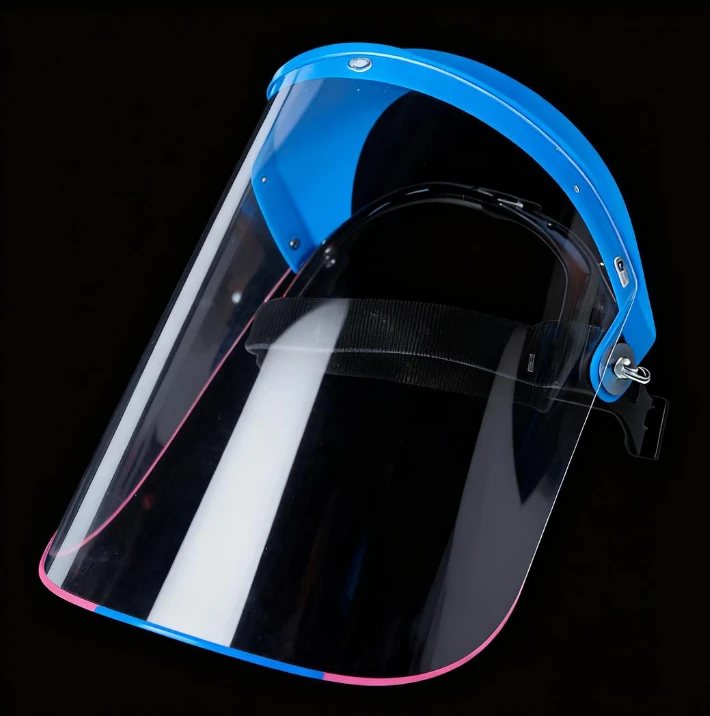
For a cell, the useful unit of specification is the set that each role needs: helmet and filter, eye protection, face and neck coverage, flame resistant clothing and sleeves, gloves, footwear, and respiratory protection where extraction cannot control the fume. The sets are then stored where the work happens, checked before use and reviewed when the process changes.
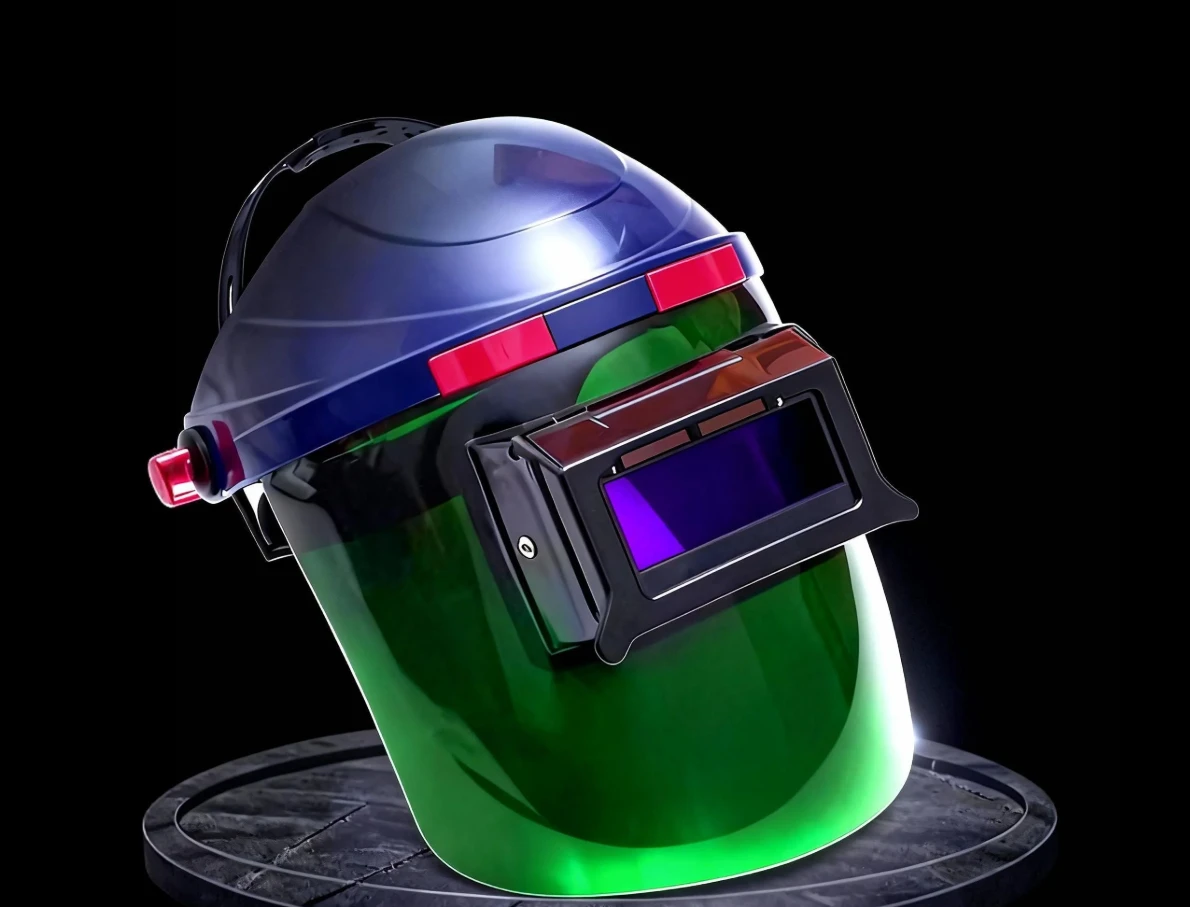
The distinction between passive and auto-darkening helmets, and how the choice follows the task, is covered in Shield Wings’ article on auto-darkening versus passive welding helmets, which owns that comparison. The hardware itself is listed on the auto-darkening welding helmet page and within the wider head and face protection range.
Shield Wings manufactures welding helmets, face shields and protective hoods at a Guangdong production base and supports fabrication businesses and distributors with filter selection, consumable planning and the documentation for each product line. The decision that matters in a cell is not which helmet is best in isolation, but which exposure each person at that cell actually receives and who has written that down.
For the wider topic and related decisions, see our Head, Face & Eye Protection.
Frequently Asked Questions
Who needs eye and face protection around an automated welding cell?
Everyone who can see the arc. Loaders, inspectors, quality staff, maintenance technicians and anyone walking past an open cell can receive optical radiation exposure, and the exposure is intermittent, which is what makes it easy to miss. The primary answer is the enclosure and the interlocking, and the secondary answer is eye protection specified for the task, including for people who are not welders.
Is the same helmet suitable for high amperage manual welding and for cell work?
The filter has to cover the process and the current range concerned, and the two settings are not always the same. High amperage work produces a more intense arc, while cell work often involves repeated short observations rather than continuous welding. Where both occur on one site, the specification should state the process, the current range and the viewing tasks, and the filter should cover the most demanding combination.
Do maintenance staff need the full welding set?
Maintenance work inside a cell combines several exposures: residual heat, spatter, sharp tooling, mechanical movement and the possibility of an inadvertent arc. The set should be chosen for the task the technician performs, with the equipment isolated where possible and the residual hazards assessed. Where the technician has to enter a cell to change a torch or clear a jam, the requirement is normally a full protective set rather than a single item.
What documentation should be held for a welding cell specification?
Keep the assessed exposures for each role, the filtering and protection equipment specified for those exposures, the test evidence for the models used, the enclosure and interlock arrangements, the maintenance and inspection records for helmets and filters, and the training records for everyone who works near the cell rather than only for the welders.
How often should welding helmets and filters be replaced?
Follow the manufacturer’s instructions, which normally set out inspection criteria for the shell, the headband and the filter, and replacement of consumable items such as outer and inner lens covers. In practice, helmets in heavy fabrication and cell environments need covers replaced frequently, and a filter that has been cracked, contaminated or damaged is replaced rather than repaired. Every replacement should be recorded against the unit.
Specifying protection for a welding cell?
Send the roles at the cell, the process and the current range. Shield Wings confirms the helmet, filter and face protection options for each role and the consumables plan that keeps them serviceable.
External references: 29 CFR 1910.252 welding, cutting and brazing, 29 CFR 1910.253 oxygen-fuel gas welding and cutting, 29 CFR 1910.133 eye and face protection, UK HSE welding guidance, CEN-CENELEC standards portal, Regulation (EU) 2016/425.
{“@context”:”https://schema.org”,”@type”:”FAQPage”,”mainEntity”:[{“@type”:”Question”,”name”:”Who needs eye and face protection around an automated welding cell?”,”acceptedAnswer”:{“@type”:”Answer”,”text”:”Everyone who can see the arc. Loaders, inspectors, quality staff, maintenance technicians and anyone walking past an open cell can receive optical radiation exposure, and the exposure is intermittent, which is what makes it easy to miss. The primary answer is the enclosure and the interlocking, and the secondary answer is eye protection specified for the task, including for people who are not welders.”}},{“@type”:”Question”,”name”:”Is the same helmet suitable for high amperage manual welding and for cell work?”,”acceptedAnswer”:{“@type”:”Answer”,”text”:”The filter has to cover the process and the current range concerned, and the two settings are not always the same. High amperage work produces a more intense arc, while cell work often involves repeated short observations rather than continuous welding. Where both occur on one site, the specification should state the process, the current range and the viewing tasks, and the filter should cover the most demanding combination.”}},{“@type”:”Question”,”name”:”Do maintenance staff need the full welding set?”,”acceptedAnswer”:{“@type”:”Answer”,”text”:”Maintenance work inside a cell combines several exposures: residual heat, spatter, sharp tooling, mechanical movement and the possibility of an inadvertent arc. The set should be chosen for the task the technician performs, with the equipment isolated where possible and the residual hazards assessed. Where the technician has to enter a cell to change a torch or clear a jam, the requirement is normally a full protective set rather than a single item.”}},{“@type”:”Question”,”name”:”What documentation should be held for a welding cell specification?”,”acceptedAnswer”:{“@type”:”Answer”,”text”:”Keep the assessed exposures for each role, the filtering and protection equipment specified for those exposures, the test evidence for the models used, the enclosure and interlock arrangements, the maintenance and inspection records for helmets and filters, and the training records for everyone who works near the cell rather than only for the welders.”}},{“@type”:”Question”,”name”:”How often should welding helmets and filters be replaced?”,”acceptedAnswer”:{“@type”:”Answer”,”text”:”Follow the manufacturer’s instructions, which normally set out inspection criteria for the shell, the headband and the filter, and replacement of consumable items such as outer and inner lens covers. In practice, helmets in heavy fabrication and cell environments need covers replaced frequently, and a filter that has been cracked, contaminated or damaged is replaced rather than repaired. Every replacement should be recorded against the unit.”}}]}