

Welding protection is usually specified around the person holding the torch, and the arc does not discriminate. Helpers passing electrodes, adjacent trades working a few metres away, supervisors watching a procedure and cleaners moving through the bay are all exposed to optical radiation, usually in short bursts, and short bursts are the pattern that protective equipment programmes manage least well.
What This Environment Does to People and Equipment
Equipment is affected in the same way. Portable screens become scratched and opaque, curtain hooks fail, and a screen that is left folded against a wall provides no protection at all. Welding curtains and screens are consumables in practice, and the condition they are kept in decides whether the area is genuinely contained or only nominally screened.
The arc emits intense radiation across a wide spectrum, and the welding helmet is designed to manage that for the welder. For everyone else, the exposure is indirect: it comes from the arc seen at an angle, from reflected light off nearby surfaces, and from the cumulative effect of repeated short exposures across a shift. The consequences range from the immediate discomfort of a flash exposure to longer-term effects that accumulate without any single event.
Two features of the workshop make this harder to control. The first is reflection: pale walls, metal structures, screens, windows and even wet floors redirect light beyond the direct line of sight, so spacing alone does not protect people who are out of the welder’s view but within the reflected field. The second is turnover: people move through the area throughout the day, and the protection that was in place at the start of the task is often assumed rather than checked when the next person walks past.
The Hazards That Drive the Specification
It is worth recording the exposure in terms of what a person can see rather than where they stand. Someone facing the other way is not exposed to the direct arc, but may still be at a screen edge or in the path of reflected light; someone working behind a curtain is not exposed at all. Describing positions that way makes it possible to decide which people need equipment and which are protected by the arrangement.
- The processes in use, including welding, gouging, plasma cutting and grinding at the same bench.
- The position and duration of each person’s exposure, since a helper at the arc and a fitter ten metres away have different requirements.
- Whether the exposure is direct or reflected, and the surfaces that redirect light in that area.
- The frequency of exposure, because repeated short exposures accumulate where continuous ones would prompt a change in the working method.
- The other hazards present, including spatter, hot particles and mechanical debris, which determine whether face protection is also required.
- Who else enters the area and how, including cleaners, inspectors, delivery staff and visitors.
- The screening in place, since it reduces the requirement for everyone except the welder.
The employer’s assessment sets the requirement, and the supplier documents what each product is tested to. In this category the assessment is unusual because it has to describe several people and several positions rather than one task, and because the same area may contain a welder with a helmet, a helper needing lighter protection and a passer-by who should not be there at all.
Controls That Come Before the Equipment
Where the work is repetitive, a dedicated bay with fixed screening and a defined access point usually costs less over a year than the equipment and supervision needed to manage an open bench, and it makes the exposure predictable for everyone else on site.
It is also worth agreeing how the area is managed while the arc is live. A simple signal, a warning sign that is turned or a barrier that is closed gives everyone on the shop floor the same information, which is more reliable than expecting each person to judge whether welding has started.
Screening is the primary control, and it works better than any eyewear because it removes the exposure rather than reducing it. Fixed and portable screens, welding curtains, booths and enclosures, positioned to contain the arc and to block the reflected light that travels around the edges, are what allow the people around the welder to work without special protection.
Administrative controls follow: sequencing that separates welding from other trades, restricted access to the immediate area during welding, warning signage and communication so that people know when the arc is live, and rules about who may enter and with what protection. Personal protective equipment is the last line of defence, and it is specified for the residual exposure that the screens and the procedures do not remove.
What the Equipment Has to Do Here
Fit matters more for bystanders than it is usually given credit for, because the equipment is worn intermittently. Protective eyewear that is uncomfortable, that fogs, or that has to be fetched from another room will be left off for the two minutes it is needed, and the exposure occurs inside those two minutes. Keeping the protection at the workstation, in a condition that can be put on quickly, is part of the specification rather than an office convenience.
For a bystander, the eyewear has to do two things at once: reduce the optical radiation to an acceptable level for that position, and provide the impact protection that the industrial environment requires. That is why ordinary sunglasses are not a solution and why leisure eyewear is not protective equipment: the lens may offer some filtering, but the frame and lens are not specified for impact, and the marking does not support the claim.
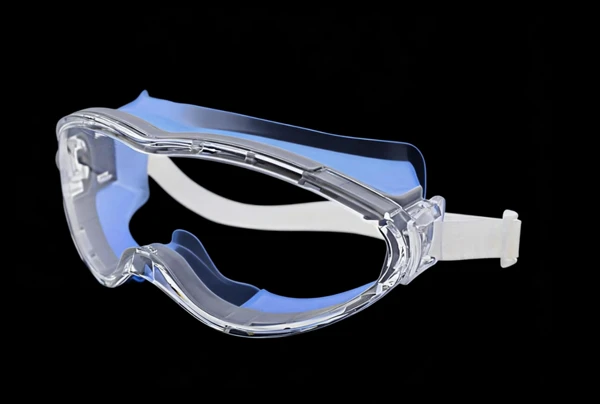
Where the exposure is significant, the protection may be welding goggles or safety spectacles with an appropriate filter, chosen against the assessment rather than from habit. Where the person is also exposed to spatter or hot particles, a face shield is added, and primary eye protection is worn underneath. The selection logic for welding eye protection, including goggles and filters, is covered in Shield Wings’ article on eye protection for welders, which owns that topic.
Selection Criteria Specific to This Sector
| Person and position | Exposure | Protection that follows | What to verify |
|---|---|---|---|
| Helper at the arc, feeding or holding | Intermittent intense exposure at close range | Filtered eye protection for that exposure, with face protection where spatter is present | The filter specified for the position and the fit with a helmet |
| Adjacent trade at the same bench | Reflected and direct exposure, variable through the shift | Screening first, with eye protection specified for the residual exposure | Screen position and the protection issued for that bench |
| Supervision and inspection | Intermittent exposure while watching the work | Protection carried and worn when approaching, or a screening arrangement | Access rules and the availability of protection at the point of entry |
| Cleaning and housekeeping | Exposure while the work continues nearby | Either protection for the exposure or a rule that cleaning waits | Communication between trades and the sequencing of tasks |
| Visitors and delivery staff | Unpredictable exposure with no local knowledge | Escorted routes that avoid live areas, or full protection for the route | Route planning and the provision at the access point |
| Gouging and plasma cutting | Intense radiation plus sparks and hot material | Protection specified for those processes, with face and body coverage | That the assessment covers every process at the bench |
Read across the table, the protection is different for each person but the sequence is the same: screen what can be screened, separate what can be separated, and specify protection for what remains.
Typical Specification Failures in This Sector
One failure is cultural: the people who are exposed least often are the least prepared, and they tend to believe that the risk belongs to the welder. A short briefing for everyone who works near welding, covering what the exposure is, when it occurs and what they should have with them, closes most of that gap at negligible cost.
- Protection specified for welders only. Everyone else receives whatever happens to be available, or nothing.
- Leisure eyewear used as protection. Tinted lenses without the impact specification and marking are not eye protection.
- Screens with gaps and edges. Light travels around and over screens, and reflected light does not respect the direct line of sight.
- Reflection ignored. Pale walls, glass and wet surfaces extend the exposure well beyond the apparent work area.
- Processes not covered. Gouging, plasma cutting and grinding are treated as preparation rather than as exposures requiring their own protection.
- Visitors and cleaners overlooked. The people with the least local knowledge are often in the area with the least protection.
- No rule about when the arc is live. Without communication, people enter the area at the moment it is unsafe.
Building the Full Set Rather Than Buying Pieces
It is also worth reviewing the arrangement whenever the layout changes. Moving a bench, changing the direction a job faces, adding a partition or replacing a wall surface with a lighter finish can all change where the exposure reaches, and those changes are easier to catch in the layout review than in an incident.
The set for an area where welding takes place includes the welder’s helmet assembly, the protection issued to helpers and adjacent workers for their own exposure, the screening and curtains that contain the arc, the signage and communication arrangements, and the routes that keep people who do not need to be there out of the way. The protection is therefore specified per role and per position, with the screening doing as much work as the equipment.
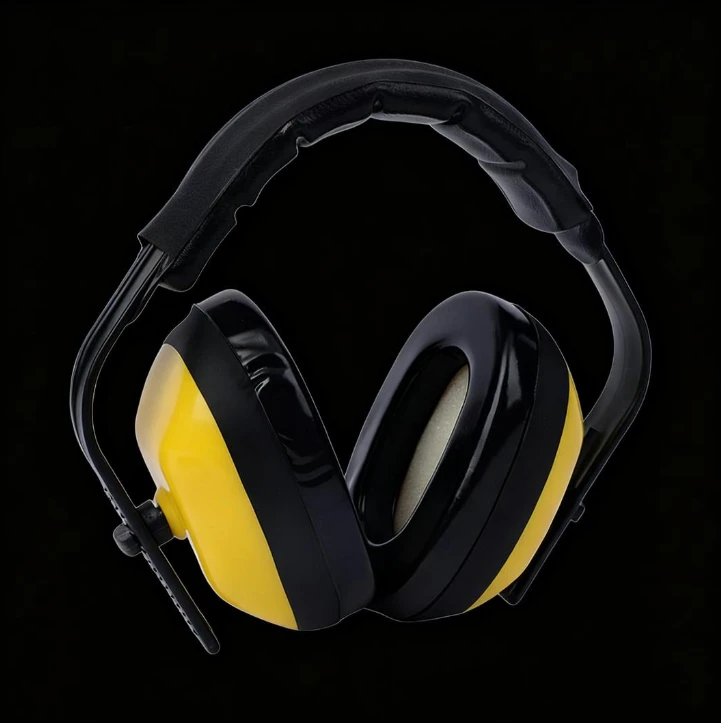
Shield Wings manufactures eye and ear protection, including safety glasses, at a Guangdong production base, and supplies industrial customers and distributors with product information and documentation. The spectacles are listed on the safety glasses page and within the wider eye and ear protection range.
The practical test in a workshop is straightforward: stand where the helper stands, where the adjacent fitter works and where the cleaner walks, and ask what each of them is wearing and why. Where the answer is that they are wearing whatever the welder does not need, the specification has not been written for those positions.
For the wider topic and related decisions, see our Welding Safety & Welding PPE.
Frequently Asked Questions
Do welding helpers and bystanders need eye protection?
Anyone who can see the arc is exposed to optical radiation, and that includes helpers, adjacent trades, supervisors, cleaners and visitors. The exposure is usually intermittent rather than continuous, which is exactly what makes it easy to leave unprotected. Screening is the primary answer, and personal eye protection is specified for the residual exposure each person receives.
What level of protection does a bystander need?
It depends on the process, the distance, how long the exposure lasts and whether the light is direct or reflected, which is why the assessment should describe the position rather than the job title. The shade or filter required for a specific position comes from that assessment, and it is normally specified with the safety eyewear rather than with a general purpose pair of glasses.
Why are reflections important?
Because an arc reflects from nearby surfaces, which means that someone who is not in the direct line of sight can still be exposed. Light-coloured walls, screens, metal structures, glass and even wet floors change how far the exposure reaches, which is one of the reasons screening and enclosure do more work than equipment alone.
Does plasma cutting and gouging create the same hazard?
It produces intense optical radiation as well, and it is often present in the same area as welding, so the assessment should cover all of the processes used at that bench. Tasks that people think of as preparation, such as gouging and grinding, often carry the exposures that are left unprotected because the equipment was specified around welding only.
What should be checked before a welding task begins?
That the screens and curtains are complete and positioned correctly, that everyone in the field of view has the protection for their own exposure, that reflections from walls and structures have been considered, and that people who move through the area, such as cleaners and inspectors, are either protected or excluded while the work is in progress.
Equipping a welding area for everyone in it?
Send the processes, the positions and the people who work nearby. Shield Wings confirms the eyewear options available, the marking each carries and the documentation for each product.
External references: 29 CFR 1910.133 eye and face protection, 29 CFR 1910.252 welding, cutting and brazing, UK HSE welding guidance, CCOHS PPE answers, CEN-CENELEC standards portal, Regulation (EU) 2016/425.
{“@type”:”FAQPage”,”@context”:”https://schema.org”,”mainEntity”:[{“@type”:”Question”,”name”:”Do welding helpers and bystanders need eye protection?”,”acceptedAnswer”:{“@type”:”Answer”,”text”:”Anyone who can see the arc is exposed to optical radiation, and that includes helpers, adjacent trades, supervisors, cleaners and visitors. The exposure is usually intermittent rather than continuous, which is exactly what makes it easy to leave unprotected. Screening is the primary answer, and personal eye protection is specified for the residual exposure each person receives.”}},{“@type”:”Question”,”name”:”What level of protection does a bystander need?”,”acceptedAnswer”:{“@type”:”Answer”,”text”:”It depends on the process, the distance, how long the exposure lasts and whether the light is direct or reflected, which is why the assessment should describe the position rather than the job title. The shade or filter required for a specific position comes from that assessment, and it is normally specified with the safety eyewear rather than with a general purpose pair of glasses.”}},{“@type”:”Question”,”name”:”Why are reflections important?”,”acceptedAnswer”:{“@type”:”Answer”,”text”:”Because an arc reflects from nearby surfaces, which means that someone who is not in the direct line of sight can still be exposed. Light-coloured walls, screens, metal structures, glass and even wet floors change how far the exposure reaches, which is one of the reasons screening and enclosure do more work than equipment alone.”}},{“@type”:”Question”,”name”:”Does plasma cutting and gouging create the same hazard?”,”acceptedAnswer”:{“@type”:”Answer”,”text”:”It produces intense optical radiation as well, and it is often present in the same area as welding, so the assessment should cover all of the processes used at that bench. Tasks that people think of as preparation, such as gouging and grinding, often carry the exposures that are left unprotected because the equipment was specified around welding only.”}},{“@type”:”Question”,”name”:”What should be checked before a welding task begins?”,”acceptedAnswer”:{“@type”:”Answer”,”text”:”That the screens and curtains are complete and positioned correctly, that everyone in the field of view has the protection for their own exposure, that reflections from walls and structures have been considered, and that people who move through the area, such as cleaners and inspectors, are either protected or excluded while the work is in progress.”}}]}