

Abrasive blasting is one of the few tasks where the head and face protection is also a respiratory device, a visibility system and a communication problem at the same time. The operator works inside a helmet in an atmosphere that cannot be breathed, producing a spray that rebounds into everything, and the main operational difficulty is often not protection but visibility. Specifying the equipment well means treating those four functions together.
What This Environment Does to People and Equipment
It is worth separating the two atmospheres an operator deals with. The first is inside the helmet, where the air is supplied and the main concerns are quality, temperature and flow. The second is outside it, where the composition changes minute by minute as the surface coating is removed and the abrasive breaks down. The equipment is the boundary between the two, and every design decision — window size, seal tightness, air routing — trades one of those conditions against the other.
Blasting throws abrasive at high velocity against a surface, and a significant proportion of it rebounds towards the operator. That rebound reaches the helmet, the window, the collar and the rest of the body, and it carries whatever the surface contained: rust, scale, old coatings, and in some cases hazardous substances that the site’s assessment has to identify. Meanwhile, the process generates an airborne concentration of abrasive and removed material that cannot be filtered with a simple respirator in many cases, which is why supplied air is used where the exposure requires it.
Equipment suffers in predictable ways. Windows become obscured within minutes and are the consumable that decides whether the task continues; the abrasive also abrades the window frame, the seals and the hose connections, and it works its way into the collar where the helmet meets the suit. Operators respond to poor visibility by lifting the helmet, pulling the window closer or working by feel, all of which change the exposure and often reduce the quality of the work.
The Hazards That Drive the Specification
The coating removed from the surface is the variable most often underestimated, because it changes as the task progresses. A structure may be painted in several layers applied over decades, and the assessment should identify what those layers contain rather than assuming that the substrate is the only concern. Sampling is normally required where the coating history is unknown, and the result feeds directly into the respiratory protection arrangement.
- The abrasive and its velocity, including the angle of blasting and how much rebound reaches the operator.
- The material being removed, including any hazardous coatings that the assessment must identify.
- The airborne concentration, which determines whether supplied air is needed rather than a filter.
- The noise from the nozzle and the air supply, which is often high and continuous.
- The duration of the task and the conditions of the enclosure, including heat and restricted space.
- The ability to see the work, since visibility drives operator behaviour more than any other factor.
- The ability to communicate, because an operator inside a helmet cannot be heard and may not hear.
The employer owns the assessment, and the supplier documents what the equipment is tested to. In this category the assessment has to cover respiratory protection explicitly, because the helmet is only one component of an arrangement that also includes the air supply, its quality and its monitoring.
Controls That Come Before the Equipment
Blasting safety is built on containment and separation before anything is worn. Blast enclosures and booths, mechanical handling so that the operator stays outside and directs the nozzle remotely or from a booth, extraction and ventilation that keep the atmosphere manageable, and the choice of abrasive itself all reduce the exposure. Where the work is done in the open, screens and containment become the control that protects everyone else on site.
Administrative controls follow: restricting access to the blasting area, defining the tasks that require supplied air, establishing communication and signal arrangements, and providing the welfare facilities that a hot, dusty and enclosed task requires. Personal protective equipment is the last line of defence, and in blasting it is substantial: the helmet or hood, the air supply, the suit, gloves and footwear, with the interfaces between them doing much of the work.
What the Equipment Has to Do Here
Visibility deserves its own place in the requirements, because it is the property the operator notices first and the one most often traded away in purchasing. A window that is large, undistorted and quickly replaceable lets the operator see the surface, judge progress and stop at the right point. A small or heavily obscured window forces the operator to work closer to the surface, where rebound is more intense and the dust concentration is higher.
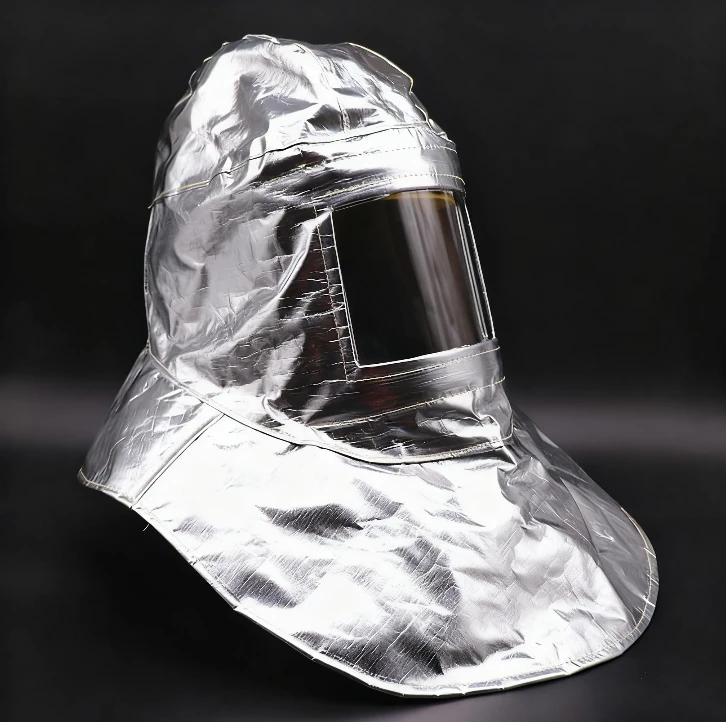
A blasting helmet or hood has to protect the head and face from rebounding abrasive, provide a window that the operator can see through for a useful period, seal against the suit collar so that abrasive and dust do not enter, and integrate with the air supply in a way that keeps the operator breathing clean air and cool enough to work. Those requirements interact: a tighter seal improves protection and worsens heat and fogging, and a larger window improves visibility while adding an area that will be abraded.
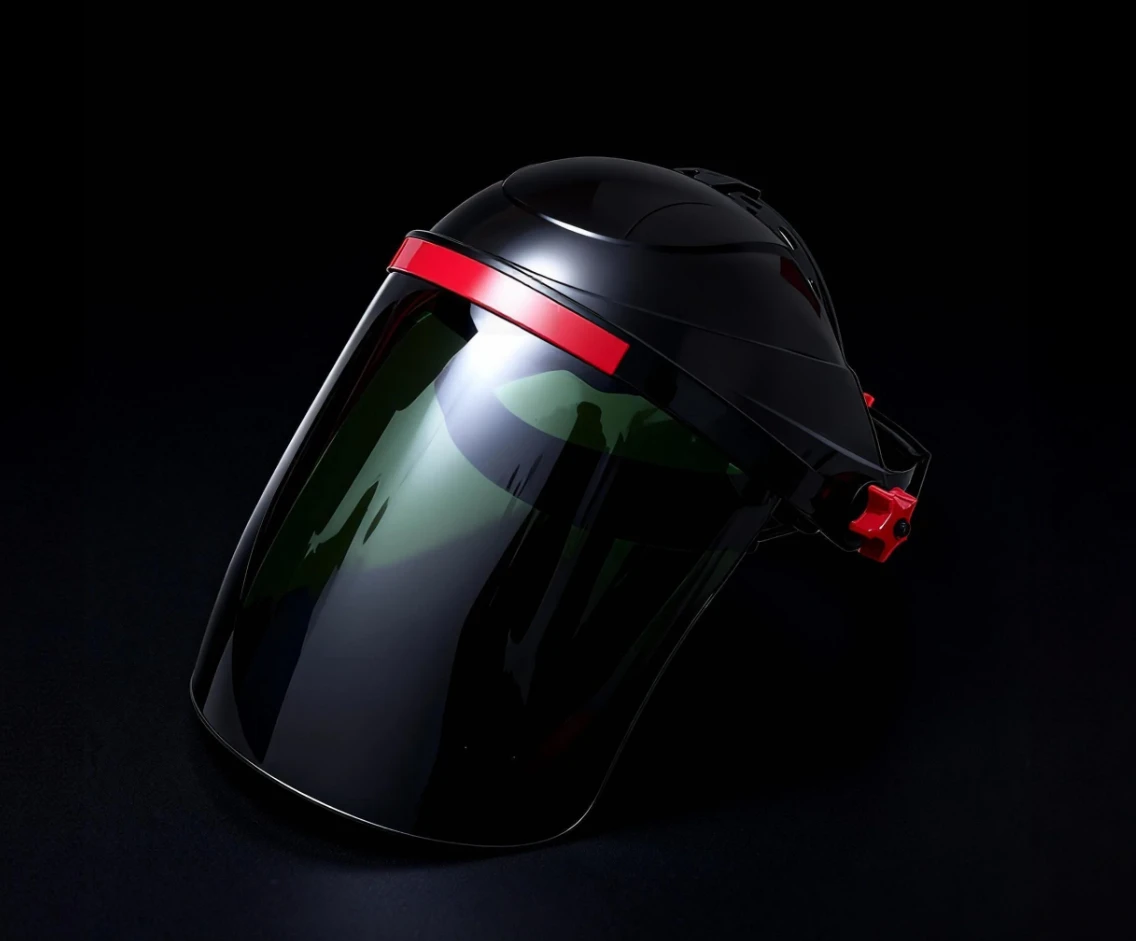
Two practical properties separate good and poor equipment in service. The first is how quickly the window can be replaced, because the operator will keep working with a degraded window rather than stop. The second is how the helmet behaves with the other equipment in the set: the collar seal with the suit, the hose routing when the operator turns, and the noise reduction when hearing protection is worn underneath. The design and selection of the head and face equipment family is covered in Shield Wings’ guide to face shield types and selection, which owns that topic.
Selection Criteria Specific to This Sector
| Task | What dominates | Equipment that follows | What to verify |
|---|---|---|---|
| Enclosed booth blasting | Dense atmosphere, sustained task, heat | Hood or helmet with supplied air, replaceable window and sealed collar | Air supply quality and continuous flow |
| Open blasting with screens | Rebound, containment of others, weather | Helmet with full face coverage, suit interface and hearing protection | The containment arrangements and the set as worn |
| Spot blasting and repair work | Short tasks, awkward positions | Equipment that can be donned quickly while still sealing properly | Fit and seal in the position used |
| Removal of hazardous coatings | The removed material, not only the abrasive | Equipment selected for the substance, with the respiratory arrangement reviewed separately | The assessment of the coating and the air supply arrangement |
| Blasting with abrasive recovery | Recirculated abrasive, dust, noise | Sealed equipment with attention to window life and hose condition | Maintenance of hoses, seals and windows |
| Inspection inside a blast area | Intermittent presence without full protection | The same level of protection as for the task, or exclusion from the area | Access rules and the protection available at entry |
Read across the table, the constant is that the equipment is a system rather than an item. The helmet, the air supply, the suit and the hearing protection are specified together, because the failures in this sector happen at the join between them.
Typical Specification Failures in This Sector
One further failure is procedural: the equipment is maintained by the operator, but the consumables are held by the store, so a degraded window is used because the replacement is not where the work happens. Keeping window stock, seals and hose fittings at the blasting area, and giving the operator the authority to change them, removes most of the reason for working with equipment that has lost its visibility.
It is also worth reviewing the specification when the abrasive or the coating changes. A different media type, a coarser grade or a surface with a different coating profile can alter both the rebound and the airborne concentration, and the equipment that was adequate for the previous job may not be for the next one.
- Window supply treated as a consumable afterthought. Operators who cannot see lift the equipment or work by feel, which is where the exposure changes.
- Respiratory protection handled separately. The helmet and the air supply are one arrangement, and dividing the responsibility between two documents usually leaves a gap.
- Collar seal not checked. Abrasive and dust enter at the join with the suit, which is the most common route into the set.
- Hearing protection overlooked. Nozzle noise and air supply noise are continuous, and they are often the reason an operator asks for a lighter helmet.
- Communication arrangements assumed. Without a signal system, the operator cannot hear instructions and stops work to ask.
- Heat and fogging ignored. Equipment that fogs is equipment that gets lifted, and the specification should reflect the working temperature.
- Everyone else forgotten. Blasting in the open affects adjacent workers, and containment and access rules protect them more effectively than issuing helmets.
Building the Full Set Rather Than Buying Pieces
The set for blasting is one of the most interconnected in industry: helmet or hood with a replaceable window, supplied air with its hose and quality arrangements, a blast suit whose collar seals with the helmet, gloves rated for the abrasive and the surfaces, footwear that keeps abrasive out, and hearing protection that can be worn inside the assembly. Interfaces matter more here than in almost any other category, and the fit should be confirmed in the working position rather than standing upright.
Shield Wings manufactures head and face protection at a Guangdong production base, including face shields and hoods within the head and face protection range, and supports industrial customers and distributors with configuration guidance and product documentation. Where a site is assembling a blasting set, the practical route is to specify the interfaces first … the seal at the collar, the window replacement, the hose routing … and then choose the components that satisfy them.
The specification that works in blasting is the one that keeps the operator able to see and breathe while keeping the abrasive out, and that treats window supply, air quality and hearing as part of the same purchase.
For the wider topic and related decisions, see our Head, Face & Eye Protection.
Frequently Asked Questions
What head and face protection does abrasive blasting require?
Equipment that protects the head and face from rebounding abrasive while providing respiratory protection, normally a blasting helmet or hood supplied with clean breathing air and fitted with a replaceable window suitable for the work. The visible conditions matter as much as the protection: if the operator cannot see the surface being blasted, the task is performed by feel and the exposure changes.
Why is supplied air used rather than a filter?
Blasting creates a dense airborne concentration of abrasive and the material being removed, including coatings that may contain hazardous substances, and the atmosphere inside a blasting enclosure can be immediately dangerous. Supplied air separates the wearer from that atmosphere, and the arrangement follows the site’s respiratory protection programme rather than being treated as part of the helmet purchase.
What matters most about the window?
That it can be replaced quickly, cheaply and in the field, because visibility is the first thing lost in blasting. Operators lift or remove equipment when they cannot see, so a supply of spare windows and a design that allows fast replacement is a protection measure rather than a convenience.
How does blasting work interact with the rest of the protective set?
The abrasive rebounds off the surface and reaches the body, so the set usually includes a blast suit or protective clothing, gloves, and footwear rated for the environment, with the helmet or hood sealing against the collar. Where noise from the nozzle and the air supply is significant, hearing protection is part of the same specification.
What should be checked before a blasting task starts?
The air supply quality and its continuous operation, the condition of the window and seals, the fit of the helmet with the suit collar, the noise exposure, and the arrangements for communication or a signal system, since the operator inside a helmet cannot hear instructions. Each of those is a pre-task check rather than an assumption.
Specifying protection for blasting work?
Send the abrasive, the coating being removed, the enclosure and the air supply arrangement. Shield Wings confirms which head and face equipment fits the set and what documentation accompanies it.
External references: 29 CFR 1910.132 hazard assessment and equipment selection, 29 CFR 1910 Subpart I, 29 CFR 1910.95 occupational noise exposure, CCOHS PPE answers, CEN-CENELEC standards portal, Regulation (EU) 2016/425.
{“@type”:”FAQPage”,”@context”:”https://schema.org”,”mainEntity”:[{“@type”:”Question”,”name”:”What head and face protection does abrasive blasting require?”,”acceptedAnswer”:{“@type”:”Answer”,”text”:”Equipment that protects the head and face from rebounding abrasive while providing respiratory protection, normally a blasting helmet or hood supplied with clean breathing air and fitted with a replaceable window suitable for the work. The visible conditions matter as much as the protection: if the operator cannot see the surface being blasted, the task is performed by feel and the exposure changes.”}},{“@type”:”Question”,”name”:”Why is supplied air used rather than a filter?”,”acceptedAnswer”:{“@type”:”Answer”,”text”:”Blasting creates a dense airborne concentration of abrasive and the material being removed, including coatings that may contain hazardous substances, and the atmosphere inside a blasting enclosure can be immediately dangerous. Supplied air separates the wearer from that atmosphere, and the arrangement follows the site’s respiratory protection programme rather than being treated as part of the helmet purchase.”}},{“@type”:”Question”,”name”:”What matters most about the window?”,”acceptedAnswer”:{“@type”:”Answer”,”text”:”That it can be replaced quickly, cheaply and in the field, because visibility is the first thing lost in blasting. Operators lift or remove equipment when they cannot see, so a supply of spare windows and a design that allows fast replacement is a protection measure rather than a convenience.”}},{“@type”:”Question”,”name”:”How does blasting work interact with the rest of the protective set?”,”acceptedAnswer”:{“@type”:”Answer”,”text”:”The abrasive rebounds off the surface and reaches the body, so the set usually includes a blast suit or protective clothing, gloves, and footwear rated for the environment, with the helmet or hood sealing against the collar. Where noise from the nozzle and the air supply is significant, hearing protection is part of the same specification.”}},{“@type”:”Question”,”name”:”What should be checked before a blasting task starts?”,”acceptedAnswer”:{“@type”:”Answer”,”text”:”The air supply quality and its continuous operation, the condition of the window and seals, the fit of the helmet with the suit collar, the noise exposure, and the arrangements for communication or a signal system, since the operator inside a helmet cannot hear instructions. Each of those is a pre-task check rather than an assumption.”}}]}