

A helmet that is correct in a fabrication shop can be the wrong choice fifty metres away at a furnace. Head protection is sold as one category and specified as several: the same silhouette can be designed for falling objects, for contact with live parts, for molten metal splash or for radiant heat, and those requirements pull the specification in different directions. The selection only becomes reliable when the hazard is named before the shell is chosen.
The Hazard First, the Product Second
Head hazards divide by the way energy reaches the head. Impact from a falling object loads the shell vertically, which is why suspension design and crown clearance dominate. Lateral impact — a swing into a fixed structure, a fall onto the side of the head — loads the same helmet differently, and the two failure modes are not covered by identical test regimes. Electrical contact depends on whether the shell can conduct or retain a path. Molten metal splash is a thermal and material problem, affected by brim shape, surface, and whether metal components sit near the shell. Radiant heat exposure degrades both the shell material and the suspension over time.
Two further hazards belong in the same assessment even though they are often handled separately. Chemical splash from above, which is a face and neck coverage question as much as a head one, and retained heat, because a shell that traps heat is a shell that gets removed on a hot day. Comfort is a protection variable, not a welfare footnote: the helmet that workers keep on is doing more work than the one with the better laboratory figure.
What the Risk Assessment Has to Establish
The assessment has to answer, for each task and each position the worker occupies, what can strike or contact the head, from which direction, with what energy, and for how long. Falling object risk alone is rarely the whole answer, and it is common for a single worker to move between positions with different exposures during one shift.
For head protection, the assessment should produce at least these statements:
- The credible impact type and direction, including any lateral impact exposure from low structures or confined spaces.
- Whether contact with live parts is credible, in which case the helmet class has to be specified for it.
- Whether molten metal, hot slag, radiant heat or flame reaches the head area, and the position of the worker relative to the source.
- The environmental conditions, including heat load, and the interaction with the rest of the protective ensemble.
- Compatibility requirements: welding helmet, face shield, ear muffs, and any fall-arrest or head-mounted accessory.
- The controls already in place, because guardrails, exclusion zones and tool tethering change the residual requirement.
Writing those lines down is what allows a supplier to quote accurately, and what makes a later change of process trigger a review instead of a silent exposure.
Which Hazards This Category Covers and Which It Does Not
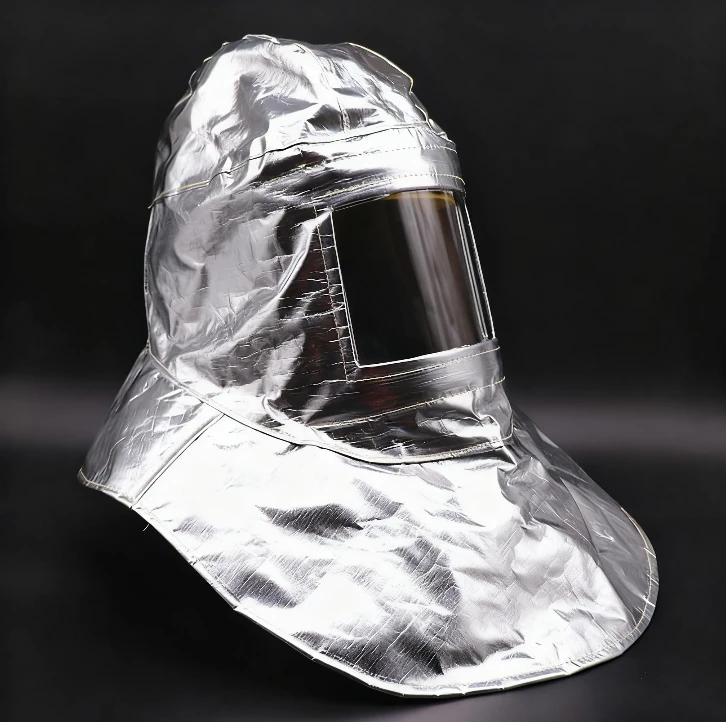
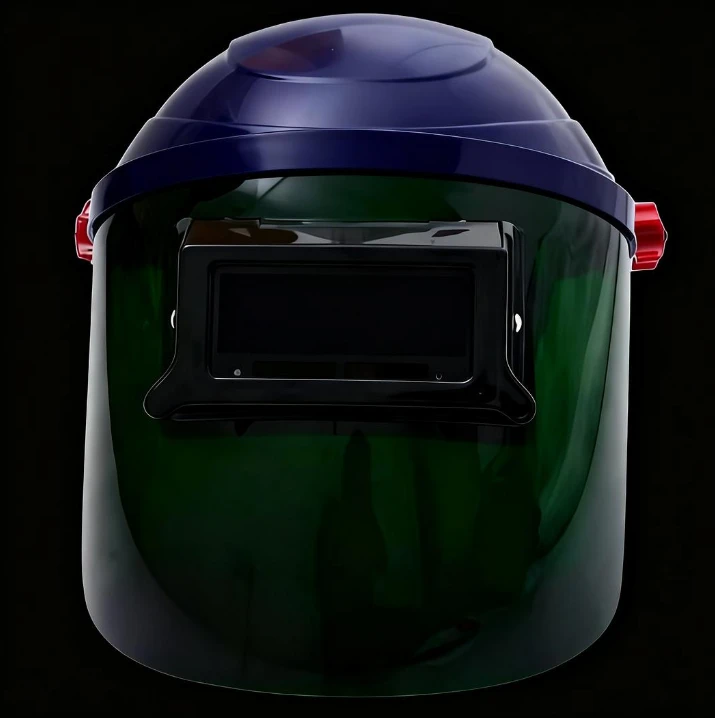
Head and face protection covers the shell, the suspension, welding helmets, face shields and protective hoods, including flame retardant and aluminium foil hoods for high-heat work. It addresses the head, face, neck and, in the case of hoods, the shoulders. It does not address the eyes behind a shield, the ears under a helmet, the hands or the body, and those are separate specifications with their own standards and their own selection logic.
Within the category there is also a division of labour worth being explicit about. A safety helmet protects the head; it does not protect the face. A face shield protects the face; it does not protect the crown and it is not a substitute for a helmet. Where a task requires both, the specification should say how the two are mounted and worn together, because the combination is the protective equipment and not the individual components.
Matching Task to Protection Level
The level of protection is expressed through the helmet’s type and class in the applicable standard, together with the accessories specified for the task. In the United States, industrial head protection is characterised under ANSI/ISEA Z89.1; in Europe, industrial helmets are covered by EN 397. Both frameworks distinguish shells by the hazards they are intended to resist, and both require the manufacturer to mark the product accordingly. Naming the framework is the first step; the required class is still a site decision taken from the assessment.
| Task exposure | What decides the specification | Framework that frames the claim | Evidence to request |
|---|---|---|---|
| Falling or flying objects, standard industrial work | Impact type, headroom, whether lateral impact is credible | ANSI/ISEA Z89.1 or EN 397, depending on market | Test documentation for that shell and model, plus marking |
| Work near live parts | Whether contact with energised parts is credible at all | Helmet class within the same framework | Class marking and test evidence, and no conductive accessories |
| Molten metal, welding spatter, foundry work | Position relative to the flow, splash size, need for neck and shoulder coverage | Helmet combined with hood or shield specification | Material and construction data, and the complete assembly documentation |
| Radiant heat, furnace and furnace-adjacent work | Exposure duration and the worker’s distance from the source | Helmet plus heat protective hood specification | Shell and suspension material data, inspection interval, retirement triggers |
| Confined space and low structures | Whether lateral impact is the dominant risk | Head protection class appropriate to the exposure | Test evidence covering the impact direction the task presents |
Note what the table does not contain: a numerical rating to order against. The number has to come from the assessment, the equipment label or the task analysis. A generic recommendation in an article, including this one, is not a safe configuration.
Where Selection Usually Goes Wrong
Head protection errors are rarely caused by the shell failing in service. They are caused by mismatches that nobody wrote down.
- Specifying for the wrong hazard. A helmet chosen for impact is not automatically suitable where electrical contact or molten metal is credible, and the difference may not be visible in the shell’s appearance.
- Ventilation chosen for comfort in the wrong task. Vents improve heat exchange; where live parts or molten metal are present the specification has to account for what the shell is designed to resist.
- Accessories that were never checked. Badge holders, lamps, ear muffs and face shields mounted on incompatible fittings can affect retention and coverage.
- Worn suspensions left in service. The suspension is a service part; a stretched or contaminated one reduces the clearance the shell relies on.
- Decorating or modifying shells. Solvents, adhesives and stickers applied outside the manufacturer’s instructions are a common cause of voided claims.
- Treating the helmet as the control. Helmets do not stop objects from falling; they reduce the consequence when the earlier controls have not been applied.
- Ignoring the under-layer. Where a hood or welding helmet is worn over a safety helmet, the combination has to be assessed as a system, with attention to heat stress and to how the layers sit.
The Hierarchy of Controls Around the Selection
Head protection is a classic case where the earlier controls do the heavy work. Guards at height, toe boards, tool tethering, exclusion zones under work platforms, sequenced work that avoids simultaneous overhead and below activity, and planned maintenance that removes the need to work under a suspended load all reduce the exposure before a helmet is specified. Only after those measures are in place does the helmet requirement describe the residual risk.
Personal protective equipment is the last line of defence: it does not eliminate a falling object hazard and it does not remove the possibility of contact with live parts. It reduces the severity of the outcome when the earlier controls fail or when a residual exposure remains. Writing that assumption into the specification is worthwhile, because it defines what has to be revisited if the engineering controls are changed, removed for maintenance, or bypassed for a short task.
Where the assessment identifies electricity, heat or molten metal, the helmet is only one line in a wider specification that also covers face, eye, body and hand protection. The evaluation of all those exposures together is what makes a task specification coherent.
Specification Points to Fix Before Ordering
A head protection specification should be precise enough that a second supplier could quote against it without exploring the plant. The core points are short, and each of them prevents a specific failure.
- The hazard statement, including the credible impact type and any electrical, molten metal or heat exposure.
- The framework and the class or type required, named with its scope, plus the marking expected on the shell.
- The complete head-and-face assembly: shell, suspension, chin strap, welding helmet, face shield or hood, and how they mount.
- Material and construction requirements for the specific exposure, including non-metallic construction where the assessment requires it.
- Size range and adjustment mechanism, tested against the actual workforce.
- Documentation required with the quotation: test evidence for the model, care and inspection instructions, and the traceability reference.
- Inspection, cleaning, storage and retirement criteria, taken from the manufacturer’s instructions.
- Colour, visibility and branding requirements, expressed so that they do not alter the protection claim.
For a full picture of how shell classes, suspension types and marking conventions work across the two main frameworks, Shield Wings maintains a guide to safety helmets under ANSI Z89.1 and EN 397 that owns that explanation rather than repeating it here. Where the requirement extends to connected or monitored helmets, the smart safety helmet page covers the option set, and the wider head and face protection range sets out the hoods, shields and welding helmets that combine with a shell.
Shield Wings manufactures head and face protection including welding helmets, face shields, flame retardant hoods, aluminium foil hoods and smart safety helmets from a Guangdong production base, with material selection support and testing documentation for the product line quoted. The commercial outcome of a careful specification here is straightforward: fewer variants in stock, fewer mid-shift substitutions, and a documented reason for every item issued.
For the wider topic and related decisions, see our Head, Face & Eye Protection.
Frequently Asked Questions
Does a safety helmet protect against electrical contact?
Only if the helmet class is specified for that exposure. Helmet classifications exist precisely because shells differ in whether they provide electrical protection, and a vented or conductive design is not specified where contact with live parts is credible. The class required for a task comes from the employer’s risk assessment, not from a general recommendation, and the marking on the shell is what proves the class.
Can a helmet be reused after it has taken an impact?
It should be withdrawn and inspected against the manufacturer’s instructions, and in most programmes a helmet that has absorbed a significant impact is replaced rather than returned to service. Damage is often invisible: a shell may look intact while the suspension or the shell structure has been compromised. The manufacturer’s replacement criteria and the site’s inspection procedure govern, and the decision should be recorded.
How should a helmet be combined with ear muffs and a face shield?
Use accessories designed for the specific shell and mount system, and confirm that the combination is still compliant as an assembly. Attaching a face shield or ear muffs with adapters that are not intended for that helmet can affect fit, retention and coverage, and can interfere with the electrical properties of the shell. Helmet-mounted combinations are usually more stable than separate headbands worn under the shell.
When must a metal component not be worn on a helmet?
Where molten metal splash is a credible hazard, metal parts on or near the shell create a conduction path and can hold heat, so helmets intended for those tasks are specified with the non-metallic construction the assessment requires. The same logic applies in electrical work, where accessories in contact with the shell should not compromise the class specified. Both cases are specification decisions rather than preferences.
What should be checked before a helmet is issued?
Confirm the class and type against the hazard statement, the size range and suspension type against the wearer, the date and condition of the shell and suspension, the marking required by the specification, and compatibility with the other protective equipment the worker wears. Issue records should capture the helmet identifier, the wearer, the date and the replacement interval set by the manufacturer’s instructions.
Checking a helmet specification against the hazard?
Send the task, the exposure and the accessories the workers already use. Shield Wings confirms the helmet and hood options that match the requirement and the documentation the product line carries.
External references: 29 CFR 1910.135 head protection, 29 CFR 1910 Subpart I, 29 CFR 1910.132, CCOHS guidance on headwear, UK HSE personal protective equipment guidance, CEN-CENELEC standards portal, Regulation (EU) 2016/425.