

Hands are the most frequently injured part of the body in heavy industry, and gloves are the most frequently mis-specified item in the storeroom. The reason is structural: a glove is judged by how it feels, so comfort decides what gets worn, while the marking on it decides what it actually protects against. Selection works when the hazard is described first and the glove is chosen to match, with comfort treated as a requirement rather than as the deciding criterion.
The Hazard First, the Product Second
Hand hazards in industrial work fall into five groups, and most tasks combine at least two of them. Mechanical hazards — cut, puncture, abrasion and impact — are the most common in fabrication, glass, metal and food processing. Thermal hazards include heat, flame, molten metal splash and cold. Chemical exposure depends on the substance and its permeation behaviour. Electrical exposure requires an entirely different glove family rated for the voltage involved. The fifth group is less visible but drives many incidents: grip and fatigue, because a glove that cannot hold a wet or oily component produces a fumble, and a fumble near a blade or a hot surface is how the injury occurs.
That means a task description should never stop at the material being handled. How the component is held, whether it is wet or oily, how long the task lasts, what the temperature of the workpiece is, and what happens if the grip fails, all belong in the assessment. Two tasks that both involve sheet metal can require different gloves because one involves dry, flat panels and the other involves oily, sharp-edged offcuts pulled from a press.
What the Risk Assessment Has to Establish
Occupational hand protection requirements in the United States are set out in 29 CFR 1910.138, which requires protection where hazards are present and links the selection to the nature of the hazard. The European framework works through the PPE Regulation and the glove standards it calls up. In both cases, the assessment is the employer’s, and the glove is the answer rather than the starting point.
For a specification that a supplier can quote against, the assessment should record:
- The physical hazard and how the hand meets it: sharp edge, point, abrasive surface, hot surface, flame, splash or a combination.
- The condition of the material: dry, wet, oily, hot, cold, or coated with a process fluid.
- The duration and repetition of the task, including whether the glove has to be worn continuously for a full shift.
- The chemicals present, where any, because chemical protection is a separate glove family selected on permeation data.
- Whether electrical exposure is credible, which changes the glove family entirely.
- The measured hand sizes across the workforce, because fit determines both performance and whether the glove is worn at all.
- The dexterity and grip the task requires, and what happens if the worker removes the glove to finish the job.
The last point is the one most often missing and the one that decides the outcome. Where the specified glove makes a task impossible, workers will remove it for the difficult fifteen seconds of the cycle, and that is where incidents cluster.
Which Hazards This Category Covers and Which It Does Not
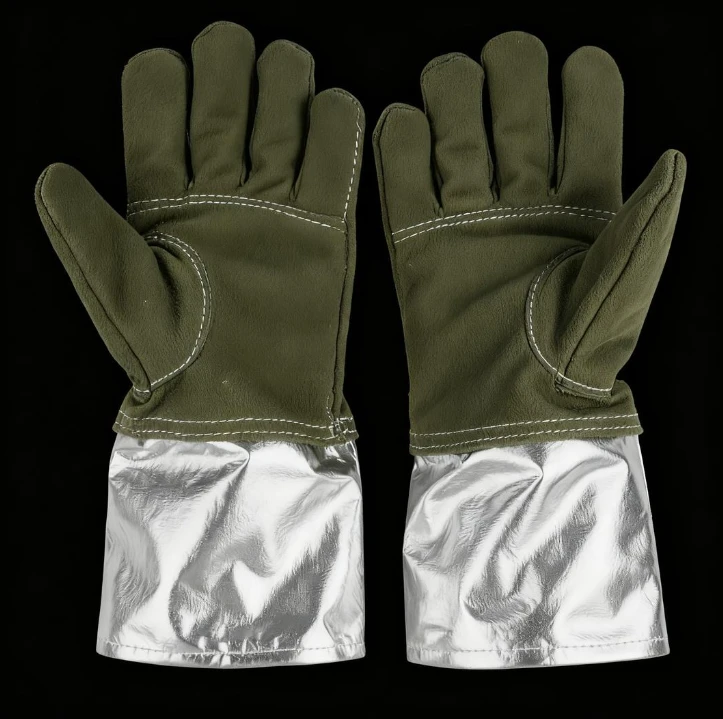
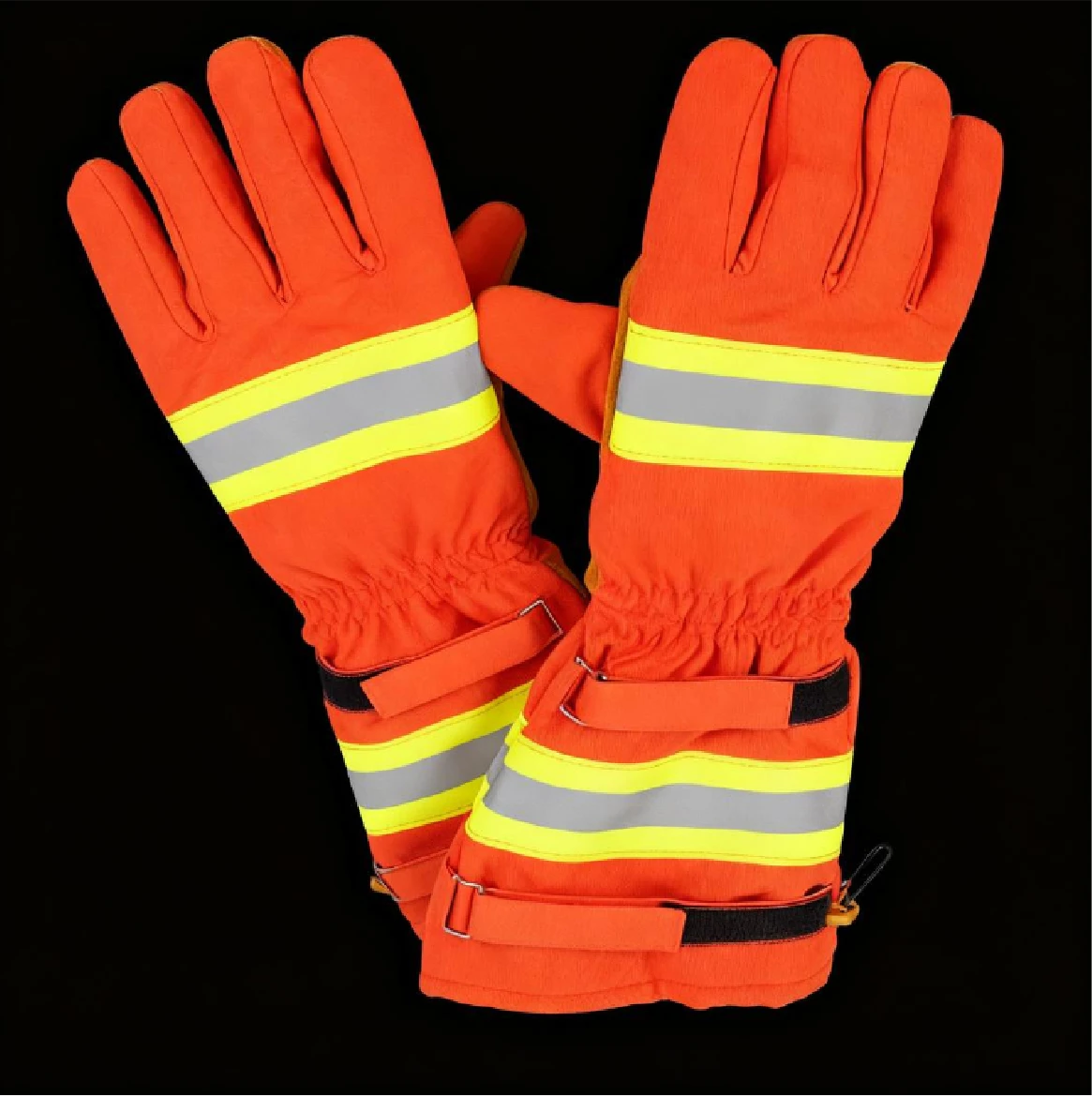
Hand protection in this range covers cut resistant gloves, including gloves built to the higher cut levels in the ANSI/ISEA 105 scale with 316L stainless steel construction at the highest level, firefighting gloves, and high temperature gloves. Those three families illustrate how different the requirements are: a cut glove is selected for mechanical resistance and grip, a firefighting glove for the combination of heat, flame, water and grip that structural firefighting presents, and a high temperature glove for contact heat and handling of hot components.
What the category does not cover is equally important. Chemical protection gloves depend on permeation and degradation data for the specific substance and are specified from that data, not from a general claim of chemical resistance. Electrical insulating gloves are a separate family with their own classes, testing and inspection regime. Sleeves and arm protection belong with body protection, and the choice of glove has to be compatible with the sleeve because the overlap is where hot material and swarf enter. Each of those decisions sits alongside the glove specification, not inside it.
Matching Task to Protection Level
The protection level comes from the assessment expressed in a standard, and the glove’s marking is what demonstrates that the product meets it. The table below shows how the hazard family narrows the field and what the buyer should verify. The specific level required for a task remains a site decision taken from the assessment.
| Task hazard | What decides the specification | Construction that carries it | Evidence to request |
|---|---|---|---|
| Sharp edges, sheet metal, glass handling | Cut performance level required, plus grip and dexterity | Cut resistant liner with a grip coating suited to dry, oily or wet parts | Cut level marking and the test report for the model |
| Abrasion and general handling | Wear rate over the shift and the agent causing abrasion | Coated palm or fully coated glove with the appropriate coating | Test data for abrasion performance plus the model’s coating specification |
| Contact heat and hot components | Temperature of the surface and duration of contact | Heat resistant liner and construction rated for that exposure | Documentation for the heat performance claimed |
| Flame, structural firefighting and rescue | The ensemble requirement and the tasks performed with the glove | Firefighting glove construction with the grip and water resistance the task needs | Documentation naming the standard applied to the glove |
| Impact and trapped-hand risk | Mass, direction and frequency of impact | Back-of-hand impact protection integrated with the liner | Performance data for the impact property and compatibility with the task’s grip needs |
| Oily and wet components | Grip requirement, which is a safety property rather than a comfort preference | Coating selected for the fluid present, or a different glove family | Grip performance information and worker trials on the actual component |
Note what the table does not do: it does not assign numbers to tasks. The cut level, heat performance or impact class required comes from the assessment of the actual exposure, and a generic recommendation — in an article or in a catalogue — is not a safe configuration.
Where Selection Usually Goes Wrong
Glove programmes fail in ways that are easy to recognise once they are named.
- Buying on price per pair alone. A cheaper glove that is replaced three times as often, or that is not worn because it fits badly, costs more in total.
- One glove for the whole plant. A compromise that satisfies no task in particular tends to be removed at the tasks that matter most.
- Sizing by convenience. A single size across a mixed workforce produces gloves that are too loose to grip or too tight to wear for a shift.
- Ignoring contamination. Oils and process fluids change both grip and liner performance, and the specification should name the fluid.
- Cut level treated as the only number that matters. Level is one property; grip, dexterity, coating and abrasion life decide whether the glove survives the task.
- Chemical resistance assumed. A coated glove is not a chemical glove unless it is specified and documented for the substance involved.
- Replacement left to judgement. Without a wear indicator, gloves are used past the point where the liner is exposed, at which point the level on the marking no longer describes the protection in hand.
The Hierarchy of Controls Around the Selection
The most effective hand protection measures are not gloves. Machine guarding, fixed knives replaced by safer cutting methods, jigs and fixtures that hold the workpiece, magnetic or vacuum lifters, process changes that remove the sharp edge or the hot surface, and task rotation to reduce continuous exposure all reduce the hazard rather than defending the hand against it. Administrative controls — procedures, training, restricted access to presses and saws — come next.
Personal protective equipment is the last line of defence. A glove reduces the severity of contact with a blade or a hot surface; it does not remove the blade or the heat, and it depends on being the right size, being worn for the whole task and being replaced before the liner is compromised. Wherever a task has been engineered so that the hand never has to enter the danger zone, that measure is worth more than any pair of gloves, and the glove requirement that follows can be narrower and cheaper to sustain.
Specification Points to Fix Before Ordering
A glove specification that a second supplier could quote against contains more than a model and a size, and each line below prevents a known failure.
- The hazard statement: mechanical, thermal, chemical or electrical, with the condition of the material and the duration of the task.
- The standard the glove must be tested to, named with its scope, and the performance level required against that standard.
- The construction: liner material, coating type and coverage, cuff length and any impact protection.
- Grip requirements against the actual component and fluid, verified by a trial rather than by a datasheet.
- The size range and the size distribution of the workforce, with a fitting step before bulk issue.
- Replacement rules, including wear indicators and the interval for hygienic laundering where applicable.
- Documentation required with the quotation: test evidence for the model, care instructions and batch traceability.
- Sampling and change control, so that a substitution of liner or coating is approved rather than discovered.
Where the task calls for a cut resistant specification, the detail behind the levels is covered in Shield Wings’ cut resistant glove buying guide, which owns that explanation. The products themselves are listed in the hand protection category, alongside firefighting gloves and high temperature gloves for the tasks where mechanical and thermal exposure sit together.
Shield Wings manufactures hand protection from a Guangdong production base, including cut resistant, firefighting and high temperature gloves, and supports buyers with liner and coating selection, performance documentation and specification review before an order is placed. The commercial result of a good specification is small but real: fewer sizes returned, fewer mid-shift substitutions, and a glove that workers keep on because it lets them do the task.
For the wider topic and related decisions, see our Hand, Cut & Impact Protection.
Frequently Asked Questions
What glove should be used when a task involves both cut and heat exposure?
The glove has to carry both properties on its marking, and each is tested separately, so a product tested only for cut resistance is not a heat glove. Liners that tolerate heat, such as aramid constructions, are often used where both risks are present, and the specification should name the standard behind each claim. Where no single glove covers both requirements at the level the task needs, the task sequence is changed or the exposure is reduced first.
Does a higher cut level always mean a better glove?
No. Cut level is one property among several, and higher cut resistance often comes with a thicker liner, less dexterity, poorer grip or a shorter service life, any of which can increase the risk of the task itself. The right level is the one the assessment supports for that task, allowing for the fact that performance in use is affected by grip, contamination and how long the glove is worn.
How long can a coated glove be used before it loses protection?
There is no universal interval. Performance falls with abrasion, cuts in the coating, contamination with oil or chemicals, and heat exposure, and the rate depends on the task. Practical programmes check gloves before use, replace them on defined wear indicators such as coating breach or holes, and treat heavy-soiling tasks separately from clean assembly work. The manufacturer’s instructions and the site’s inspection routine govern the change-out rule.
Can one glove cover several tasks in one shift?
Sometimes, and where it does, standardising reduces error because workers do not have to choose under pressure. Two conditions apply: the glove must cover the most demanding hazard of every task it is used for, and it must remain comfortable and grippy enough that workers keep it on. Where those conditions cannot both be met, separate gloves for separate tasks, clearly identified at the workstation, are more reliable than one compromise.
What information should accompany a glove quotation?
Ask for the standard the glove is tested to with the performance levels claimed, the liner and coating specification, the size range, the care and inspection instructions, and the traceability reference for the batch. Where the glove is being specified for a regulated task, the test report should name the model and the production site, because a claim made for one style does not transfer to another style in the same catalogue.
Specifying gloves across several tasks?
Send the task list, the materials handled and the fluids involved. Shield Wings recommends liner and coating combinations, confirms the performance levels that can be documented, and supplies samples for a fitting trial.
External references: 29 CFR 1910.138 hand protection, 29 CFR 1910.132, 29 CFR 1910 Subpart I, CCOHS guidance on protective gloves, UK HSE personal protective equipment guidance, CEN-CENELEC standards portal, Regulation (EU) 2016/425.
{“@context”:”https://schema.org”,”@type”:”FAQPage”,”mainEntity”:[{“@type”:”Question”,”name”:”What glove should be used when a task involves both cut and heat exposure?”,”acceptedAnswer”:{“@type”:”Answer”,”text”:”The glove has to carry both properties on its marking, and each is tested separately, so a product tested only for cut resistance is not a heat glove. Liners that tolerate heat, such as aramid constructions, are often used where both risks are present, and the specification should name the standard behind each claim. Where no single glove covers both requirements at the level the task needs, the task sequence is changed or the exposure is reduced first.”}},{“@type”:”Question”,”name”:”Does a higher cut level always mean a better glove?”,”acceptedAnswer”:{“@type”:”Answer”,”text”:”No. Cut level is one property among several, and higher cut resistance often comes with a thicker liner, less dexterity, poorer grip or a shorter service life, any of which can increase the risk of the task itself. The right level is the one the assessment supports for that task, allowing for the fact that performance in use is affected by grip, contamination and how long the glove is worn.”}},{“@type”:”Question”,”name”:”How long can a coated glove be used before it loses protection?”,”acceptedAnswer”:{“@type”:”Answer”,”text”:”There is no universal interval. Performance falls with abrasion, cuts in the coating, contamination with oil or chemicals, and heat exposure, and the rate depends on the task. Practical programmes check gloves before use, replace them on defined wear indicators such as coating breach or holes, and treat heavy-soiling tasks separately from clean assembly work. The manufacturer’s instructions and the site’s inspection routine govern the change-out rule.”}},{“@type”:”Question”,”name”:”Can one glove cover several tasks in one shift?”,”acceptedAnswer”:{“@type”:”Answer”,”text”:”Sometimes, and where it does, standardising reduces error because workers do not have to choose under pressure. Two conditions apply: the glove must cover the most demanding hazard of every task it is used for, and it must remain comfortable and grippy enough that workers keep it on. Where those conditions cannot both be met, separate gloves for separate tasks, clearly identified at the workstation, are more reliable than one compromise.”}},{“@type”:”Question”,”name”:”What information should accompany a glove quotation?”,”acceptedAnswer”:{“@type”:”Answer”,”text”:”Ask for the standard the glove is tested to with the performance levels claimed, the liner and coating specification, the size range, the care and inspection instructions, and the traceability reference for the batch. Where the glove is being specified for a regulated task, the test report should name the model and the production site, because a claim made for one style does not transfer to another style in the same catalogue.”}}]}