

Most hand injury programmes stop at the wrist, which is where a large share of the exposure continues. Handling a full sheet of glass, drawing long metal offcuts from a press, breaking down cartons with a blade or working a carcass on a production line all place sharp material close to forearms, torso and thighs, and a glove on the hand covers none of it. The question a specification has to answer is not which glove to buy but how much of the worker is exposed.
The Hazard First, the Product Second
Cut and stab hazards are different problems that are often written as one. A cut comes from a sharp edge drawn across a surface: a blade, a broken pane, a cut metal edge, a glass shard. A puncture comes from a point driven into a surface under load: a needle, a spike, a bone fragment, a wire end. Cut resistant material resists the sliding edge; puncture resistance depends on the density and construction of the layer that the point has to penetrate. A garment described only as slash resistant may have little to say about the second mechanism.
The severity of a cut incident depends on more than the material. The force applied, the angle of contact, the length of the blade, whether the edge is powered, whether the worker’s grip failed first, and how quickly the task was performed all change the outcome. That is why the assessment should describe the task as performed, including the awkward cases, rather than the material being handled in general terms.
What the Risk Assessment Has to Establish
Cut protection requirements in the United States sit inside the general PPE framework in 29 CFR 1910.132 and 1910 Subpart I, which require the employer to identify the hazard and select protection against it; European buyers work through the PPE Regulation and the mechanical risk standards for the products concerned. The assessment produces the statement; the supplier confirms what the product is tested to.
A workable statement for this category records:
- The sharp item and its form, including whether the hazard is an edge, a point, or abrasive material that wears the protective layer.
- The body areas exposed, stated as coverage rather than as a product — forearm, upper arm, torso, thighs, lower leg.
- The force and speed involved, and whether the hazard is powered.
- The grip and contamination conditions, because a slip under load is a common route to the cut itself.
- Whether other exposures exist alongside, such as heat, cold, chemicals or molten material.
- The duration and repetition of the task, since heavy protective layers that cannot be tolerated for a full shift will be removed.
Two of those lines are habitually missing. Coverage is usually expressed as a product name rather than as an area that has to be protected, which is how sleeves get left out of an order. And powered hazards are often treated as if clothing could address them, which leads to a specification that substitutes a garment for a guard.
Which Hazards This Category Covers and Which It Does Not
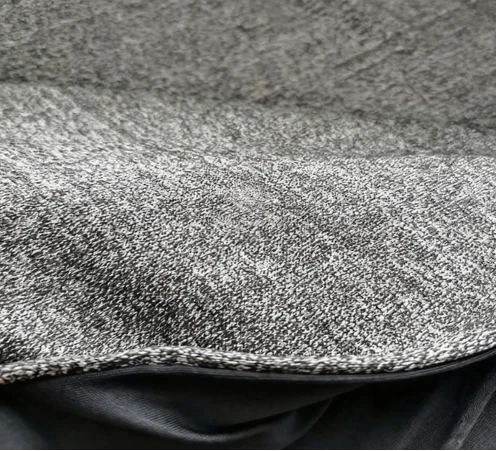
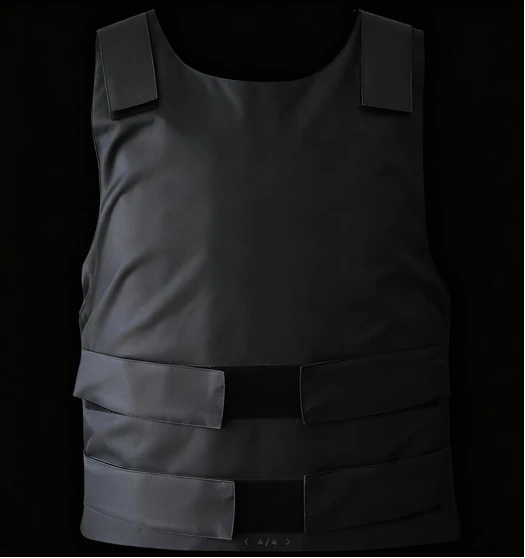
This category covers the clothing that extends protection beyond the hand: sleeves and gauntlets for the forearm and elbow, full garments for the torso and arms, aprons for the front of the body, and leggings or trousers where the thighs and lower legs are exposed. The materials are typically high-performance yarns and blends, sometimes combined with steel or glass components in the constructions used for the higher levels, and they are specified by the cut performance they are tested to.
What the category does not do should be stated as plainly. It does not make clothing proof against any blade under any force. It does not replace machine guarding or safe cutting practice. It does not provide heat, arc or chemical protection unless the same garment has been tested to those standards and the documentation says so. And it does not cover the hand: the glove remains a separate specification, chosen from the same hazard statement and matched at the sleeve interface, which is why the two are usually ordered together.
Layering raises a practical question that buyers meet immediately. Where an apron or a sleeve is worn over ordinary workwear, the ordinary garment is still part of the system, and its behaviour matters if it is exposed to the hazard, melts, or rides up underneath. The cleanest solutions usually extend coverage rather than adding a loose layer over it: a garment with cut resistant panels in the places the task threatens, or a sleeve design with a thumb loop and a cuff that stays where it is put. Loose layers that move independently of the body tend to be the ones that leave the gap.
Matching Task to Protection Level
The protection level is expressed through the cut performance the garment is tested to, and the level required comes from the assessment. The table below shows how the task shape governs the decision and what the buyer should ask to see.
| Task | What the assessment has to state | Coverage that follows | Evidence to request |
|---|---|---|---|
| Flat glass handling and cutting | Panel size, edge condition, handling method, grip contamination | Sleeves or a full garment with the glove overlapping the cuff | Cut performance documentation for the garment and the glove |
| Sheet metal handling and press work | Offcut geometry, whether hands enter the danger zone, force involved | Forearm coverage plus guarding and tooling controls | Cut performance data and the guarding arrangement in the assessment |
| Meat, poultry and fish processing | Blade type, cut direction, wet and slick conditions | Apron and arm coverage with the grip requirement stated | Documentation for cut and, where specified, puncture performance |
| Packaging, recycling and waste handling | Mixed materials, hidden points and staples, unpredictable loads | Full garments with puncture consideration and forearm coverage | Documentation for each property claimed, plus a defined replacement rule |
| Utility knife work at height or in awkward positions | Body position, blade exposure, whether the blade can be secured | Coverage of the areas the blade can reach when the grip slips | Task-specific specification plus the safe cutting method in the procedure |
The level of cut performance required for each of those tasks is a site decision, and it should be recorded with the reasoning. A level copied from a previous employer or from a supplier’s recommendation is not a selection decision, and it will not survive an incident investigation.
Where Selection Usually Goes Wrong
Failures in this category follow a small number of patterns.
- Gloves only. The most common gap: the hand is protected and the forearm that holds the material against the body is not.
- Coverage that moves. Sleeves that slide down, aprons that swing, and garments that ride up when the wearer reaches leave the area they were bought for.
- Cut confused with puncture. A garment that performs well against a sliding edge may not resist a point load, and the assessment should name which mechanism is present.
- Comfort traded away. An over-specified garment that is hot, stiff or restrictive is removed for the difficult part of the task.
- Grip ignored. A slippery grip, not a weak material, is often the reason the blade contacts the body.
- Contaminated garments in service. Oil, blood and food soils hide damage and affect both grip and hygiene; cleaning must follow the care instructions.
- Protection assumed against powered blades. Guarding, tooling and procedure address those hazards, and clothing cannot substitute for them.
The Hierarchy of Controls Around the Selection
Cut injuries are reduced most effectively by taking the sharp hazard out of reach of the hand: guards and fixed knives, jigs and fixtures that hold the workpiece, lifting aids, magnetic and vacuum handling for sheet material, packaging designs that can be opened without a blade, and tool policies that specify the safe knife for the job. Administrative controls follow: procedures for blade changes, prohibition of loose blades in pockets, task rotation to limit continuous exposure, and training on cutting technique and body position.
Personal protective equipment is the last line of defence. Cut resistant clothing reduces the severity of contact when the earlier controls fail or when a residual exposure remains, and it only works while it is intact, correctly fitted and worn for the whole task. Writing that assumption into the specification is useful, because it makes clear which process change would trigger a review of the requirement.
Specification Points to Fix Before Ordering
A cut and stab resistant clothing specification should be able to tell a second supplier exactly what is required.
- The task and the mechanism, stating whether the exposure is a sliding edge, a point load or abrasion.
- The body areas to be covered, described as areas rather than as products.
- The standard the garment must be tested to, with the performance level required and the framework named.
- The construction: material, weight, closure type, sleeve and cuff design, and how it interfaces with the glove.
- The grip and dexterity requirement, verified by a trial on the actual component.
- The size range and fitting process, since coverage depends on the garment staying in place.
- Care, inspection and replacement rules, including the wear indicators that trigger withdrawal.
- Documentation required with the quotation: test evidence for the model, care instructions and traceability.
Two specification habits improve the outcome for very little cost. Run a trial with the actual component and the actual knife or edge, and record how the garment behaved when the operator worked at normal speed rather than in a demonstration. And agree the change-control rule in advance, so that a substitution of yarn, weight or construction is notified before shipment rather than discovered when the next order arrives. In a category where the protection is carried by the liner, those two habits cover most of the risk that the specification quietly stops matching the product.
Shield Wings manufactures stab and cut resistant clothing at a Guangdong production base, alongside the cut resistant gloves that cover the hand and meet the sleeve at the cuff. The hand protection decision itself is covered by the buying guide on choosing cut resistant gloves, the broader range sits in the body protection category, and the glove families are listed under hand protection.
The specification that works is the one that describes the worker’s exposure as an area and a mechanism, then closes the gaps between the items. Where the garment and the glove were selected from the same hazard statement, the interfaces take care of themselves.
For the wider topic and related decisions, see our Hand, Cut & Impact Protection.
Frequently Asked Questions
Is there such a thing as stab proof clothing?
Protective clothing in this category is resistant rather than proof. Cut and puncture performance is measured under defined test conditions, and a result above a threshold describes what the material achieved in that test, not what will happen in every incident. Specifications should state the standard, the level required and the coverage, and they should treat the garment as one control among several rather than as a guarantee.
When do gloves stop being sufficient?
Whenever the exposed body area extends beyond the hand. Handling large glass panes, working with long sheet metal offcuts, using knives near the torso or forearms, and processing carcasses all create exposure at the arms, torso or legs. In those tasks the glove is one component of a set that also covers the forearm, the front of the body or the thighs, and the specification should describe coverage rather than a single item.
Does cut resistant clothing protect against a powered blade?
No test method supports the idea that clothing can stop a powered saw, a guillotine or a moving machine blade. Those hazards are addressed by guarding, tooling design, interlocks, safe operating procedures and training, with protective clothing as a secondary measure. Any specification that relies on clothing instead of machine guarding has misplaced the control.
How should cut resistant clothing be inspected and cleaned?
Inspect before use for cuts, snags, exposed lining, damaged seams and contamination, and withdraw any garment whose protective layer has been compromised. Cleaning should follow the manufacturer’s instructions, because the fibres that provide the protection are affected by temperature, chemistry and mechanical action in the wash. Repairs and alterations outside the instructions should not be attempted, since they can leave an area with no protective layer.
Can one garment cover cut and heat protection together?
Only where the garment is tested to both requirements and the documentation names each claim. Cut resistant constructions are not automatically heat resistant, and heat protective garments are not automatically cut resistant. Where a task presents both, the specification should require evidence for each property on the same garment, or the task sequence and the equipment set should be arranged so that one exposure is controlled before the other is specified.
Closing the gap between glove and garment?
Send the task, the sharp material and the body areas exposed. Shield Wings recommends the garment and glove combination, confirms the performance documented for each, and supplies samples for a trial.
External references: 29 CFR 1910.132 hazard assessment and equipment selection, 29 CFR 1910 Subpart I, CCOHS guidance on protective gloves, UK HSE personal protective equipment guidance, CEN-CENELEC standards portal, Regulation (EU) 2016/425.
{“@context”:”https://schema.org”,”@type”:”FAQPage”,”mainEntity”:[{“@type”:”Question”,”name”:”Is there such a thing as stab proof clothing?”,”acceptedAnswer”:{“@type”:”Answer”,”text”:”Protective clothing in this category is resistant rather than proof. Cut and puncture performance is measured under defined test conditions, and a result above a threshold describes what the material achieved in that test, not what will happen in every incident. Specifications should state the standard, the level required and the coverage, and they should treat the garment as one control among several rather than as a guarantee.”}},{“@type”:”Question”,”name”:”When do gloves stop being sufficient?”,”acceptedAnswer”:{“@type”:”Answer”,”text”:”Whenever the exposed body area extends beyond the hand. Handling large glass panes, working with long sheet metal offcuts, using knives near the torso or forearms, and processing carcasses all create exposure at the arms, torso or legs. In those tasks the glove is one component of a set that also covers the forearm, the front of the body or the thighs, and the specification should describe coverage rather than a single item.”}},{“@type”:”Question”,”name”:”Does cut resistant clothing protect against a powered blade?”,”acceptedAnswer”:{“@type”:”Answer”,”text”:”No test method supports the idea that clothing can stop a powered saw, a guillotine or a moving machine blade. Those hazards are addressed by guarding, tooling design, interlocks, safe operating procedures and training, with protective clothing as a secondary measure. Any specification that relies on clothing instead of machine guarding has misplaced the control.”}},{“@type”:”Question”,”name”:”How should cut resistant clothing be inspected and cleaned?”,”acceptedAnswer”:{“@type”:”Answer”,”text”:”Inspect before use for cuts, snags, exposed lining, damaged seams and contamination, and withdraw any garment whose protective layer has been compromised. Cleaning should follow the manufacturer’s instructions, because the fibres that provide the protection are affected by temperature, chemistry and mechanical action in the wash. Repairs and alterations outside the instructions should not be attempted, since they can leave an area with no protective layer.”}},{“@type”:”Question”,”name”:”Can one garment cover cut and heat protection together?”,”acceptedAnswer”:{“@type”:”Answer”,”text”:”Only where the garment is tested to both requirements and the documentation names each claim. Cut resistant constructions are not automatically heat resistant, and heat protective garments are not automatically cut resistant. Where a task presents both, the specification should require evidence for each property on the same garment, or the task sequence and the equipment set should be arranged so that one exposure is controlled before the other is specified.”}}]}