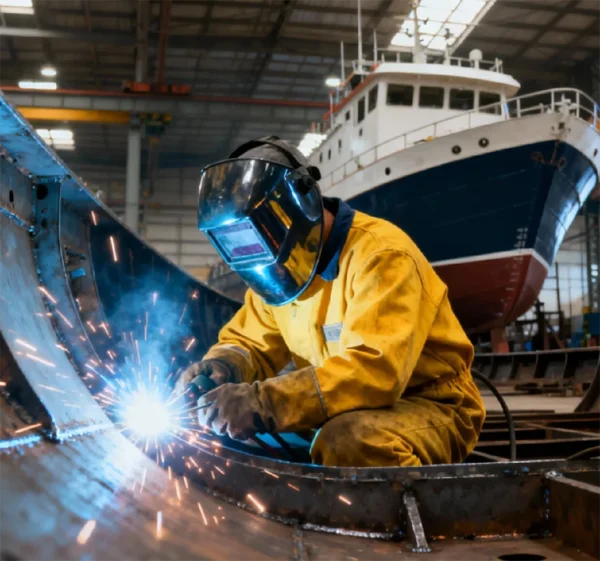
The filter is the part of a welding helmet that a welder interacts with hundreds of times a day, and the choice between technologies is usually presented as a preference. It is better understood as a decision about how the helmet is used: whether it can stay down for positioning and inspection, how much there is to fail or to maintain, and what the workshop can keep running. The three families answer those questions differently.
What Each Option Is Designed For
The distinction that matters most in practice is what the welder can see while the helmet is on. In fabrication, a large part of the working day is spent positioning, measuring, tacking, cleaning and inspecting rather than welding continuously, and each of those activities is a decision point about whether the helmet is lifted. Technologies that allow the work to be seen without removing the helmet change the exposure pattern of the whole shift, not just the welding itself.
Passive filters hold a single fixed shade. They are simple, have no power supply and no switching components, and they are durable in dirty environments. Their practical limitation is that the welder cannot see the work in the dark state, so the helmet has to be lifted for positioning, tacking, inspection and grinding, which is exactly when many eye injuries in welding happen.
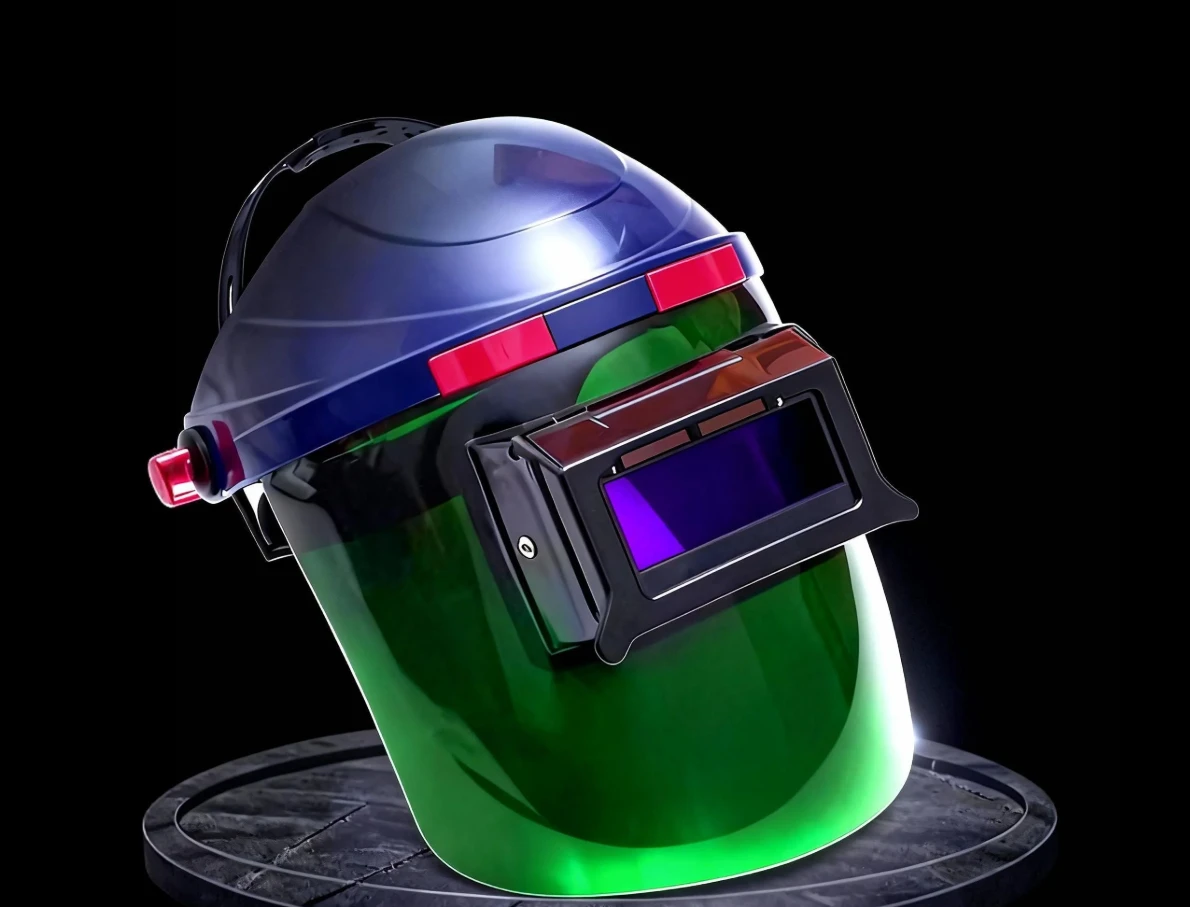
Fixed-shade filters with a flip-up front section address that limitation mechanically: the dark filter is lifted to reveal a clear window, so the helmet itself stays on the head. They are common in maintenance and mixed work where the welder alternates between welding and inspection, and they are often paired with a lightweight design for overhead positions.
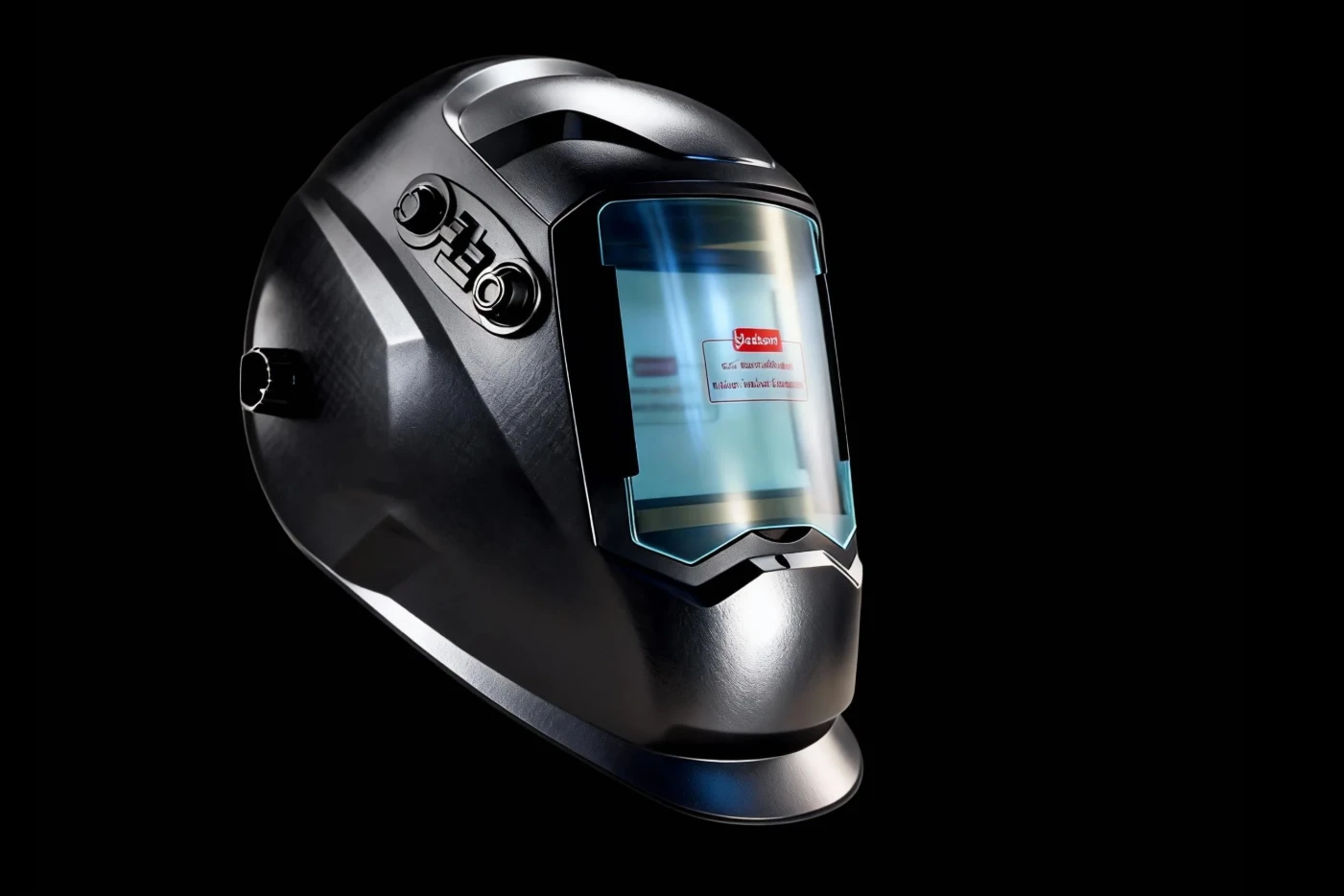
Auto-darkening filters stay in a light state until the arc starts, then switch to the dark state within a defined time. Most models allow the shade, the sensitivity and the delay to be adjusted, which lets one helmet cover a range of processes and currents. Their cost is in the components: sensors, electronics, and a power arrangement that has to be maintained.
How They Differ in Construction
It is worth noting what the helmet itself contributes, since the filter receives most of the attention. The shell, the headgear and the shell-to-head distance determine whether the helmet can be worn comfortably for a shift, whether it stays in position when the welder looks down or works overhead, and how easily it can be lifted and replaced. A technically capable filter in an uncomfortable helmet produces the same behaviour as a poor filter: the helmet comes off, or is worn tilted and half-engaged.
The construction differences follow the mechanism. A passive filter is a piece of treated glass or polycarbonate in a holder, with the outer cover as its protection. A flip-up assembly adds a hinge, a spring and a second window, which is more to maintain but requires no power. An auto-darkening filter is a layered assembly with liquid crystal elements, sensors arranged to detect the arc from different positions, control electronics and either a battery, a solar cell or both.
Those differences affect maintenance as much as performance. Passive and flip-up helmets need lens covers, headgear and occasionally a new filter; auto-darkening helmets add battery condition, sensor cleanliness and function checks, plus the risk that a filter fails to darken. Any of those is manageable, but each of them has to be written into an inspection routine, otherwise the failure appears at the arc rather than at the bench.
Performance Differences That Matter on Site
Two site conditions affect all three families and deserve a place in the specification. The first is contamination: spatter and grinding dust on the outer cover degrade visibility for every type of filter, and the difference between a workshop that replaces covers and one that does not is larger than the difference between two filter technologies. The second is position: overhead and confined welding change how the helmet sits and how easy it is to raise and lower, which affects whether a flip-up or an auto-darkening design is practical in that position.
| Consideration | Passive filter | Fixed shade with flip-up | Auto-darkening filter |
|---|---|---|---|
| Visibility between operations | Requires lifting the helmet | Front section lifts while the helmet stays on | Light state lets the welder work with the helmet down |
| Process and current range | Fixed by the chosen shade | Fixed by the chosen shade | Adjustable across a range on most models |
| Components that can fail | Very few | Hinge and spring mechanism | Electronics, sensors and power arrangement |
| Maintenance burden | Lens covers and headgear | Lens covers, hinge and headgear | Lens covers, sensors, batteries, function checks |
| Behaviour when uncontaminated | Predictable and simple | Predictable, with a mechanical action to check | Depends on the light state, the delay and the sensors |
| Best fit to | Repetitive work at a fixed setting | Mixed welding and inspection work | Variable processes, tacking, positional work and training |
Read across the table, the trade is between simplicity and usability. The technology that keeps the helmet down for the whole task is usually the one that protects best, because the protection depends on the helmet being worn rather than on the filter’s specification.
Cost and Service Life Compared
Where a workshop is buying for a mixed process list, it is usually more economical to standardise on one or two helmet types and hold a realistic consumables stock than to buy the cheapest helmet for each process. A single type means one set of covers, one set of headgear spares and one training message, and those savings usually exceed the difference in purchase price over a year of use.
Passive filters and flip-up assemblies cost less to buy and less to maintain, and their service life is limited mostly by damage to the shell and the headgear. Auto-darkening filters cost more and have a shorter effective life in heavy fabrication, where spatter, contamination and battery management all take a toll, but they often reduce the number of helmets needed at a bench because one unit covers several processes.
The cost that is rarely counted is the one attached to lifting the helmet. Every lift is a moment without eye and face protection, and in a workshop where welding, grinding and inspection alternate, those moments accumulate. Where a site is choosing between technologies, comparing purchase price per unit without considering how often the helmet is removed tends to favour the option that provides less protection in practice.
Where the Choice Is Genuinely Commercial
Availability of consumables is a legitimate commercial criterion in its own right. A helmet whose outer covers arrive in weeks will keep a damaged cover in service for those weeks, and the visibility loss is a protection loss. Where several products are otherwise equivalent, the one with a reliable supply of covers, headgear and batteries at the point of use is the better choice for the workshop.
Where several products meet the requirements of the processes involved, the remaining differences are availability, service parts, fit and what the welders will actually keep on their heads. Those are legitimate commercial criteria, and in a workshop with a mixed process list they usually point toward auto-darkening for flexibility and passive or flip-up for fixed, repetitive work.
What is not commercial is selecting a filter whose shade range does not cover the processes performed, or buying a helmet whose light state is unusable for the inspection work at that bench. Both mistakes produce the same outcome: a welder lifting the helmet at the arc to see the joint, which is the exposure the specification was supposed to remove.
How to Trial the Decision Before Committing
Where a workshop is considering a change across the whole team, it is worth trialling with the welders who work the most difficult positions rather than with the ones who weld the tidiest joints. Overhead work, confined work and short repetitive tacks all expose the weaknesses of a filter arrangement faster than a comfortable bench weld, and those are the opinions that predict whether the equipment will be used as specified.
Run the trial on the real processes and the real positions. Ask welders to work a full shift and record whether they lifted the helmet at all, whether the light state was usable for the inspection they perform, whether the dark state was comfortable for the joint being welded, and whether the sensitivity and delay settings needed constant adjustment. Check the behaviour of the assembly with the spectacles, respirator or hard hat in use at that station.
Record the outcome against the process list in the specification. That record is what prevents the choice from reverting to a preference the next time helmets are ordered, and it gives the workshop a basis for standardising the equipment at each bench.
Which Buyer Profile Each Option Suits
Whatever the profile, the specification should state the process list and the current ranges that each helmet type covers, so that a helmet is not issued to a bench where its shade range is inadequate.
A heavy fabrication shop welding the same joint at a fixed setting can standardise on passive or flip-up helmets, with the saving spent on covers and headgear that keep them comfortable. A maintenance workshop with a mixed process list, frequent positional work and short welds benefits most from auto-darkening, because the helmet stays down between operations. A training environment usually needs auto-darkening for the same reason, since learners lift helmets more often than experienced welders.
Shield Wings manufactures welding helmets and face protection at a Guangdong production base, including auto-darkening configurations, and supports welding supervisors, fabrication workshops and distributors with filter selection, consumable planning and the documentation each product carries. The helmet range is listed on the auto-darkening welding helmet page, and the comparison of passive and auto-darkening types is covered in Shield Wings’ article on auto-darkening versus passive welding helmets, which owns that topic.
The choice that protects the welder is the one that keeps the helmet down for the whole task, keeps the covers serviceable, and matches the shade range to the processes at that bench.
For the wider topic and related decisions, see our Welding Safety & Welding PPE.
Frequently Asked Questions
What are the main welding helmet lens types?
There are three practical families: passive filters, which hold a single fixed shade and are simple and durable; fixed-shade filters with a flip-up front section, which allow the welder to see the work without lifting the helmet; and auto-darkening filters, which stay in a light state until the arc starts and then switch to the dark state, with adjustable shade, sensitivity and delay on most models.
Is auto-darkening better than passive?
Not universally. Auto-darkening is easier to live with because the helmet can stay down for positioning, tacking, inspection and grinding, which is where passive helmets tend to be lifted. Passive filters have fewer components to fail, no power dependency and lower cost, and in some repetitive fabrication tasks they remain the practical choice. The decision follows the work, not the technology.
What should be checked on an auto-darkening filter?
The shade range and whether it covers the processes performed, the light state, the switching behaviour, the sensitivity and delay adjustments, the power arrangement, the availability of outer and inner lens covers, and the standard the filter is tested to. The marking and documentation state the claims, and the covers are what keep the filter surface serviceable.
Why do welders lift their helmets?
Most often because they cannot see the joint clearly in the dark state, because the light state is not usable for inspection, or because the helmet is uncomfortable. Each of those is a specification problem rather than a habit: the shade range, the light state and the fit decision determine whether the helmet stays down, which is where the protection comes from.
How should filters and covers be maintained?
Follow the manufacturer’s instructions, and treat the outer lens cover as a consumable: replace it when it is scratched, spattered or cloudy, because the welder compensates for poor visibility by lifting the helmet or looking around the filter. Where batteries are used, keep spares available and check the function before each shift.
Choosing a filter for a workshop?
Send the processes, the current ranges and the tasks performed at each bench. Shield Wings confirms the filter types available, the shade ranges and the consumables that keep them serviceable.
External references: 29 CFR 1910.252 welding, cutting and brazing, 29 CFR 1910.133 eye and face protection, UK HSE welding guidance, CEN-CENELEC standards portal, CCOHS PPE answers, Regulation (EU) 2016/425.
{“@type”:”FAQPage”,”@context”:”https://schema.org”,”mainEntity”:[{“@type”:”Question”,”name”:”What are the main welding helmet lens types?”,”acceptedAnswer”:{“@type”:”Answer”,”text”:”There are three practical families: passive filters, which hold a single fixed shade and are simple and durable; fixed-shade filters with a flip-up front section, which allow the welder to see the work without lifting the helmet; and auto-darkening filters, which stay in a light state until the arc starts and then switch to the dark state, with adjustable shade, sensitivity and delay on most models.”}},{“@type”:”Question”,”name”:”Is auto-darkening better than passive?”,”acceptedAnswer”:{“@type”:”Answer”,”text”:”Not universally. Auto-darkening is easier to live with because the helmet can stay down for positioning, tacking, inspection and grinding, which is where passive helmets tend to be lifted. Passive filters have fewer components to fail, no power dependency and lower cost, and in some repetitive fabrication tasks they remain the practical choice. The decision follows the work, not the technology.”}},{“@type”:”Question”,”name”:”What should be checked on an auto-darkening filter?”,”acceptedAnswer”:{“@type”:”Answer”,”text”:”The shade range and whether it covers the processes performed, the light state, the switching behaviour, the sensitivity and delay adjustments, the power arrangement, the availability of outer and inner lens covers, and the standard the filter is tested to. The marking and documentation state the claims, and the covers are what keep the filter surface serviceable.”}},{“@type”:”Question”,”name”:”Why do welders lift their helmets?”,”acceptedAnswer”:{“@type”:”Answer”,”text”:”Most often because they cannot see the joint clearly in the dark state, because the light state is not usable for inspection, or because the helmet is uncomfortable. Each of those is a specification problem rather than a habit: the shade range, the light state and the fit decision determine whether the helmet stays down, which is where the protection comes from.”}},{“@type”:”Question”,”name”:”How should filters and covers be maintained?”,”acceptedAnswer”:{“@type”:”Answer”,”text”:”Follow the manufacturer’s instructions, and treat the outer lens cover as a consumable: replace it when it is scratched, spattered or cloudy, because the welder compensates for poor visibility by lifting the helmet or looking around the filter. Where batteries are used, keep spares available and check the function before each shift.”}}]}