

Noise-induced hearing loss is the occupational disease that is hardest to notice while it is happening. The damage accumulates over years without pain or visible injury, the early changes are easy to attribute to age or to a cold, and by the time an individual notices a problem the exposure that caused it may be a decade in the past. That timeline is what shapes the employer’s duties, and it is why records matter as much as protection.
Why the Programme Outlives the Product Choice
It is worth being clear about why hearing is treated differently from other hazards. A cut or a fall produces an event with a date, a witness and a record; hearing loss produces a gradual decline with no single incident to point to. That makes the programme, rather than the incident, the unit of management, and it makes the assessment the reference point for every later decision about protection, task design and surveillance.
Protectors are replaced constantly: types change, models are discontinued, workers move between roles. The programme is what survives: the assessment that established where the exposure is, the protection selected against it, the training that taught the workforce how to fit and use it, the surveillance that shows whether it is working, and the records that connect all four.
That structure has a practical value beyond compliance. Exposure that is measured can often be engineered away, and the cost of doing so is usually lower over a decade than the cost of protecting against it. Protection specified against a measurement is bought at the right level rather than the highest available. And surveillance findings examined against the exposure history frequently point to a specific machine, task or shift pattern rather than to a general problem.
Assessment, Selection and Issue
Where a site is commissioning its first assessment, the most useful thing it can do is describe positions rather than departments. A noise level in the middle of a hall does not describe what a fitter experiences under a machine, and a department label does not describe a worker who spends two hours of a shift in a plant room. The assessment is only useful later if it says where people actually are and for how long.
Occupational noise requirements in the United States are set out in 29 CFR 1910.95, covering monitoring, protection, training and hearing conservation obligations, with the general selection framework in 29 CFR 1910.132; European sites work within the noise requirements of the framework that applies to them. The thresholds, intervals and record requirements differ between frameworks, and the programme should be written against the rule that applies to that site rather than against a general summary.
What the duties have in common is a sequence, and it is the same sequence as the hierarchy of controls.
- Establish the exposure, including the levels, the areas and the roles affected, and the conditions of the measurement.
- Reduce the exposure at source where that is reasonably practicable: enclosing, isolating, damping, maintaining and separating noisy processes.
- Control exposure organisationally where it cannot be removed: limiting time in the area, rotation, and restricting access.
- Provide suitable protection, selected against the measured exposure, together with the training and fitting that make it effective.
- Operate health surveillance where the framework requires it, and review the protection in the light of the results.
- Keep records that connect those elements to individuals and to areas.
Selection is where the sequence meets the product. The protection has to suit the exposure, which means the measured level, the pattern of exposure and what the worker must still hear. It also has to be comfortable enough to be worn for the whole exposure, because a protector left in a pocket provides nothing, and the records should show that this was considered rather than assumed.
Training and Competence Evidence
Two practical additions make training records more useful. Record the protector types the worker was trained on, since a workforce that moves between areas uses more than one. And record any fit verification result with the date, because a result that shows poor achieved attenuation is a reason to retrain or change the protector rather than a box that has been ticked.
The obligation to inform and train is not satisfied by an induction slide. Workers need to understand the exposure in their own area, how to fit and adjust the protector they are given, what to do when it becomes uncomfortable or damaged, and what the surveillance results mean. Where a site uses several protector types, the training has to cover the ones actually issued rather than a generic description of hearing protection.
Competence records should be specific enough to answer a question years later: which worker, which protector, which training, on what date, and what the outcome was. Where the site uses fit verification, recording the achieved attenuation for each individual gives the programme a measure of performance that no product specification can provide, and it also identifies who needs further training rather than a different product.
Inspection Frequency by Hazard Class
Where a site has several areas at different levels, it is worth grading both the protector and the inspection interval by area rather than applying one rule across the plant.
| Item | Inspection arrangement | Who performs it | Record |
|---|---|---|---|
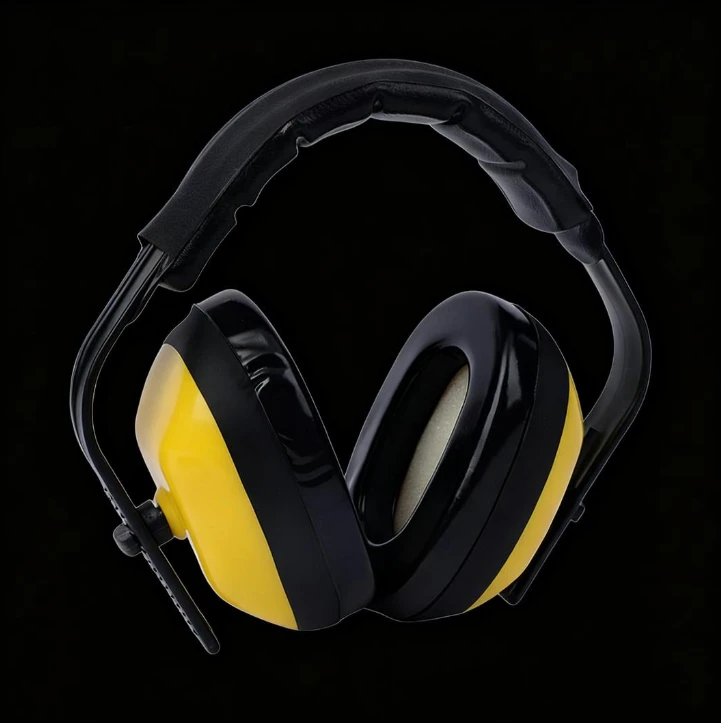
| Ear muffs in daily use | Pre-use check of shell, cushions and headband; cushions replaced on the stated interval or on condition | Wearer, with store support | Issue record and service-part replacement |
| Reusable plugs | Checked for cleanliness, shape and damage before use; replaced when hardened or contaminated | Wearer | Issue and replacement record where tracked |
| Disposable plugs | New pair for each use, supplied at the point of use | Wearer with stock control | Consumption record |
| Helmet-mounted protectors | Checked in the configuration worn, with eyewear and helmet in place | Supervisor or trained inspector | Configuration noted with the issue record |
| Electronic or communication protectors | Protection checked as a protector, plus function, battery and hygiene | Wearer with periodic check | Unit record including faults and battery replacement |
The maintenance part of the duty is easy to overlook because it does not appear in the equipment’s price. Cushions and headbands are the components that decide whether a muff still performs, and they are the cheapest to replace. A site that holds them in stock, and lets a worker swap a cushion without a request form, keeps protection at its specified level far more consistently than one that relies on an annual inspection.
Record Keeping for Audits and Incidents
Where a site operates several locations, a common record format is worth more than a perfect format at one of them, because it allows the group to compare provision and to spot a problem that appears at three sites rather than treating it as bad luck at one.
Records are the part of a hearing conservation programme that is most often tested long after the event. The two questions that arise are what exposure a role involved, and what protection the site provided and trained for. Five items answer both: the measurements and their conditions, the areas and roles covered, the protection specified against those exposures, the issue and training records for the individuals, and the surveillance results with the review that followed.
Retention should be a decision rather than a default. Hearing develops over a working lifetime and a claim can arrive many years after the exposure, so assessments, protection records and surveillance results should be kept for a defined period and kept linked to roles rather than filed by year. The documentation expectations that support those records, including what accompanies imported protective equipment, are set out in Shield Wings’ PPE compliance checklist, which owns that topic.
Retirement, Replacement and Stock Control
It is also worth reviewing the specification whenever the plant changes. New machinery, a change in production rate, an enclosure added or removed, or a new shift pattern all alter the exposure, and the protection that was selected before the change should be revisited rather than inherited.
Replacement is part of the duty rather than an administrative detail. A protector whose cushions have hardened, whose headband no longer holds or whose plug ends have become soiled is not the product that was specified, and the site is relying on its performance in the surveillance results. The programme should state the criteria, hold the parts, and give the store the authority to replace without a process that discourages it.
Stock control also affects what is worn. Protectors kept where the work happens are used; protectors kept in an office are collected at the start of the shift and lost by the end of it. Consumption records are a useful signal: a sudden rise in plug usage in one area usually means the protection there is uncomfortable or the level has changed.
Making the Programme Survive Contact With Operations
Finally, the programme should state how it will be reviewed. A hearing conservation programme with no review cycle ages into a description of how the plant used to be, and the sites that follow it faithfully end up protecting against an exposure that no longer exists while missing the one that has appeared.
Programmes fail in the gap between the documentation and the shop floor: the assessment exists, the protection was bought, and nothing connects the two at the point of use. Closing that gap is mostly practical. Protection at the point of use, fitting taught by demonstration, supervisors checking the seal rather than the presence of the equipment, and a review that uses the surveillance results rather than filing them.
Shield Wings manufactures hearing protection earmuffs and eye protection at a Guangdong production base and supplies industrial customers and distributors with attenuation data, fitting guidance and the documentation that supports a programme. The protectors are listed on the hearing protection earmuffs page and in the wider eye and ear protection range.
The test of the programme is not the size of the file. It is whether the site can explain a change in someone’s hearing, and whether it can show that the protection it provided was the protection its workers were wearing.
For the wider topic and related decisions, see our Hearing Protection & Noise Control.
Frequently Asked Questions
What are an employer’s main duties on noise?
Assess the exposure, reduce it at source where it is reasonably practicable to do so, provide suitable hearing protection and the training to use it, and operate health surveillance where the framework requires it. The exact thresholds, intervals and record-keeping requirements come from the regulations that apply to the site, so the programme should be written against that rule rather than a general summary.
Why do noise records matter for so long?
Because hearing loss develops over years and may be diagnosed long after the exposure that contributed to it. A claim or a regulatory enquiry can arrive a decade later, and the site that can produce its assessments, its protection records, its training and its surveillance results has a defensible position, while the site that cannot has to reconstruct history from memory.
Does providing hearing protection discharge the duty?
No. Personal protective equipment is the last line of defence, and the expectations of the framework are generally that exposure is reduced by other means first where that is reasonably practicable. Provision matters, but it sits after engineering and organisational measures rather than replacing them, and the protection has to be suitable, maintained and used.
How does health surveillance connect to the protection programme?
Surveillance is what shows whether hearing is being protected in practice. Where a change appears in an individual’s results, the programme should be able to check what exposure that role involved, what protection was provided and whether the worker was trained and fitted, and then decide whether the protection, the task or the environment needs to change.
What evidence should a site be able to produce in an audit?
The noise assessments and the conditions they were taken under, the areas and roles they cover, the protection specified against those exposures, issue and training records for the workers concerned, the maintenance and replacement records for the protectors, and the surveillance results with the review that followed them. The value lies in the links between those documents, not in the volume.

Reviewing a hearing conservation programme?
Send the assessed areas, the roles and the protection in use. Shield Wings supplies attenuation data, fitting guidance and product documentation that support the issue and training records.
External references: 29 CFR 1910.95 occupational noise exposure, 29 CFR 1910.132, UK HSE noise guidance, CCOHS PPE answers, CEN-CENELEC standards portal, Regulation (EU) 2016/425.
{“@type”:”FAQPage”,”@context”:”https://schema.org”,”mainEntity”:[{“@type”:”Question”,”name”:”What are an employer’s main duties on noise?”,”acceptedAnswer”:{“@type”:”Answer”,”text”:”Assess the exposure, reduce it at source where it is reasonably practicable to do so, provide suitable hearing protection and the training to use it, and operate health surveillance where the framework requires it. The exact thresholds, intervals and record-keeping requirements come from the regulations that apply to the site, so the programme should be written against that rule rather than a general summary.”}},{“@type”:”Question”,”name”:”Why do noise records matter for so long?”,”acceptedAnswer”:{“@type”:”Answer”,”text”:”Because hearing loss develops over years and may be diagnosed long after the exposure that contributed to it. A claim or a regulatory enquiry can arrive a decade later, and the site that can produce its assessments, its protection records, its training and its surveillance results has a defensible position, while the site that cannot has to reconstruct history from memory.”}},{“@type”:”Question”,”name”:”Does providing hearing protection discharge the duty?”,”acceptedAnswer”:{“@type”:”Answer”,”text”:”No. Personal protective equipment is the last line of defence, and the expectations of the framework are generally that exposure is reduced by other means first where that is reasonably practicable. Provision matters, but it sits after engineering and organisational measures rather than replacing them, and the protection has to be suitable, maintained and used.”}},{“@type”:”Question”,”name”:”How does health surveillance connect to the protection programme?”,”acceptedAnswer”:{“@type”:”Answer”,”text”:”Surveillance is what shows whether hearing is being protected in practice. Where a change appears in an individual’s results, the programme should be able to check what exposure that role involved, what protection was provided and whether the worker was trained and fitted, and then decide whether the protection, the task or the environment needs to change.”}},{“@type”:”Question”,”name”:”What evidence should a site be able to produce in an audit?”,”acceptedAnswer”:{“@type”:”Answer”,”text”:”The noise assessments and the conditions they were taken under, the areas and roles they cover, the protection specified against those exposures, issue and training records for the workers concerned, the maintenance and replacement records for the protectors, and the surveillance results with the review that followed them. The value lies in the links between those documents, not in the volume.”}}]}