

What the Regulation Requires and What It Does Not
The rule requires two certifications, not a programme document.
Under OSHA 1910.132 the written obligations are a certification that a hazard assessment was performed and a certification that each affected employee was trained. Selection logic, issue records, inspection intervals and review cadence are not prescribed. They are what make the two required certifications defensible.
Paragraph 1910.132(d) requires the employer to assess the workplace for hazards that make PPE necessary, verified in writing by a certification identifying the workplace evaluated, the person certifying the evaluation, the date, and that the document is a hazard assessment certification. Paragraph 1910.132(f) covers training and carries its own verification: the name of each employee trained, the date, and the subject of the training. Neither paragraph prescribes a document format or a review interval. The general obligations sit in 29 CFR 1910 Subpart I; where the work is electric power generation, transmission or distribution, OSHA’s electrical safety standards apply to the task and drive the arc-rated clothing requirement.
Employers outside the United States work from a second document set. HSE guidance in the UK and CCOHS guidance in Canada describe employer duties, while the EU regime regulates the product rather than the site programme. Product evidence belongs to the manufacturer or importer; site evidence belongs to the employer.
PPE is also the last control in the hierarchy of controls — elimination, substitution and engineering controls come first — so the file should record which upstream options were considered first.
Element 1: Hazard Assessment Record
The assessment record is the spine of the document, because every later element refers back to it. It works at two levels: the workplace certification that satisfies the regulation, and a task-level register a supervisor can use. The certification proves the assessment happened; the register proves it was specific enough to select equipment from.
The certification is four fields — workplace evaluated, person certifying, date, and identification as a hazard assessment certification. The register carries the detail that selection actually needs:
- Task, described as the work is really done, including fault-finding and maintenance
- Hazard and energy source — thermal, electrical, mechanical or chemical
- Exposure route and duration — what is exposed, for how long, how often
- Required protection level, stated as an output of the assessment
The last item is the one that fails most often. The required arc-rated category, class, cut level or voltage exposure comes from the employer’s risk assessment — the incident energy calculated in the arc-flash study, the figures on the equipment label, the task hazard analysis — never from a catalogue, a supplier brochure or last year’s order. A register that records where the required level came from can be defended years later; one that records only an item number cannot.
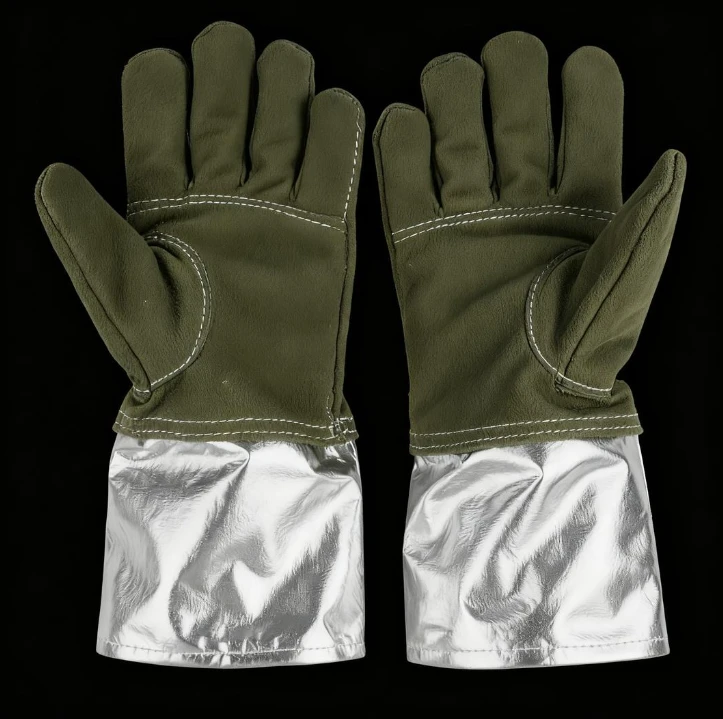
Element 2: Selection Logic and Standard Cited per Item
Selection logic turns the assessment into an instruction a supervisor can follow, and it is the first document an auditor asks for. Each line names the item issued, the hazard it addresses and the standard the item is held to, so a replacement can be sourced without reopening the assessment. State the required level as a condition of the task rather than as a product recommendation, and name the standard with its scope instead of using the word “certified” on its own.
The table below is a structure to copy, not a selection guide. Every level or class in it is set by the site assessment for that task.
| Hazard or task | Standard that governs it | What the record must show |
|---|---|---|
| Flash fire, petrochemical and oil and gas work | NFPA 2112 for flash-fire-resistant garments; API RP 2217 is referenced for oil and gas practice | The garment is specified as flash-fire resistant, with the test report reference on file |
| Electric arc exposure | NFPA 70E for the workplace programme; IEC 61482 for arc thermal performance in the EU; IEEE 1584 for incident energy calculation | The required arc rating is taken from the study or the equipment label for that task |
| Structural firefighting | NFPA 1971 for the ensemble; EN 469 for European structural firefighting clothing | A component-level list, because the standard applies to the ensemble |
| Heat and molten metal splash | EN ISO 11612 for clothing protecting against heat and flame, including molten metal splash within its scope | The specific performance requirements the task demands, not “heat resistant” |
| Work near vehicles or mobile plant | ANSI/ISEA 107; EN ISO 20471 | The class required by road speed, task and site layout |
| Cut and puncture exposure | ANSI/ISEA 105; EN 388 | The cut level required by the material handled |
| Static control in flammable or dust atmospheres | EN 1149-1 | Dissipative properties, with the bonding and earthing controls that make them meaningful |
| Electrical exposure to the feet | ASTM F1117 | Voltage exposure defined by the task and the system, from the assessment |
Keep three document types apart, because buyers routinely conflate them. A test report is a laboratory result for a specific sample; a certificate is issued by a certification body or notified body and covers a defined type; a declaration of conformity is the manufacturer’s own statement. Standards bodies publish standards and rules, they do not certify products, so a file claiming “NFPA certified” fails at the first question. Write “tested to”, “compliant with” or “certified by [body]”, naming the body and what it certified. The wider document set is set out in the PPE compliance checklist for manufacturers and importers.
Element 3: Training Content and Records
Training is the element most often reduced to a signed attendance sheet, and the sheet is exactly what an investigator discounts. The requirement is that each affected employee understands when PPE is necessary, what is necessary, how to wear and adjust it, its limitations, and how to care for it. The record has to connect a named person to those subjects.
Retraining is triggered by change rather than by the calendar: a change in the workplace or work that makes earlier training obsolete, a change in the types of PPE used, or evidence that an employee has not retained the understanding. Because the verification lists the subject of the training, that field has to distinguish a session on arc-rated layering from a general induction talk. Professional bodies such as ASSP publish reference material that helps supervisors design sessions worth recording. Two additions make the record more useful than the minimum: capture the fit of the equipment issued at the same time, and reference the assessment revision the training was based on.
Element 4: Issue, Fit and Replacement
An issue record turns a purchase into controlled equipment. It should answer three questions quickly: what this person was given, against which assessment line, and when it is due to be replaced. That is also the record that supports budgeting, since replacement dates and consumption rates are the only reliable basis for a next-year quantity.
Fit belongs in the same record, because selection rules require equipment that properly fits each affected employee, and a garment that does not fit fails quietly — sleeves that ride up, a hood that restricts vision, gloves removed to handle a tool. Where sizing is distributed unevenly across a workforce, the issue record is the evidence for adjusting the size curve at the next order. Care and laundering follow the manufacturer’s care label, which controls the method; the programme records that the label was followed rather than a house recipe. Replacement is triggered by the criteria in the next section, and the record should show which trigger fired.
Element 5: Inspection and Retirement
Inspection intervals are defensible when they follow from exposure and wear rather than from habit. A garment worn daily against oily, abrasive or hot contact earns a shorter interval than one issued for occasional use, and equipment checked before each use plus formally at fixed intervals is a common pattern. Setting the interval from the manufacturer’s instructions, the assessed exposure and the observed wear rate produces an interval that can be explained.
Retirement criteria should be physical and observable: structural fabric damage, contamination that cannot be removed within the care instructions, damaged or missing closures, retroreflective trim that no longer performs its function, an illegible label, or exposure beyond the manufacturer’s stated service conditions. Retirement is a documented event rather than a disposal: record the item, the criterion met and the removal from service. That record is also what keeps retired equipment from reappearing in a contractor’s kit.

Element 6: Review Trigger and Revision History
A programme with no revision history has no way to show it is current, and an undated selection is the first thing a reviewer challenges. Write the trigger as a list of events rather than a promise to review “regularly”; when one occurs, the revision history records what changed.
| Trigger | What usually changes |
|---|---|
| Incident, near miss or equipment failure | The task line, the required level, sometimes the control chosen upstream of PPE |
| Process, plant or equipment change | The assessment certification and every selection line referencing the old configuration |
| New task or new contractor scope | New register lines and the training record for the crews affected |
| Revision of a cited standard | The standard reference and, where the edition changed a requirement, the selection itself |
| Audit or client pre-qualification finding | Documentation gaps: missing verifications, dates or sign-off |
| Chemical, material or supplier change | Compatibility, care instructions and the supplier document set |
A Programme Document Structure You Can Adopt
The order below follows the way an auditor reads a file: assessment, then selection, then people, then equipment life, then currency. Two of the seven sections are driven by regulation; the rest are practice, and they turn the required certifications into a working programme. This is also where a management system such as ISO 45001 expects documented processes rather than verbal arrangements.
| Section | Contents | Owner | Basis |
|---|---|---|---|
| 1. Hazard assessment | Written certification plus the task-level register behind it | HSE | Regulation |
| 2. Selection matrix | Task, hazard, standard cited, item issued, required level and its source | HSE with procurement | Practice; drives compliance |
| 3. Training and verification | Subjects, named attendees, dates, retraining triggers | HSE with supervisors | Regulation |
| 4. Issue, fit and replacement | Person, item, size, assessment line, issue and replacement dates | Supervisors | Practice |
| 5. Inspection and retirement | Intervals by equipment type, criteria, retirement log | Supervisors | Practice |
| 6. Supplier documents | Test reports, certificates, user instructions, care labels | Procurement with HSE | Practice; supports due diligence |
| 7. Review and revision history | Triggers, revisions, approver, current version reference | Programme owner | Practice |
Index the registers from one place where the range spans several standards and several task types, which is the approach set out in the sourcing, manufacturing and compliance hub. Sector selections — power, oil and gas, welding, construction — are covered in the industry solution pages, and each register line can cite the relevant page instead of copying it.
FAQ: Questions About Programme Documentation
Does OSHA require a written PPE program?
OSHA 1910.132 does not require a document called a PPE programme. It requires verification that a workplace hazard assessment was performed and verification that each affected employee was trained, both in writing, both identifying who performed or received them and when. Employers holding only those two certifications still have to select and issue equipment, but the selection logic itself is not a prescribed document.
What are the 5 major components to a good PPE program?
Hazard assessment, selection with the standard cited per item, training and its records, issue and fit, and inspection and retirement – with review triggers that keep the document current. Those five are a useful minimum rather than a regulatory structure, because the regulation’s own written requirements sit inside the first and third of them. Add supplier documents as a sixth if you buy to more than one market.
How often should a PPE programme be reviewed?
No interval is set in 1910.132. Review on events instead of on a calendar: an incident or near miss, a process or equipment change, a new task, a revision of a cited standard, or an audit finding. An annual review is a reasonable backstop, but the event trigger is what catches the change that makes a selection obsolete before anyone questions it.
Who is responsible for the PPE programme?
The employer is responsible for the assessment, the selection and the training, and the rule requires the person who performed the assessment to be identified in the written certification. In practice a named programme owner signs the document, HSE keeps it current, and supervisors enforce issue, fit and inspection in the field. Where no single owner is named, revision history is the first part of the file to fall out of date.
If you are rebuilding the document set and need the standard named per item, send your task list, target market and current selections to [email protected], or use the contact page to ask for a specification review.