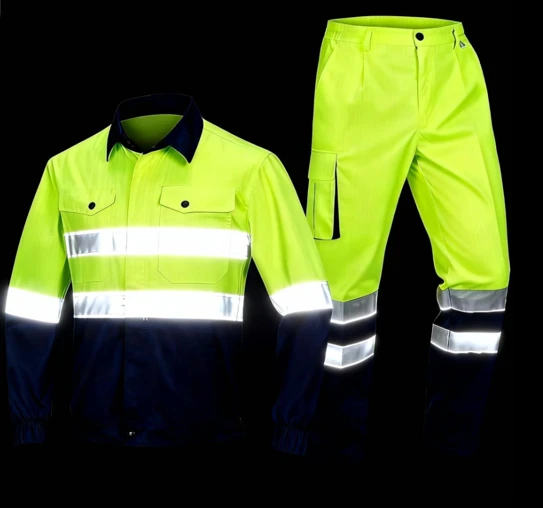
FR and hi-vis workwear combine two protections — flame resistance for thermal hazards and visibility for vehicle hazards — and the combined garment must be tested for both, with the tape and fabric themselves flame resistant. This guide explains when you need both and how to choose, with reference to Shield Wings’ hi-vis workwear.
Last updated:
When Do Workers Need FR and Hi-Vis Together?
Workers need FR and hi-vis together when the risk assessment identifies both a thermal hazard and a vehicle or visibility hazard — utilities, oil and gas, and fire response are the classic cases.
An electrical utility crew working near a roadway faces both arc flash or flash fire and passing traffic. A gas plant operator directing vehicles faces both flammable atmospheres and moving equipment. In these situations, the worker needs flame resistance and visibility at the same time, and the garment must deliver both without weakening either. The combined requirement comes from the hazard assessment, and it is not optional where both risks exist.
Why Can’t You Just Layer a Hi-Vis Vest Over FR Clothing?
You cannot layer a standard hi-vis vest over FR clothing because the vest’s fluorescent fabric and reflective tape can melt or ignite in a thermal event — the added layer becomes the weak point.
An ordinary hi-vis vest is not flame resistant, and its materials can melt into the FR system or ignite, defeating the protection underneath. The combined garment must have FR-rated fluorescent and reflective materials as part of its certified design. Certification should cover both properties with separate test reports, including the tape’s FR rating. When you specify, request the combined documentation — a vest that melts is a vest that failed.
What Standards Apply to Combined Garments?
The combined garment must meet both the hi-vis standard — ANSI/ISEA 107 or EN ISO 20471 — and the FR standard for the thermal hazard, such as NFPA 2112 or EN ISO 11612, with both tested on the same model.
| Property | Standard |
|---|---|
| Visibility | ANSI/ISEA 107 or EN ISO 20471 |
| Flash fire | NFPA 2112 |
| Heat and flame | EN ISO 11612 |
| Arc (electrical) | ASTM F1506 |
Each property carries its own test report, and both must name the same model and production. The certificate should state the visibility class and the FR standard with the performance values. A garment with one certification alone does not cover both hazards. Confirm both reports before ordering.
How Do You Choose a Combined Garment?
Choose by the risk assessment: confirm the required visibility class and the thermal standard, then verify the garment carries both certifications with matching documentation.
Start with the hazard profile — the traffic speed and light for the class, the flash fire or arc energy for the FR rating. Select the garment style that meets the class, from vest with sleeves to full coverall, and confirm the FR standard covers the thermal hazard. Fit and layering matter: the garment must close properly and work with the rest of the PPE. Trial the garment with the crew, because a combined garment that is hot or stiff will not be worn.
How Do You Care for FR Hi-Vis Workwear?
Care for the combined garment with the FR laundry rules — no bleach or fabric softeners — and inspect both the flame-resistant fabric and the reflective tape on a schedule.
The care cycle protects both properties: harsh detergents can degrade FR materials, and dirty or damaged tape loses reflectivity. Inspect the garment for FR damage and the tape for cracking and peeling, and retire it when either property fails. Track the class and the FR standard on the certificate, and replace the garment when it no longer meets either. A combined garment that is cared for and documented keeps both protections working.
Select visibility garments according to traffic speed, lighting, work-zone control, and the applicable visibility standard.
Evidence to Verify Before Approving FR and Hi-Vis Workwear: When You Need Both
A supplier claim is not enough to approve FR and Hi-Vis Workwear When You Need Both. The purchasing file should connect the workplace hazard to the exact model, its supporting documents, and the configuration workers will actually receive.
| Verification item | What to request | Reason to stop approval |
|---|---|---|
| Hazard basis | Task, exposure, environment, and the site assessment that created the requirement | The product is being selected from a catalogue without a documented hazard basis |
| Exact product identity | Model, size range, material or component specification, and revision | The quotation and test document refer to different models or constructions |
| Model-specific evidence | Applicable standard, edition, test method, result, laboratory, and report date | Only a generic certificate, logo, or supplier declaration is available |
| System compatibility | Instructions showing how the item works with the rest of the PPE ensemble | Fit, coverage, accessories, or another PPE item creates a protection gap |
| Receipt and change control | Approved sample, SKU or lot link, inspection criteria, and notice of material changes | The delivered item cannot be tied back to the approved sample and evidence |
For U.S. programs, keep this evidence with the employer’s PPE assessment and training records. OSHA’s general PPE requirements make hazard assessment, suitable equipment, proper fit, and employee training separate obligations; a product certificate does not replace them. See 29 CFR 1910.132.
When to Reopen the Selection Decision
Approval should not be treated as permanent. Reassess FR and Hi-Vis Workwear When You Need Both when the work, product, evidence, or condition changes.
- The task or exposure changes: repeat the hazard assessment before carrying the old specification into a new process, energy level, temperature, chemical, or work location.
- The supplied construction changes: obtain revised model-specific evidence when fabric, coating, component, accessory, test standard, or manufacturing route changes.
- Fit or compatibility fails: stop issue when movement, coverage, visibility, communication, dexterity, or another PPE item is compromised.
- Damage or contamination appears: follow the manufacturer’s inspection and retirement instructions rather than relying on appearance alone.
- Records no longer match: quarantine stock when the label, SKU, batch, user instructions, and supporting report cannot be reconciled.
This review gate turns procurement into a controlled decision: hazard → model → evidence → fit trial → receipt inspection → periodic reassessment.
FAQs
Is a hi-vis vest over FR clothing acceptable?
No. The vest’s materials can melt or ignite; the combined garment must be certified for both properties.
Do we need a separate test report for each property?
Yes — visibility and FR are tested separately, and both reports must name the same model.
Can the combined garment be washed like normal hi-vis?
No. Follow the FR care rules, because the care cycle protects both the FR fabric and the reflective tape.
How do we get combined FR hi-vis workwear?
Send us your hazard profile, and we will recommend the class and standard with documentation via our contact page , or ask Shield Wings’ factory team on the hi-vis page .