

Footwear is often the last item considered in a welding specification and the one that takes the longest to replace. A welder standing over a plate receives hot material from above and to the side, molten spatter that runs and collects, and slag that arrives while the boot is under a bench where the wearer cannot see it. The boot has to tolerate all of that while remaining wearable for a full shift, and the details that decide it are the closure, the upper and the sole.
The Hazard First, the Product Second
It is worth following what happens to a piece of spatter after it leaves the arc. It lands, and then it follows gravity: down the instep, along the tongue and into any opening. That path explains most of the design features in welding footwear. A closed closure, a high collar and a boot that overlaps the trouser are all attempts to deny the material somewhere to sit, and a boot that is comfortable but open is a boot that collects hot particles at the point where the wearer cannot see them.
The hazards in hot work arrive through three routes. From above and to the side, molten spatter and hot particles fall onto the boot and the instep, which is why the upper material and the closure design matter. From the ground, hot slag, offcuts and heated surfaces load the sole, and metal waste on the floor presents a penetration hazard. And through the boot opening, material that runs down the leg finds the gap between the trouser and the boot, which is where spats and higher boots exist in foundry and heavy welding work.
Alongside the thermal exposure there are the ordinary shop floor hazards: dropped components and tools, oily and wet surfaces, and long periods of standing or walking. Footwear in this category is therefore a combination of thermal behaviour, mechanical protection and comfort, and a boot that satisfies one at the expense of the others tends to be removed or replaced before its time.
What the Risk Assessment Has to Establish
The floor deserves attention beyond slip resistance. Welding areas accumulate slag, offcuts and wire ends, and the same surface may be hot in places where work has just finished. The assessment should describe what is on the floor and what temperature it might be, because those two facts decide whether penetration resistance and heat tolerance are needed in the sole as well as the upper.
Occupational foot protection requirements sit in 29 CFR 1910.136 in the United States, with construction requirements in 29 CFR 1926 Subpart E, and European sites work through the PPE Regulation and the footwear standards. For welding and hot work, the assessment should record:
- The processes performed and the position of the work: bench, overhead, kneeling or inside a structure.
- The quantity and size of spatter and hot material produced, and whether molten metal is present.
- The condition of the floor, including hot surfaces, slag, offcuts and waste metal.
- Impact and compression exposure at the toe area, and whether the metatarsal area is exposed.
- The surfaces walked on, since slip performance depends on the floor as well as the sole.
- The duration of wear and the walking distance, which decide the comfort requirements.
- The other protective clothing worn, because the way the trouser sits over the boot changes where material enters.
The employer owns the requirement, and the supplier documents what the boot is tested to. Where the work involves both welding and heavy fabrication, the assessment usually produces two specifications rather than one, because the exposures at the two positions differ.
Which Hazards This Category Covers and Which It Does Not
It is also worth separating this requirement from the footwear used for molten metal handling. Where a process involves metal being poured, transferred or worked on at temperature, the exposure includes running liquid metal and the boot requirement follows that assessment, with additional coverage at the leg and the boot opening.
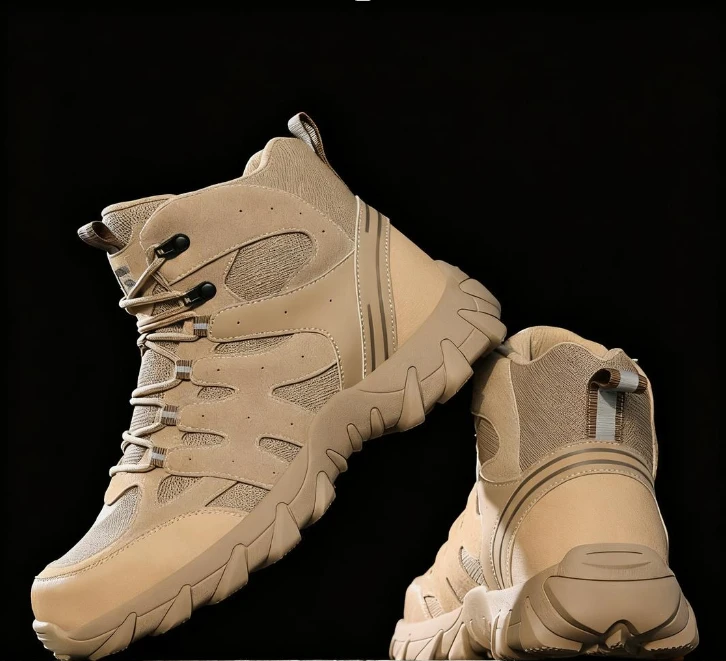
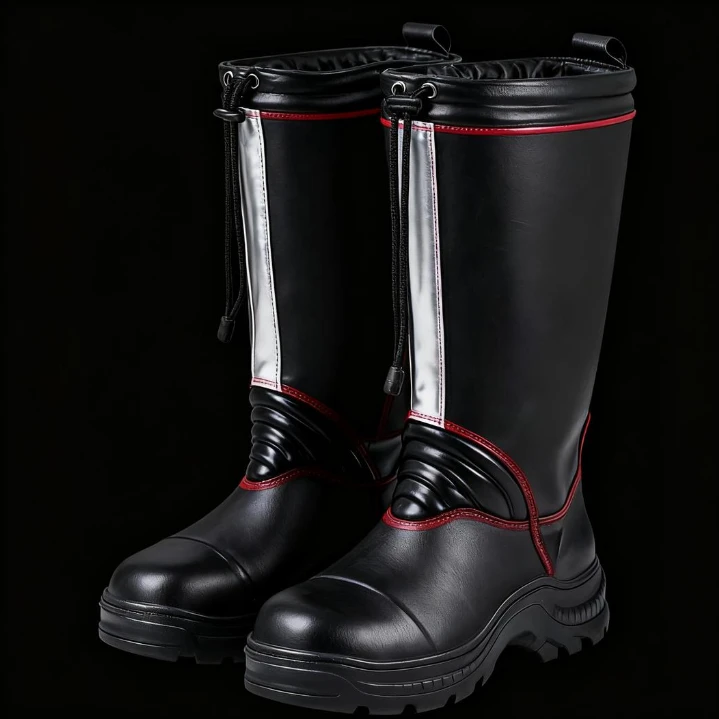
This family covers footwear for hot work: boots with heat and spatter resistance, impact and penetration protection where the assessment requires it, and soles suited to the surfaces present. It sits within the foot protection range, alongside the dielectric, structural firefighting and general safety footwear families used in adjacent tasks.
What it does not do is protect the lower leg or the knee, which is a leggings, spats or knee protection question, and those items are specified alongside the boot rather than in place of it. It also does not replace the controls: screens, fume extraction, positioners that keep the welder away from the hot zone, and task sequencing reduce the exposure before the boot is considered. And a boot specified for welding is not thereby suitable for molten metal handling, which is a different exposure with its own requirement.
Matching Task to Protection Level
Where a site operates both bench welding and structural work, the two specifications should be written separately, because the differences are in the boot height and closure rather than in the sole.
Where the same welder moves between both positions during a shift, the specification should reflect the more demanding of the two, with the reasoning recorded so that the choice can be reviewed when the work changes.
| Task | Dominant exposure | Footwear that follows | What to verify |
|---|---|---|---|
| Bench welding and light fabrication | Spatter, hot particles, standing for long periods | Boot with a heat tolerant upper, closed closure and a sole for workshop floors | Marking, fit and the comfort of the sole over a shift |
| Overhead and positional welding | Spatter falling onto the boot and instep | Higher boot or boot with leggings arranged to shed material away from the opening | The overlap between trouser or legging and the boot |
| Welding over metal offcuts and slag | Penetration from below, hot material on the floor | Sole with documented penetration resistance and heat tolerance | Condition of the sole and the floor conditions in the assessment |
| Heavy fabrication and structural work | Impact from components, hot material, uneven ground | Boot with toe and metatarsal protection where required, with a sole for rough surfaces | The loads involved and the properties carried by the model |
| Welding in wet conditions | Reduced slip resistance, moisture in the boot | Sole suited to the wet surface, with an upper that keeps water out | Slip performance on the actual floor and the boot’s water resistance |
| Confined or kneeling work | Hot material at floor level, restricted movement | Boot that allows kneeling and movement, with a closed closure | Fit and clearance in the working position |
Read across the table, the specification follows the position of the work and the floor conditions, and the boot is only part of a set that also covers the lower leg where material can run.
Where Selection Usually Goes Wrong
One failure is administrative: the boot is selected once and then reordered from a part number, without checking whether the process, the floor or the position of the work has changed in the intervening years. Those changes are common in fabrication, and the boot that suited the previous layout may no longer match the task.
- One boot for every welder. A bench welder and a structural welder do not present the same exposure.
- Open closures and laces. Hot material collects in the openings and stays against the boot.
- Gaps at the trouser. A boot that does not overlap the trouser lets spatter into the opening.
- Sole condition ignored. Penetration and slip performance both depend on the sole, and both degrade with wear.
- Comfort traded away. A boot that is uncomfortable after two hours is a boot that gets worn loosely or replaced with something unsuitable.
- Molten metal treated as welding. If the task involves molten metal, the requirement is different and the assessment should say so.
- No inspection rule. Boots that have received hot material, or whose sole is worn, are withdrawn rather than kept in service.
The Hierarchy of Controls Around the Selection
The exposure in hot work is reduced first by the way the work is set up. Screens and shields between the arc and the operator’s feet, positioners that move the work rather than the welder, extraction that removes fume, staging that keeps hot offcuts out of walking routes, and the discipline of clearing slag and waste before it is trodden on all reduce what the boot has to tolerate. Where the task demands kneeling or working at floor level, the position and the method are worth reviewing before the boot is chosen.
Personal protective equipment is the last line of defence. The boot reduces the consequence of contact with hot material, and it only does so while the material used, the closure and the sole are in the condition the specification assumes.
Specification Points to Fix Before Ordering
Where a site has several fabrication areas, it is worth recording the requirement by area and keeping a small range of boots rather than one model for everyone.
- The processes and positions, including whether molten metal is involved.
- The properties required: heat tolerance, impact and penetration protection, and slip performance.
- The standard the footwear is tested to, with the marking expected on the boot.
- Boot height and closure design, and how they work with the trouser or legging.
- The sole compound and tread for the surfaces present, including hot material on the floor.
- Fit across the workforce, with a trial over a full shift.
- Inspection and replacement criteria, including withdrawal after contact with hot material.
- Documentation required with the quotation: test evidence, care instructions and traceability.
The footwear families used in hot work are listed on the safety shoes and boots page and in the wider foot protection range, and the buying decisions behind them are covered in Shield Wings’ safety shoes and boots buying guide, which owns that topic.
Shield Wings manufactures foot protection at a Guangdong production base and works with fabrication businesses, shipyards and industrial customers on boot selection, closure design and size ranges. The specification that works in hot work is the one that describes where the hot material comes from and where it goes when it runs.
For the wider topic and related decisions, see our Safety Footwear & Boots.
Frequently Asked Questions
What boots should welders wear?
Footwear that protects against the specific hot work performed: a boot with impact and penetration protection where those risks exist, an upper and sole that tolerate contact with hot material and spatter, a closure that does not collect molten material, and a height and profile that keep material out of the boot opening. The exact specification comes from the assessment, because a bench welder and a fabricator working over a plate do not present the same exposure.
Should welders wear steel toe boots?
Where the assessment identifies an impact or compression hazard, footwear with documented toe protection is specified, and the choice of toe cap material follows the same reasoning as any other task. The relevant question is not whether the toe cap should be steel or composite, but whether the toe area and the rest of the foot are exposed to loads that the assessment identifies.
Why does the boot closure matter in welding work?
Because spatter and hot material run. Laces, eyelets and open tongues give hot particles somewhere to sit in contact with the boot and the sock, and a closure that can be released quickly is also safer if material has been spilled onto the footwear. This is why welding footwear tends to favour designs with fewer places for material to collect.
What should be checked before welding boots are issued?
That the marking covers the properties the assessment requires, that the boot height and closure suit the position of the work, that the sole suits the surfaces present including any metal offcuts or slag, that the fit allows the boot to be worn for a full shift, and that the condition of the upper and sole is checked before use. Footwear that has received hot material is assessed before it returns to service.
Do welders need footwear different from other workshop staff?
Often yes, because the exposure differs. A welder working over a plate has hot material falling from above and to the side, while a store person or an inspector on the same site does not. Where a site issues one boot to everyone, the specification should be written for the most demanding role and the differences recorded, rather than assuming that a single product suits every position.
Equipping welders and hot work positions?
Send the processes, the positions and the floor conditions. Shield Wings confirms the footwear options available, the properties each carries and the documentation that accompanies them.
External references: 29 CFR 1910.136 foot protection, 29 CFR 1910.252 welding, cutting and brazing, CCOHS guidance on safety footwear, UK HSE welding guidance, CEN-CENELEC standards portal, Regulation (EU) 2016/425.