

Wet weather is where protective clothing programmes are most often quietly broken. A worker with compliant arc-rated clothing puts on a waterproof shell that was bought for comfort, the shell becomes the outermost layer, and the material facing a potential arc event is one that nobody specified for it. Making that arrangement correct is mostly a matter of treating the outer layer as part of the system rather than as a weather accessory.
The Hazard First, the Product Second
It is worth being explicit about why an unrated shell is worse than no shell at all in some circumstances. The layer closest to the event absorbs the energy and determines how much reaches the layers beneath, so introducing a material of unknown behaviour at that position replaces a known system with an unknown one. A garment that melts, drips or breaks open can concentrate injury in a way the underlying arc-rated clothing was never tested to prevent.
An arc flash releases thermal energy in a very short time, and the layer nearest the event absorbs it first. If that layer melts, ignites or breaks open, the layers beneath it are exposed to more energy than the system was designed for, and the consequence can be worse than if the outer layer had not been worn. The same logic applies to flash fire exposure, where the behaviour of the outermost material determines much of what happens next.
Rainwear introduces a second requirement that ordinary protective clothing does not have: it must keep water out while remaining wearable for a shift. That combination is achieved through construction as much as material: closures that seal without leaving a coverage gap, sleeves that stay in place when the wearer reaches, seams that are sealed, and a hood arrangement that works with the face protection in use. A shell can be arc rated and still perform poorly in service if the closures or the seams fail in the conditions they were bought for.
What the Risk Assessment Has to Establish
The assessment for a wet-weather task has to cover the electrical exposure and the weather together, because the garment answers both.
- The arc-flash exposure for the task, established by the study or the equipment labels the site uses.
- The weather conditions: rain intensity, wind, duration and the temperature range.
- Whether the task is short or prolonged, since a worker who is wet and cold for hours behaves differently from one who steps outside for minutes.
- The other layers worn beneath, and whether they are part of the arc-rated system or personal clothing.
- Visibility requirements, which frequently apply in the same task and on the same garment.
- Hood and face protection compatibility, since a hood that interferes with a face shield or a respirator will be pushed back.
The employer owns the requirement, and the supplier documents what the garment is tested to. Where the site operates across markets, the assessment should also state the framework the requirement is written against, because the marking and documentation conventions differ between them.
Which Hazards This Category Covers and Which It Does Not
It is also worth separating rainwear from the general outer layer that workers add for warmth. An insulated jacket worn over arc-rated clothing is a layer in the system and should be specified as such, and a fleece or soft shell pulled on for comfort is not automatically suitable. Where the specification names the layers, the worker has a clear answer to the question that wet, cold weather always raises: what am I allowed to put on over this.
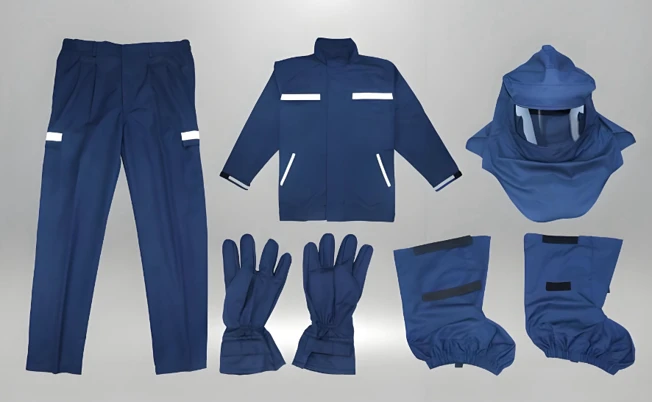
Arc-rated rainwear and outer layers cover the torso, arms and, in longer designs, the upper legs against rain, wind and the thermal exposure identified for the task. They are frequently specified with high-visibility properties on the same garment, and they are designed to work as the outermost layer of an arc-rated system.
What this category does not do is replace the layers beneath. An arc-rated shell over ordinary clothing is not an arc-rated system, because the inner layers are part of what determines the protection. Nor does it address chemical exposure: a garment specified for arc and weather is not thereby suitable for chemical splash, and the assessment should identify that as a separate requirement. And it does not remove the need for the controls that come first: isolation, work procedures, protective barriers and task planning all reduce the exposure before any garment matters.
Matching Task to Protection Level
Where a site has several weather conditions to cover, the specification is most useful when it states which garment applies to which condition, so that a light shower does not prompt the same response as a full storm.
| Situation | What dominates | Garment that follows | What to verify |
|---|---|---|---|
| Wet-weather switching and inspection | Arc exposure plus rain, short duration | Arc-rated jacket or parka worn as the outer layer, with the layers beneath specified | Arc rating of the garment and the system documentation |
| Prolonged outdoor work in rain | Sustained wetting, comfort, visibility | Arc-rated rainwear with sealed seams and closures, plus visibility properties | Water resistance behaviour, closure design and care instructions |
| Storm response and fault finding | Unpredictable conditions, urgency | Outer layer kept ready and in condition, with the complete set assembled beforehand | Availability and pre-use condition of the whole set |
| Cold and wet combined | Insulation plus weather plus arc exposure | Layers specified as a system, with instructions on the order in which they are worn | The layering arrangement permitted by the specification |
| High-visibility requirement on the same task | Traffic exposure and weather | Outer garment carrying both claims, rather than a vest over an unrated shell | Evidence for both properties on the same garment |
Two rules complete the table. The outer layer is selected for the exposure it faces, not only for the weather. And the system is what matters, which means the layers beneath are named in the specification rather than left to whatever the worker happens to be wearing.
Where Selection Usually Goes Wrong
One failure is procedural rather than technical, and it is worth planning for directly. In poor weather, workers improvise with what is available, and improvisation is a sign that the specified garment is not where it needs to be. Keeping outer layers at the point of use, in the sizes needed, and inspecting them before the season rather than after the first storm, removes most of the reason to improvise.
- An unrated shell over compliant clothing. The most common compromise, and the one least visible in a documentation review.
- Borrowed or personal rainwear. It meets the weather requirement and fails the arc requirement without anyone noticing.
- Coverage lost at the closures. A jacket that fits well standing up can open at the front when the wearer reaches or climbs.
- Hoods that interfere with face protection. A hood pushed back leaves the neck exposed and often displaces the protection it was meant to work with.
- Care that removes the weather performance. The wrong detergent or a build-up of residue stops the fabric shedding water, and the worker compensates by wearing something else.
- Ignoring the visible requirement. Adding a non-rated vest over an arc-rated shell defeats the outer layer specification.
- Layers beneath unspecified. A system is only as good as its layers, and personal clothing worn underneath can affect both comfort and protection.
The Hierarchy of Controls Around the Selection
Where a site runs a storm or fault response, the pre-task check should include the outer layers as part of the set, since a response that begins with an unrated shell on the nearest hook is a specification failure that occurs under time pressure rather than a decision taken deliberately.
The controls that precede personal protective equipment do not change in bad weather. De-energisation and isolation, planned work that avoids unnecessary exposure, protective barriers and covers, clear procedures and competent supervision all reduce what reaches the worker. Weather adds a planning dimension rather than a technical one: work that can be deferred until conditions improve, or arranged so that fewer people are exposed, is often the cheapest control available.
Personal protective equipment is the last line of defence. Arc-rated rainwear reduces the consequence of an event in the conditions in which the work actually happens, and it only does so as part of a system, worn as specified, maintained as instructed. Where a site finds that workers routinely wear unrated shells, the useful question is whether the specified garment is practical in the weather, because that is usually the reason.
Specification Points to Fix Before Ordering
Where several garments are involved, the specification should also state how the set is stored and issued between seasons, so that a complete system is available when the weather changes rather than being assembled from whatever is left.
- The arc-flash exposure for the task and the level required, with the framework named.
- The weather conditions the garment must handle and the duration of exposure.
- The system: which layers are worn beneath, in what order, and which are permitted.
- Construction requirements for closures, seams, sleeves and hoods, checked against the face protection in use.
- Visibility and any additional properties required on the same garment.
- Care, drying and re-proofing instructions that preserve both the arc rating and the weather performance.
- Inspection and replacement criteria, including what ends the garment’s service life.
- Documentation required with the quotation: test evidence, marking and traceability.
The arc-rated system and how it is selected are covered in Shield Wings’ guide to arc flash protection for electrical workers, which owns that topic. The garment families themselves are listed in the arc flash protection range and within the body protection category.
Shield Wings manufactures arc-rated and protective clothing at a Guangdong production base and supports utility, industrial and contracting customers with outer-layer selection, layering arrangements and the documentation each claim requires. The specification that holds in wet weather is the one that treats the shell as part of the protective system, and that keeps the layers beneath it as defined as the garment on the outside.
For the wider topic and related decisions, see our Arc Flash & Electrical Safety PPE.
Frequently Asked Questions
Does rainwear worn over arc-rated clothing need to be arc rated?
Yes, if it is worn where an arc-flash exposure is credible. The outer layer is the one that faces the event, and a shell made from materials that melt, ignite or disrupt the performance of the layers beneath can undermine the protection the system was specified for. In practice this means the outer layer is specified as part of the arc-rated system rather than added for weather alone.
Can a waterproof shell be worn under arc-rated clothing instead?
That arrangement changes the system and should be confirmed rather than assumed. Where the waterproof layer sits beneath, it is the material closest to the arc-rated outer garment and can affect how the layers behave together; it also affects comfort and moisture management. The assessment and the supplier documentation should cover the arrangement as worn rather than as imagined.
What should be checked on arc-rated rainwear?
The arc rating claimed for the garment, the standard it is tested to, the marking, and the construction details that matter on site: closures that keep rain out without leaving a gap in coverage, sleeves that stay in place when reaching, a hood arrangement that works with the face protection in use, and reflective material where visibility is required.
How does care affect waterproof and arc-rated properties?
Both depend on maintenance. Water-repellent finishes are affected by the wrong detergent and by residue, and the arc-rated property depends on the fabric and construction remaining as specified, which is why laundering practice matters. Where an outer layer is worn frequently in poor weather, the care instructions and the drying arrangements should be treated as part of the specification rather than as facilities matters.
What is the most common mistake with outer layers?
Buying a weather shell that is not part of the arc-rated system and wearing it over compliant clothing. It is the most common compromise in wet weather, it is usually invisible in a paperwork review, and it puts a material of unknown behaviour in the position where an arc event would reach it first. The garment must be specified for the exposure, not only for the weather.
Specifying outer layers for electrical work?
Send the exposure, the weather conditions and the layers already in use. Shield Wings confirms the configurations available, the construction options and the documentation for each claim.
External references: NFPA 70E electrical safety in the workplace, 29 CFR 1910.137 electrical protective equipment, 29 CFR 1910.132, UK HSE electrical safety guidance, CEN-CENELEC standards portal, Regulation (EU) 2016/425.
{“@type”:”FAQPage”,”@context”:”https://schema.org”,”mainEntity”:[{“@type”:”Question”,”name”:”Does rainwear worn over arc-rated clothing need to be arc rated?”,”acceptedAnswer”:{“@type”:”Answer”,”text”:”Yes, if it is worn where an arc-flash exposure is credible. The outer layer is the one that faces the event, and a shell made from materials that melt, ignite or disrupt the performance of the layers beneath can undermine the protection the system was specified for. In practice this means the outer layer is specified as part of the arc-rated system rather than added for weather alone.”}},{“@type”:”Question”,”name”:”Can a waterproof shell be worn under arc-rated clothing instead?”,”acceptedAnswer”:{“@type”:”Answer”,”text”:”That arrangement changes the system and should be confirmed rather than assumed. Where the waterproof layer sits beneath, it is the material closest to the arc-rated outer garment and can affect how the layers behave together; it also affects comfort and moisture management. The assessment and the supplier documentation should cover the arrangement as worn rather than as imagined.”}},{“@type”:”Question”,”name”:”What should be checked on arc-rated rainwear?”,”acceptedAnswer”:{“@type”:”Answer”,”text”:”The arc rating claimed for the garment, the standard it is tested to, the marking, and the construction details that matter on site: closures that keep rain out without leaving a gap in coverage, sleeves that stay in place when reaching, a hood arrangement that works with the face protection in use, and reflective material where visibility is required.”}},{“@type”:”Question”,”name”:”How does care affect waterproof and arc-rated properties?”,”acceptedAnswer”:{“@type”:”Answer”,”text”:”Both depend on maintenance. Water-repellent finishes are affected by the wrong detergent and by residue, and the arc-rated property depends on the fabric and construction remaining as specified, which is why laundering practice matters. Where an outer layer is worn frequently in poor weather, the care instructions and the drying arrangements should be treated as part of the specification rather than as facilities matters.”}},{“@type”:”Question”,”name”:”What is the most common mistake with outer layers?”,”acceptedAnswer”:{“@type”:”Answer”,”text”:”Buying a weather shell that is not part of the arc-rated system and wearing it over compliant clothing. It is the most common compromise in wet weather, it is usually invisible in a paperwork review, and it puts a material of unknown behaviour in the position where an arc event would reach it first. The garment must be specified for the exposure, not only for the weather.”}}]}