

Chemical eye injuries rarely begin with a large spill. They begin with a small volume of liquid that travels around the edge of a pair of spectacles, or with a mist that settles on an unprotected eye during a task nobody classified as hazardous. The distinguishing feature of this hazard is that the eye has no natural defence and no opportunity to react: the exposure is instantaneous and the consequence depends on the substance and on how quickly the eye is washed. That is why the selection rule here is different from impact protection.
The Hazard First, the Product Second
Liquid hazards behave in ways that solid particles do not. A splash arrives with direction and volume, and it will follow any gap rather than stop at a lens. A mist travels with air movements and settles on surfaces, including the eye, over time. A spray under pressure combines velocity with fine droplets and reaches angles that are difficult to predict. The severity of the outcome then depends on the substance: its concentration, whether it is an acid or an alkali, whether it is a solvent that damages tissue quickly, and how long it remains in contact before the eye is washed.
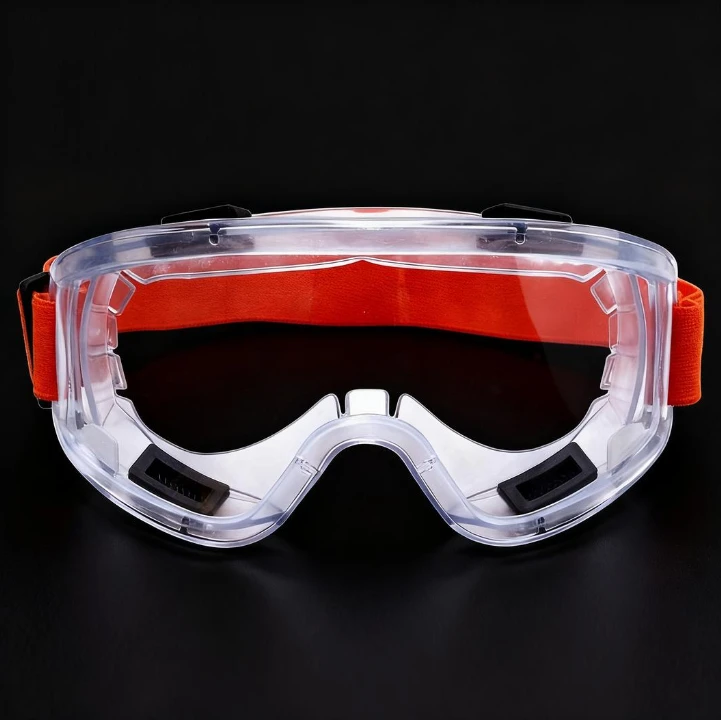
Those mechanisms point to one requirement above all others, which is sealing. Coverage from the front is not enough, because the anatomy of the eye and the shape of the face leave the lower and outer areas exposed when the eyewear does not close against the skin. That is the practical difference between safety spectacles and a sealed goggle, and it is why the primary control in liquid handling is a goggle rather than a visor or a pair of spectacles.
What the Risk Assessment Has to Establish
Occupational eye and face protection requirements sit in 29 CFR 1910.133 in the United States, with the general selection framework in 29 CFR 1910.132; European buyers work through the PPE Regulation and the eye and face protection standards it calls up. What the assessment has to produce for a splash task is a description of the exposure, not a product name.
- The substance and its form: liquid, mist, vapour or pressurised spray, with the concentration used.
- The task and how the exposure would occur: pouring, decanting, mixing, spraying, sampling from a line, or cleaning equipment.
- The volume and the direction, including whether the process involves pressure or a temperature that changes the behaviour of the substance.
- The first-aid arrangement, including the location of eyewash facilities relative to the task, because response time is part of the protection.
- What must be worn together: prescription eyewear, respiratory protection, face shield, helmet or hearing protection.
- The duration and frequency of the task, since frequent short exposures are often the ones left uncovered.
The substance line is the one most often missing, and it is the line that the supplier needs. Eyewear materials are not equally resistant to every chemical, and a compatibility question answered in advance is worth far more than a claim made after a delivery.
Which Hazards This Category Covers and Which It Does Not
It is worth being explicit about the overlap with the impact family, because workshops frequently stock one product and use it for both. A sealed goggle will resist some impact, and an impact-rated spectacle may shrug off a small splash, but neither product has been selected for the other hazard and the marking on each states what it was tested for. Where a task genuinely presents both exposures, the specification should require evidence for each property on the item concerned rather than assuming that one protection implies the other.
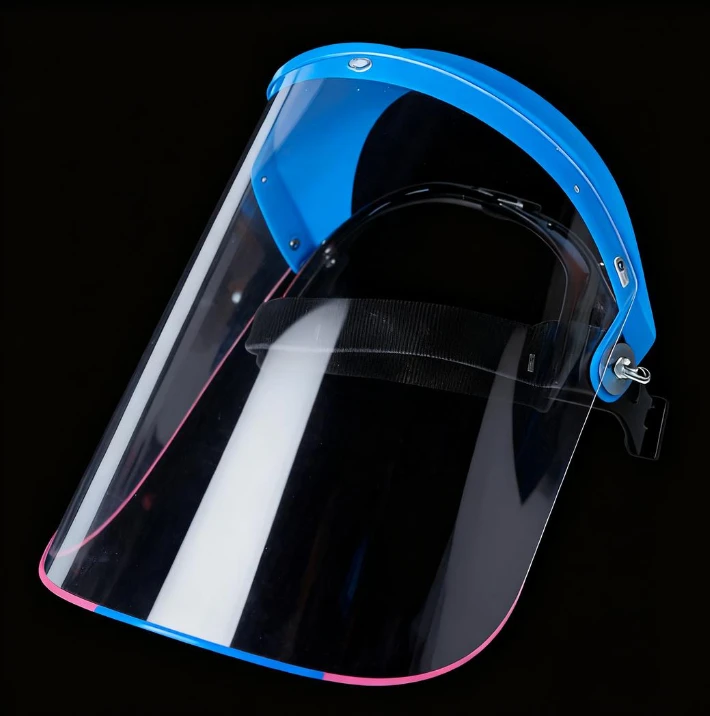
This family covers sealed splash goggles, indirect-vented goggles that limit liquid entry while allowing airflow, and the combinations used with face shields for tasks where the whole face is exposed. It sits within the eye and ear protection range, alongside the impact and optical radiation products that are specified for different exposures.
Its boundaries matter as much as its contents. Splash goggles do not provide impact protection at the level a grinding task needs, and they are not respiratory protection: a vapour or gas hazard is managed by ventilation and by respiratory equipment, not by eyewear. They do not protect the face, which is why a face shield may be added, and they do not remove the need for the controls that prevent the splash in the first place. A goggle reduces the consequence of contact; it does not stop the liquid leaving the container.
Matching Task to Protection Level
| Task | Exposure | Eyewear that follows | What to verify |
|---|---|---|---|
| Decanting and pouring from containers | Liquid splash from the front and below | Sealed goggle; add a face shield where the volume is significant | Seal quality with the wearer’s face and prescription eyewear |
| Mixing and blending chemicals | Splash plus possible mist and heat | Sealed goggle plus face protection and, where mist is credible, respiratory protection | Compatibility of every item with the substance and with each other |
| Spray application and pressure washing | Fine droplets at velocity from unexpected angles | Sealed goggle with face and respiratory protection for the task | Chemical resistance of the ensemble, and the decontamination procedure |
| Sampling from a process line | Small volume, often under pressure, close to the face | Sealed goggle; task procedures that control the direction of release | Task design, valve condition and the eyewear selected for that exposure |
| Cleaning equipment and floors | Splash and aerosol from cleaning agents | Sealed goggle, with face protection where the cleaning method generates spray | Cleaning agent compatibility and the rinse arrangements |
| Laboratory and quality work with small volumes | Low volume but frequent exposure | Sealed goggle as the default for handling liquids | Fit over prescription eyewear and the local eyewash arrangement |
Two rules complete the table. The first is that the eyewear is primary protection and the face shield is secondary, so the shield is never the only item worn. The second is that the required performance is a site decision taken from the assessment and expressed in the language of the standard the market works to, not inherited from a previous workplace or from a supplier’s recommendation.
Where Selection Usually Goes Wrong
One pattern explains several of them at once: the site stocked a single goggle type for every chemical task, because the substances look alike in a store room and the packaging does not state what each product resists. Recording the substance on the issue list is the simplest correction.
The failures are predictable and most of them are visible in a storeroom.
- Spectacles used for splash tasks. They do not seal, and liquid reaches the eye from below and from the sides.
- A face shield used alone. It protects the face but not the sealing requirement, and it is often lifted during the task.
- Wrong goggle for the substance. Materials and seals differ in chemical resistance; compatibility is a supplier question, not a guess.
- Fit compromised by prescription eyewear. Standard spectacles worn under goggles can hold the seal away from the face.
- Shared eyewear without cleaning. Cleaning between users is a hygiene and a performance issue, and damaged seals are easily missed.
- No eyewash within reach. Response time determines the outcome of many chemical eye injuries, and the location of facilities belongs in the task assessment.
- Vapour treated as splash. Ventilation and respiratory protection manage vapour; a goggle does not.
The Hierarchy of Controls Around the Selection
The first-aid arrangement deserves to be treated as a control rather than as a facility, because the outcome of a chemical eye injury depends heavily on how quickly the eye is washed. That means the location of the eyewash relative to the task, the route to it being kept clear, the equipment being maintained and tested, and the workers knowing how to use it. A specification that selects excellent goggles and leaves the wash point at the far end of the building has addressed part of the exposure only.
Chemical eye injuries are reduced most effectively before the eyewear is reached. Substituting a less hazardous substance, using closed transfer systems, avoiding manual decanting, fitting splash guards and lids, using pumps and dispensers, controlling the height and speed of a pour, and providing ventilation and enclosures all reduce the exposure. Administrative controls follow: procedures for handling, training on the direction of release, restricting access during hazardous operations, and maintaining eyewash facilities in working order with the route to them kept clear.
Personal protective equipment is the last line of defence. A sealed goggle reduces what reaches the eye when the earlier controls fail, and it depends on being worn for the whole task, being clean and undamaged, and fitting the individual wearer well enough for the seal to work. Where a site finds that goggles are frequently removed, the useful question is whether the fit, the fogging or the task design is the cause.
Specification Points to Fix Before Ordering
A splash protection specification should be short and specific, and it should record what the eyewear is chosen against.
- The substance and its form, with the concentration and the tasks involved.
- The standard the eyewear must be tested to, named with its scope, and the marking expected on the product.
- The type required: sealed goggle, indirect-vented goggle, or goggle plus face protection.
- Chemical compatibility confirmed by the supplier for the substance concerned.
- Fit requirements, including prescription eyewear and the compatibility with respiratory protection.
- Cleaning, storage and shared-use rules, plus the replacement criteria for lenses and seals.
- The emergency arrangement: eyewash provision, location, maintenance and the route to it.
- Documentation required with the quotation: test evidence, compatibility information and traceability.
How face shields are specified for the tasks that need them is covered in Shield Wings’ guide to face shield types and selection, which owns that topic, and the impact-rated spectacles used for other tasks in the same workshop are described under safety glasses.
Shield Wings manufactures eye and ear protection at a Guangdong production base and supports chemical, laboratory and industrial customers with product information, compatibility questions and the documentation a specification needs. The decision that prevents injury here is the one that treats the goggle as primary protection and treats the substance as a specification input rather than a detail.
For the wider topic and related decisions, see our Head, Face & Eye Protection.
Frequently Asked Questions
Are goggles or a face shield required for chemical splash?
Sealed goggles are the primary protection, because they close against the face and limit liquid reaching the eye from below and from the sides. A face shield is added to protect the rest of the face and to reduce the energy of a splash, but it does not seal and it can be lifted, so it is not specified as the only protection for liquid handling. The assessment decides whether both are required.
Do safety spectacles protect against chemical splash?
Spectacles offer impact protection and some frontal coverage, but they do not seal against the face, so liquid can reach the eye from directions the lens does not cover. For splash tasks the specification should require a sealed goggle, and where spectacles are worn for prescription correction they should be a design intended for use under goggles or as prescription safety eyewear with adequate coverage.
How does the substance affect the choice of eyewear?
Different substances behave differently on the materials used for lenses, frames and seals, and some attack materials that resist others. The assessment should name the substance, and the supplier should confirm compatibility for the eyewear concerned rather than assuming that any splash goggle is suitable. Where no compatibility information exists, that is a question to resolve before the task is done, not during it.
How should chemical splash eyewear be cleaned and stored?
Follow the manufacturer’s instructions, which normally specify rinsing and mild cleaning rather than aggressive chemicals that could attack the seals or coatings. Goggles should be stored so that the lens is not deformed, away from heat and away from the substances they protect against. Shared eyewear should be cleaned and inspected between users, and any item that has been contaminated or damaged is withdrawn.
What should be recorded for a splash task specification?
The substance and the task, the protective eyewear and face protection specified, the compatibility information received from the supplier, the emergency arrangement for eye contact and where it is located, the cleaning and storage rule, and the replacement criteria. Where the substance has a specific first-aid response, that arrangement belongs in the task documentation rather than only in a safety data sheet on file.
Specifying eye protection for liquid handling?
Send the substances, the tasks and the other equipment in use. Shield Wings confirms the eyewear options, the compatibility information available and the marking each product carries.
External references: 29 CFR 1910.133 eye and face protection, 29 CFR 1910.132, CCOHS PPE answers, UK HSE personal protective equipment guidance, CEN-CENELEC standards portal, Regulation (EU) 2016/425.
{“@context”:”https://schema.org”,”@type”:”FAQPage”,”mainEntity”:[{“@type”:”Question”,”name”:”Are goggles or a face shield required for chemical splash?”,”acceptedAnswer”:{“@type”:”Answer”,”text”:”Sealed goggles are the primary protection, because they close against the face and limit liquid reaching the eye from below and from the sides. A face shield is added to protect the rest of the face and to reduce the energy of a splash, but it does not seal and it can be lifted, so it is not specified as the only protection for liquid handling. The assessment decides whether both are required.”}},{“@type”:”Question”,”name”:”Do safety spectacles protect against chemical splash?”,”acceptedAnswer”:{“@type”:”Answer”,”text”:”Spectacles offer impact protection and some frontal coverage, but they do not seal against the face, so liquid can reach the eye from directions the lens does not cover. For splash tasks the specification should require a sealed goggle, and where spectacles are worn for prescription correction they should be a design intended for use under goggles or as prescription safety eyewear with adequate coverage.”}},{“@type”:”Question”,”name”:”How does the substance affect the choice of eyewear?”,”acceptedAnswer”:{“@type”:”Answer”,”text”:”Different substances behave differently on the materials used for lenses, frames and seals, and some attack materials that resist others. The assessment should name the substance, and the supplier should confirm compatibility for the eyewear concerned rather than assuming that any splash goggle is suitable. Where no compatibility information exists, that is a question to resolve before the task is done, not during it.”}},{“@type”:”Question”,”name”:”How should chemical splash eyewear be cleaned and stored?”,”acceptedAnswer”:{“@type”:”Answer”,”text”:”Follow the manufacturer’s instructions, which normally specify rinsing and mild cleaning rather than aggressive chemicals that could attack the seals or coatings. Goggles should be stored so that the lens is not deformed, away from heat and away from the substances they protect against. Shared eyewear should be cleaned and inspected between users, and any item that has been contaminated or damaged is withdrawn.”}},{“@type”:”Question”,”name”:”What should be recorded for a splash task specification?”,”acceptedAnswer”:{“@type”:”Answer”,”text”:”The substance and the task, the protective eyewear and face protection specified, the compatibility information received from the supplier, the emergency arrangement for eye contact and where it is located, the cleaning and storage rule, and the replacement criteria. Where the substance has a specific first-aid response, that arrangement belongs in the task documentation rather than only in a safety data sheet on file.”}}]}