

Gloves are the item workers are most willing to keep using, and the item where wear has the most direct effect on protection. A cut glove performs as specified while its liner is intact and its coating is sound; once the coating is breached and the liner abrades, the marked level describes a product the worker no longer has. Because that transition is gradual and happens inside the working day, the replacement rule has to be simple enough to apply on the shop floor.
Where Performance Is Lost in Service
Task conditions change the rate at which this happens. Handling abrasive castings all day wears a coating in days; the same glove used for light assembly can last weeks. Temperature matters as well, because a coating that becomes hard and brittle in a cold store cracks sooner, and one exposed to radiant heat from a nearby process can stiffen without any mechanical contact at all. That is why a replacement interval written as a number of weeks, without reference to the task, tends to be wrong in both directions at once.
Wear in a coated glove concentrates at the palm, the fingertips and the base of the fingers, and it advances in a predictable order. The coating abrades first, then thins at high-contact points, then breaches and exposes the liner. Once the liner itself abrades or is cut, both the cut performance and the grip the task relied on fall away. In coated gloves the coating is also the abrasion protection for the liner, so the two failures follow each other quickly once the first occurs.
Contamination adds its own path. Oils and process fluids affect grip and can carry abrasive particles into the material; chemicals may attack the coating or the elastic; heat exposure stiffens and shrinks materials in ways that change the fit. Laundering is a fourth path, and in industrial settings it is significant: repeated cycles with thermal disinfection and aggressive chemistry affect liners, coatings and cuffs at a rate that depends on the process rather than on the number of washes. And fit changes as gloves stretch, dry or shrink, which is why a glove can be intact and still no longer suitable.
Cleaning and Care Within the Manufacturer’s Instructions
Where gloves are not washed but are used in food, pharmaceutical or other sensitive environments, the disposal and replacement practice is the control instead. In those cases the specification should state whether the protective glove is worn alone, worn with a disposable layer, or replaced between tasks, and how that decision is recorded. Leaving it to the line usually produces a mixture of practices and an inconsistent hygiene outcome.
The care instructions define what the glove tolerates and, where relevant, what the manufacturer has validated for industrial laundering. That matters because two sites can use the same glove with very different outcomes: one follows the instructions and gets a predictable service life, the other runs a hotter cycle with different chemistry and replaces the glove far sooner without knowing why.
Three arrangements make care manageable across a plant.
- Keep the care instructions with the issue record, so the person responsible for washing can see what is permitted.
- Confirm the site’s laundry cycle against those instructions, in writing, before the gloves go into the system.
- Segregate gloves that are laundered from those that are not, since a shared cycle will not suit every product.
Where gloves are not laundered, the replacement rule does the work instead: the glove is used for the task, withdrawn on condition, and replaced. Attempting to extend the life of a contaminated glove by cleaning it with whatever is available usually reduces its performance rather than restoring it.
Inspection Points Before Every Use
The check should also confirm that the glove still suits the task as it is currently performed. Where a process has changed, a new coolant introduced or a different component supplied, the glove that was correct at specification stage may no longer be the right one, and that review belongs in the routine rather than in a separate exercise.
The pre-use check belongs to the wearer and takes seconds.
- Palm and fingertips: coating intact, texture present, no shiny or worn patches.
- Liner: not exposed, not thinning, no holes or snags.
- Seams, cuff and elastic: intact, and holding the glove in place.
- Contamination: oil, chemical residue or embedded particles that affect grip or the material.
- Fit: the glove stays on the hand when the wrist moves, and the fingers are not folded or restricted.
- Cleanliness: no product residue or contamination that would transfer to the next item handled.
Any glove that fails the check is replaced rather than set aside. The practical obstacle to that rule is availability, so the replacement stock should be within reach of the task rather than in a store that closes at the end of the shift.
Periodic Inspection and Test Intervals
Where the same glove type is used across several tasks, the interval should be set by the most demanding of them.
| Situation | Inspection arrangement | Who performs it | Record |
|---|---|---|---|
| Gloves in continuous handling work | Pre-use check; replacement on condition with defined wear indicators | Wearer, supported by the store | Consumption and replacement reason by area |
| Cut resistant gloves in demanding tasks | Pre-use check plus a supervisor check of glove condition at the start of shift | Wearer and supervisor | Replacement record by task |
| Laundered gloves | Inspection after washing, before return to the issue point | Laundry or store | Wash cycle record and inspection outcome |
| Heat resistant gloves | Pre-use check for stiffening, cracking, contamination and metal adhesion | Wearer, with periodic check | Withdrawal record for any glove that has received an event |
| Chemically exposed gloves | Checked against the substance and the exposure, with replacement on any sign of degradation | Wearer with supervisor | Record of the substance and the glove selected for the task |
The logic behind the table is that gloves are consumables whose performance is defined by condition. An interval alone will not protect a worker who is handling abrasive material all day, and condition alone will not catch a laundered glove that has lost its elastic. The two together, with a replacement stock close at hand, are what make the rule enforceable.
Documenting Condition and Traceability
Where a site runs several similar tasks in one area, the record should be specific enough to distinguish them. A single glove line issued to a whole department produces a single replacement figure that hides the fact that one task consumes four times as many gloves as the rest. Splitting the record by task costs nothing and usually reveals the specification problem within a month.
The record set can be short: what is issued to whom or to which area, the replacement rate, and the reason gloves are withdrawn. Where gloves are laundered in batches, the wash record belongs with it. Where a glove has been used for a task involving a specific chemical or heat exposure, the withdrawal decision should be recorded against that exposure rather than as a general replacement.
Two patterns are worth watching. Coating failure concentrated at the fingertips usually points to a handling or material question rather than a quality problem, while liner exposure across the palm suggests that the material choice or the task itself needs review. Recording the reason turns the store’s consumption data into information the specification can use. What the marking on a product means, and how to read it against a claim, is covered in Shield Wings’ guide to PPE labels and ratings, which owns that topic.
Repair, Withdrawal and Disposal
It is worth agreeing the disposal route in advance for gloves used in food, chemical or contaminated environments, because a glove that has absorbed process fluids is not ordinary waste in the same sense that a worn work glove is. The site’s procedure should say where withdrawn gloves go, who collects them and what is recorded, and that answer belongs in the specification rather than in a conversation at the end of the shift.
Repair is not part of glove care. Stitching, patching or gluing a protective glove moves it outside the construction that was tested, and the area concerned is usually the one that matters most. Withdrawal is the correct response to coating breach, liner exposure, contamination or a loss of fit, and disposal should follow the site’s procedure for the material concerned, since a glove contaminated with process fluids is a waste-stream question rather than a bin question.
The failure to design against is the glove kept in a locker as a spare. It is already past the condition that justified its replacement, and it will be used on the day when nothing else is available. A quarantine point with a visible marker, and a rule that only the responsible person releases items from it, prevents that outcome.
What to Ask the Supplier Before You Buy
It is also worth asking how the supplier expects the glove to be withdrawn, since that answer often reveals which wear point matters most.
- What are the care instructions, and is industrial laundering supported?
- Which change in condition means the glove should be withdrawn?
- How do wear and cleaning affect the cut, heat or chemical claims the glove carries?
- What is the expected service life for the intended task, and how does it vary?
- Which sizes and models are available, so that fit can be maintained across the workforce?
- What documentation accompanies each delivery, and what traceability reference can be recorded?
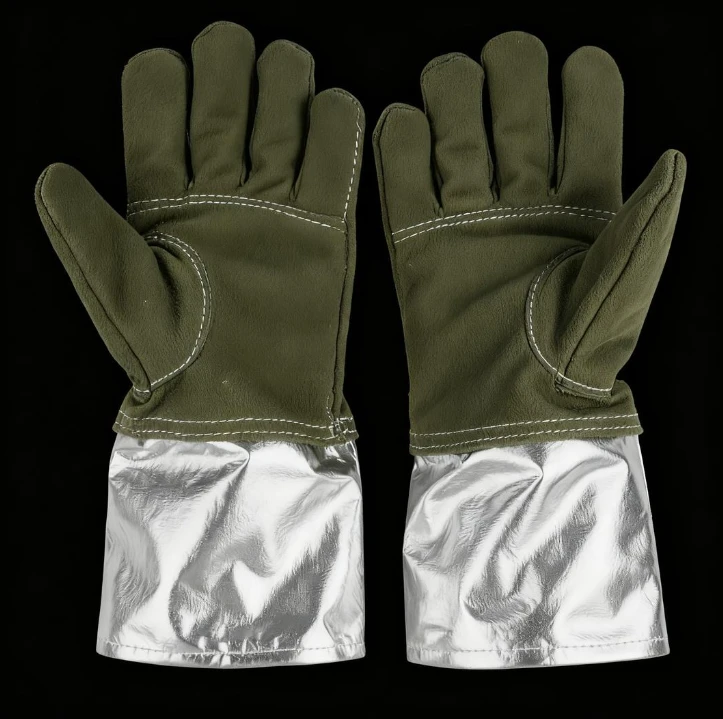
Shield Wings manufactures cut resistant, coated, heat resistant and firefighting gloves at a Guangdong production base, and supplies care and replacement information with the product documentation so that a site can maintain the equipment it has specified. The range is listed in the hand protection category, with the coated and cut resistant families on the cut resistant gloves page.
A glove programme is judged by the simplest test available: whether the glove on the hand right now is still the product the specification describes. Where the answer depends on how busy the shift was, the replacement rule is not yet practical.
For the wider topic and related decisions, see our Hand, Cut & Impact Protection.
Frequently Asked Questions
When should a work glove be replaced?
When the coating or outer surface is breached and the liner is exposed, when the glove has been cut, punctured or chemically contaminated in a way the care instructions cannot resolve, when it no longer fits and moves on the hand, or when the task changes and the glove no longer matches the required performance. The marked performance belongs to the intact construction, so these conditions are retirement triggers rather than preferences.
Can cut resistant gloves be washed?
Many can, within the conditions the manufacturer states, and some are manufactured for industrial laundering programmes. What matters is that the process used on site matches those conditions, because temperature, chemistry and mechanical action affect liners, coatings and elastic. Where the site’s wash cycle runs outside the instructions, the glove may lose performance well before it looks worn, so the cycle should be confirmed rather than assumed.
What should be checked before each use?
Check the palm and fingertips for abrasion and coating breach, the liner for exposed or thinning areas, the seams and cuff for damage, the grip surface for contamination, and the fit for any change that lets the glove move on the hand. The check takes seconds and it is the only point at which most of these conditions are noticed before the task begins.
How should glove condition be recorded?
Records should be proportionate: the type issued to each worker or area, the replacement rate, and the reasons for replacement. Where gloves are shared or laundered in batches, the washing record matters as well. The most useful piece of data is the reason a glove was withdrawn, because a pattern of coating failure at the fingertips points to the task, while liner exposure across the palm points to the material choice.
What should a buyer ask the supplier about care and replacement?
Ask for the care instructions in the form the site will use, whether industrial laundering is supported and under what conditions, which parts of the glove determine retirement, and what the expected service life looks like for the intended task. Where the glove carries cut, heat or chemical claims, ask how each of those claims is affected by wear and cleaning.

Setting glove replacement rules?
Send the tasks, the materials handled and the current laundering arrangement. Shield Wings confirms the care conditions, the wear points to inspect and the replacement criteria for each product line.
External references: 29 CFR 1910.138 hand protection, CCOHS guidance on protective gloves, UK HSE personal protective equipment guidance, CEN-CENELEC standards portal, Regulation (EU) 2016/425.