

Two FR garments can carry the same certificate on day one and behave completely differently in year three. One keeps its protection because the flame resistance is built into the fibre; the other depends on a chemical finish that survives only as long as the laundering programme lets it. The certificate describes the fabric as new — the mechanism decides what happens next.
(Last modified date: October 1, 2026)
Key Takeaways
- Flame resistance comes from one of two mechanisms: inherent chemistry in the fibre, or a chemical treatment applied to the fabric. The care and replacement cycle follow from which one you bought.
- Inherently FR fibres include aramid types such as Nomex and Kevlar, modacrylic, and blends — each trading heat resistance, strength, comfort and cost differently.
- Treated FR fabrics — typically FR cotton with finishes such as Proban-type chemistry — pass the same standards when new, and are cheaper and more breathable, but the finish has to survive every wash.
- In a layered system the arc rating belongs to the combination, not to any single layer, so the whole system has to be specified together.
- Bleach and fabric softener attack both mechanisms. Care is part of the protection, not an afterthought to it.
What Does “Flame Resistant” Mean at the Fibre Level?
Flame resistant means the fibre or fabric resists ignition and self-extinguishes once the ignition source is removed — and there are two ways to get there. Some fibres are inherently non-combustible by chemistry; others are made flame resistant by a treatment applied to the fabric.
When ordinary fabric meets flame it ignites and keeps burning, and synthetic fabrics can melt and drip onto the skin, extending the injury well beyond the contact point. FR fabrics are engineered so the material does not support combustion: it may char, but it will not keep burning, and it does not melt into the skin. Which mechanism a fabric uses decides how the protection behaves over the garment’s life — inherent protection is part of the fibre and cannot wash out; treated protection depends on the finish surviving the care cycle.
What Are the Main Inherent FR Fibres?
The main inherently FR fibres are aramid types such as Nomex and Kevlar, modacrylic, and the blends that combine them — each with a different balance of heat resistance, strength, comfort and cost.
| Fibre | Key properties | Typical use |
|---|---|---|
| Nomex-type aramid | Inherent FR, durable, comfortable | FR coveralls, arc flash suits |
| Kevlar-type aramid | High strength, cut and heat resistance | Reinforcement, cut protection |
| Modacrylic | Inherent FR, soft, good colour | FR blends, comfort layers |
| FR cotton (treated) | Breathable, economical | Light FR workwear |
| FR blends | Balance of properties | Multi-hazard garments |
Inherently FR fibres resist flame as part of their chemistry, so the protection cannot wash out — the main limitations are cost and, for some constructions, weight and durability. Aramid fabrics are strong and hold their performance through many wash cycles, which is why they are the default for high-risk roles. Modacrylic blends add softness and drape, which matters when a garment has to be worn for a full shift rather than a task. The choice is rarely one fibre on its own; it is a blend engineered for the hazard, the climate and the budget.
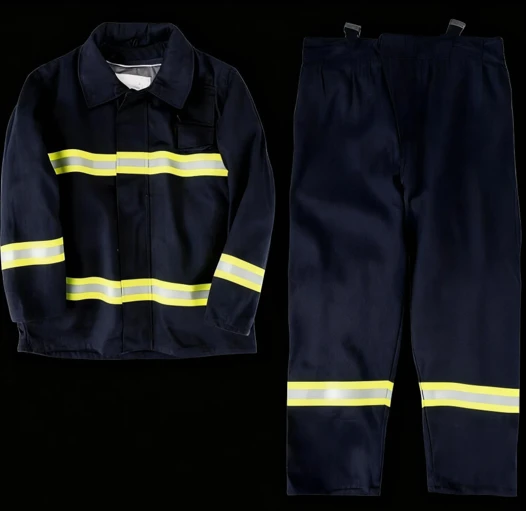
Inherently FR garments carry their protection in the fibre, so it survives the wash cycle.
How Do Treated FR Fabrics Work?
Treated FR fabrics — typically FR cotton or FR cotton blends using finishes such as Proban-type chemistry — gain their flame resistance from a chemical treatment that has to survive the full care cycle to keep protecting.
The treatment reacts with the fibre so the fabric forms a stable char when heated, resisting ignition and blocking flame spread rather than burning through. Treated fabrics pass the same standards as inherent fabrics when they are new, and they are usually more breathable and less expensive, which suits lighter workwear and hot climates. The trade-off is the care cycle: the treatment degrades with improper laundering — bleach, fabric softeners and high heat — so the garment’s protection depends on how it is washed and how often. Buyers should know which mechanism they are purchasing, because the care instructions and the replacement cycle are consequences of that choice.
How Do You Choose Between Inherent and Treated Fabrics?
Choose by the hazard level, the expected service life, the climate and the care system actually in place — inherent fabrics for high-risk roles and long service life, treated fabrics where breathability and budget lead.
The decision is not which one is “safer”; both can meet the standard. It is which one performs over the garment’s real life in your conditions.
| Inherent FR | Treated FR | |
|---|---|---|
| Where protection lives | In the fibre chemistry | In a finish on the fabric |
| Effect of washing | Cannot be washed out | Degrades with wrong care |
| Breathability | Lower on heavier constructions | Generally higher |
| Unit cost | Higher | Lower |
| Service life | Longer, with wear limits | Shorter, care-dependent |
| Fits best | High-risk, high-duty roles | Lighter tasks, controlled laundering |
For high-risk, high-duty work such as oil and gas or electrical operations, inherently FR garments justify the higher unit price through longevity and a lower maintenance risk. In lighter tasks with disciplined laundering, treated FR cotton delivers comfort and economy. Ask for the test report on the exact model, confirm the care requirements, and put the replacement cycle into the total cost — a garment that must be replaced twice as often can cost more than it saves.
Whichever route you take, the selection has to start from the hazard assessment. OSHA 1910.132(d) requires the employer to assess the workplace for hazards, select equipment that protects against the hazards identified, and certify that assessment in writing. Fabric type alone does not establish suitability for a task.
What Role Do Blends and Layering Play?
Blends combine fibres to balance protection, comfort and durability; layering stacks fabrics to reach a higher rating — and in a layered system the arc rating belongs to the combination, not to any single layer.
A garment may blend aramid for strength with modacrylic for comfort and anti-static fibres for safety in flammable atmospheres. Layering extends the same logic: a higher-category arc flash system pairs an outer shell with a secondary layer, and the total rating is a property of the system as tested. When you specify, state the full system — the fabrics, the layers and the standard — because performance in a test is measured as designed, not assembled afterwards. The category mapping is set out in arc flash PPE categories 1–4 explained.
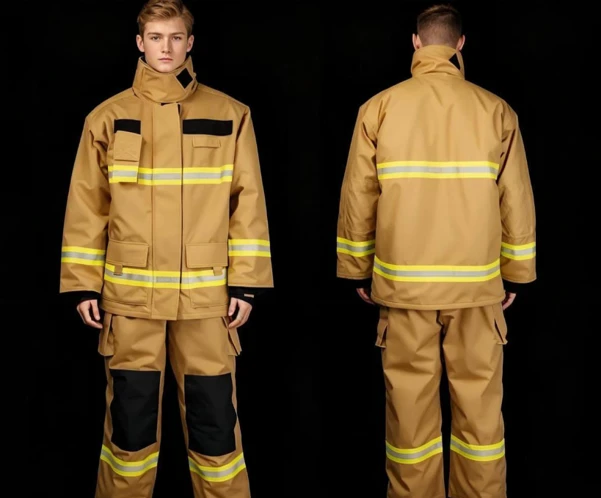
In a layered system the rating is a property of the combination, not of the outer garment alone.
How Do You Care for FR Fabrics So They Keep Performing?
Wash with mild detergent, never bleach or fabric softener, follow the temperature on the label, and inspect for damage — because degraded fabric no longer performs to its certificate.
Fabric softeners coat the fibres and can interfere with FR performance; bleach attacks treated finishes and degrades inherent fibres over time. Wash at the labelled temperature, dry properly, and inspect cuffs, seams and high-wear areas for holes, fraying and fading. Treated fabrics need the most disciplined care, but inherent fabrics also lose strength with heavy wear and UV exposure. Set the replacement schedule from duty and laundering frequency, and document the inspections so the programme is auditable. The certificate describes the fabric as new; the care programme is what keeps it close to that performance in service.
For teams standardising across sites, the practical route is to fix the fabric family and the care system together, then buy against that specification. Our team can supply fabric specifications, care documentation and test reports for each model through the contact page or the FR clothing page. If your programme spans regions, the certification set to work from is covered in FR clothing certifications: NFPA 2112, ASTM F1506 and EN ISO 11612.
For the wider topic and related decisions, see our Flame-Resistant Workwear.
FAQs
Is Nomex the same as all aramid?
No. Nomex is a specific meta-aramid brand; other aramid fibers offer similar properties, and the performance depends on the fabric construction, not the brand name.
Do treated FR fabrics lose protection after washing?
They can, if the care cycle is wrong. Follow the care label strictly — no bleach, no fabric softeners, no high heat — and replace garments on schedule.
Which fabric is better for hot climates?
Breathability leads: lighter FR cotton blends and modacrylic blends manage heat stress better than heavier inherent fabrics, while still meeting the standard.
How do we verify a fabric’s FR performance?
Request the test report for the exact model and production, confirming the standard and edition — and ask our team for documentation via our contact page or the FR clothing page.
Related Articles
- FR Clothing Certifications: NFPA 2112, ASTM F1506 and EN ISO 11612
- Arc Flash PPE Categories 1–4 Explained
- FR Clothing for Welders: What You Actually Need
- EN ISO 11612: Heat and Flame Protection Clothing Standard
- Custom Workwear Manufacturing: MOQ, Sampling and Production
Official Resources
References
- 29 CFR 1910.132 — General requirements: hazard assessment, PPE selection and written certification. Electronic Code of Federal Regulations.
- ASTM F1506 — standard performance specification for flame resistant and arc rated textile materials for wearing apparel. ASTM International.
- NFPA 2112 — standard on flame-resistant clothing for protection of industrial personnel against short-duration thermal exposures from fire. National Fire Protection Association.
- EN ISO 11612 — protective clothing: clothing to protect against heat and flame, test methods and requirements (standard designation; full text is not publicly available). International Organization for Standardization.