

Arc flash suit ratings describe how much heat energy a garment can stop before a second-degree burn occurs. The three numbers buyers see most — cal/cm², ATPV, and HRC — come from standard tests and must match the incident energy of each task, as explained below with certified arc flash suits from Shield Wings in mind.
(Last modified date: October 4, 2026)
Quick definition: Incident energy is the heat that reaches a worker during an arc flash, measured in calories per square centimeter (cal/cm²).
Key Takeaways
- ATPV stands for Arc Thermal Performance Value, the highest incident energy at which a fabric predicts a 50 percent chance of preventing a second-degree burn.
- EBT, or Energy Breakopen Threshold, applies to materials that break open rather than pass heat through.
- HRC, or Hazard Risk Category, is the older NFPA 70E way of grouping arc flash PPE into four levels, from 1 to 4, each tied to a minimum cal/cm² rating.
- Look for the arc rating in cal/cm², the test standard, and the fabric description; then match those three facts to your hazard analysis and the garment’s certificate.
- Choose by task: routine panel switching at 8 cal/cm² needs a Category 2 suit of at least that rating, while substation work above 25 cal/cm² calls for Category 3 or 4 kits.
- The examples below show how the rating translates to real work, assuming the hazard analysis confirms the incident energy for each task.
What Is Incident Energy and Why Does Cal/cm² Matter?
Incident energy is the heat that reaches a worker during an arc flash, measured in calories per square centimeter (cal/cm²). It is the single number that decides which suit is safe, because every garment is rated against it.
A calorie per square centimeter is simply the amount of thermal energy striking each square centimeter of surface. At 1.2 cal/cm², bare skin reaches the threshold for a second-degree burn. Above that, the risk climbs quickly, and arc-rated clothing is required. The value on your suit must be equal to or higher than the incident energy your hazard analysis assigns to the task — not close, but higher, so the suit buys the worker time to escape serious injury.
What Does ATPV Mean on an Arc Flash Suit Label?
ATPV stands for Arc Thermal Performance Value, the highest incident energy at which a fabric predicts a 50 percent chance of preventing a second-degree burn. It is the number printed on most arc-rated garments.
ATPV comes from laboratory testing in which fabric panels are exposed to controlled electric arcs. The test measures how much energy passes through before the back of the fabric reaches the burn threshold, then reports that value in cal/cm². A suit labeled 25 cal/cm² ATPV can therefore be used where incident energy does not exceed 25 cal/cm² — and most buyers keep a margin below that limit. ATPV is the property of a complete fabric system, which is one more reason to buy matched kits rather than mixing pieces from different suppliers.
What Is EBT and When Is It Used Instead of ATPV?
EBT, or Energy Breakopen Threshold, applies to materials that break open rather than pass heat through. For those fabrics, EBT is the incident energy at which the fabric is predicted to break open, exposing skin.
Some arc-rated fabrics fail by allowing heat through (ATPV governs); others fail by tearing or breaking open under the blast (EBT governs). The standard requires the garment to use whichever value is lower and more conservative, so labels carry either ATPV or EBT — never both as the rating. If a label lists EBT, treat it exactly as you would ATPV: the suit is rated to that cal/cm² value, and the test report behind it is what your compliance file should contain.
What Is HRC and How Does It Relate to ATPV?
HRC, or Hazard Risk Category, is the older NFPA 70E way of grouping arc flash PPE into four levels, from 1 to 4, each tied to a minimum cal/cm² rating. It still appears in older documents and some training materials.
| Hazard Risk Category | Minimum arc rating |
|---|---|
| HRC 1 | 4 cal/cm² |
| HRC 2 | 8 cal/cm² |
| HRC 3 | 25 cal/cm² |
| HRC 4 | 40 cal/cm² |
Since the 2015 edition, NFPA 70E has replaced HRC with the table-based PPE categories you see on current labels, but the mapping is identical: Category 1 equals the old HRC 1, and so on. When a legacy document says your task is HRC 2, you still need at least 8 cal/cm². The practical rule never changes: read the cal/cm² value, not the letter.
How Do You Read the Numbers on a Suit Label?
Look for the arc rating in cal/cm², the test standard, and the fabric description; then match those three facts to your hazard analysis and the garment’s certificate.
Every arc-rated garment should carry a permanent label stating the ATPV or EBT value, the standard it was tested to (such as ASTM F1506 or IEC 61482), and care instructions. If a label shows only a category number, check the product documentation for the underlying cal/cm² rating — that is the number your audit needs. Also confirm the garment includes the full kit your task requires: a coat alone does not protect your face, and gloves are rated separately.
Which Rating Should Your Team Choose for Different Tasks?
Choose by task: routine panel switching at 8 cal/cm² needs a Category 2 suit of at least that rating, while substation work above 25 cal/cm² calls for Category 3 or 4 kits.
Most utility crews standardize on two levels. For metering, switching, and breaker operation on typical distribution panels, an 8 to 12 cal/cm² system is the workhorse. For transformer banks, large switchgear, and racking breakers where studies show 25 to 40 cal/cm², crews switch to the heavier kit. When in doubt, buy the higher rating: the weight difference is small next to the difference between a treatable burn and a fatal one. Your electrical utility PPE selection should always be documented against the study, so every suit in service has a justification behind it.
Arc Rating Comparison at a Glance
The examples below show how the rating translates to real work, assuming the hazard analysis confirms the incident energy for each task.
| Task example | Incident energy | Recommended suit |
|---|---|---|
| Routine panel switching | 8 cal/cm² | Category 2, 8.5–12 cal/cm² kit |
| Industrial MCC work | 12 cal/cm² | Category 2/3, 25 cal/cm² kit |
| Substation racking | 25–40 cal/cm² | Category 4, 40 cal/cm² full kit |
These are starting points, not substitutes for your own study. Ratings on your site may be higher or lower depending on fault current, clearing time, and working distance — which is why every order should begin with the actual numbers.
Can You Order Suits with Certified Ratings from a Factory?
Yes. As a manufacturer, Shield Wings supplies arc flash suits with certified ratings, test documentation, and custom options — and we recommend ordering a sample before committing to a full team order.
Working factory-direct changes how you verify ratings. Instead of trusting a reseller’s description, you receive the test report, fabric specifications, and QC records for your batch. For OEM and wholesale buyers, we can match a specific ATPV target, add branding, and adjust sizing — then confirm the rating on the production run, not just on the sample. That documentation is what protects you in an audit, and it is included with every certified arc flash protection order we ship.
Expert Views
“The question I hear most is ‘what is this suit rated for?’ and the answer is always the same: it depends on the task’s incident energy, not on the suit alone. I have seen teams buy a 40 cal/cm² suit for every job because they thought bigger was better — then watch workers bake in the heat and start cutting corners. I have also seen teams buy the cheapest 8 cal/cm² coverall for substation work where the study said 30. Both are the same mistake in different directions: the rating must match the hazard. My advice is to keep the audit simple — a one-page matrix of task, cal/cm², and required kit — and buy suits with a margin above the numbers. Verify the certificate, test a sample on a real worker, and only then scale to the full crew. When the rating matches the hazard and the suit fits, compliance stops being paperwork and becomes something workers trust.” — Safety Engineer, Shield Wings
What Should You Do with These Numbers?
Turn your hazard analysis into a simple matrix: task, incident energy, required rating, and assigned kit — then buy suits with a margin and keep the certificates on file.
Three actions move you from confusion to compliance. First, confirm every cal/cm² value in your study is current. Second, label every suit or kit with its rating and task, so field crews never guess. Third, ask your supplier for the test report before purchase and for batch documentation with delivery. If you need help mapping ratings to your operation, send us your study and our engineers will recommend the right arc flash suits — with samples available before you commit to bulk. Reach out through our contact page and we will walk through the numbers together.
Reading a Rating Label Before You Compare Prices
Two suits with the same headline number are not automatically the same product: the label records how the value was produced, and the value to compare against is the one the task produced. A label that does not carry those fields is a label you cannot audit.
| Field | Why it matters | Common gap |
|---|---|---|
| Garment identifier and model | Ties the rating to the item in front of you | Rating quoted for a fabric, not for the garment |
| Rating value in cal/cm² | The number compared with the calculated incident energy | Only the category letter is given |
| Whether it is ATPV or EBT | The two are produced by different test outcomes | One value quoted as though it covered both |
| Standard and test method | Allows the report to be traced | No standard edition named |
| Component ratings | Hood, face shield and gloves are rated separately | Suit rating assumed to cover the accessories |
| Care and service life | The rating assumes an intact garment | Care instructions arrive as a leaflet, not as a record |
Worked example: margin, and what spends it
Illustrative figures. A task is calculated at 8 cal/cm². Kit A is rated 8.5 and kit B is rated 12. A leaves 0.5 cal/cm² of margin; B leaves 4. On a day with everything intact, both are compliant. The difference appears over time: the margin is spent by contamination, a worn sleeve, a laundered hood, or a face shield that was swapped between kits — each of which removes protection without changing the number on the suit. That is why the rating is the entry ticket and the inspection record is what keeps the claim true, and why 29 CFR 1910.132(e) treats damaged equipment as unusable rather than as an allowance.
Where the numbers stop being comparable
An arc rating is not a measure of comfort or durability, and a higher number is not automatically the better purchase: the heavier system is the one that gets left in the cab on a hot day. The older hazard-risk category table still circulates and is useful as a screening shorthand, but it was built on a box-based method that predates routine incident-energy analysis, so a site that has a study should compare against the study. And ratings belong to the garment as tested — a different closure, a different layering, or a branded variant can move the result, which is why the tested configuration is the one to order.
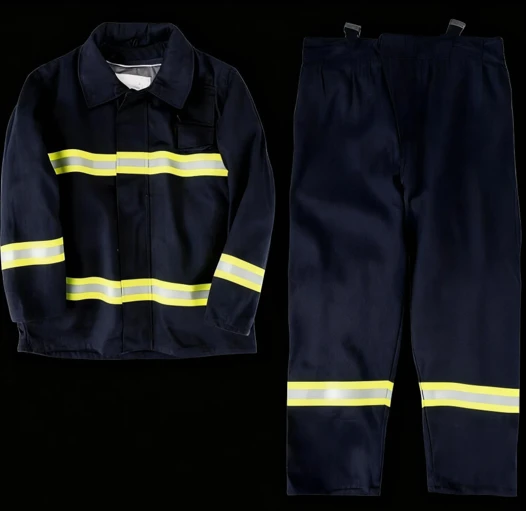
For the wider topic and related decisions, see our Arc Flash & Electrical Safety PPE.
FAQs
Is a higher cal/cm² rating always better?
Not always. Higher ratings usually mean heavier, warmer fabric. Match the rating to the task with a reasonable margin, and keep the most protective suits for the highest-energy work.
Can the same suit carry both ATPV and EBT?
No. Labels carry whichever value is lower for the fabric system. Treat either number as the suit’s rating.
Do gloves and hoods have the same rating as the suit?
They are tested separately. Check that every component of the kit is rated for the task, because protection is only as strong as the weakest piece.
Do ratings change after washing?
They can, if the garment is not cared for properly. Follow the care label and inspect regularly, because degraded fabric loses tested performance.
What rating should an arc flash suit have?
At least the incident energy calculated for the task at the working distance, and the number to use is the one on the label — ATPV or EBT, whichever the system is rated to. Buying above that adds weight and heat load, so the practical target is the calculated value plus a margin you can maintain through inspection, not the highest number available.
At what voltage do you need an arc flash suit?
Voltage alone does not decide it. The incident energy depends on the available fault current, the clearing time of the protective device and the working distance, which is why the same nominal voltage can produce very different results at two sites. For electric power work, 29 CFR 1910.269(l)(8)(v) sets the rule at an estimated incident heat energy above 2.0 cal/cm².
Related Articles
- How to Choose Safety Glasses for Your Workplace
- PPE for Oil and Gas Workers: The Complete Guide
- Dielectric Boots vs EH Rated Boots: What’s the Difference
- Arc Flash Suit vs FR Coveralls: Key Differences
- Arc Flash Suit Care: Inspection Storage and Maintenance
- Arc Flash PPE Categories 1-4 Explained
Official Resources
- Arc Flash Protection
- Arc Flash Ppe Categories 1 4 Explained
- Arc Flash Suit Care Inspection Storage And Maintenance
- Contact Shield Wings