

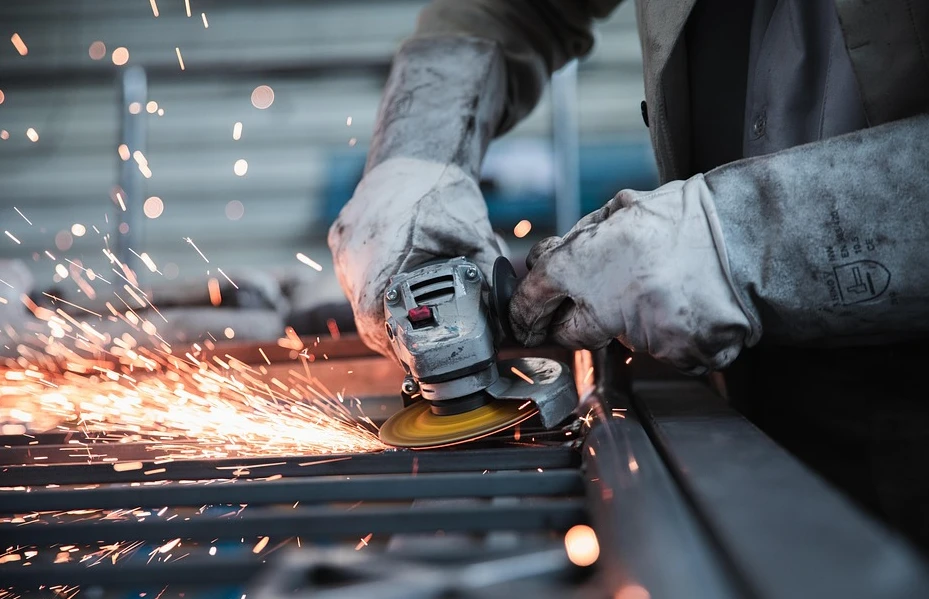
An arc flash and an electric shock are two different injuries with two different defences. Shock protection stops current travelling through the body; arc flash protection keeps the thermal energy of a fault away from the skin. A worker can be fully protected against one and still be burned by the other — and that is the mistake most arc flash incidents are built on.
(Last modified date: October 2, 2026)
Key Takeaways
- An arc flash is an explosive release of energy from an electrical fault — heat, pressure, light and molten material — and it injures by thermal transfer, not by current passing through the body.
- Shock protection and arc flash protection are separate systems that are worn together; neither substitutes for the other.
- OSHA 1910.335 requires electrical protective equipment appropriate to the specific body parts and the work performed, plus non-conductive head protection and eye or face protection wherever arc or flash hazards exist.
- Engineering controls come first: de-energising, lockout/tagout and safe working distance outrank any item of PPE.
- Arc-rated equipment is verified by inspection and testing, not by appearance — 1910.335 requires it to be kept in a safe, reliable condition and periodically inspected or tested.
What Is an Arc Flash, and How Is It Different from a Shock?
An arc flash is the explosive release of energy when an electrical fault ionises the air between conductors; a shock is current passing through the body. The mechanisms are different, the injuries are different, and so is the equipment that prevents them.
Shock protection is about insulation — stopping current from finding a path to earth. Arc flash protection is about a thermal barrier — containing the heat and pressure of the fault before either reaches the worker. That is why the two systems are worn at the same time rather than chosen between: a lineman may be wearing rubber insulating gloves over leather protectors while dressed in arc-rated clothing, and each layer is answering a hazard the other does not address.
Where Does the Energy Come From?
The energy released depends on the available fault current and how long the fault is allowed to persist — which is why protection is planned around the task, not around the voltage alone.
Two installations at the same voltage can present very different hazards because of how much current is available and how quickly the upstream device clears the fault. That is what a hazard analysis quantifies: the incident energy a worker would be exposed to at a given working distance, for a given task. Everything downstream — the arc rating of the clothing, the class of the rubber goods, the tools, the approach boundaries — follows from that number rather than from a general impression of how dangerous the panel looks.
It also explains why an apparently small job can be a serious one. Opening a cover to take a measurement, racking a breaker, or verifying a de-energised state all put a worker in front of equipment that may still be capable of an arc if something goes wrong.
What Does OSHA Require?
OSHA sets the requirement at the level of the body part and the work performed, then requires the equipment to be maintained and periodically inspected or tested.
29 CFR 1910.335(a)(1) requires that employees working in areas with potential electrical hazards be provided with — and use — electrical protective equipment appropriate for the specific parts of the body to be protected and for the work to be performed. The same paragraph requires non-conductive head protection wherever there is a danger of head injury from electric shock or burns through contact with exposed energised parts, and protective equipment for the eyes or face wherever there is danger of injury from electric arcs or flashes or from flying objects produced by an electrical explosion.
Two more requirements in the same section drive the maintenance programme. Protective equipment must be kept in a safe, reliable condition and periodically inspected or tested as required by 1910.137. And where the insulating capability of equipment may be damaged during use, the insulating material has to be protected — the regulation gives a leather outer covering over rubber insulating material as the example.
Underneath all of it sits the general duty in 1910.132(d): assess the workplace for hazards that require PPE, select equipment that protects against the hazards identified, communicate the selection to each affected employee, select PPE that properly fits, and certify the assessment in writing.
How Do You Build the Protection?
Work down the hierarchy: remove the hazard where you can, then protect against what remains. De-energising and lockout/tagout come before any clothing decision, because a task that can be done dead is a task with no arc flash exposure at all. Where equipment must be worked live, the protective system is assembled from the hazard analysis outward.
The practical consequence is that arc-rated clothing is the last layer, not the first answer. A programme that buys suits but leaves the de-energising procedure vague has inverted the order and will still have incidents.
| Hazard | Protective answer | Where the requirement sits |
|---|---|---|
| Current through the body (shock) | Rubber insulating gloves, sleeves, blankets, insulated tools | 1910.137, 1910.335(a)(2) |
| Arc heat and pressure | Arc-rated clothing and face protection matched to the task | 1910.335(a)(1)(v) |
| Head contact with energised parts | Non-conductive head protection | 1910.335(a)(1)(iv) |
| Insulation damaged in use | Outer covering that protects the insulating material | 1910.335(a)(1)(iii) |
| Tools bridging conductors | Insulated tools and handling equipment | 1910.335(a)(2)(i) |
Matching the Equipment to the Task
Select from the hazard analysis, not from a catalogue: the task sets the rubber goods and tools, and the incident energy sets the arc rating of the clothing. An arc rating below the task’s exposure is not partial protection; it is a garment that fails at the moment it is needed.
Two habits keep the selection honest. First, treat the arc rating as a floor and check it against the label on the exact garment rather than the product family it belongs to. Second, remember that a layered system takes its rating from the combination — an outer shell with a secondary layer is rated as the system that was tested, not as two garments added together afterwards. The category mapping used in the field is set out in arc flash PPE categories 1–4 explained, and the rating definitions in arc flash suit ratings explained.
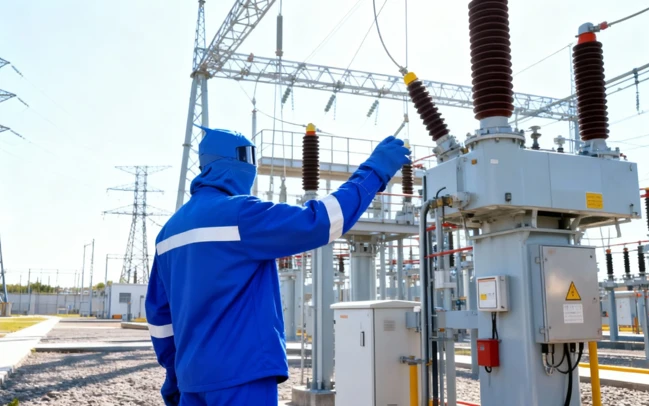
Arc-rated clothing answers the thermal hazard; the insulating layer underneath answers shock.
Inspection, Care and What Takes Equipment Out of Service
Arc-rated and insulating equipment is only protection while it is intact, which is why inspection is a schedule rather than an event.
Rubber goods are visually inspected before every use and retested on a cycle, with anything that fails withdrawn immediately. Arc-rated clothing is checked for holes, contamination, damaged closures and legible labelling — a garment that has lost its label has lost the evidence that it ever met the rating. Storage matters as much as inspection: rubber degrades near light, heat and ozone sources such as motors, and soil or grease reduces the thermal performance of an arc-rated shell.
Anything involved in an electrical incident comes out of service for testing or replacement, even when it looks undamaged. That rule exists because the damage an arc does to protective equipment is frequently invisible, and the next exposure is the one that matters. The care regime for suits specifically is covered in arc flash suit care: inspection, storage and maintenance.
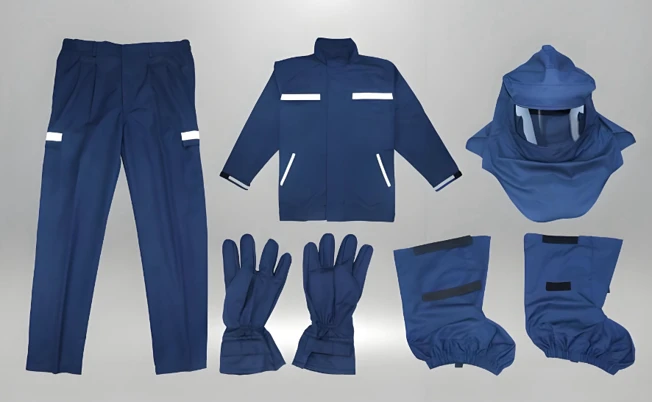
A complete arc flash system is rated as a combination, not as separate garments.
Building the Programme Around the Task Matrix
Write the hazard analysis into a task-to-equipment matrix, then buy against that matrix. Each row names a task, the incident energy it exposes the worker to, and the equipment that answers it — rubber goods class, arc-rated clothing, head and face protection, and insulated tools. The matrix is what makes the programme auditable and re-orderable, and it is the document a supplier should be working from.
If your team is assembling or standardising that specification, our engineering team can work from your hazard analysis and task matrix and provide the corresponding documentation. See the arc flash protection range, the comparison in arc flash suit vs FR coveralls, or send the matrix through the contact page.
For the wider topic and related decisions, see our Arc Flash & Electrical Safety PPE.
FAQs
What is an arc flash hazard?
An arc flash is the explosive release of energy from an electrical fault; it produces intense heat, pressure, light, and flying material that can seriously injure or kill nearby workers.
Who is exposed to arc flash hazards?
Anyone who works on or near energized electrical equipment — electricians, utility workers, maintenance technicians, and industrial plant staff — can be exposed.
How do you protect against arc flash hazards?
De-energize and lock out where possible, perform an arc flash hazard analysis to find incident energy, select PPE with the right ATPV rating, and train workers on procedures and equipment.
Related Articles
- Arc Flash PPE Categories 1–4 Explained
- Arc Flash Suit Ratings Explained: ATPV, Cal/cm² and HRC
- Arc Flash Suit vs FR Coveralls: Key Differences
- Arc Flash Suit Care: Inspection, Storage and Maintenance
- The Role of Ergonomic Design in Modern Protective Equipment
Official Resources
- Arc Flash Protection
- Arc Flash Protection for Utility Workers: A Practical Guide
- Contact Shield Wings
References
- 29 CFR 1910.335 — Safeguards for personnel protection: use of protective equipment, insulated tools and shields. Electronic Code of Federal Regulations.
- 29 CFR 1910.137 — Electrical protective equipment: design, inspection and testing. Electronic Code of Federal Regulations.
- 29 CFR 1910.132 — General requirements: hazard assessment, PPE selection and written certification. Electronic Code of Federal Regulations.
- ASTM F1506 — standard performance specification for flame resistant and arc rated textile materials for wearing apparel. ASTM International.