

Toe caps are the property everyone checks and the one that appears on more footwear than any other. They protect the toes, and they do it well. What they do not cover is the top of the foot behind them, where the long bones sit close to the surface and where a dropped object or a rolling load frequently lands. Metatarsal protection exists for that area, and the decision to specify it is a question about where the load falls rather than about how heavy the boot looks.
The Hazard First, the Product Second
It is also worth distinguishing the frequency of the exposure from its severity. A load that is dropped once in a career is not the same problem as a drum that rolls across the same walkway several times a day, and the second case is where footwear alone quietly becomes the control. Where the same event happens repeatedly, the answer is almost always to change the way the load is moved rather than to add protection to the foot.
The mechanism is a load arriving on the instep, either dropped from above or rolling along the ground and onto the foot. In both cases the injury is to the midfoot, and the consequences are serious because those bones are small, close to the surface and exposed to the full force of the impact. The hazard is common in rigging, construction, mining, rail, heavy fabrication, utilities and any task where pipes, drums, beams, plates or wheels are moved by hand or with limited mechanical assistance.
The direction and the point of contact matter. A load that falls vertically onto the instep behaves differently from one rolling over the foot, and a load that lands behind the toe cap is a different event from one that lands on it. That is why the assessment describes the load and how it moves, rather than concluding that a safety boot is required and leaving the specification at that.
What the Risk Assessment Has to Establish
Occupational foot protection requirements sit in 29 CFR 1910.136 in the United States, with construction requirements in 29 CFR 1926 Subpart E, and the European framework works through the PPE Regulation and the footwear standards. For metatarsal protection specifically, the assessment needs to establish:
- What can fall or roll onto the foot, including the mass, the shape and the height from which it can fall.
- Whether the load typically lands on the toe area or behind it, which decides whether toe protection alone is adequate.
- How the load is handled: manually, with a bar or roller, or mechanically, and how often the exposure occurs.
- The task position, including whether the worker kneels, crouches or works close to the ground where the instep is exposed.
- The environment: heat, molten metal, chemicals, water, and whether those conditions affect the guard or the boot material.
- What the worker must still do in the boot: drive, operate pedals, climb, or work in confined positions.
The last item is the one that decides whether the protection is usable. A rigid guard that prevents the worker from operating plant controls will be left in the locker, and a guard that is uncomfortable on a twelve-hour shift will be worn unlaced. Both outcomes remove the protection the specification was written for.
Which Hazards This Category Covers and Which It Does Not
Metatarsal protection is also frequently combined with other requirements on the same boot, and the combination is where most purchasing confusion arises. A rigger may need penetration resistance, slip resistance and thermal protection as well as metatarsal coverage, and a boot that carries two of those properties will not satisfy the requirement for the third. The specification should list every property required for the task and then verify each against the marking, rather than treating one protective claim as evidence of the others.
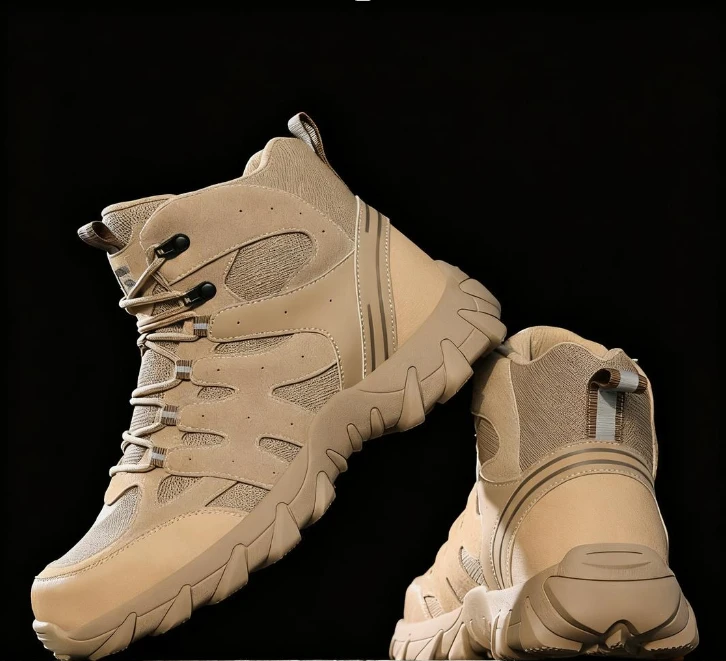
Metatarsal protection covers the top of the foot from the toe cap back across the instep, and it is available in two principal forms: an external guard, a rigid plate over the instep that deflects loads and material, and an internal guard built into the boot’s construction. Some designs combine metatarsal protection with other properties such as penetration resistance, electrical performance or thermal protection, and the marking states what each product carries.
What the category does not do is equally specific. It does not protect the ankle or the lower leg, which is a different requirement involving boot height, ankle support and, in some cases, gaiters. It does not protect against a load that lands on the side of the foot or the heel. It does not replace penetration resistance, which addresses sharp objects from below rather than loads from above. And it does not remove the hazard: mechanical handling, load securing, chocks and planning the path of a load come first, with footwear addressing what remains. The comparison between toe cap materials is covered in Shield Wings’ article on steel toe versus composite toe boots, which owns that topic.
Matching Task to Protection Level
| Task | What dominates | Protection that follows | What to verify |
|---|---|---|---|
| Handling pipes, beams and drums at ground level | Rolling and falling loads onto the instep | External metatarsal guard with toe protection, in a boot that still flexes for walking | Fit, guard coverage and the ability to do the task while wearing it |
| Rigging and lifting operations | Loads dropped from height onto the foot | Metatarsal protection combined with the site’s other foot requirements | Mechanical handling and exclusion zones, with the boot for the residual risk |
| Rail, mining and heavy maintenance | Rolling loads, uneven ground, long shifts | Metatarsal guard with ankle support and suitable sole for the surface | Comfort across a full shift plus the sole properties required for slip |
| Work involving hot material | Loads plus thermal exposure | Metatarsal protection in a boot specified for the thermal hazard | Whether an external guard is suitable, since hot material can collect on it |
| Operators climbing in and out of plant | Falling objects plus access tasks | Metatarsal protection with a profile that does not snag on steps or pedals | Task trial: climbing, driving and access as performed |
| Confined or kneeling work | Instep exposed to dropped tools and components | Internal or low-profile protection that does not restrict position | Fit in the working position rather than standing |
The level of protection required for each of these tasks is a site decision taken from the assessment, and it should be expressed in the marking the standard requires, so that the delivered boot can be verified rather than assumed.
Where Selection Usually Goes Wrong
The most expensive version of this failure is a plant-wide order of one heavily protected boot. Riders on this list appear quickly: workers who drive cannot feel the pedals, workers who climb find the profile catches on steps, and workers who kneel find the guard presses into the instep. Within a month, boots are unlaced, swapped or left at home, and the programme has spent money to reduce protection rather than increase it.
- Assuming a toe cap covers the foot. The instep is a separate exposure, and it is where a load landing behind the toe does its damage.
- Choosing an external guard for every task. The profile can snag, collect material or interfere with access and pedals, which is why some tasks suit an internal design.
- Size and fit treated casually. A guard changes how the boot flexes and where pressure falls, so a fitting step matters more than usual.
- Guards reused after an impact. A deformed guard may no longer perform as tested, and the boot should be assessed before it returns to service.
- Boots worn unlaced. Lacing keeps the foot in position relative to the guard, so a loose boot reduces the protection it was bought for.
- Protection substituted for load control. Where hands and feet are under a load, mechanical handling and securing are the measures that remove the exposure.
- One specification for a mixed crew. Where some workers drive plant and others handle loads by hand, the boot requirements differ and the specification should follow the task.
The Hierarchy of Controls Around the Selection
Foot injuries from loads are reduced most effectively by controlling the load. Mechanical handling devices, cradles, stands, chocks, load securing, keeping feet out from under suspended loads, planning the path of anything that can roll, and using tools that hold the material rather than the hand all reduce the exposure before footwear is considered. Administrative controls follow: exclusion zones during lifts, procedures for moving long or heavy items, and training in handling technique.
Personal protective equipment is the last line of defence. Metatarsal protection reduces the consequence of a load that reaches the foot, and it depends on being worn, correctly fitted and properly maintained. Where a site finds itself specifying heavier guards every year, the question worth asking is which load-handling method has stayed the same.
Specification Points to Fix Before Ordering
- The hazard statement: what can fall or roll, its mass and the part of the foot it reaches.
- The standard the footwear must be tested to, named with its scope, and the properties required, including metatarsal coverage where specified.
- The type of guard: external or internal, with the profile and coverage the task allows.
- Boot height, ankle support and the sole properties required for the surfaces on site.
- Size and fit requirements, with a trial across the size range before bulk issue.
- Inspection and replacement rules, including withdrawal after any significant load.
- Documentation required with the quotation: test evidence for the model, care instructions and traceability.
- Compatibility with the rest of the set, including gaiters, trousers and any thermal or chemical protection required.
Shield Wings manufactures foot protection at a Guangdong production base, including steel toe puncture resistant safety shoes and the wider foot protection range, and supports construction, utility, mining and heavy industry customers with specification guidance and the documentation each property carries.
The decision that holds up is the one that describes where the load falls and how the worker moves, and then selects a boot the worker can actually perform the task in. Protection that is left in the locker protects nobody.
For the wider topic and related decisions, see our Safety Footwear & Boots.
Frequently Asked Questions
What does metatarsal protection cover that a toe cap does not?
The toe cap protects the toes, while a metatarsal guard extends coverage over the top of the foot behind the toes, where the long bones of the foot sit close to the surface. That area is where a dropped or rolling load lands when it falls behind the toe, which is a common injury mechanism in construction, rigging, mining and heavy handling work.
Are internal or external metatarsal guards better?
They suit different conditions. An external guard covers the foot with a rigid plate that also deflects material, at the cost of some flexibility and a bulkier profile; an internal guard sits inside the boot, which keeps a conventional appearance and reduces snagging while offering protection through the boot’s own structure. The choice comes from the task, including whether hot material, cables or moving equipment make an external profile a hazard.
Do metatarsal boots need to be broken in?
A rigid guard changes how the boot flexes, so the fit has to be right from the first wear rather than adapted over weeks. Trialling a pair during a shift, on the surfaces and tasks the worker actually faces, is more reliable than assuming that discomfort will pass. Where the fit is wrong, the boot tends to be left unlaced or worn loosely, which reduces both the protection and the stability the boot provides.
How should metatarsal footwear be inspected?
Inspect the guard or the internal protection for deformation, cracks and impact damage, check the upper and the sole for the usual wear, and confirm that the boot is still laced and fitted as intended. After any significant load the footwear should be withdrawn and assessed, because a guard that has been deformed may no longer perform as it was tested, even when it looks serviceable.
When is foot protection the wrong answer altogether?
Where the load can be kept away from the foot. Mechanical handling, load securing, chocks and stands, keeping feet out from under suspended loads, and planning the path of a rolling object all remove the exposure instead of relying on footwear to reduce its consequence. Metatarsal protection is a last line of defence for the residual risk, not a substitute for controlling the load.
Specifying protection for dropped and rolling loads?
Send the loads involved, how they are handled and the tasks the workers perform. Shield Wings confirms the boot configurations available, the coverage each provides and the documentation that accompanies them.
External references: 29 CFR 1910.136 foot protection, 29 CFR 1926 Subpart E personal protective equipment in construction, CCOHS guidance on safety footwear, UK HSE personal protective equipment guidance, CEN-CENELEC standards portal, Regulation (EU) 2016/425.