

Slip resistance is the property most often promised and least often checked. Boots are described as non-slip, slip resistant or anti-slip, and the plant floor continues to produce incidents on wet, oily or contaminated surfaces. The reason is not that the markings are meaningless; it is that a marking records performance under defined test conditions, and the site has to decide whether those conditions resemble the ones its workers walk on.
What the Standard Actually Covers
It is also worth separating slip resistance from the other sole properties, because they are frequently confused in a purchase. Penetration resistance describes the midsole’s behaviour against a sharp object from below, and electrical properties describe how the sole behaves in a circuit. None of those tells you anything about friction on a wet floor, and a boot can carry all of them while being the wrong sole compound for the area it is worn in. Each property has its own test and its own marking.
Slip resistance appears within footwear standards as a tested property of the sole, expressed through specific marking codes rather than through a generic claim. In the European framework, EN ISO 20345 incorporates slip resistance testing with markings that distinguish the surface and contaminant combination used: one configuration tests on a ceramic tile with a dilute soap solution, another on a steel floor with oil, and a third indicates that the sole satisfied both. In the United States, slip performance is often assessed using ASTM F2913, which measures the coefficient of friction between the footwear and a walking surface under conditions the test method defines.
The standards therefore do two things. They define how the test is conducted, so that results from different products are comparable within a framework. And they require the manufacturer to mark the footwear so a buyer can verify which property was tested. What they do not do is predict behaviour on a specific floor with a specific contaminant, which is where most site-level disappointment originates.
The Ratings Buyers Are Asked to Prove
The most useful evidence a site can build is a short description of each area, written in the language of the test conditions: what the floor is made of, what is spilled on it, how it is cleaned, whether there are slopes, and how often it is wet rather than merely damp. That description is what turns a marking into a decision, and it also gives the supplier something concrete to work with rather than a request for slip-resistant boots.
What a buyer is usually asked to demonstrate is that the footwear specified matches the conditions on site, and that the marking supports the choice. Three statements make up the evidence.
- The contamination present on the floor: water, oil, food fats, dust, ice, cleaning chemicals or a mixture.
- The marking on the sole, and which tested condition it corresponds to.
- The reason that condition was selected, recorded in the assessment alongside the floor surfaces involved.
Where the site’s surfaces vary, the third statement often leads to more than one specification. A production hall with oil mist, a wash-down area with detergent and a yard exposed to frost present three different problems, and a single boot may not be the right answer for all of them. Recording the reasoning is what makes that visible before an incident rather than after one.
How Test Methods Differ Between Frameworks
The two frameworks approach slip in different ways. The European framework integrates slip tests into the footwear standard and expresses the result in tabular markings, so the chosen sole condition is visible on the product. The North American approach commonly relies on a test method such as ASTM F2913, which produces a friction measurement for the footwear and surface combination under the conditions specified in the method, and is used by footwear manufacturers and by sites evaluating products for their own floors.
For a buyer, that difference has practical consequences. A marking from one framework does not translate directly into the terminology of the other, so the specification should name the framework and the condition. Where a site has run its own testing, the result is specific to the surface and contaminant tested and should likewise be recorded with those conditions, because a result on a wet tile says nothing about a floor covered in cooking oil.
Reading the Marking on the Product
Where a site buys the same model repeatedly, it is worth keeping a reference pair or a record of the sole specification from the original order. Sole compounds and tread patterns are revised over time, and a change that keeps the model name and the appearance can alter performance on a specific contaminant. The receiving check is the only point at which that can be noticed before the boots are on people’s feet.
The marking identifies the standard, the properties tested and, where slip resistance is claimed, the condition the sole was tested under. On European footwear this appears as a marking code together with the other properties, such as penetration resistance or electrical performance. On North American product it typically appears in the technical documentation and on the labelling that accompanies the product.
Two checks matter at goods-in. First, confirm the marking matches the specification rather than assuming that the model is unchanged since the last order, because sole compounds and patterns are revised while the model name stays the same. Second, inspect the tread: a sole that arrives with a rounded or polished pattern, or that has been stored in a way that has hardened the compound, will not behave as the marking describes. The standards behind these properties, and how they differ between the two frameworks, are covered in Shield Wings’ guide to ASTM and EN ISO 20345 footwear standards, which owns that topic.
Comparing the US and EU Frameworks
| Question | North American practice | European practice |
|---|---|---|
| How is slip performance expressed? | Commonly as a friction measurement from a test method such as ASTM F2913 | As a marking code within the footwear standard, indicating the tested condition |
| What conditions are tested? | Defined by the test method and the surfaces used | Defined combinations of surface and contaminant, such as ceramic with soap solution or steel with oil |
| What appears on the product? | Information in the technical documentation and labelling | A marking code on the footwear alongside other property claims |
| What does the buyer verify? | That the tested conditions resemble the site’s floors | That the marked condition matches the contamination present |
| What sits outside the test? | Floor condition, wear, contaminants and walking behaviour | Floor condition, wear, contaminants and walking behaviour |
Read across the table, both frameworks test a footwear-surface combination and both leave the plant conditions to the buyer. The useful conclusion is that a slip specification is only complete when it names the condition the sole was tested under and explains how that relates to the floor the worker crosses.
Common Misreadings of the Rating
One further misreading is worth naming because it costs money in the wrong direction. Where slips continue after a change of footwear, the assumption is often that a better boot is needed, and the cycle repeats with a more expensive sole. In many plants the more effective intervention is on the floor: fixing drainage so that water does not stand, changing a cleaning agent that leaves a film, repairing a polished surface, adding an absorbent mat at the point where contaminants are carried out, or moving a spill-prone operation away from a walking route.
- Treating a marking as a guarantee for every surface. The test conditions are defined and limited; the plant presents combinations the test never included.
- Assuming a deeper tread is always better. Pattern design affects how contaminants are channelled, and a deep pattern that holds oil can be worse than a shallower one that sheds it.
- Ignoring wear. Performance falls as the tread rounds off, and it can fall below the level the original specification assumed while the boot still looks serviceable.
- Comparing markings across frameworks. The terminology and the test conditions differ, and the specification should name the framework.
- Ignoring the contaminant. Water, oil, fat, sugar, dust and ice behave differently, and a sole selected for one is not necessarily right for another.
- Leaving the floor out of the solution. Drainage, gradients, floor finish and cleaning method all affect friction, and some changes are cheaper than replacing footwear.
- One boot for a whole site. Where conditions vary substantially, a single sole compound is a compromise that may be wrong in the areas that matter most.
What Documentation to Request From a Supplier
Where a site changes cleaning chemistry or floor treatment, the footwear specification should be reviewed in the same discussion.
Ask for the standard the footwear is tested to and the marking it carries, the test evidence covering the model and production site, the sole compound and tread specification, the care and inspection information, and a traceability reference for the batch. Where the product is intended for a food or chemical environment, ask what the sole is and is not suitable for, since resistance to one contaminant does not imply resistance to another.
Two further requests help in practice. Ask whether the sole compound or tread has changed since a previous order, because a silent revision is the most common reason a familiar boot starts performing differently. And ask for the marking and documentation in the form the site’s receiving inspection uses, so footwear can be verified on delivery rather than in the specifications folder.
Shield Wings manufactures foot protection at a Guangdong production base, including steel toe puncture resistant safety shoes and the wider foot protection range, and supports construction, utility, food and industrial customers with sole selection and the documentation for each property claimed.
The specification that holds up in service is the one that names the contamination, records the tested condition, and includes a rule for inspecting the tread. Slip resistance is a property of the sole in condition, not a label on a box.
For the wider topic and related decisions, see our Safety Footwear & Boots.
Frequently Asked Questions
What does a slip resistance marking actually prove?
It records that the sole compound achieved the required result on the test surfaces and contaminants defined by the standard, which in the European framework means combinations such as a ceramic tile with a dilute soap solution, a steel floor with oil, or both. It is evidence of a tested property rather than a prediction for a particular plant floor, so the site still has to match the sole to the actual surface and contamination.
Why do slip-resistant boots still slip on site?
Because the test conditions rarely match what a plant presents. Food fats, ice, fine dust, sugar, oil mixed with water and cleaning chemicals all behave differently from the standard surfaces, and a sole that performs well on one can be poor on another. Wear also matters: as the tread pattern rounds off, performance falls, and a boot that was specified correctly can become unsuitable long before the upper wears out.
Does a higher slip rating mean a better boot?
Not necessarily, because the rating is produced under defined conditions and the site’s conditions decide the outcome. The useful approach is to identify which standard condition is closest to the real one, select a sole tested for that, and then confirm performance on the actual floor with a trial. Where several areas differ, more than one sole specification may be justified.
How does floor condition interact with the footwear choice?
Strongly. Drainage, floor finish, gradients, cleaning method and the type of contaminant all affect friction, and a change to any of them can change the right footwear. That is why slip control is a programme rather than a purchase: floor treatment, cleaning regimes, signage, drainage, housekeeping and footwear selection work together, and reviewing them separately tends to leave the risk in place.
What should be checked when footwear is issued for slip risk?
Confirm that the sole marking matches the contamination present, that the tread is intact and not polished smooth, that the size and fit keep the foot stable, and that the boot is suitable for the surfaces the worker crosses in a shift rather than only the one where they spend most of their time. Record the issue and set an inspection rule, because sole wear is the most common reason performance disappears.

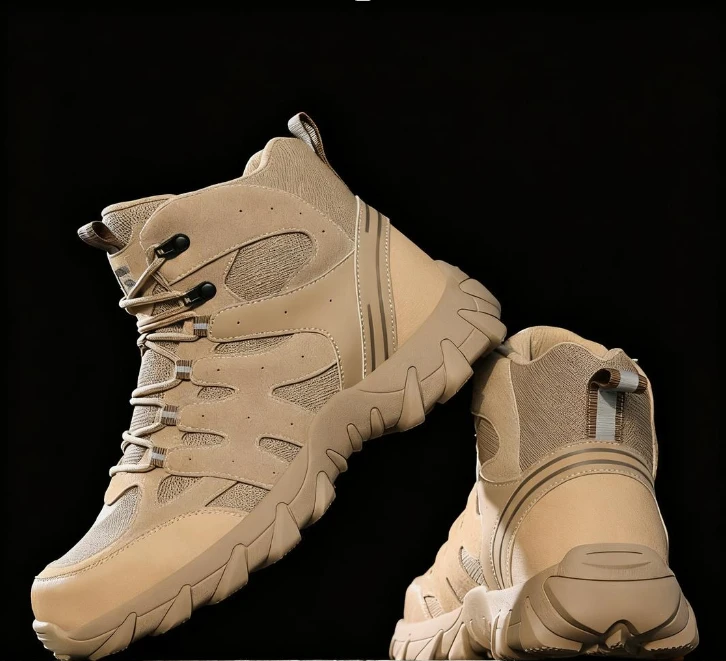
Matching soles to your floors?
Send the surfaces, the contaminants and the cleaning regime. Shield Wings confirms the sole options available, the marking each carries and the documentation that supports the specification.
External references: 29 CFR 1910.136 foot protection, 29 CFR 1926 Subpart E personal protective equipment in construction, CCOHS guidance on safety footwear, UK HSE personal protective equipment guidance, CEN-CENELEC standards portal, Regulation (EU) 2016/425.