

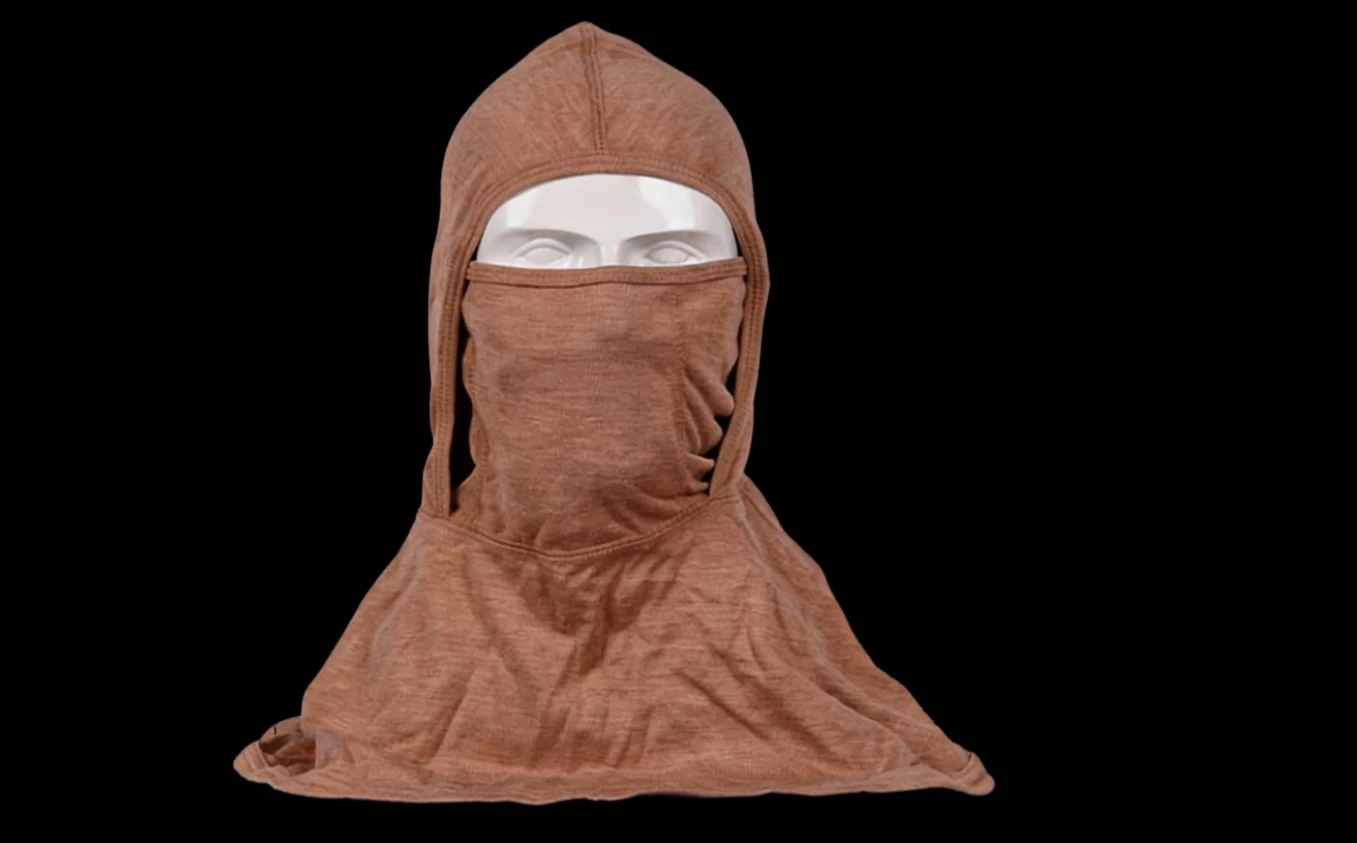
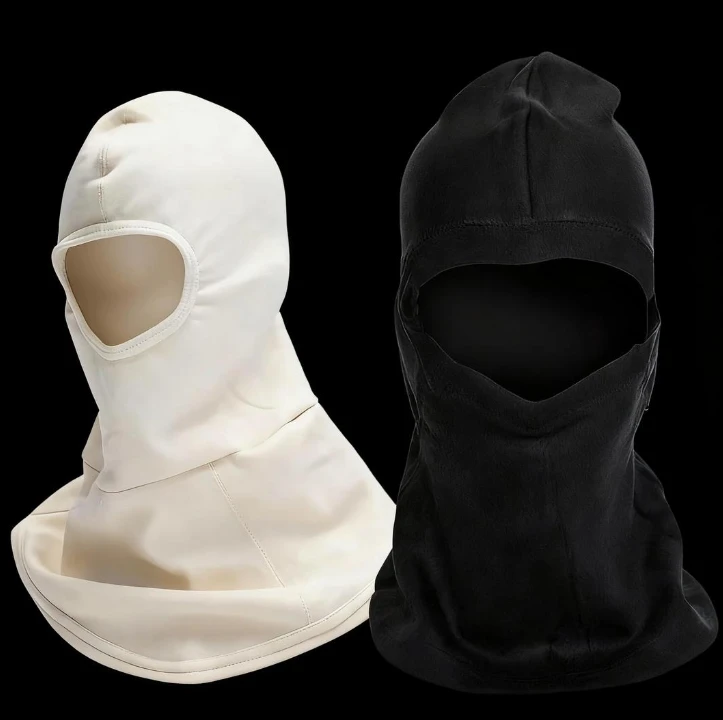
The hood is the item most often left out of an electrical or petrochemical protective set, and the area it covers is among the most exposed: the neck, the sides of the head and the chin sit outside a jacket collar and outside a face shield, and they are exactly where an arc or a flash fire reaches skin. Buying the hood is simple. Specifying it correctly means deciding which hazard it answers, what it covers, and how it fits with everything else on the head.
What the Standard Actually Covers
Head and neck protection in this category falls into two families that answer different hazards. Flame resistant hoods and balaclavas are built for flash fire and heat exposure, and their performance is documented under the heat and flame standards the market applies, including NFPA 2112 in the United States and EN ISO 11612 in Europe. Arc-rated head protection is specified for electric arc exposure and forms part of the arc-rated system described in NFPA 70E in the United States, with fabric and garment testing addressed through the IEC 61482 series in the European and international framework.
The standards therefore define two things a buyer needs. First, what the hood is tested for: flame spread and heat, or arc performance, or both where the item is documented for both. Second, that the hood is one element of an ensemble. NFPA 70E frames arc-rated clothing and equipment as a system selected against the incident energy identified by the employer’s study or the equipment labels, and the head and neck protection is part of that system rather than an accessory.
What the standard does not do is decide the requirement. The employer’s assessment sets the exposure; the supplier documents what the product is tested to; and the arc rating or flame resistance of the assembly has to be established rather than assumed from the strongest item in the set.
It is worth being precise about the word assembly, because it is the source of most specification disputes. The hood sits at the junction of the suit, the face shield and the helmet, and it covers the parts of the body that the other items leave open: the neck, the throat, the ears and the sides of the head. Where the required protection level changes, the hood usually changes with it, but the change is in the assembly rather than in one garment. That is why suppliers who can document a complete head and body set are more useful in this category than suppliers who document individual items well and leave the interfaces to the buyer.
The Ratings Buyers Are Asked to Prove
What an auditor, a client or an investigator asks for is a chain that connects the exposure to the product, and in this category the chain has four links.
- The exposure the assessment identified, expressed in the terms the applicable standard uses.
- The standard and rating the hood is tested to, with the marking that appears on the product.
- The test evidence naming the model and the production site, not a generic statement covering a catalogue.
- The ensemble relationship: which suit, face shield, helmet and gloves the hood is specified to be worn with.
The fourth link is where most documentation gaps appear. A hood that is correctly rated but worn with a non-rated face shield, or over a helmet that disturbs the face opening, is no longer the assembly that was assessed. Where the hood is bought as part of a set, the documentation should cover the set.
How Test Methods Differ Between Frameworks
Flash fire and arc testing measure different events, which is why a hood cannot simply inherit a claim from a neighbouring product family. Flash fire testing evaluates how a garment behaves when exposed to a short, intense flame, including whether it ignites, how it burns and how much heat passes through. Arc testing evaluates performance against the thermal energy released by an electric arc, and produces the arc rating that the selection process in NFPA 70E works with.
Those differences produce practical consequences for buyers. A hood documented for flash fire is not thereby arc rated, and a hood with an arc rating is not thereby validated for flash fire hazards. Where a site faces both exposures, the specification should require evidence for each property on the product concerned. And because the arc rating belongs to the system, a hood used with a different suit or a different layer arrangement has to be considered against the documentation for that combination rather than in isolation.
Test conditions also explain why a hood can be uncomfortable yet still correct. Arc and flash fire testing measures how a garment behaves under an extreme event, not how it feels on a Tuesday afternoon, so the properties that protect in the event and the properties that make a hood wearable are separate concerns. A specification should therefore treat comfort as a requirement in its own right, because a hood that fogs, itches or interferes with hearing will be pushed back or removed, and a removed hood provides none of the protection the documentation describes.
Reading the Marking on the Product
The marking on a hood or balaclava states the standard, the manufacturer, the size or fit information, the care instructions and the performance claimed, usually as an arc rating or a flame resistance claim depending on the family. Because a hood is worn next to the face and under or over other equipment, the marking and the care label are often the only place where the claim can be verified, which makes them a receiving-inspection item rather than a data-sheet detail.
Three checks are worth making on delivery. Confirm that the standard and rating match the specification rather than the family resemblance to a previous order. Confirm the fit over the head, around the face opening and at the neck, because a hood that rides up when the wearer looks down leaves the throat exposed. And confirm compatibility with the helmet, face shield and any respiratory protection the worker uses, since the face opening is where interference shows up first.
A fourth check applies to hoods bought in bulk for a mixed workforce. Head size, hair, spectacles and headwear all change how a hood sits, and a single size that is comfortable for one worker may leave the face opening misaligned for another. Where the range allows it, offering more than one size or a choice of face opening is a cheap way to avoid the most common complaint in this category, and it improves the chance that the hood stays where it was put for the whole task.
Comparing the US and EU Frameworks
| Question | North American practice | European and international practice |
|---|---|---|
| What governs arc-rated head protection? | The arc-rated system described in NFPA 70E, selected against the incident energy | Arc-rated garments and materials assessed through the IEC 61482 series |
| What governs flash fire garments? | NFPA 2112 for flash fire resistant garments | EN ISO 11612 for heat and flame protective clothing |
| How is performance expressed? | As an arc rating or a flash fire claim, depending on the standard | As performance claims against the applicable standard |
| What appears on the product? | Standard, rating, size, manufacturer and care instructions | Standard, performance claims, size, manufacturer and care instructions |
| What sits outside the claim? | The rest of the ensemble and the conditions of use | The rest of the ensemble and the conditions of use |
Read across the table, the frameworks differ in vocabulary more than in intent, and both place the same obligation on the buyer: name the exposure, require the documentation, and confirm that the hood belongs to the assembly that was assessed.
Common Misreadings of the Rating
Hood and balaclava mistakes tend to repeat across sites.
- Treating flame resistance as arc rating. The two are separate claims, tested differently and documented differently.
- Wearing a non-FR layer underneath. Meltable materials next to the skin undermine the system, and a personal beanie or balaclava is the usual culprit.
- Assuming the hood completes the coverage. The neck, the chin and the gap under the chin are where coverage is lost, and the fit decides whether they are covered.
- Ignoring the helmet interface. A hood worn over a helmet can be pulled out of position by the suspension, and a hood worn under one can interfere with adjustment.
- Launching care practices that void the claim. Conditioners, bleaches and high-heat drying affect the properties the hood was bought for; the care label controls.
- Retiring on appearance only. Holes, thinning, contamination and stiffness are the triggers, and a hood that has been exposed to an incident is withdrawn rather than returned to the store.
- Buying the hood last. When the hood is added after the suit was specified, the ensemble documentation is rarely complete.
What Documentation to Request From a Supplier
A hood order should arrive with the standard and rating for the model, the test evidence covering the model and production site, the care and laundering instructions, the marking as it appears on the product, and a batch traceability reference. Where the hood is supplied with a suit, face shield or helmet, the documentation should describe the assembly.
Two further requests pay for themselves. Ask which laundering processes the manufacturer has validated for the product, so the site’s laundry can be checked against a real statement rather than an assumption. And ask for the size and fit information in a form the workforce can use, since hoods are frequently bought in one size and then worn badly by anyone outside the middle of the range.
How the arc-flash categories drive the number of layers and the equipment expected in a set is explained in Shield Wings’ article on arc flash PPE categories 1 to 4, which owns that topic rather than repeating it here. The hoods themselves are shown on the flame retardant hood page and in the wider head and face protection range.
Shield Wings manufactures flame retardant hoods and head protection at a Guangdong production base and supports electrical, utility and petrochemical buyers with material documentation, fit information and the care instructions that keep a claim valid in service. The decision that matters is made when the exposure is written down and the ensemble is specified together, not when a hood is added to an order at the end.
For the wider topic and related decisions, see our Arc Flash & Electrical Safety PPE.
Frequently Asked Questions
What is the difference between an FR hood and an arc flash hood?
They answer different hazards. A flame resistant hood is built for flash fire and heat exposure, while arc-rated head protection is specified for electric arc exposure and carries an arc rating as part of the system. A hood described as flame resistant is not thereby arc rated, and the assessment decides which of the two exposures is present. Where both are possible, the garment has to be documented for the exposure that applies.
Should a balaclava be worn underneath a hood?
Only as part of the documented system. Where the exposure is arc or flash fire, materials that can melt are not worn against the skin, and a balaclava made from an unsuitable fabric undermines the protection of the hood above it even though it looks like extra protection. Where the hood covers the neck and head properly, an additional layer is usually unnecessary; where it does not, the coverage should be specified rather than improvised.
How is the hood’s protection documented?
Through the standard it is tested to, the arc rating or flame resistance claimed, the test evidence naming the model and production site, the marking on the product, and the care instructions. Where the hood is sold as part of an ensemble with a face shield and a suit, ask for the documentation for the complete assembly, because the interfaces are where protection is gained or lost.
What happens to hood performance after laundering?
It depends on the fabric and on the process used. Inherently flame resistant materials keep their property in the fibre, while treated fabrics depend on a finish that must be maintained, and both are affected by chemistry, temperature and mechanical action outside the care instructions. The care label controls, and a site using a central laundry should confirm that its process stays inside the conditions the claim assumes.
What should be checked before a hood is issued?
Confirm the standard and rating against the assessment, check the fit over the head and around the face opening, confirm that the hood works with the helmet, face shield and respiratory protection in use, and check the condition of the fabric, seams and any closure. Record the issue against the worker, and set an inspection and replacement rule that includes damage, contamination and any exposure beyond the garment’s specified conditions.
Specifying head and neck protection for an electrical or petrochemical set?
Send the exposure, the suit and the face protection already in use. Shield Wings confirms which hoods are documented for the requirement and how they fit with the rest of the ensemble.
External references: NFPA 70E electrical safety in the workplace, NFPA 2112 flash fire resistant garments, 29 CFR 1910.137 electrical protective equipment, 29 CFR 1910.132, CEN-CENELEC standards portal, Regulation (EU) 2016/425.
{“@context”:”https://schema.org”,”@type”:”FAQPage”,”mainEntity”:[{“@type”:”Question”,”name”:”What is the difference between an FR hood and an arc flash hood?”,”acceptedAnswer”:{“@type”:”Answer”,”text”:”They answer different hazards. A flame resistant hood is built for flash fire and heat exposure, while arc-rated head protection is specified for electric arc exposure and carries an arc rating as part of the system. A hood described as flame resistant is not thereby arc rated, and the assessment decides which of the two exposures is present. Where both are possible, the garment has to be documented for the exposure that applies.”}},{“@type”:”Question”,”name”:”Should a balaclava be worn underneath a hood?”,”acceptedAnswer”:{“@type”:”Answer”,”text”:”Only as part of the documented system. Where the exposure is arc or flash fire, materials that can melt are not worn against the skin, and a balaclava made from an unsuitable fabric undermines the protection of the hood above it even though it looks like extra protection. Where the hood covers the neck and head properly, an additional layer is usually unnecessary; where it does not, the coverage should be specified rather than improvised.”}},{“@type”:”Question”,”name”:”How is the hood’s protection documented?”,”acceptedAnswer”:{“@type”:”Answer”,”text”:”Through the standard it is tested to, the arc rating or flame resistance claimed, the test evidence naming the model and production site, the marking on the product, and the care instructions. Where the hood is sold as part of an ensemble with a face shield and a suit, ask for the documentation for the complete assembly, because the interfaces are where protection is gained or lost.”}},{“@type”:”Question”,”name”:”What happens to hood performance after laundering?”,”acceptedAnswer”:{“@type”:”Answer”,”text”:”It depends on the fabric and on the process used. Inherently flame resistant materials keep their property in the fibre, while treated fabrics depend on a finish that must be maintained, and both are affected by chemistry, temperature and mechanical action outside the care instructions. The care label controls, and a site using a central laundry should confirm that its process stays inside the conditions the claim assumes.”}},{“@type”:”Question”,”name”:”What should be checked before a hood is issued?”,”acceptedAnswer”:{“@type”:”Answer”,”text”:”Confirm the standard and rating against the assessment, check the fit over the head and around the face opening, confirm that the hood works with the helmet, face shield and respiratory protection in use, and check the condition of the fabric, seams and any closure. Record the issue against the worker, and set an inspection and replacement rule that includes damage, contamination and any exposure beyond the garment’s specified conditions.”}}]}