

A face shield is a simple product with three quite different jobs, and most storerooms hold one version of it. Grinding throws high-velocity particles and hot sparks from the wheel and the workpiece. Cutting with an abrasive disc or a saw adds fragment energy and, in the case of a disc failure, a heavier load. Chemical handling brings liquid that behaves in a third way again, pooling and splashing around the edges of a shield that does not seal. The hazard decides the visor, the coverage and what is worn underneath.
The Hazard First, the Product Second
Impact from grinding arrives as many small particles at speed, plus sparks that arrive hot. The energies are lower than a fragment from a failed disc but the frequency is higher, and the particles come from the direction of the wheel, which is usually towards the operator’s face and chest. Cutting with a large disc adds a heavier single event in the rare case of disc failure plus more material ejected at higher velocity. Chemical splash differs in mechanism entirely: the hazard is contact with a liquid or a mist, and the severity depends on the substance, the volume and how long it remains in contact with skin or eye.
Those three mechanisms produce three different requirements. Against particles, the visor’s impact behaviour and its coverage matter. Against a fragment, the impact performance of the material and the arrangement of the shield in front of the face matter more. Against liquid, sealing and material compatibility with the substance matter most, and a face shield alone is rarely the correct primary answer. The common mistake is to buy one visor for all three, which normally means the chemical task is under-protected and the cutting task is over-covered by a shield that fogs and gets pushed up.
What the Risk Assessment Has to Establish
Occupational eye and face protection is required where there is a reasonable probability of injury, and 29 CFR 1910.133 sets the framework in the United States, with the European requirements working through the PPE Regulation and the eye and face protection standards it calls up. In both systems the employer decides what is needed, and the shield is selected against that decision.
For these tasks, the assessment should record:
- The process and its direction of debris travel, including whether the work is done overhead, at bench height or in an awkward position.
- The particle size and speed, and whether a single heavier fragment is credible, as with an abrasive disc.
- The substances handled for cleaning, cutting fluids, solvents or process chemicals, and their behaviour on contact with skin and visor materials.
- The duration of the task and the number of exposures per shift, since repeated short tasks add up and are often the ones left unprotected.
- What is already worn on the head: a helmet, ear muffs, a welding helmet or a respirator, all of which affect how the shield mounts.
- The controls in place, including whether guarding, dust extraction or splash screens have already reduced the exposure.
Two of those deserve emphasis. The direction of travel decides the coverage shape, because a shield designed for particles arriving from below differs from one for material coming straight at the face from a bench grinder. And the presence of chemicals changes the list of acceptable visor materials, which is a question for the supplier rather than for the storeroom.
Which Hazards This Category Covers and Which It Does Not
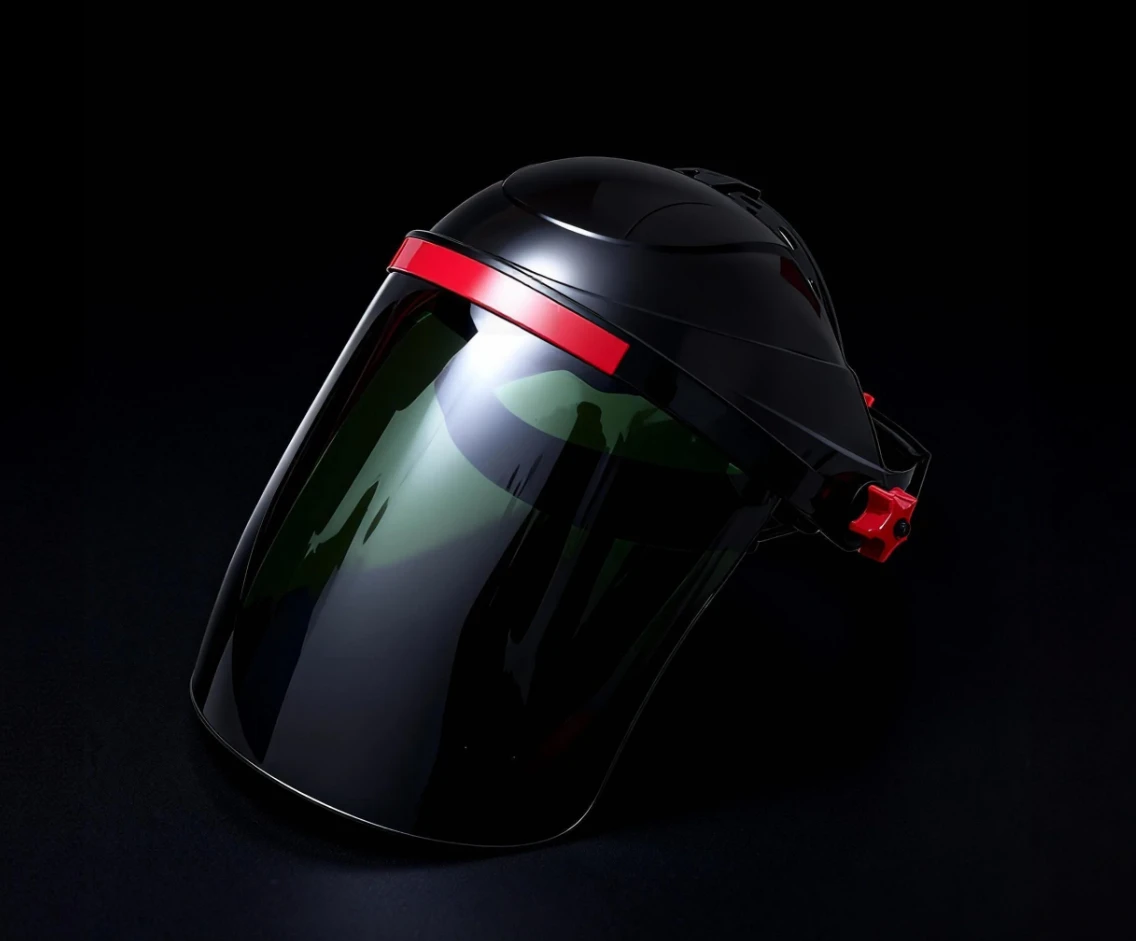
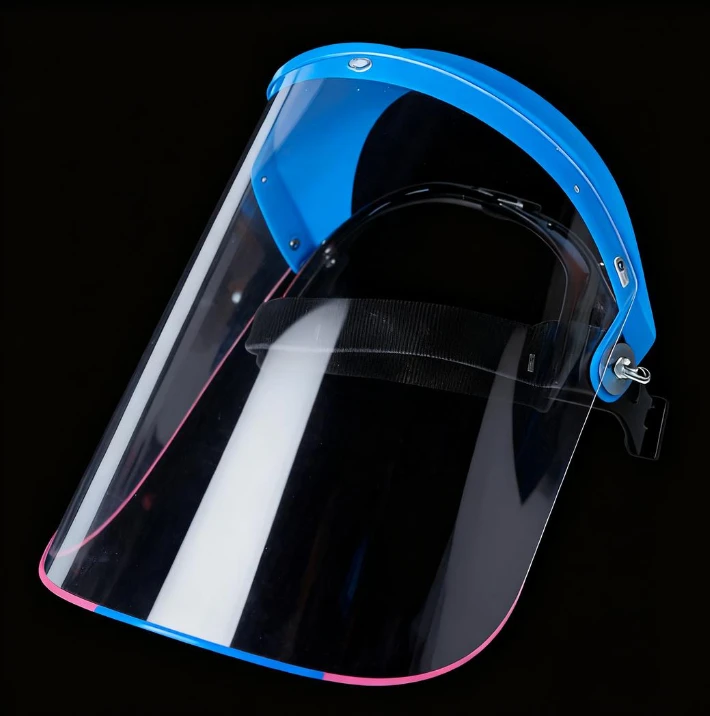
Face shields in this family cover the face and, in some designs, the throat, with mounting options for a headband or a safety helmet. They are specified alongside primary eye protection, which is worn underneath, and they are available with visors optimised for impact, for heat, for chemical resistance or for visibility in specific conditions.
What they do not cover is as important as what they do. A face shield is not primary eye protection, because its coverage is not tight to the face and it can be lifted. It does not seal against liquid, which is why goggles are specified for chemical splash. It does not protect the top of the head, so a safety helmet is worn where impact from above is credible. And it does not control the hazard: guards on wheels, machine enclosures, dust extraction, splash screens and safe work positioning reduce the exposure before the shield is considered. Selection guidance, including everything in this article, is conditional on that assessment.
There is also a question of who else is exposed. Grinding in a shared workshop throws debris beyond the operator, so the task assessment should consider adjacent workers as well as the person holding the tool. In practice this is handled by screens and by positioning, and where that is impossible the neighbouring workers need the same eye and face protection as the operator. That single point accounts for a substantial share of eye injuries in fabrication shops, where the person injured was not the person using the tool.
Matching Task to Protection Level
| Task | Hazard | Shield and eye protection that follow | What to verify |
|---|---|---|---|
| Angle grinding and cutting metal | High-velocity particles, hot sparks, possible fragment | Impact-rated visor with full face coverage, over impact-rated spectacles or goggles | Standard and performance claimed for the visor, and the marking |
| Cutting with abrasive discs or saws | Higher-energy particles and fragments, noise, dust | Impact visor with helmet mounting where required, plus hearing and respiratory protection | Compatibility with the helmet and respirator in use |
| Bench and pedestal grinding | Particles from below and to the side, sparks | Visor with brow coverage, over spectacles, with the guard set correctly | Coverage shape for the direction of travel |
| Handling acids, caustics or solvents | Liquid splash and mist | Sealed goggles as primary protection, plus a face shield for the face | Material compatibility with the substance, and the cleaning method |
| Pressure washing and spray application | Liquid and mist at velocity, plus chemical exposure | Sealed eye protection plus face and respiratory protection for the task | Chemical resistance of every item, and the decontamination procedure |
| Brush cutting, vegetation and site clearing | Larger flying debris, reduced vision of the hazard | Shield specified for the task, usually with a mesh visor, plus head protection | Task specification, since a mesh visor answers a different hazard |
Where several of these tasks share a workshop, the solution is more than one specification, each identified at the workstation, rather than a single compromise shield. That decision often saves money as well, because a general-purpose visor that satisfies nobody tends to be replaced on condition rather than on protection, and its consumables list grows without improving the outcome.
Where Selection Usually Goes Wrong
The recurring problems are visible in a walk-through of most fabrication shops.
- Shield without primary eye protection. The visor is lifted for a closer look or for a measurement, and the eyes are left with nothing in front of them.
- Fogging and debris leading to removal. A scratched or fogged visor is more likely to be pushed up, which is why condition and ventilation matter to protection.
- One visor for every task. Chemical tasks end up with an impact visor, and cutting tasks with a shield whose coverage does not suit the direction of travel.
- Mesh visors used for metal work. The mesh suits larger debris; it does not provide the impact or splash protection a grinding task needs.
- Mounting never checked. A shield that drops, swings or interferes with the helmet it is attached to will be worn badly or left on the bench.
- Cleaning with the wrong materials. Solvents cloud some visor materials and damage coatings, which reduces visibility and shortens service life.
- Guards treated as optional. Where the machine guard or the extraction has been removed for convenience, the face protection is compensating for a control that should be in place.
The Hierarchy of Controls Around the Selection
Grinding and cutting injuries are reduced most effectively at the machine. Correctly adjusted guards and rests, dust and fume extraction, enclosures and splash screens, extraction at the point of generation, and work positioning that keeps the operator out of the line of the wheel all reduce the exposure before any visor is specified. For chemical tasks, the equivalents are substituting a less hazardous substance, enclosing the process, improving ventilation and using transfer systems that reduce the chance of a splash.
Personal protective equipment is the last line of defence. The shield reduces the consequence of a particle or a splash that the earlier controls did not prevent, and it depends on being worn, in good condition, properly mounted and used together with primary eye protection. Where a site finds itself specifying heavier and heavier visors, the useful question is normally which engineering control has stopped working.
Specification Points to Fix Before Ordering
A face protection specification should be written per task and kept short enough to be used at the workstation.
- The task and the hazard, including the direction debris or liquid travels and whether fragments are credible.
- The standard the visor must be tested to, named with its scope, and the performance required.
- The primary eye protection worn underneath, specified for the same hazard.
- The mounting arrangement and the helmet model it must fit, where head protection is worn.
- Coverage requirements at the face, throat and sides, and the shape that suits the direction of travel.
- Cleaning materials and replacement criteria for the visor, plus a consumables list the site can restock.
- Chemical compatibility for any substance handled during the task, confirmed by the supplier rather than assumed.
- Documentation required with the quotation: test evidence, marking supplied, instructions and traceability.
The types of face shield available and how they are selected are covered in Shield Wings’ safety face shield guide, which owns that explanation. The products are listed on the safety face shield page and within the wider head and face protection range.
Shield Wings manufactures face shields and head protection at a Guangdong production base and supplies HSE teams, workshops and distributors with visor options, mounting hardware and the documentation for each performance claim. The decision that protects the worker is the one that names the hazard and specifies the whole arrangement, rather than the one that buys a shield with the highest-sounding description.
For the wider topic and related decisions, see our Head, Face & Eye Protection.
Frequently Asked Questions
Do you need a face shield for grinding?
Where the assessment shows particles, sparks or fragments can reach the face, the usual answer is a face shield over primary eye protection. Grinding sends high-velocity debris from the wheel and from the workpiece, and a bonded wheel can fail, which makes the face the exposed area rather than only the eye. The shield is the secondary layer; spectacles or goggles underneath are the primary protection, and both are chosen for the task.
Is a face shield enough for chemical splash?
No. A face shield does not seal against the face, so liquid can reach the eyes from below or around the edge, and the primary answer for chemical splash is sealed eye protection such as goggles, with a face shield added for the rest of the face. The chemical involved also dictates the material, because some substances attack visor materials that resist others.
Does a mesh visor protect the face from grinding debris?
A mesh visor is typically used for tasks such as brush cutting and clearing, where the risk is larger flying debris and the worker needs ventilation and clear vision. It is not the same as an impact-rated clear visor with the coverage required for grinding particles, and it offers no protection against liquid splash. The specification should state the hazard rather than the word visor.
How should a face shield be inspected?
Check the visor for scratches, crazing, cracks, heat damage, chemical clouding and contamination, and check the headband or the helmet mount for damage and a secure fit. Visibility is part of the protection, so a visor that can no longer be seen through clearly is replaced rather than polished. Inspections and replacements should be recorded against the unit, and consumable visors should be stocked so replacement is easy.
What should the specification include for a mixed workshop?
The tasks and their hazards, the standard and performance required for each visor, the primary eye protection worn underneath, the mounting arrangement with any safety helmet in use, the cleaning materials that suit the visor material, and the replacement rule with a consumables list. Where several tasks share one workshop, more than one shield specification is normal, clearly identified at the workstation.
Specifying face protection across a workshop?
Send the tasks, the machines and any chemicals handled. Shield Wings confirms the visor, the primary eye protection and the mounting arrangement for each workstation, with the documentation behind each claim.
External references: 29 CFR 1910.133 eye and face protection, 29 CFR 1910.132, 29 CFR 1910 Subpart I, CCOHS PPE answers, UK HSE personal protective equipment guidance, CEN-CENELEC standards portal, Regulation (EU) 2016/425.
{“@context”:”https://schema.org”,”@type”:”FAQPage”,”mainEntity”:[{“@type”:”Question”,”name”:”Do you need a face shield for grinding?”,”acceptedAnswer”:{“@type”:”Answer”,”text”:”Where the assessment shows particles, sparks or fragments can reach the face, the usual answer is a face shield over primary eye protection. Grinding sends high-velocity debris from the wheel and from the workpiece, and a bonded wheel can fail, which makes the face the exposed area rather than only the eye. The shield is the secondary layer; spectacles or goggles underneath are the primary protection, and both are chosen for the task.”}},{“@type”:”Question”,”name”:”Is a face shield enough for chemical splash?”,”acceptedAnswer”:{“@type”:”Answer”,”text”:”No. A face shield does not seal against the face, so liquid can reach the eyes from below or around the edge, and the primary answer for chemical splash is sealed eye protection such as goggles, with a face shield added for the rest of the face. The chemical involved also dictates the material, because some substances attack visor materials that resist others.”}},{“@type”:”Question”,”name”:”Does a mesh visor protect the face from grinding debris?”,”acceptedAnswer”:{“@type”:”Answer”,”text”:”A mesh visor is typically used for tasks such as brush cutting and clearing, where the risk is larger flying debris and the worker needs ventilation and clear vision. It is not the same as an impact-rated clear visor with the coverage required for grinding particles, and it offers no protection against liquid splash. The specification should state the hazard rather than the word visor.”}},{“@type”:”Question”,”name”:”How should a face shield be inspected?”,”acceptedAnswer”:{“@type”:”Answer”,”text”:”Check the visor for scratches, crazing, cracks, heat damage, chemical clouding and contamination, and check the headband or the helmet mount for damage and a secure fit. Visibility is part of the protection, so a visor that can no longer be seen through clearly is replaced rather than polished. Inspections and replacements should be recorded against the unit, and consumable visors should be stocked so replacement is easy.”}},{“@type”:”Question”,”name”:”What should the specification include for a mixed workshop?”,”acceptedAnswer”:{“@type”:”Answer”,”text”:”The tasks and their hazards, the standard and performance required for each visor, the primary eye protection worn underneath, the mounting arrangement with any safety helmet in use, the cleaning materials that suit the visor material, and the replacement rule with a consumables list. Where several tasks share one workshop, more than one shield specification is normal, clearly identified at the workstation.”}}]}