

Welding glove selection is usually settled by habit. A workshop standardises on one leather glove, and it is used for stick welding on a ladder, for TIG work on thin stainless, for grinding between passes and for handling hot offcuts. Each of those tasks presents a different combination of heat, spatter, dexterity and grip, and one glove rarely serves them all well. Selecting by process and position takes a short conversation and removes most of the frustration.
What Each Option Is Designed For
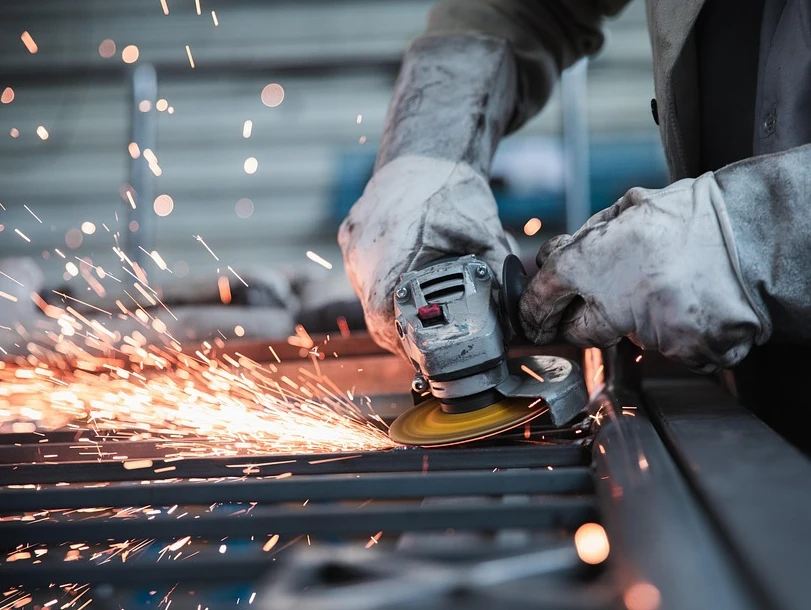
The process itself narrows the choice quickly. Stick and flux-cored welding at high current produce heavy spatter and plenty of heat, which pushes the selection toward a thicker leather with a long cuff. MIG and flux-cored work on a bench produces less spatter but more contact with hot material, so a medium leather with reasonable feel is usually enough. TIG work produces little spatter and demands fine control, which is where a supple leather or a flame resistant fabric glove becomes the practical answer rather than a luxury. Plasma cutting and gouging sit closer to the stick end, with sparks and hot material travelling further.
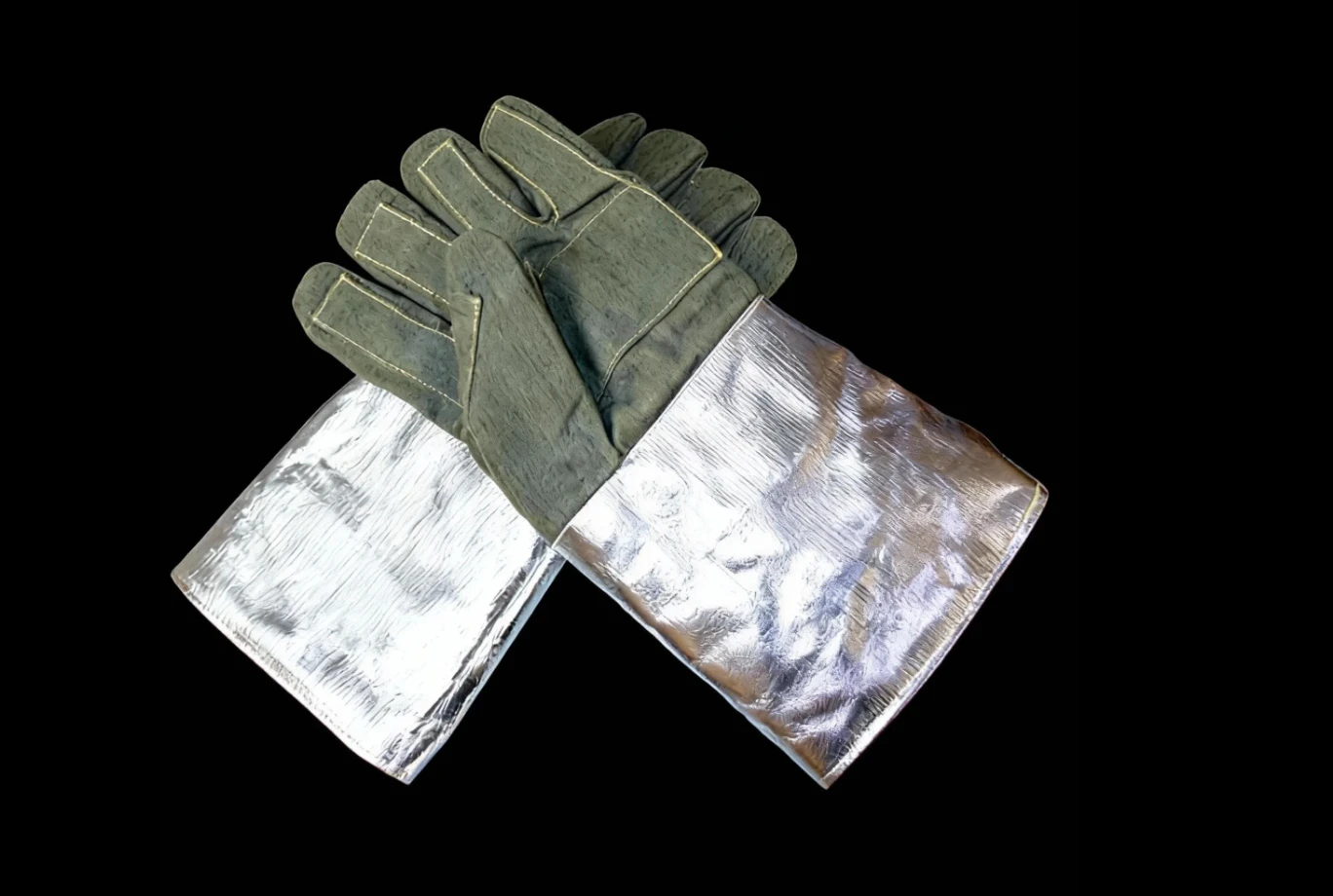
Leather gloves are the default for most welding because leather resists spatter, tolerates contact heat and survives abrasion. Heavy leathers with a long gauntlet suit high-spatter processes and out-of-position work, while thinner, more supple leathers are chosen where the welder needs to feel the torch or the filler wire. Split leathers are used where the exposure is mostly thermal and abrasion, while full-grain leathers offer more dexterity and durability for the same thickness.
Flame resistant fabric gloves, typically made from aramid or similar materials, are chosen where dexterity and heat tolerance matter more than heavy spatter resistance: light TIG work, handling hot components briefly, or tasks where a leather glove is too rigid. Coated and knit gloves are handling products rather than welding products. They are selected for grip and abrasion on parts after welding, and where they are used during welding work it is usually a sign that the welding glove choice needs revisiting.
How They Differ in Construction
Lining is the detail that most affects how a glove feels after an hour. An unlined leather transmits heat through to the hand more quickly, which is uncomfortable on long welds but gives better feel; a lined glove delays the heat and stays wearable longer. Where a glove is used for both welding and handling hot parts, the lining and the cuff usually decide whether the same product can do both, or whether the handling task needs its own glove.
Construction differences explain the trade-offs. Leather gloves have a stitched shell, often with a lining for insulation, and the seams are the weak point for spatter: a seam on the back of the hand, or a folded seam on the back of a finger, collects hot material. Flame resistant fabric gloves have a textile construction with a closer fit and better flexibility, but they transmit heat more quickly than a thick leather and they lose performance when contaminated with oils or solvents. Coated gloves have a knit liner with a polymer coating whose main purposes are grip and abrasion resistance.
Cuff length, closure and fit complete the picture. The cuff has to cover the wrist and overlap the sleeve so that spatter cannot enter at the gap, and it has to be long enough for the position of the work: overhead welding sends material down the arm. Fit affects both control and how quickly the glove is replaced, because a loose glove makes the torch harder to control and a tight one is removed during the task.
Performance Differences That Matter on Site
Two site conditions change how any of these gloves behaves. Moisture is the first: a wet leather glove conducts heat more quickly and loses grip, and a damp flame resistant fabric loses some of its insulation. Contamination is the second, because oil, solvent or grease on a glove can affect both its heat behaviour and, on some materials, its flame resistance. Both are reasons to keep spare gloves available at the station rather than relying on a single pair for a wet or oily shift.
| Consideration | Leather gloves | FR fabric gloves | Coated handling gloves |
|---|---|---|---|
| Spatter resistance | High, depending on thickness and finishes | Moderate; material may char or stiffen | Not intended for spatter exposure |
| Dexterity | Depends on leather thickness and pattern | High, which suits fine work | Varies with coating coverage |
| Contact heat | Good with adequate thickness and lining | Moderate, and sensitive to contamination | Limited; specified for the task it is bought for |
| Abrasion life | Good, and leather stiffens rather than tearing | Moderate; abrades at fingertips and seams | Good for the coated surface until it is breached |
| Care | Cleaning limited; stiffened gloves replaced | May be launderable within instructions | Rinsed or wiped, replaced when the coating goes |
| Best fit to task | Heavy spatter, out-of-position, general fabrication | Light processes, fine control, moderate heat | Handling welded parts, assembly, general work |
Read across the table, the columns are different tools rather than grades. A workshop that stocks one leather glove and one coated handling glove covers most of its work, and adds a lighter flame resistant glove where dexterity is the binding constraint.
Cost and Service Life Compared
Where a workshop buys in bulk for a large team, the size range matters as much as the unit price. A glove that only fits the middle of the range will be worn too loose by some welders and discarded by others, and a poor fit reduces control of the torch, which shows up as rework rather than as an incident. Holding a realistic spread of sizes and letting welders try two or three candidates before the order is placed is a small investment with a clear return.
Cost in this category is dominated by how often the glove is replaced, and replacement is driven by spatter and abrasion. In heavy fabrication, leather gloves are consumed quickly, and the wear concentrates at the cuff, the fingertips and the seams on the back of the hand. In light work the same glove lasts much longer, and a flame resistant fabric glove may outlast a heavier leather simply because it is used for tasks that do not damage it.
Two habits reduce the cost without weakening protection. Keep a lighter glove for the light processes rather than using the heaviest available everywhere, and replace on defined criteria — holes, hardened areas, failed seams, cuffs that no longer cover the wrist — rather than on appearance. A stiffened glove that has lost its flexibility will be removed at the delicate moment, and the protection it offered goes with it.
Where the Choice Is Genuinely Commercial
Where several gloves meet the requirement for the same process, the choice is legitimately commercial: fit across the size range, durability in the specific position, availability, and how the glove behaves when wet or contaminated. Those differences are worth trialling, because a glove the welder keeps on is doing more protection work than a heavier glove left on the bench.
What is not commercial is substituting a handling glove for a welding glove, or a light flame resistant glove for a heavy spatter task, to simplify stock. The process sets the requirement, and the glove has to meet it. Where a workshop runs several processes at one bench, keeping two or three clearly identified glove types at the station is the answer rather than one compromise.
How to Trial the Decision Before Committing
The trial should also include the tasks around the welding. Grinding, chipping slag, handling hot offcuts and moving workpieces are part of the same shift, and a glove that suits the arc but not the adjacent work will be swapped for something else within a week. Where those tasks need a different glove, specify it at the same time and keep both at the bench.
Run the trial on the processes actually performed, with the positions actually used. Ask welders to work a full shift in the candidate gloves and record four things: whether spatter reaches the skin at any point, whether dexterity is sufficient for the most demanding joint, how the glove behaves when it becomes wet or contaminated, and how it feels after two hours when the leather has warmed up.
Record the outcome against the process and the station in the specification. That record is what keeps a workshop from drifting back to one glove for everything, and it gives the next purchase a basis that does not depend on whoever placed the last order. The relationship between gloves and the rest of the welding set is covered in Shield Wings’ article on FR clothing for welders versus leather, which owns that topic.
Which Buyer Profile Each Option Suits
Whatever the profile, the station should state which glove is for which task, because the failure mode in this category is predictable: the handling glove ends up on the hand during welding because it was closest, or the welding glove is used to pick up hot offcuts because it was already on. Two clearly identified glove types at each bench, with the correct one in reach, resolves both habits.
A heavy fabrication shop welding structural steel and thick plate needs durable leather gloves with long gauntlets, replaced on a short cycle, plus hand protection for grinding and handling. A stainless or aerospace workshop doing TIG work needs a lighter, more sensitive glove with heat tolerance and less spatter resistance. A maintenance or repair workshop that alternates between welding, grinding and handling hot components needs two or three glove types at the bench, clearly identified, rather than one general answer.
Shield Wings manufactures high temperature gloves and the wider hand protection range at a Guangdong production base, and supports fabrication businesses and distributors with leather, lining and cuff selection for the processes they run. The range is listed in the hand protection category.
The specification that survives a busy week is the one where each station states its process and its glove, and where the glove at that station is the one the welder will actually keep on.
For the wider topic and related decisions, see our Hand, Cut & Impact Protection.
Frequently Asked Questions
What gloves do welders use?
Most welding is performed in leather gloves, which resist spatter and contact heat and offer the durability that heavy work needs, with lighter flame resistant fabric gloves used where dexterity matters more than spatter resistance, and coated or knit gloves reserved for handling parts rather than for welding itself. The process, the position and the amount of spatter decide which of those is appropriate.
Are coated gloves suitable for welding?
Coated gloves are generally selected for handling material rather than for welding, because coatings and synthetic components are chosen for grip and abrasion rather than for contact with spatter. Where a welder handles hot parts between passes, the handling task should have its own glove specified for the temperature, and the welding glove should be kept for the arc. Mixing the two tends to put a coating in the wrong place at the wrong time.
How long should a welding glove last?
Service life depends on the process, the position and the spatter load rather than on a fixed period. Gloves used for heavy fabrication with a lot of spatter and grinding will be replaced frequently, while a glove used for light TIG work lasts far longer. The programme should define what constitutes retirement, such as a hole, a hardened area, a failed seam or a cuff that no longer covers the wrist.
Does the cuff length matter for welding gloves?
It matters a great deal. The cuff has to cover the wrist and overlap the sleeve so that spatter and hot particles do not enter at the gap, and the length needed depends on the position of the work: overhead welding, for example, sends spatter down the arm. Where the glove and the sleeve do not overlap properly, the gap becomes the exposure, whatever the glove is made from.
What should a buyer verify with a welding glove supplier?
Ask which processes and positions the glove is intended for, what the leather or fabric specification is, what the cuff length and closure are, how the glove should be cared for, and what marking and documentation accompany each delivery. Where the glove carries an additional claim such as heat or cut performance, ask how that claim is documented and how it is affected by wear.
Specifying gloves per welding station?
Send the processes, the positions and the handling tasks at each bench. Shield Wings confirms the glove types that suit them, the cuff lengths available and the documentation each carries.
External references: 29 CFR 1910.252 welding, cutting and brazing, 29 CFR 1910.133 eye and face protection, 29 CFR 1910.138 hand protection, UK HSE welding guidance, CEN-CENELEC standards portal, Regulation (EU) 2016/425.