

Filter technology gets the attention in welding helmet specification, and fit decides whether any of it is used. A helmet that pressures the forehead, fogs within minutes or slides when the welder looks down will be tilted, lifted or left on the bench, and every one of those behaviours removes protection that the filter selection was supposed to provide. Fit is not a comfort preference; it is the mechanism by which the purchased protection is delivered.
The Hazard First, the Product Second
It is worth separating the discomfort that workers complain about from the discomfort they do not. A helmet that presses across the front of the skull produces an obvious complaint and gets adjusted. A helmet whose filter sits at the wrong angle, or whose shell is too close to the face, produces no complaint at all until the welder starts lifting it to see the joint, and by then the behaviour is established. That is why fit should be assessed by watching the work rather than by asking whether the helmet feels comfortable.
The hazard is optical radiation and spatter reaching the eyes and face during welding and the tasks around it. The helmet prevents that only while it is between the arc and the face, and the most common way that protection is lost is the lift: the moment when the welder raises the helmet to see the joint, check a tack, measure, grind or clean. Fit and comfort determine how often that moment happens, which is why they belong in the specification.
Three physical factors drive it. The first is pressure: a headband that presses on the forehead or temples becomes intolerable over an hour, and the wearer responds by loosening it until the helmet no longer stays in place. The second is balance: a shell that is heavy at the front pulls the helmet down over the face until the wearer pushes it back, changing the angle of the filter. The third is clearance: too little distance between shell and face causes fogging and interferes with spectacles or a respirator, and too much allows spatter to reach the skin around the edges.
What the Risk Assessment Has to Establish
Welding protection requirements in the United States sit in 29 CFR 1910.252, with eye and face protection addressed in 29 CFR 1910.133, and European sites work through the PPE Regulation and the applicable welding protection standards. The assessment establishes the filter requirement; the fit questions come alongside it and should record:
- The processes and current ranges at that station, which set the required shade range and the light state needed for inspection work.
- The positions worked, since overhead and confined welding load the helmet differently from bench work.
- The duration of wear and the pattern of the shift, including how much of it is spent welding.
- What else is worn on the head: spectacles, a welding cap, a safety helmet, ear muffs or a respirator.
- The environment: heat, which makes a closed helmet harder to tolerate, and dust, which affects covers and visibility.
- Whether helmets are issued personally or shared, because that decides the hygiene and adjustment arrangements.
The last two items are the ones that decide whether the specification survives contact with the workshop. A shared helmet that must be readjusted every time it changes head will be worn loosely by everybody, and a hot station where the helmet becomes uncomfortable by mid-morning will produce lifts that no instruction prevents.
Which Hazards This Category Covers and Which It Does Not
It is also worth stating that fit is not a substitute for eye protection worn under the helmet. In most welding tasks the helmet is the primary protection, but grinding, chipping and inspection at the same bench call for their own protection, and a helmet that is lifted to allow those tasks leaves nothing in place. The specification should cover the tasks around the weld, not only the weld itself.
This article covers the fit, adjustment, headgear and comfort of the helmet assembly, including the sweatband, the shell distance from the face and the compatibility with other head-worn equipment. The choice of shade range and filter technology is a separate question, and it is covered in Shield Wings’ article on auto-darkening versus passive welding helmets, which owns that comparison, while the buying detail for auto-darkening models is set out in the auto-darkening welding helmet buying guide.
What fit does not do is compensate for the wrong process protection. A perfectly fitted helmet with an inadequate shade range still leaves the eyes exposed to radiation the standard is designed to manage. It also does not replace the controls around the task, such as screens, extraction and work positioning, and it does not address the rest of the protective set: the body, hands and feet have their own specifications.
Matching Task to Protection Level
| Task or position | Fit challenge | Configuration that follows | What to verify |
|---|---|---|---|
| Bench welding, continuous | Sustained wear, heat build-up | Headgear that distributes pressure, with a replaceable sweatband and good clearance | Comfort after two hours, and fogging behaviour |
| Overhead welding | Shell tends to swing away from the face | Headgear with firm retention and balance, and a shell that stays at the set angle | Position held while working overhead |
| Tacking and short welds | Frequent raising and lowering | Lightweight helmet with an easy, repeatable lift action that works with gloves | One-handed operation in gloves |
| Work with spectacles | Frames press against the face or hold the shell forward | Headgear adjusted for the extra depth, with clearance checked | Fit with the spectacles worn |
| Work with a respirator | Mask and shell compete for space | Configuration chosen with the respiratory protection as one assembly | Seal integrity and clearance |
| Shared helmets | Adjustment and hygiene between users | Headgear with a wide adjustment range and replaceable sweatbands | Cleaning arrangements and adjustment reset |
Read across the table, most rows are about the same three properties: pressure, balance and clearance. The differences between helmets show up in those terms far more than in the specifications quoted on a product page, which is why a short trial answers more than a data sheet.
Where Selection Usually Goes Wrong
One further failure belongs here rather than in a maintenance article, because it affects fit directly: the helmet is bought in one configuration and used with headgear from another, or with pads and bands that were not intended for it. The combination may look functional, but the adjustment range and the balance of the shell were established for the original assembly, and the result is usually a helmet that has to be overtightened to stay in place.
- One size assumed for everyone. Head shape and size vary, and headgear adjustment range matters more than the nominal size.
- Retention achieved by tension. A helmet that stays on only because the headband is tight will be loosened within the hour.
- Compatibility not checked. Spectacles, welding caps, ear muffs and respirators all change the fit and are often added after the purchase.
- Sweatbands neglected. A saturated or compressed band stops absorbing and stops holding, and it is the cheapest part to replace.
- Covers not replaced. Scratched or spattered covers reduce visibility, and the welder compensates by lifting the helmet.
- Position not trialled. A helmet adjusted standing up can behave differently when the welder is kneeling or working overhead.
- Shared helmets without a routine. Where adjustment and cleaning are not managed, the helmet ends up worn loosely by everyone.
The Hierarchy of Controls Around the Selection
Where a station produces constant lifts despite a comfortable helmet, the position of the work itself is usually the reason, and raising the workpiece or changing the fixture often does more than any change of headgear.
Fit is a personal protective equipment issue, and the orders above it still apply. Screens and booths that contain optical radiation, extraction that removes fume at the source, fixtures and positioners that reduce awkward positions, and sequencing that separates welding from other trades all reduce both the exposure and the amount of time the helmet has to be worn in a difficult position.
Personal protective equipment is the last line of defence, and it works best when it is worn for the whole task. That is the reason fit deserves a place in the specification: the exposure the helmet protects against occurs when it is on, and the helmet is more likely to stay on when it is comfortable, properly adjusted and compatible with everything else the welder wears.
Specification Points to Fix Before Ordering
Where a site is buying for a mixed workforce, the practical approach is to bring two or three candidate models on site, adjust them for the individuals doing the most demanding positions, and let the workshop use the ones that come back with the fewest complaints after a week. That process is faster than a specification review and produces a better answer, because the properties that matter are only visible in use.
- The processes, positions and duration of wear at each station.
- The adjustment range of the headgear and the availability of different shell or headband sizes.
- Weight and balance, checked in the working position rather than in a store room.
- Clearance from the face, including with spectacles and respiratory protection in use.
- Sweatband and lens cover supply, with a restocking arrangement at the point of use.
- The lift and lower action, verified with gloves on and with one hand where the task requires it.
- Cleaning, hygiene and shared-use rules, plus the replacement criteria for headgear and bands.
- Documentation required with the quotation, including the filter claims and the marking.
The welding helmet range is listed on the auto-darkening welding helmet page and within the wider head and face protection category.
Shield Wings manufactures welding helmets and face protection at a Guangdong production base and supports welding supervisors, fabrication workshops and distributors with headgear and consumable selection, sizing advice and the documentation each product carries. The specification that protects the welder is the one where the helmet stays on the head for the whole task and comes down again without a struggle.
For the wider topic and related decisions, see our Welding Safety & Welding PPE.
Frequently Asked Questions
How should a welding helmet fit?
The headband should grip without pressure points, the shell should sit far enough from the face that there is clearance for breathing and for spectacles, and the helmet should stay in place when the welder looks down or works overhead without being held by tension alone. If it has to be tightened to stay put, the headgear or the size is wrong rather than the adjustment being loose.
Why do welders end up lifting their helmets?
Usually for one of four reasons: they cannot see the joint in the dark state, the light state is not usable for inspection, the helmet is uncomfortable after an hour, or the shell fogs. Three of those are fit and comfort issues, which is why fit belongs in the specification alongside the filter selection rather than being treated as a personal preference.
Do welding helmets need to work with other head-worn equipment?
Yes. Spectacles, safety helmets, welding caps, ear muffs and respiratory protection all change how a helmet sits and whether it can be adjusted properly. Where several are worn together, the combination should be checked rather than assumed, and the assembly should be trialled in the position the work is performed, because a helmet that fits standing up may not fit when the welder is working overhead.
How should headgear and sweatbands be maintained?
Follow the manufacturer’s instructions: sweatbands are consumables and should be replaced when they are saturated, compressed or no longer holding their shape, and headgear should be replaced when adjustment no longer holds or when the ratchet, strap or pads are damaged. Where helmets are shared, cleaning between users is part of the programme, not an optional extra.
What should a buyer check when choosing between helmets?
The adjustment range of the headgear, the weight and the balance of the shell, the distance from the face in the working position, the availability of sweatbands and lens covers, and the ease with which the helmet can be raised and lowered with one hand while wearing gloves. Those details decide whether the helmet is worn properly, which is what the protection depends on.
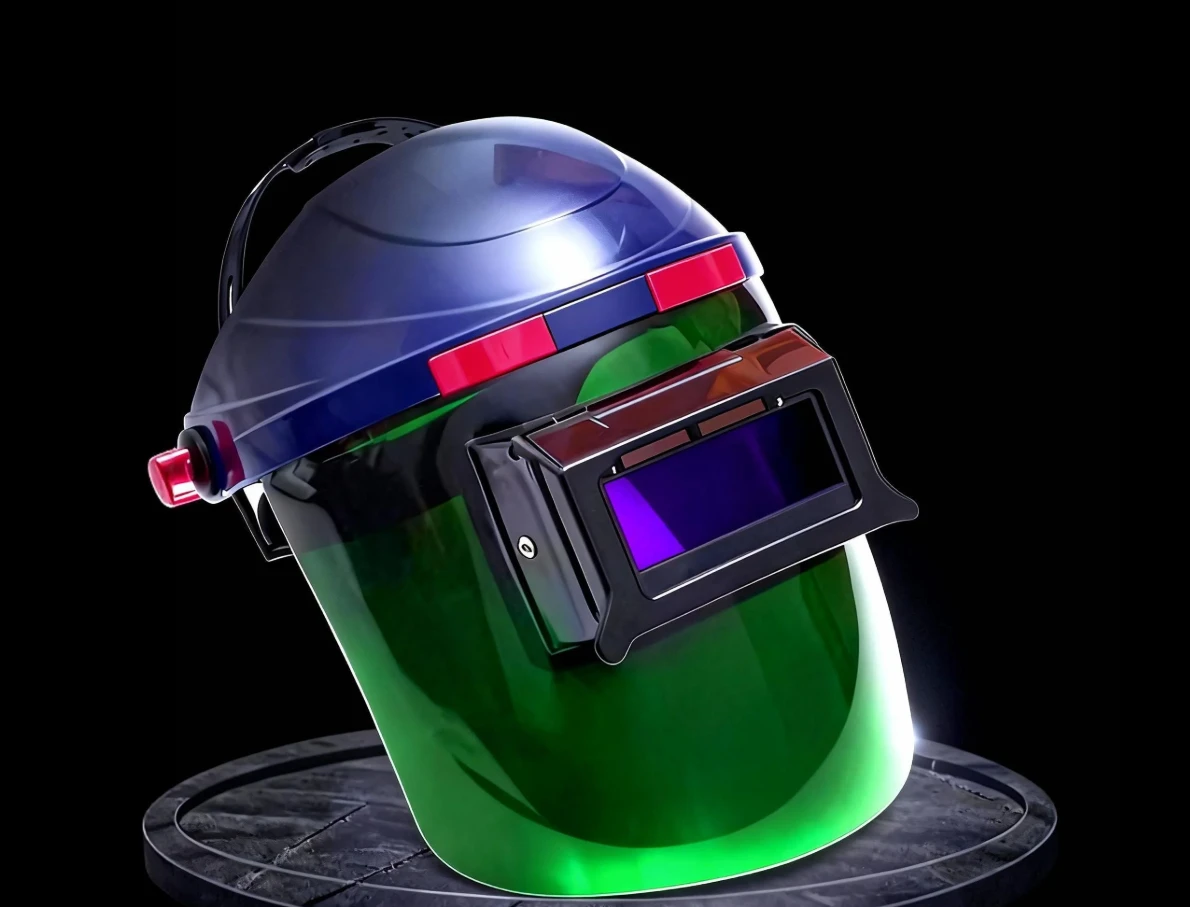
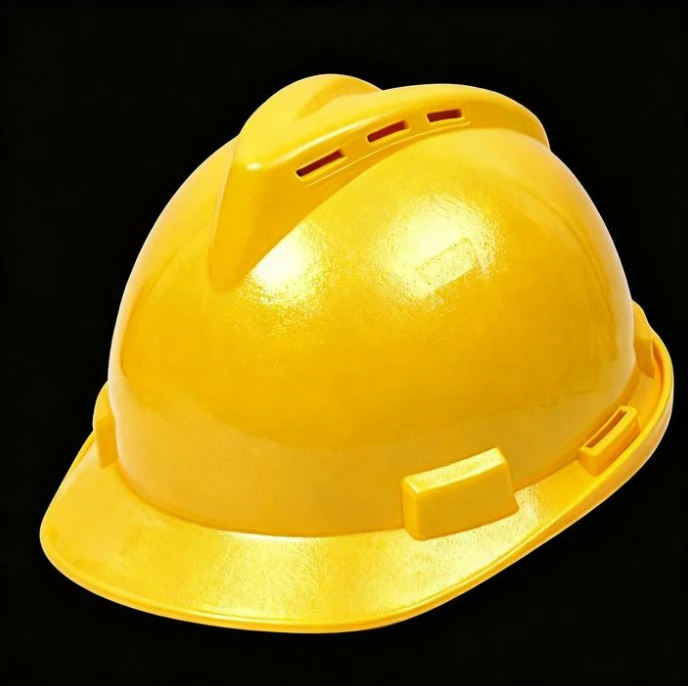
Standardising welding helmets across a workshop?
Send the processes, the positions and the equipment already worn on the head. Shield Wings confirms the headgear options, the size ranges and the consumables that keep helmets usable.
External references: 29 CFR 1910.252 welding, cutting and brazing, 29 CFR 1910.133 eye and face protection, UK HSE welding guidance, CCOHS PPE answers, CEN-CENELEC standards portal, Regulation (EU) 2016/425.
{“@type”:”FAQPage”,”@context”:”https://schema.org”,”mainEntity”:[{“@type”:”Question”,”name”:”How should a welding helmet fit?”,”acceptedAnswer”:{“@type”:”Answer”,”text”:”The headband should grip without pressure points, the shell should sit far enough from the face that there is clearance for breathing and for spectacles, and the helmet should stay in place when the welder looks down or works overhead without being held by tension alone. If it has to be tightened to stay put, the headgear or the size is wrong rather than the adjustment being loose.”}},{“@type”:”Question”,”name”:”Why do welders end up lifting their helmets?”,”acceptedAnswer”:{“@type”:”Answer”,”text”:”Usually for one of four reasons: they cannot see the joint in the dark state, the light state is not usable for inspection, the helmet is uncomfortable after an hour, or the shell fogs. Three of those are fit and comfort issues, which is why fit belongs in the specification alongside the filter selection rather than being treated as a personal preference.”}},{“@type”:”Question”,”name”:”Do welding helmets need to work with other head-worn equipment?”,”acceptedAnswer”:{“@type”:”Answer”,”text”:”Yes. Spectacles, safety helmets, welding caps, ear muffs and respiratory protection all change how a helmet sits and whether it can be adjusted properly. Where several are worn together, the combination should be checked rather than assumed, and the assembly should be trialled in the position the work is performed, because a helmet that fits standing up may not fit when the welder is working overhead.”}},{“@type”:”Question”,”name”:”How should headgear and sweatbands be maintained?”,”acceptedAnswer”:{“@type”:”Answer”,”text”:”Follow the manufacturer’s instructions: sweatbands are consumables and should be replaced when they are saturated, compressed or no longer holding their shape, and headgear should be replaced when adjustment no longer holds or when the ratchet, strap or pads are damaged. Where helmets are shared, cleaning between users is part of the programme, not an optional extra.”}},{“@type”:”Question”,”name”:”What should a buyer check when choosing between helmets?”,”acceptedAnswer”:{“@type”:”Answer”,”text”:”The adjustment range of the headgear, the weight and the balance of the shell, the distance from the face in the working position, the availability of sweatbands and lens covers, and the ease with which the helmet can be raised and lowered with one hand while wearing gloves. Those details decide whether the helmet is worn properly, which is what the protection depends on.”}}]}